- Company Articles
- Products and Technology
- Product knowledge
- Ideal 2040 Aluminum Profile End Caps for Flexible Production Lines

Ideal 2040 Aluminum Profile End Caps for Flexible Production Lines
Related Product
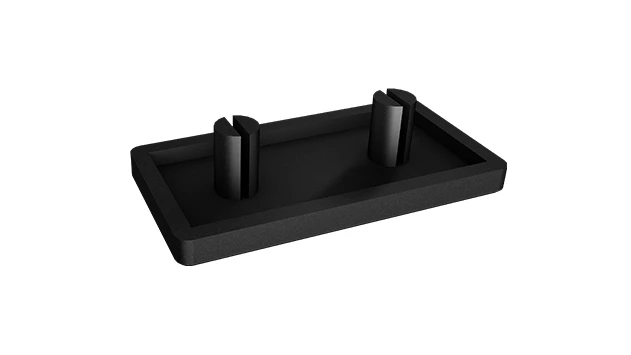
2040 Aluminum Profile End Cap
The aluminum profile end cap adds a finishing touch to your project and closes off profile ends to limit dust and debris buildup, also it can avaid some scratch for material and labor during the assemble work.
The Unsung Heroes of Modular Manufacturing Efficiency
Introduction: The Era of Flexible Production and the Need for Smart Solutions
Walk into any modern manufacturing facility today, and you'll notice a shift—gone are the days of rigid, one-size-fits-all production lines. In their place are dynamic, adaptable workspaces that can pivot from assembling small electronics to packaging medical devices, often with just a few hours of reconfiguration. This shift, driven by consumer demand for customization and the need to stay competitive in fast-changing markets, has made flexible production lines the backbone of contemporary manufacturing. At the heart of this revolution lies a commitment to lean system principles—eliminating waste, optimizing flow, and maximizing value—and the tools that make these principles actionable.
Among these tools, aluminum extrusion profiles stand out as quiet game-changers. Lightweight yet surprisingly strong, these modular building blocks allow manufacturers to design everything from workbenches and material racks to conveyor systems and assembly stations, all without welding or heavy machinery. But even the most robust aluminum profiles rely on small, often overlooked components to deliver their full potential. Enter the 2040 aluminum profile end cap —a humble accessory that plays a critical role in safety, durability, and long-term efficiency. In this article, we'll explore why these unassuming caps are indispensable for anyone building or maintaining flexible production lines, and how they fit into the broader ecosystem of aluminum extrusion profiles and accessories.
Understanding Flexible Production Lines: Why Adaptability Matters
Before diving into end caps, let's first clarify what makes a production line "flexible." At its core, flexibility in manufacturing means the ability to quickly adjust processes, layouts, or output to meet changing demands. This could involve scaling up production for a sudden order surge, switching between product variants, or reconfiguring a workstation to accommodate a new tool. For small to mid-sized manufacturers, this adaptability isn't just a luxury—it's survival. Rigid lines that take weeks to retool can't compete with competitors who can deliver custom orders in days.
This is where lean system thinking comes into play. Lean manufacturing, pioneered by Toyota, focuses on minimizing waste (time, materials, space) while maximizing value for the customer. Flexible production lines embody this by reducing "changeover waste"—the time lost when reconfiguring equipment. Aluminum extrusion profiles excel here because they're inherently modular: T-slots along their length allow for easy attachment of accessories like brackets, casters, and panels, meaning a single profile can be repurposed from a workbench leg to a conveyor frame with minimal effort.
Consider a scenario: A electronics manufacturer needs to shift from assembling smartphones to smartwatches. With traditional steel infrastructure, this might require cutting, welding, and repainting frames—days of work. With aluminum profiles, however, they can simply detach the old workbench top, adjust the height using new brackets, and add a smaller material rack, all in a few hours. The key? The profiles themselves are designed for quick, tool-free modifications, and their accessories—including end caps—ensure that every reconfiguration is safe and stable.

Aluminum Extrusion Profiles: The Backbone of Flexible Systems
To appreciate the role of 2040 end caps, we first need to understand the star of the show: aluminum extrusion profile . Aluminum extrusion is a manufacturing process where heated aluminum billets are pushed through a die to create uniform, custom-shaped profiles. The result? Lightweight (about 1/3 the weight of steel), corrosion-resistant, and incredibly strong structures that can support heavy loads without bending or warping.
Among the thousands of extrusion profiles available, the 2040 series has emerged as a favorite for flexible production lines. As the name suggests, these profiles measure 20mm in width and 40mm in height, making them compact enough for tight spaces but sturdy enough for most workshop applications. Their defining feature is the T-slot—a groove running along the length of the profile that allows bolts, nuts, and accessories to slide into place and lock securely. This T-slot design eliminates the need for drilling or welding, turning assembly into a process as simple as "slide, tighten, done."
Common uses for 2040 profiles include:
- Workbenches : From assembly stations to packing tables, 2040 profiles form the legs and frames, often paired with plywood or aluminum honeycomb tops.
- Material Racks : Lightweight yet strong, they're ideal for storing tools, components, or finished goods in lean, vertical setups.
- Conveyor Frames : When combined with roller tracks or belt systems, 2040 profiles create modular conveyors that can be extended or shortened as needed.
- Machine Guards : Their slim profile makes them perfect for building safety barriers around equipment, with slots for attaching clear panels.
But for all their versatility, aluminum profiles have one vulnerability: their ends. Without protection, the raw, cut edges of extruded aluminum can be sharp, posing a safety risk to workers. They also collect dust, debris, and moisture, which can corrode the interior over time. This is where end caps step in—and not just any end caps, but ones specifically designed for 2040 profiles.

The 2040 Aluminum Profile End Cap: Small Part, Big Impact
At first glance, an end cap might seem like an afterthought—a plastic or metal plug that simply covers the end of a profile. But in reality, it's a multi-functional component that addresses three critical needs in flexible production lines: safety , durability , and maintainability .
Safety First: Eliminating Sharp Edges
Walk through a busy factory, and you'll notice workers moving quickly—carrying parts, adjusting machines, or collaborating over workbenches. A sharp, unprotected end of an aluminum profile is an accident waiting to happen: a scraped arm, a torn glove, or worse. 2040 end caps, typically made from durable nylon or PVC, soften these edges, turning a potential hazard into a smooth, safe surface. In environments where workers handle delicate components (like electronics or medical devices), this isn't just a nicety—it's a requirement to prevent damage to products as well.
Durability: Keeping Debris Out
Aluminum extrusion profiles are hollow, with internal chambers that provide strength without extra weight. But these chambers are also magnets for dust, metal shavings, and moisture—especially in factories where cutting, grinding, or painting occurs. Over time, debris buildup can weaken the profile, corrode its interior, or even jam the T-slots, making it harder to attach accessories. End caps seal off these open ends, acting as a barrier against contaminants. This simple step can extend the lifespan of a profile by years, reducing replacement costs and downtime.
Maintainability: Simplifying Cleaning and Inspection
Flexible production lines thrive on cleanliness—cluttered, dusty workspaces slow down operations and increase error rates. End caps make cleaning easier by eliminating hard-to-reach crevices where dirt accumulates. A quick wipe with a damp cloth is all it takes to keep a capped profile looking and functioning like new. They also simplify inspections: a missing or damaged end cap is easy to spot, alerting maintenance teams to potential issues before they escalate.
Types of 2040 Aluminum Profile End Caps: Choosing the Right Fit
Not all end caps are created equal. Depending on your application, you might need a cap that's easy to install, extra durable, or even color-coded for organization. Below is a breakdown of the most common types, along with their best-use scenarios:
| End Cap Type | Material | Installation Method | Key Features | Best For |
|---|---|---|---|---|
| Push-Fit Nylon End Cap | Nylon (PA6) | Press-fit into profile end; no tools needed | Lightweight, cost-effective, resistant to impact | General-purpose workbenches, material racks, non-critical areas |
| Snap-On PVC End Cap | PVC | Snap-on design with flexible tabs | Easy to remove/reinstall, chemical-resistant | Conveyor frames, areas requiring frequent cleaning or inspection |
| Screw-Fit Aluminum End Cap | Aluminum Alloy | Secured with small screws through T-slots | Heavy-duty, heat-resistant, matches profile aesthetics | High-temperature environments, machine guards, load-bearing structures |
| Vented End Cap | Nylon or PVC | Push-fit or snap-on with small ventilation holes | Prevents moisture buildup, ideal for humid environments | Outdoor applications, washdown areas, food/beverage production lines |
When selecting an end cap, consider factors like the environment (Is it dusty? Wet? Exposed to chemicals?), the profile's use (Is it a workbench leg or a conveyor rail?), and the frequency of reconfiguration (Will you need to remove the cap often?). For most flexible production lines, push-fit nylon caps strike the best balance of cost, ease of use, and performance.
Installation and Maintenance: Making the Most of Your End Caps
Installing 2040 end caps is a straightforward process, but a few best practices can ensure they stay secure and effective. Here's a step-by-step guide:
Installation Steps
- Clean the Profile End : Before installing, wipe the inside and outside of the profile's end with a dry cloth to remove dust or debris. This ensures a tight, secure fit.
- Align the Cap : Hold the end cap at a slight angle and insert one edge into the profile. Gently press down until you hear a "click" (for snap-fit) or feel resistance (for push-fit).
- Secure (If Needed) : For screw-fit caps, insert the provided screws into the T-slots and tighten with a hex key until snug (don't over-tighten, as this can strip the threads).
Maintenance Tips
- Inspect Regularly : Check end caps monthly for cracks, looseness, or discoloration (a sign of chemical exposure). replace any damaged caps immediately.
- Clean Gently : Use a mild detergent and soft cloth to clean caps; avoid abrasive sponges or solvents, which can degrade plastic materials.
- Lubricate (If Sticky) : If a push-fit cap becomes hard to remove, apply a small amount of silicone lubricant to the profile end before reinstalling.
Beyond End Caps: Building a Complete Aluminum Profile Ecosystem
While end caps are essential, they're just one piece of the puzzle. To truly maximize the flexibility of your production line, you'll need to pair 2040 profiles with the right aluminum profile accessories . These include:
- Joints and Connectors : 90° angles, T-joints, and swivel connectors allow you to build complex structures from straight profiles.
- Casters and Feet : Lockable casters turn static workbenches into mobile carts, while adjustable feet level racks on uneven floors.
- Panels and Covers : Aluminum honeycomb panels or acrylic sheets attach to profiles to create work surfaces, machine guards, or storage cabinets.
- Lighting and Power Accessories : LED light strips and power rails clip into T-slots, keeping workspaces illuminated and tools plugged in without messy cords.
The beauty of this ecosystem is its modularity. A 2040 profile used as a workbench leg today can become part of a conveyor tomorrow, simply by swapping out feet for casters and adding roller tracks. And with end caps protecting each profile along the way, you can rest assured that every reconfiguration is as safe and durable as the last.
Case Study: How End Caps Improved Efficiency at a Medical Device Plant
To illustrate the real-world impact of 2040 end caps, let's look at a case study from a mid-sized medical device manufacturer. Prior to using aluminum profiles, the company relied on steel workbenches and fixed shelving, which took days to reconfigure when switching between product lines. Frustrated by downtime and rising maintenance costs, they transitioned to a lean system built around 2040 aluminum extrusion profiles.
Initially, they overlooked end caps, assuming the profiles' smooth edges were "safe enough." Within weeks, however, workers reported minor cuts from sharp profile ends, and maintenance teams noticed dust buildup inside profiles was jamming T-slots, making it hard to attach accessories. After switching to push-fit nylon end caps, the results were clear:
- Zero Reported Injuries : Sharp edges were eliminated, reducing workplace incidents by 100% in profile-heavy areas.
- Faster Changeovers : T-slots stayed clean, cutting accessory attachment time by 30% during reconfigurations.
- Longer Profile Lifespan : After 18 months, profiles showed no signs of internal corrosion, delaying replacement by an estimated 3+ years.
The plant manager summed it up: "End caps seemed like a small expense, but they've saved us thousands in maintenance and downtime. We now consider them non-negotiable for every profile we install."
Conclusion: Small Parts, Big Results in Flexible Manufacturing
In the fast-paced world of modern manufacturing, success hinges on the details. While aluminum extrusion profiles and lean systems get the headlines for driving flexibility, it's components like the 2040 aluminum profile end cap that ensure these systems deliver on their promise. By protecting workers, extending equipment life, and simplifying maintenance, these unassuming caps play a vital role in keeping production lines running smoothly, safely, and efficiently.
Whether you're building a new lean system from scratch or upgrading an existing line, don't overlook the power of quality end caps. They may be small, but their impact on your bottom line—through reduced injuries, lower maintenance costs, and faster changeovers—will be anything but.
Invest in the details. Build a better production line.