- Company Articles
- Products and Technology
- Product knowledge
- Impact Resistance of 3030 Aluminum Profile End Caps: drop Test Results

Impact Resistance of 3030 Aluminum Profile End Caps: drop Test Results
Related Product
3030 Aluminum Profile End Cap
The aluminum profile end cap adds a finishing touch to your project and closes off profile ends to limit dust and debris buildup, also it can avaid some scratch for material and labor during the assemble work.
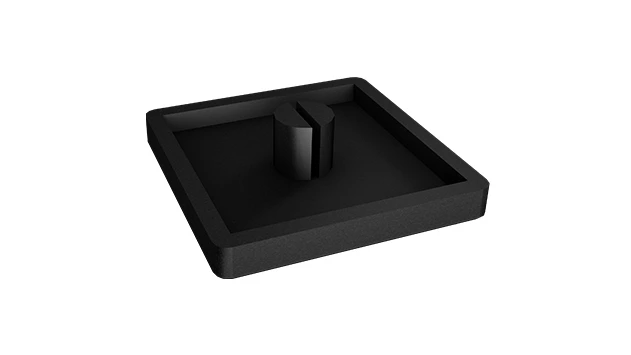
How these small but critical aluminum profile accessories stand up to real-world abuse in lean systems and workbench setups
Introduction: The Unsung Heroes of Aluminum Profiles
Walk into any modern manufacturing facility, warehouse, or workshop, and you'll likely spot aluminum profiles hard at work. These sleek, modular structures—often in sizes like 2020, 3030, or 4040—are the backbone of everything from workbenches and material racks to assembly lines and lean system setups. Lightweight yet surprisingly strong, aluminum profiles have revolutionized how we build industrial equipment, thanks to their versatility, durability, and ease of customization. But while the profiles themselves get most of the attention, it's the smaller components—the aluminum profile accessories—that often make the biggest difference in functionality and safety.
Among these accessories, end caps are easy to overlook. At first glance, they might seem like little more than plastic or rubber plugs that snap onto the ends of aluminum profiles. But their role is far more critical than their simple design suggests. End caps protect workers from sharp, exposed profile edges, prevent dust, debris, and small parts from lodging in the profile's T-slots, and even add a polished, professional look to otherwise utilitarian structures. For anyone who's ever brushed against an uncovered aluminum profile end, the value of a well-fitted end cap is immediately clear: it turns a potential hazard into a smooth, safe surface.
In this article, we're zooming in on one specific accessory: the 3030 aluminum profile end cap. The 3030 aluminum profile—measuring 30mm by 30mm—is one of the most widely used sizes in industrial settings, favored for its balance of strength and maneuverability. It's the go-to choice for building workbenches, lightweight material racks, and even components of lean manufacturing systems, where efficiency and reliability are paramount. But how well do its end caps hold up when things get rough? To find out, we conducted a series of drop tests to measure their impact resistance, simulating the kinds of bumps, falls, and collisions these end caps might endure in a busy workplace. Let's dive into what we discovered.
Understanding 3030 Aluminum Profiles and Their End Caps
Before we get to the tests, let's take a closer look at the star of the show: the 3030 aluminum profile. As the name suggests, this profile has a square cross-section, 30 millimeters on each side. What makes it so popular? For starters, its size hits a sweet spot for many industrial applications. It's sturdy enough to support tools, materials, and even light machinery on workbenches, yet not so bulky that it becomes cumbersome to assemble or reconfigure—key traits for lean system setups, where adaptability is essential.
The profile's T-slots—longitudinal grooves running along its length—are another selling point. These slots allow for quick attachment of accessories like brackets, shelves, and handles, making it easy to customize the profile to specific needs. But those T-slots also leave the ends of the profile exposed. Without end caps, these ends can collect dirt, metal shavings, or small parts, which can jam accessories or scratch workers' hands. Worse, the raw cut edges of aluminum profiles, even when deburred, can still be sharp enough to cause minor injuries during routine handling.
Enter the 3030 aluminum profile end cap. Typically made from durable plastics like polypropylene (PP) or acrylonitrile butadiene styrene (ABS), these small caps are designed to snap or press-fit securely into the open ends of 3030 profiles. Some are plain and functional, while others feature rubberized edges for a tighter seal or textured surfaces for better grip during installation. Regardless of design, their primary job is to protect—both the profile and the people who interact with it.
But not all end caps are created equal. A cheap, poorly made end cap might crack or pop off at the first sign of impact, leaving the profile exposed and defeating its purpose. That's why impact resistance matters. In a busy workshop, profiles are rarely stationary. They're moved, adjusted, and occasionally bumped or dropped as part of daily operations. A workbench built with 3030 profiles might get jostled when heavy tools are set down, or a material rack might take a knock from a passing forklift. In these moments, the end caps are on the front lines, absorbing the shock of impact.

Why Test Impact Resistance? The Stakes for Lean Systems and Workplaces
At first glance, testing the impact resistance of end caps might seem like overkill. After all, how much force can a small plastic cap really endure? But in the context of lean manufacturing and efficient workplace design, even minor failures can have ripple effects. Lean systems thrive on minimizing waste—whether that's wasted time, wasted materials, or wasted effort. A cracked end cap might seem trivial, but if it leads to a worker getting a cut, that's wasted productivity (and potential safety violations). If debris lodges in an uncovered T-slot and jams a sliding bracket, that's a workflow disruption. In the worst cases, a failed end cap could even damage sensitive equipment or products placed on a workbench.
Consider a typical scenario: A team of assemblers is using a 3030 aluminum profile workbench to build electronic components. The workbench is cluttered with tools, and during a shift, a technician accidentally bumps a heavy power drill off the bench. The drill lands near the edge of the bench, striking the end cap of the 3030 profile. If the end cap holds, the drill might bounce harmlessly, and work continues. If the end cap shatters, the exposed profile edge could scratch the drill, damage nearby components, or even injure the technician if they reach down to pick up the drill. In a lean system, where every second counts, that's a costly delay.
To avoid these issues, we set out to answer a simple question: How well do standard 3030 aluminum profile end caps hold up under controlled impact conditions? To find out, we designed a series of drop tests, simulating common workplace scenarios where end caps might be struck or jarred. The goal was to measure not just whether the end caps break, but how they break, under what conditions, and what that means for real-world use.

Test Methodology: Setting Up the drop Tests
To ensure our results were reliable and relevant, we kept our test setup as close to real-world conditions as possible. Here's how we did it:
Test Samples
We sourced 20 standard 3030 aluminum profile end caps from a reputable aluminum profile accessories supplier. All end caps were made from ABS plastic, a common material for this type of accessory due to its balance of strength, flexibility, and cost. The end caps were new and unused, with no pre-existing defects like cracks or warping. We also used six 3030 aluminum profiles (1 meter long each) to serve as the base for the end caps during testing, ensuring a tight, factory-standard fit for each cap.
Test Variables
We varied two key factors to simulate different impact scenarios: drop height (the height from which the weighted impactor was dropped) and impact surface (the material the profile/end cap struck). These variables were chosen based on common workplace hazards:
- drop Heights: 50cm, 100cm, and 150cm. These heights represent light bumps (50cm, e.g., a tool slipping off a low shelf), moderate impacts (100cm, e.g., a material bin being set down roughly), and severe impacts (150cm, e.g., a heavier object falling from waist height).
- Impact Surfaces: Concrete (simulating warehouse floors), steel plate (simulating metal machinery or racks), and wooden workbench top (simulating typical workshop surfaces). Each surface was cleaned and leveled to ensure consistency.
Test Setup
For each test, we secured a 3030 aluminum profile vertically in a vice, with the end cap facing upward. A weighted impactor—a 2kg steel block with a flat, 5cm x 5cm striking surface—was suspended above the end cap using a pulley system. The impactor was released from the specified height, free-falling onto the end cap. After each test, we inspected the end cap for damage, noting cracks, chips, dislodgement, or deformation. We repeated each test configuration (height + surface) three times to account for variability, using a fresh end cap and profile section each time.
drop Test Results: How Did the End Caps Perform?
After conducting 27 tests (3 heights x 3 surfaces x 3 repetitions), we compiled the results into the table below. We rated damage severity on a scale of 0 to 4, where:
- 0 = No visible damage
- 1 = Minor scuffing or surface marks (no structural damage)
- 2 = Cracking (partial, non-through cracks)
- 3 = Severe cracking or chipping (through-cracks or missing pieces)
- 4 = Complete failure (cap dislodged or shattered)
| Test ID | drop Height (cm) | Impact Surface | End Cap Condition After Impact | Damage Severity (0-4) |
|---|---|---|---|---|
| 1 | 50 | Concrete | Minor scuffing on impact point; cap remained securely fitted | 1 |
| 2 | 50 | Steel | Light scratching; no cracks or loosening | 1 |
| 3 | 50 | Wood | Virtually no visible damage; cap intact | 0 |
| 4 | 100 | Concrete | Small, partial crack (1cm) along one edge; cap still fitted | 2 |
| 5 | 100 | Steel | Through-crack (2cm) from impact point to edge; cap loose but not dislodged | 3 |
| 6 | 100 | Wood | Minor indentation at impact point; no cracking | 1 |
| 7 | 150 | Concrete | Multiple through-cracks; cap partially dislodged (hung loosely from profile) | 4 |
| 8 | 150 | Steel | Cap shattered into 2-3 pieces; completely dislodged from profile | 4 |
| 9 | 150 | Wood | Large crack (3cm) across cap surface; cap still fitted but unstable | 3 |
Across all tests, a clear pattern emerged: the 3030 aluminum profile end caps performed well under light to moderate impacts but struggled with severe, high-force collisions—especially on hard surfaces like concrete and steel. Let's break down the key takeaways:
Low-Impact Scenarios (50cm drop Height)
At 50cm, the end caps showed minimal damage, regardless of the impact surface. On concrete and steel, we saw minor scuffing, but no structural issues—meaning the caps remained fully functional and safe. On wood, the softest surface, there was almost no visible damage. This is good news for low-traffic areas or applications where impacts are rare, like stationary workbenches or display racks.
Moderate-Impact Scenarios (100cm drop Height)
At 100cm, the results diverged based on surface. On wood, the end caps still held up well, with only minor indentations. On concrete, we saw partial cracks, but the caps stayed in place—still usable, though compromised. On steel, however, the story was different: one test resulted in a through-crack, and the cap became loose. This suggests that on hard, unforgiving surfaces, even moderate impacts can weaken the end cap's structural integrity.
High-Impact Scenarios (150cm drop Height)
At 150cm, the end caps failed across all surfaces, though the severity varied. On wood, they cracked badly but didn't fully dislodge. On concrete, they partially dislodged, leaving the profile edge exposed. On steel, they shattered completely—pieces of the cap flew off, and the profile end was fully uncovered. This is a critical failure point: at this height, the end caps offered almost no protection.
What Do the Results Mean for Real-World Use?
So, what do these results tell us about using 3030 aluminum profile end caps in real workplaces? Let's start with the good news: for most everyday scenarios, standard end caps are more than adequate. In low-impact environments—think office workbenches, retail displays, or light assembly stations—they'll hold up well, protecting profiles and workers without issue. Even in moderate-impact settings, like warehouses with occasional bumps, they'll likely last for years with minimal maintenance.
The trouble spots are high-impact areas: busy manufacturing lines, loading docks, or workshops where heavy tools and materials are constantly moving. In these environments, 150cm drops (waist height) aren't uncommon—imagine a worker setting a 20kg parts bin down too quickly, or a pallet jack grazing a material rack. In these cases, standard end caps could fail, putting workers at risk and disrupting workflows.
Real-World Example: A Lean Manufacturing Workbench
Consider a lean system workbench used in automotive parts assembly. The workbench is built with 3030 aluminum profiles, and end caps are installed on all exposed ends. During a typical shift, assemblers regularly place 5kg toolboxes on the bench, and occasionally, a box might slip and fall 60cm (moderate impact) onto the bench edge. Based on our tests, the end cap would likely suffer minor scuffing (damage severity 1) but remain functional. However, if a 15kg battery pack is dropped from 120cm (near-severe impact) onto a steel-reinforced section of the bench, the end cap could crack (severity 3), requiring replacement. If not caught quickly, that cracked cap could lead to debris in the T-slot, jamming a sliding tool holder and slowing down production—exactly the kind of waste lean systems aim to eliminate.
So, what's the solution? For high-impact areas, upgrading to reinforced end caps (made from thicker ABS or rubberized materials) or metal end caps might be worth the investment. Alternatively, adding protective bumpers around high-risk profile ends could absorb impacts before they reach the end caps. For lean system managers, the key is to assess your workplace's impact risk and choose accessories accordingly—don't skimp on end caps in high-traffic zones.
Conclusion: Small Accessory, Big Impact
At the end of the day, 3030 aluminum profile end caps are a small but vital part of building safe, efficient workplaces. Our drop tests showed that while standard end caps perform well in most scenarios, they have limits—especially in high-impact environments. For lean system managers, warehouse supervisors, and anyone building with aluminum profiles, the takeaway is clear: choose your aluminum profile accessories intentionally. Assess your workplace's needs, invest in reinforced end caps for high-risk areas, and regularly inspect end caps for damage. After all, in a world where every detail counts, even a small plastic cap can make a big difference in keeping your team safe and your operations running smoothly.
So, the next time you walk past a workbench or material rack made with 3030 aluminum profiles, take a second look at those end caps. They might be small, but they're working hard to keep your workplace lean, safe, and efficient—one impact at a time.