- Company Articles
- Products and Technology
- Solution
- Implementing Turning Angle Code 2020 in Medical Logistics Lean Solutions

Implementing Turning Angle Code 2020 in Medical Logistics Lean Solutions
Related Product
Urning Angle Code 2020
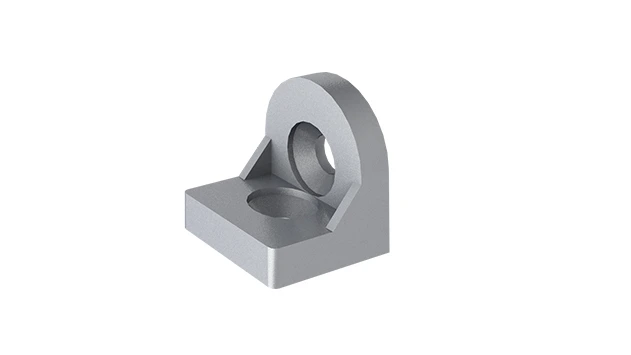
The turning angle aluminum profile connector provides a 90 degree hidden corner connection. 2020 it is means this size is used for 20 series aluminum profile.The corner code comes with set screws that allow for quick, easy connections.
In the high-stakes world of medical logistics, where a single delay can impact patient care and a misplaced supply can compromise safety, efficiency isn't just a goal—it's a necessity. Hospitals, clinics, and pharmaceutical facilities operate under relentless pressure: rising patient numbers, evolving regulatory requirements, and the constant need to do more with less. This is where lean systems step in, designed to eliminate waste, streamline workflows, and keep critical resources moving exactly where they're needed, when they're needed. But lean systems are only as strong as their components. Today, we're diving into a small but mighty part of this ecosystem: the Turning Angle Code 2020. Paired with aluminum profiles and integrated into workbenches, flow racks, and beyond, this unassuming connector is quietly transforming how medical facilities build, adapt, and maintain their logistics infrastructure.
The Hidden Challenge in Medical Logistics: Rigidity vs. Reality
Walk into any hospital supply room, pharmacy, or operating theater, and you'll quickly see the problem with traditional logistics setups. Metal shelving units bolted to the floor, fixed workbenches that can't be adjusted for taller staff or new equipment, and flow racks that rust after repeated sanitization. These systems were built for stability, but in a field where needs shift overnight—think a sudden surge in patients requiring specialized supplies, or a new piece of diagnostic equipment that demands reconfigured storage—rigidity becomes a liability. Staff waste precious minutes navigating clunky, immovable setups. Maintenance teams spend hours (and budgets) replacing corroded parts. And worst of all, these inefficiencies trickle down to patient care, where every second matters.
Lean systems have long promised a solution. By focusing on "just-in-time" resource flow, minimizing unnecessary movement, and prioritizing adaptability, lean logistics in healthcare can reduce errors, cut costs, and free up staff to focus on patients. But here's the catch: lean systems rely on components that can keep up with their philosophy. A lean system is only lean if it can evolve with the needs of the facility. That's where the Turning Angle Code 2020 comes into play—a but critical connector that bridges the gap between the theory of lean and the messy, dynamic reality of medical logistics.
What Is Turning Angle Code 2020? The Unsung Hero of Modular Logistics
At first glance, the Turning Angle Code 2020 might seem like little more than a small metal bracket. But in reality, it's the linchpin of modular, lean-ready infrastructure. Designed specifically for use with 2020 aluminum profiles—lightweight, corrosion-resistant rails with T-slots for easy component attachment—this angle code is engineered to create secure, precise 90-degree connections. Unlike traditional welding or bolted joints, which are permanent and prone to loosening over time, the Turning Angle Code 2020 allows for tool-free assembly and disassembly. Its compact design (typically around 20x20mm, matching the profile it connects) ensures it doesn't add unnecessary bulk, while its robust construction—often made from high-grade aluminum or stainless steel—stands up to the rigorous demands of medical environments.
But why does this matter in medical logistics? Let's break it down. In healthcare settings, equipment and workspaces need to be sanitized constantly—often with harsh chemicals or high-pressure washing. Traditional steel brackets can rust or degrade under these conditions, compromising the stability of the entire system. The Turning Angle Code 2020, however, is built to resist corrosion. Its smooth, crevice-free design also leaves no hiding spots for bacteria, a critical feature in environments where infection control is non-negotiable.
Even more importantly, its modular nature aligns perfectly with lean principles. Need to shorten a flow rack to make space for a new vaccine storage unit? Simply loosen the Turning Angle Code 2020, adjust the aluminum profiles, and re-tighten. Want to raise a workbench to accommodate a taller pharmacist? Swap out the code's position on the profile. This flexibility means medical facilities aren't stuck with a "one-and-done" setup; they can evolve their logistics infrastructure as needs change, without the cost or downtime of full replacements.
| Aspect | Traditional Medical Logistics Systems | Lean Systems with Turning Angle Code 2020 & Aluminum Profiles |
|---|---|---|
| Flexibility | Fixed setups; require welding or drilling to modify. | Tool-free adjustments; reconfigure in minutes to adapt to new needs. |
| Durability | Prone to rust and corrosion from frequent sanitization. | Corrosion-resistant aluminum/stainless steel; withstands harsh cleaning chemicals. |
| Compliance | Hard-to-clean crevices may harbor bacteria; risk of non-compliance with health standards. | Smooth, crevice-free design; meets strict infection control guidelines (e.g., FDA, ISO). |
| Cost Over Time | High replacement costs; frequent repairs due to wear and tear. | Lower long-term costs; modular components reduce need for full system replacements. |
| Assembly Speed | Time-consuming; requires skilled labor (e.g., welders). | Rapid setup; staff can assemble basic structures in hours, not days. |

From Workbenches to Flow Racks: Real-World Applications in Medical Logistics
The true power of the Turning Angle Code 2020 lies in its versatility. When paired with aluminum profiles, it becomes the building block for a wide range of lean logistics tools—each tailored to the unique demands of medical settings. Let's explore three key applications where this combination is making a tangible difference:
1. Medication Preparation Workbenches: Precision Meets Adaptability
Pharmacies are the heart of medical logistics, where accuracy and speed directly impact patient health. A single misplaced pill or delayed prescription can have serious consequences. Traditional medication workbenches are often fixed-height, with limited storage, forcing pharmacists to strain or overreach. But with aluminum profiles and Turning Angle Code 2020 connectors, workbenches become customizable havens of efficiency.
Imagine a pharmacy workbench built with 2020 aluminum profiles and Turning Angle Code 2020 joints. The height can be adjusted in increments of 10mm to suit each pharmacist, reducing fatigue and errors. Shelves and drawers—attached via the same angle codes—can be repositioned to prioritize frequently used medications. Need to add a new section for COVID-19 antivirals? Simply extend the profile with a few more Turning Angle Code 2020 brackets, no tools required. And because the materials are corrosion-resistant, daily sanitization with alcohol wipes or bleach solutions won't degrade the bench over time. It's a setup that grows with the pharmacy, ensuring staff can focus on what matters: getting the right medication to the right patient, on time.
2. Flow Racks for Critical Supplies: Keeping Essentials Within Reach
In emergency rooms or surgical suites, every second counts. Nurses and surgeons can't waste time hunting for gloves, syringes, or sterile dressings. Flow racks—sloped shelves with rollers that allow supplies to "flow" forward as items are removed—are a lean staple here, but traditional steel versions often fail in medical settings. They rust, the rollers jam, and reconfiguring them is a nightmare. Enter aluminum flow racks built with Turning Angle Code 2020.
These racks use lightweight aluminum profiles connected by Turning Angle Code 2020 brackets to create sturdy, adjustable slopes. The rollers—often made from medical-grade plastic—glide smoothly even after repeated cleaning, ensuring supplies always move to the front. Need to change the rack from holding 50ml syringes to 100ml IV bags? Adjust the angle of the slope by repositioning the Turning Angle Code 2020 joints. Want to add a section for trauma bandages near the ER entrance? Extend the rack with a few extra profiles and connectors. The result? Critical supplies are always visible, accessible, and organized—reducing retrieval time by up to 30% in some cases, according to hospital logistics studies.
3. Mobile Carts for Operating Room Logistics: Sterility on the Move
Operating rooms are dynamic environments, where tools and supplies need to be moved quickly and sterilely. Traditional steel carts are heavy, hard to maneuver, and prone to rusting when sterilized. Modular carts built with aluminum profiles and Turning Angle Code 2020 joints solve all three problems. Lightweight yet strong, these carts can be customized with shelves, drawers, and even IV pole attachments—all connected via the angle codes. When not in use, they can be disassembled for compact storage, and their smooth surfaces make sterilization a breeze. Surgeons and nurses report less strain from pushing lighter carts, while hospitals benefit from reduced sterilization time and longer cart lifespans.

The Ripple Effect: How a Small Connector Drives Big Improvements
It's easy to dismiss the Turning Angle Code 2020 as "just a bracket," but its impact ripples through every level of medical logistics. Let's start with the financials. Hospitals and clinics operate on tight budgets, and traditional logistics systems are a hidden drain. A single fixed steel workbench might cost $500 upfront, but when it needs replacement in 3 years due to rust, that's another $500—plus labor costs for installation. In contrast, an aluminum profile workbench with Turning Angle Code 2020 connectors costs roughly the same upfront but lasts 10+ years. Even better, when needs change, you're not replacing the entire bench—just adding or repositioning profiles, saving thousands over time.
Then there's staff satisfaction. In a field with high burnout rates, small improvements in workflow can make a big difference. Pharmacists no longer strain to reach medications on fixed shelves. Nurses spend less time hunting for supplies in cluttered flow racks. Maintenance teams stop wasting hours fixing rusted joints. When staff feel supported by their tools, morale rises—and with higher morale comes better patient care. It's a cycle of positivity driven, in part, by a small but mighty connector.
Perhaps most importantly, the Turning Angle Code 2020 helps medical facilities meet strict regulatory standards. Organizations like the FDA and Joint Commission (JCAHO) have rigorous guidelines for infection control and equipment safety. Traditional systems with rusted parts or hard-to-clean crevices risk non-compliance, leading to fines or, worse, compromised patient safety. The smooth, corrosion-resistant design of aluminum profiles and Turning Angle Code 2020 joints makes compliance easier, giving administrators peace of mind and freeing up time for more critical tasks.
Looking Ahead: The Future of Lean Medical Logistics
As medical technology advances, so too will the demands on logistics systems. We're already seeing the rise of smart hospitals, where IoT sensors track inventory in real time and automated robots deliver supplies. But even in this high-tech future, the physical infrastructure—workbenches, flow racks, carts—will remain essential. And that infrastructure needs to be as smart and adaptable as the technology it supports.
The Turning Angle Code 2020 is poised to play a key role here. Imagine a flow rack that can automatically adjust its shelves based on IoT data—adding more space for flu vaccines during winter, or shrinking to make room for surgical supplies during peak operation hours. This level of adaptability starts with modular components like aluminum profiles and angle codes. As 3D printing and AI-driven design become more accessible, we may even see custom Turning Angle Code 2020 variants tailored to specific medical needs—say, a specialized joint for MRI-compatible equipment or ultra-lightweight brackets for pediatric units.
But even without futuristic upgrades, the current iteration of the Turning Angle Code 2020 is a game-changer. It's a reminder that in healthcare, sometimes the smallest innovations make the biggest difference. By prioritizing flexibility, durability, and compliance, this unassuming connector is helping medical facilities deliver better care—one precise, adjustable joint at a time.
Final Thoughts: Building a Leaner, More Human Medical Future
At the end of the day, medical logistics isn't just about moving supplies—it's about supporting the humans behind the care. Doctors, nurses, pharmacists, and technicians dedicate their lives to helping others, and they deserve tools that work as hard as they do. The Turning Angle Code 2020, paired with aluminum profiles and lean systems, isn't just a logistics solution; it's a commitment to putting people first. It's about creating environments where staff can thrive, where patients get the care they need faster, and where healthcare facilities can adapt to whatever challenges come their way.
So the next time you walk into a hospital or clinic, take a closer look at the workbenches, the flow racks, the carts. Chances are, if they're lean, adaptable, and built to last, there's a Turning Angle Code 2020 holding them together—quietly, reliably, and with the power to transform how care is delivered. In the world of medical logistics, sometimes the smallest parts make the biggest impact. And that's something worth celebrating.