- Company Articles
- Products and Technology
- Product knowledge
- Industrial Trolley Stability: Five Way Straight Lean Pipe Joint Impact

Industrial Trolley Stability: Five Way Straight Lean Pipe Joint Impact
Related Product
Five Way Straight Lean Pipe Joint
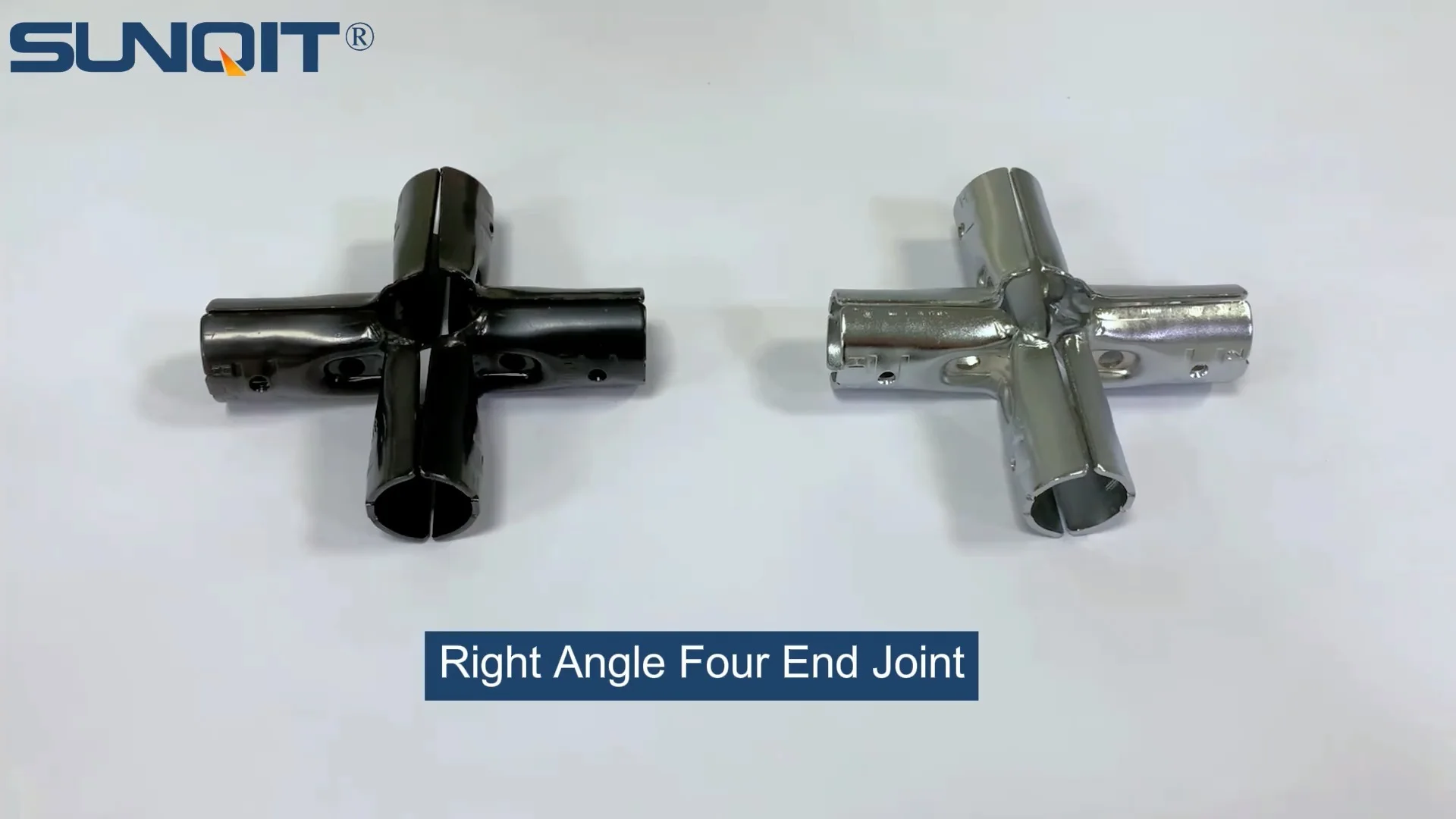
Five way straight lean pipe joint, for 5 pcs 28mm lean pipe connect in straight angle,which used widely in workbench, flow rack, hand trolley frame connection.
The Unsung Hero of Warehouse Efficiency: Why Trolley Stability Matters
Walk into any busy warehouse, manufacturing plant, or distribution center, and you'll notice a silent army hard at work: industrial trolleys. These unassuming tools glide through aisles, carry heavy loads, and keep operations moving—until they don't. A wobbly trolley, one that sways with every push or threatens to tip when turning, isn't just an annoyance. It's a productivity killer, a safety hazard, and a hidden cost that adds up over time. Dropped parts, worker strain, and delayed shipments are just the tip of the iceberg. So, what makes the difference between a trolley that's a reliable workhorse and one that's a liability? Often, it comes down to the smallest components—like the joints that hold its frame together. Today, we're shining a light on one such component: the five way straight lean pipe joint. This unassuming piece of hardware plays a massive role in keeping trolleys stable, and in turn, keeping your operations running smoothly.
The Problem with Unstable Trolleys: More Than Just a Wobble
To understand why stability matters, let's start with the consequences of getting it wrong. Imagine a warehouse associate pushing a trolley stacked with delicate electronics. As they round a corner, the trolley lurches to one side, causing a box to slide off and crash to the floor. The product is damaged, the associate has to stop and clean up, and the shipment is delayed. Multiply that scenario by a dozen times a day across your facility, and the costs—both financial and operational—skyrocket. But the issues go deeper than broken products. Unstable trolleys force workers to exert extra effort to keep them balanced, leading to fatigue and a higher risk of musculoskeletal injuries. Over time, this can increase absenteeism and turnover, hitting your bottom line even harder.
So, why do trolleys become unstable in the first place? Often, it's a failure in the frame's structural integrity. Trolleys are typically built using lean pipe—lightweight, versatile tubes that can be configured into custom shapes. But lean pipe alone isn't enough. The joints that connect these pipes are the critical link. If a joint is weak, poorly designed, or unable to handle the stresses of daily use, the frame will flex, twist, or loosen over time. Traditional joints, like two-way or three-way connectors, might work for simple structures, but when you're dealing with heavy loads, frequent movement, and varying terrain (think uneven warehouse floors), they often fall short. They can't distribute weight evenly, leading to stress points that weaken the frame. That's where the five way straight lean pipe joint comes in.

Meet the Five Way Straight Lean Pipe Joint: A Stability Powerhouse
At first glance, the five way straight lean pipe joint might look like just another piece of hardware. But take a closer look, and you'll see why it's a game-changer for trolley stability. Unlike simpler joints that connect two or three pipes, this joint is designed to link up to five lean pipes at once, all in a straight line. Picture a central hub with five connection points, each engineered to grip the pipe tightly and distribute force evenly. This design isn't just about adding more pipes—it's about creating a frame that's rigid, balanced, and built to withstand the demands of industrial use.
Let's break down the key features that make this joint so effective. First, it's all about load distribution. When you connect multiple pipes to a single joint, the weight of the trolley and its cargo is spread across more points, reducing stress on any one pipe or connection. For example, a trolley's base frame, which supports the entire load, often uses a grid-like structure. With a five way joint, you can connect horizontal and vertical pipes at the same hub, creating a crisscross pattern that acts like a reinforcement grid. This grid prevents the frame from warping under heavy loads, keeping the trolley flat and stable even when carrying unevenly distributed items.
Second, the joint's construction matters. Most high-quality five way straight lean pipe joints are made from durable materials like aluminum or stainless steel, chosen for their strength-to-weight ratio. Aluminum, in particular, is a popular choice because it's lightweight (easing trolley movement) and resistant to corrosion—essential for warehouses with humid conditions or frequent cleaning. The joints are also precision-machined, with tight tolerances that ensure a snug fit with lean pipes. Many feature internal locking mechanisms, like set screws or friction clamps, that grip the pipe securely and prevent loosening over time. This is a far cry from cheaper plastic joints that can crack or slip after repeated use.

How the Five Way Joint Outperforms Traditional Connectors: A Side-by-Side Comparison
To truly appreciate the five way straight lean pipe joint, it helps to see how it stacks up against other common joint types. Let's compare it to two-way, three-way, and even four-way connectors in key areas that impact trolley stability:
| Joint Type | Max Pipes Connected | Load Distribution | Resistance to Twisting | Common Use Cases |
|---|---|---|---|---|
| Two-Way Joint | 2 | Poor (weight on single axis) | Low (prone to flexing) | Simple structures, light loads (e.g., small shelving) |
| Three-Way Joint | 3 | Fair (basic triangular support) | Moderate (better than two-way but limited) | Small trolleys, workbenches with light tools |
| Four-Way Joint | 4 | Good (square/rectangular frames) | Good (resists twisting in two axes) | Medium-duty trolleys, material racks |
| Five Way Straight Lean Pipe Joint | 5 | Excellent (weight spread across 5 points) | High (grid-like reinforcement resists warping) | Heavy-duty trolleys, industrial workbenches, high-load material transport |
As the table shows, the five way joint excels in load distribution and resistance to twisting—two critical factors for trolley stability. Take resistance to twisting, for example. When a trolley turns sharply, the frame experiences torsional stress (twisting force). A two-way or three-way joint might allow the frame to twist slightly, causing the trolley to lean. With a five way joint, the multiple connections create a stiffer frame that resists this twisting, keeping the trolley upright and steady. This is especially important for trolleys with caster wheels, which can swivel and put extra strain on the frame during turns. A stable frame ensures the casters remain aligned, preventing the trolley from veering off course or wobbling.

Beyond Trolleys: How the Five Way Joint Elevates the Entire Lean System
While we've focused on industrial trolleys, the five way straight lean pipe joint's benefits extend far beyond them. It's a cornerstone of the broader lean system—a philosophy centered on maximizing efficiency, reducing waste, and improving workflow. In a lean system, every component should serve a purpose, and the five way joint does just that by making structures more adaptable, durable, and cost-effective.
Consider workbenches, another staple of manufacturing and warehouse operations. A sturdy workbench is essential for assembly tasks, but if it wobbles or sags, it can slow down workers and even compromise product quality. By using five way joints in the workbench frame, you can create a stable surface that supports heavy tools and materials without shaking. Some workbench designs, like the "Workbench E (single deck-without caster)" mentioned in supplier catalogs, rely on these joints to connect the tabletop to the supporting legs and lower shelves, ensuring the entire structure remains rigid during use.
Material racks are another area where the five way joint shines. Racks used to store parts or finished goods need to handle stacked boxes and frequent loading/unloading. A rack built with five way joints can support more shelves and heavier items, thanks to its reinforced frame. For example, a "Material Rack B (3 row and 3 floor)" might use these joints at the corners, connecting vertical support pipes to horizontal shelf rails. This creates a robust structure that won't bow under the weight of multiple rows of products, reducing the risk of shelf collapse and improving safety.
Even conveyor systems, which rely on smooth, consistent movement, benefit from the stability of five way joints. Conveyor frames need to stay aligned to prevent jams, and the joints that hold the roller tracks in place must maintain precision. By using five way joints to anchor the tracks to the supporting frame, you ensure minimal vibration and maximum alignment, keeping products flowing smoothly from one station to the next.
Real-World Results: How One Manufacturer Improved Stability with Five Way Joints
To put this into perspective, let's look at a real-world example. A mid-sized automotive parts manufacturer was struggling with frequent trolley-related issues in their assembly plant. Their existing trolleys, built with three-way joints, were prone to wobbling, especially when carrying heavy engine components. Workers reported fatigue from having to steady the trolleys, and the plant recorded an average of 5 product damage incidents per week due to tipping. The maintenance team was also spending hours each month tightening loose joints and replacing broken connectors, eating into production time.
The manufacturer decided to partner with a lean pipe supplier specializing in industrial solutions. After assessing their needs, the supplier recommended upgrading to trolleys built with five way straight lean pipe joints. The new trolleys featured reinforced base frames with a grid of lean pipes connected via five way joints, paired with heavy-duty caster wheels designed for stability. Within the first month of implementation, the results were striking: product damage incidents dropped by 70%, worker complaints about fatigue decreased, and maintenance time for trolley repairs fell by nearly 50%. The plant manager noted, "We didn't realize how much time we were wasting on unstable trolleys until we switched. The new joints make the trolleys feel solid—like they're gliding on rails instead of fighting against us."
This example highlights a key point: the five way straight lean pipe joint isn't just a "nice-to-have" upgrade. It's an investment that pays off in reduced costs, improved safety, and happier, more productive workers. When your equipment works with you instead of against you, every aspect of your operation runs smoother.
Choosing the Right Joint: What to Look for in a Lean Pipe Supplier
If you're considering upgrading your trolleys or other lean system structures, choosing the right five way straight lean pipe joint is crucial. Not all joints are created equal, and cutting corners on quality can lead to the same stability issues you're trying to solve. Here are a few key factors to look for when selecting a joint (and a lean pipe supplier):
Material Quality: Opt for joints made from high-grade aluminum or stainless steel. Aluminum is lightweight and corrosion-resistant, making it ideal for most indoor applications. Stainless steel is better for harsh environments, like food processing plants or outdoor warehouses, where rust resistance is critical.
Fit and Finish: The joint should fit snugly with your lean pipes. Look for precision machining—rough edges or loose tolerances are red flags. A good joint will grip the pipe without requiring excessive force, and the connection should feel solid when wiggled.
Locking Mechanism: Check how the joint secures to the pipe. Set screws with hex keys are common, but some joints use cam levers or friction clamps for tool-free assembly. Choose a mechanism that's easy to tighten but won't loosen with vibration.
Load Rating: Ask the supplier for load capacity data. The joint should be rated to handle more than the maximum weight your trolley will carry. For example, if your trolleys typically carry 500 lbs, look for a joint rated for 750 lbs or more to account for occasional overloading.
Supplier Support: A reputable lean pipe supplier will offer technical support, helping you design your trolley or rack system for maximum stability. They should also provide warranty information—look for at least a 1-year warranty on joints to ensure quality.
Maintaining Stability: Tips for Keeping Your Joints in Top Shape
Even the best five way straight lean pipe joints need regular maintenance to stay effective. Here are a few simple tips to ensure your joints (and trolleys) remain stable for years:
Inspect Regularly: Once a month, check all joints for looseness. Tighten any set screws or locking mechanisms that have come undone. Look for signs of wear, like cracks in the joint or stripped threads, and replace damaged parts immediately.
Clean and Lubricate: Dirt and debris can work their way into joint connections, causing friction and loosening. Wipe joints down with a damp cloth regularly, and apply a small amount of lubricant (like silicone spray) to moving parts, such as swivel mechanisms in caster wheels.
Avoid Overloading: Even with a strong joint, exceeding the trolley's weight capacity can strain the frame and joints. Train workers to check load limits and distribute weight evenly to prevent stress points.
replace Worn Casters: Caster wheels play a big role in stability too. If casters are worn or misaligned, they can cause the trolley to wobble, putting extra stress on joints. replace casters with flat spots or loose bearings promptly.
The Bottom Line: Stability Starts with the Right Joint
Industrial trolleys are the backbone of efficient warehouse and manufacturing operations, but their performance hinges on one tiny component: the joint. The five way straight lean pipe joint isn't just a connector—it's a stability solution that reduces costs, improves safety, and enhances productivity. By distributing weight evenly, resisting twisting, and standing up to daily wear and tear, this joint transforms wobbly, unreliable trolleys into steady workhorses that keep your operations moving forward.
Whether you're building new trolleys, upgrading existing ones, or designing a lean system from scratch, don't overlook the importance of quality joints. Partner with a trusted lean pipe supplier who understands your needs and offers durable, well-designed components. Your workers will thank you, your bottom line will benefit, and you'll wonder how you ever managed with anything less.
In the end, it's the small details that make the biggest difference. And when it comes to industrial trolley stability, the five way straight lean pipe joint is one detail that delivers big results.