- Company Articles
- Products and Technology
- Product knowledge
- Industrial Turnover Carts: Flat Swivel Castor Wheel with Brake for Safe Material Transport

Industrial Turnover Carts: Flat Swivel Castor Wheel with Brake for Safe Material Transport
Related Product
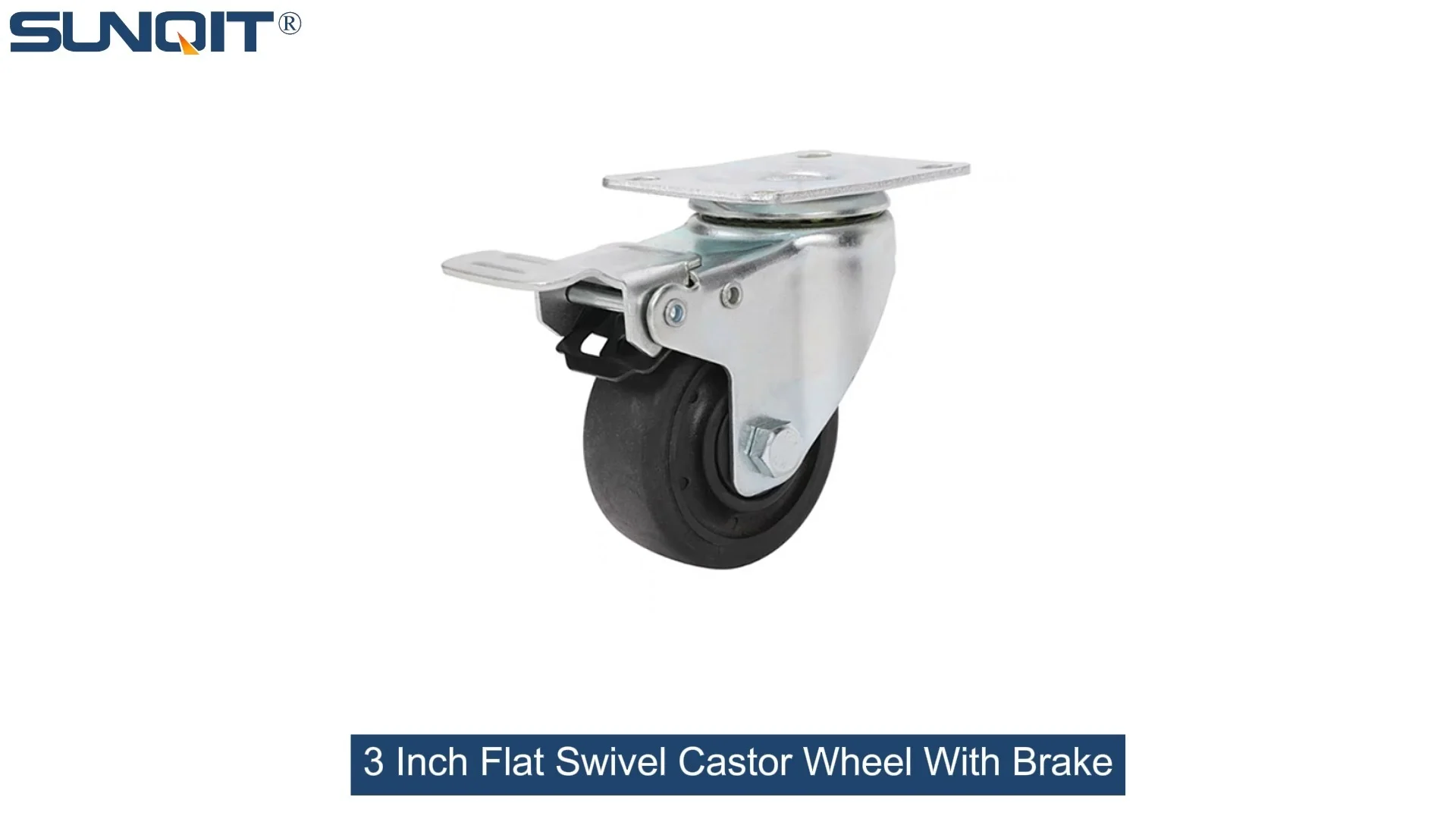
Flat Swivel Castor Wheel With Brake
Chair Casters Ball Bearing Wheels Rubber Base with brake design. Resistant to abrasion, impact and corrosion. Heavy payload can hold 70Kgs per pcs,which can make it works at a stable and smooth status.
The Backbone of Efficient Material Transport
Walk into any busy factory, warehouse, or distribution center, and you'll notice a silent army hard at work: industrial turnover carts. These unassuming trolleys glide through aisles, carry heavy loads, and keep operations moving like clockwork. But behind their seamless movement lies a critical truth: their efficiency and safety hinge on one often-overlooked component. No, it's not the sturdy frame or the durable shelves—though those matter. It's the castor wheels. And among castors, one type stands out for turning chaos into control: the flat swivel castor wheel with brake .
Think about the daily grind in a manufacturing plant. A worker needs to move a cart stacked with delicate electronic components from the assembly line to the testing area. The path is narrow, with sharp turns around machinery. If the cart's wheels stick or won't swivel, they might strain their back. If the cart rolls unexpectedly when stopped, those components could crash to the floor. That's where the right castor makes all the difference. It's not just about mobility—it's about empowering workers to do their jobs safely, confidently, and efficiently.
In this article, we'll dive into why industrial turnover carts matter, how castor wheels shape their performance, and why the flat swivel castor wheel with brake has become a game-changer for businesses prioritizing safety and lean operations. Whether you're a warehouse manager, a procurement specialist, or just curious about the tools that keep our supply chains running, let's unpack the story of these unsung heroes.
Understanding Industrial Turnover Carts: More Than Just a Trolley
First things first: what exactly are we talking about when we say turnover trolley and rack systems? At their core, these are versatile, wheeled platforms designed to transport, store, and organize materials. Unlike fixed shelving or static racks, turnover carts are mobile, making them ideal for moving goods between workstations, storage areas, or loading docks. They come in all shapes and sizes—some with open shelves, others with enclosed bins, and many with adjustable racks to fit everything from small parts to bulky equipment.
Take a typical automotive plant, for example. On the assembly line, turnover carts might carry bolts, gaskets, and wiring harnesses, positioned right where workers need them. In a retail warehouse, they're used to restock store shelves, loaded with clothing, electronics, or household goods. Even in hospitals, you'll find specialized turnover carts transporting medical supplies or linens, designed to be easy to clean and maneuver in tight corridors.
But here's the thing: not all turnover carts are created equal. A cart built for moving pallets of heavy machinery needs a different design than one carrying fragile glassware. The frame material (aluminum, steel, or plastic), the number of shelves, and the weight capacity all vary. Yet, across every design, there's a universal requirement: the wheels must keep up. A cart is only as good as its ability to move smoothly, stop securely, and handle the load without wobbling. That's where castor wheels enter the picture—and why choosing the right ones is non-negotiable.
The Heart of Mobility: Why Castor Wheels Matter
Castor wheels are the unsung heroes of material handling. They're the reason a 500-pound cart feels light enough to push with one hand, the reason you can pivot in a tight space without tipping, and the reason you can trust the cart to stay put when you step away. But not all castors are up to the task. Cheap, poorly designed wheels can turn a simple job into a nightmare: they might lock up on uneven floors, wear out quickly under heavy loads, or fail to brake properly, putting workers and products at risk.
Let's break down the basics. Castors come in two main types: fixed and swivel. Fixed castors only move forward and backward, great for straight paths but useless for tight turns. Swivel castors, on the other hand, rotate 360 degrees, making them ideal for maneuverability. But even swivel castors have their flaws. Some have a high profile, which can make the cart unstable. Others lack a reliable braking mechanism, so even if you stop, a slight incline could send the cart rolling.
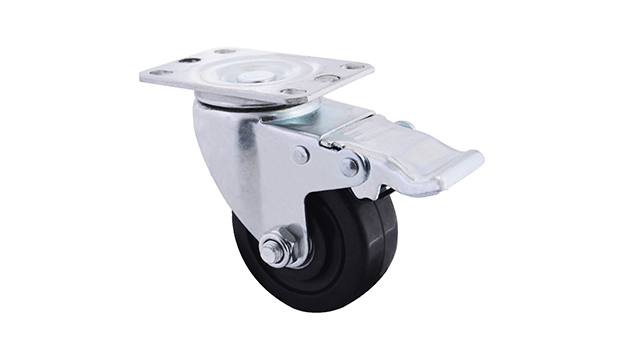
Enter the flat swivel castor wheel with brake . This design addresses the biggest pain points of traditional castors. The "flat" part refers to its low-profile construction, which lowers the cart's center of gravity, reducing the risk of tipping. The "swivel" allows for smooth, 360-degree movement, so navigating around corners or through narrow aisles feels effortless. And the "brake"? That's the safety net. A good brake doesn't just slow the cart down—it locks both the wheel and the swivel mechanism, ensuring the cart stays exactly where you park it, even on sloped floors or vibrating surfaces.

Flat Swivel Castor Wheel with Brake: Design and Features That Set It Apart
What makes the flat swivel castor wheel with brake so special? Let's start with its design. Unlike bulky castors that sit high off the ground, the "flat" design keeps the cart close to the floor. This lowers the center of gravity, which is a game-changer for stability. Imagine pushing a tall cart stacked with boxes: a high-profile castor might make it wobble, but a flat one keeps it steady, even when moving quickly.
Then there's the swivel mechanism. Quality flat swivel castors use precision bearings that let the wheel rotate smoothly with minimal effort. No more struggling to turn—even with a full load, the cart responds to a light push, saving workers from strain and fatigue. And when it's time to stop? The brake takes center stage. Most flat swivel castors with brakes use a foot-operated lever that's easy to engage, even when the cart is loaded. Step on the lever, and two things happen: the wheel locks to prevent rolling, and the swivel mechanism locks to keep the cart from turning unexpectedly. It's like having a parking brake and a steering lock in one simple motion.
Durability is another key feature. These castors are built to handle tough environments. The wheels themselves are often made from high-quality rubber, polyurethane, or nylon—materials that resist wear, absorb shocks, and protect floors from scratches. The housing (the part that holds the wheel) is typically steel or aluminum, designed to withstand heavy loads without bending or breaking. And let's not forget caster accessories like dust covers, which keep debris out of the bearings, and replacement brake pads, which ensure the brake stays reliable over time.
| Feature | Standard Swivel Castor (No Brake) | Flat Swivel Castor Wheel with Brake |
|---|---|---|
| Maneuverability | Good (360° rotation but may feel "tippy" with tall loads) | Excellent (low profile + smooth swivel = stable, easy turns) |
| Safety | Limited (can roll away if not blocked; no swivel lock) | Superior (wheel + swivel lock prevents rolling/turning when braked) |
| Load Capacity | Moderate (up to 300 lbs per castor) | High (often 500+ lbs per castor, thanks to sturdy housing) |
| Floor Protection | Basic (may scratch floors with hard wheels) | Advanced (soft, non-marking wheels ideal for concrete, tile, or hardwood) |
| Best For | Light loads, open spaces, non-critical environments | Heavy loads, tight spaces, safety-critical areas (e.g., electronics, healthcare) |
As the table shows, the flat swivel castor with brake isn't just an upgrade—it's a necessity for anyone serious about safety and efficiency. It turns a basic cart into a tool that workers can trust, even in the busiest, most demanding environments.

Safety First: How the Brake Feature Prevents Accidents
Safety isn't just a buzzword in industrial settings—it's a daily reality. A single accident can cost time, money, and even lives. That's why the brake on a flat swivel castor wheel isn't an extra feature; it's a lifesaver. Let's paint a picture: in a food processing plant, a worker leaves a cart of ingredients unattended on a slight incline. With a standard castor (no brake), the cart starts rolling, crashes into a mixing machine, and spills its contents. Now there's a mess to clean, a delay in production, and a risk of someone slipping on the spilled liquid. With a flat swivel castor with brake? The worker steps on the brake before walking away, and the cart stays put. Crisis averted.
In warehouses with forklift traffic, the stakes are even higher. A cart that rolls into an aisle could collide with a forklift, leading to injuries or damaged goods. The brake feature eliminates that risk by keeping the cart stationary until it's time to move. And for workers loading or unloading the cart, a secure, non-moving platform reduces the chance of strains. No more holding the cart with one hand while lifting with the other—just step on the brake, and focus on the task at hand.
Regulatory compliance is another factor. OSHA and other safety bodies have strict guidelines for material handling equipment, including requirements for secure braking on mobile carts. Using a flat swivel castor wheel with brake isn't just smart—it helps businesses meet these standards and avoid fines. But beyond regulations, it's about creating a workplace where employees feel valued. When workers know their tools are designed with their safety in mind, morale improves, and productivity follows.
Integrating with Lean Systems: Boosting Efficiency Beyond Mobility
Efficiency isn't just about moving fast—it's about moving smart. That's the philosophy behind lean system principles, which focus on reducing waste, improving workflow, and maximizing value. Industrial turnover carts with flat swivel castor wheels with brake fit perfectly into this mindset. Here's how:
First, they reduce downtime. A cart that maneuvers easily and stops securely means fewer delays. Workers spend less time struggling with unruly carts and more time on value-adding tasks. Second, they minimize waste. By keeping loads stable, these castors reduce the risk of damaged goods—no more broken parts or spilled materials. Third, they support flexible workflows. In lean manufacturing, production lines often need to adapt quickly to changing demands. A cart that can glide between workstations, lock into place, and then move again in seconds makes reconfiguring the workspace a breeze.
Choosing the right lean system supplier is key here. A reputable supplier doesn't just sell carts and castors—they understand your workflow and help you design solutions that fit. They'll ask questions: What's your typical load size? Do you need carts that can be sanitized (for food or medical use)? Are your floors smooth or uneven? With that information, they'll recommend the right flat swivel castor wheel with brake, ensuring it integrates seamlessly with your existing turnover trolley and rack systems. It's not just about selling a product; it's about building a partnership that makes your operations leaner, safer, and more efficient.
Maintenance Tips: Keeping Your Castors Rolling Strong
Even the best castors need a little care to stay in top shape. Here are some simple maintenance tips to ensure your flat swivel castor wheels with brake keep performing:
- Clean regularly: Wipe down the wheels and swivel mechanism to remove dirt, debris, and oil. A soft brush or cloth works well—avoid high-pressure water, which can push contaminants into the bearings.
- Lubricate the bearings: Every few months (or more often in dusty environments), apply a few drops of lubricating oil to the swivel bearings and wheel axles. This keeps the movement smooth and prevents rust.
- Check the brake: Test the brake regularly to make sure it engages fully. If it feels loose or doesn't lock the wheel, replace the brake pads or adjust the lever—don't wait for it to fail.
- Inspect for wear: Look for cracks in the wheel, bent housing, or worn tread. If the wheel is unevenly worn, it might be time for a replacement. Caster accessories like replacement wheels are easy to install and far cheaper than replacing the entire cart.
By following these steps, you'll extend the life of your castors, reduce repair costs, and keep your turnover carts safe and efficient for years to come.
Conclusion: The Right Castor Makes All the Difference
Industrial turnover carts are the workhorses of modern operations, but their true potential lies in the details. The flat swivel castor wheel with brake isn't just a component—it's a catalyst for safety, efficiency, and peace of mind. It turns a basic trolley into a tool that empowers workers, protects products, and keeps lean systems running smoothly.
Whether you're managing a warehouse, running a manufacturing plant, or overseeing a distribution center, choosing the right castors matters. Look for durability, smooth maneuverability, and a reliable brake. Partner with a lean system supplier who understands your needs and offers quality caster accessories to keep your equipment in top shape. And remember: every time a worker steps on that brake lever and feels the cart lock securely into place, they're not just moving materials—they're moving with confidence.
In the end, industrial turnover carts are more than just metal and wheels. They're about people—making their jobs easier, safer, and more productive. And when it comes to people, the right castor wheel is one investment that always pays off.