- Company Articles
- Products and Technology
- Product knowledge
- Industry-Specific Material Recommendations for T-Groove Aluminum Pipe

Industry-Specific Material Recommendations for T-Groove Aluminum Pipe
Related Product
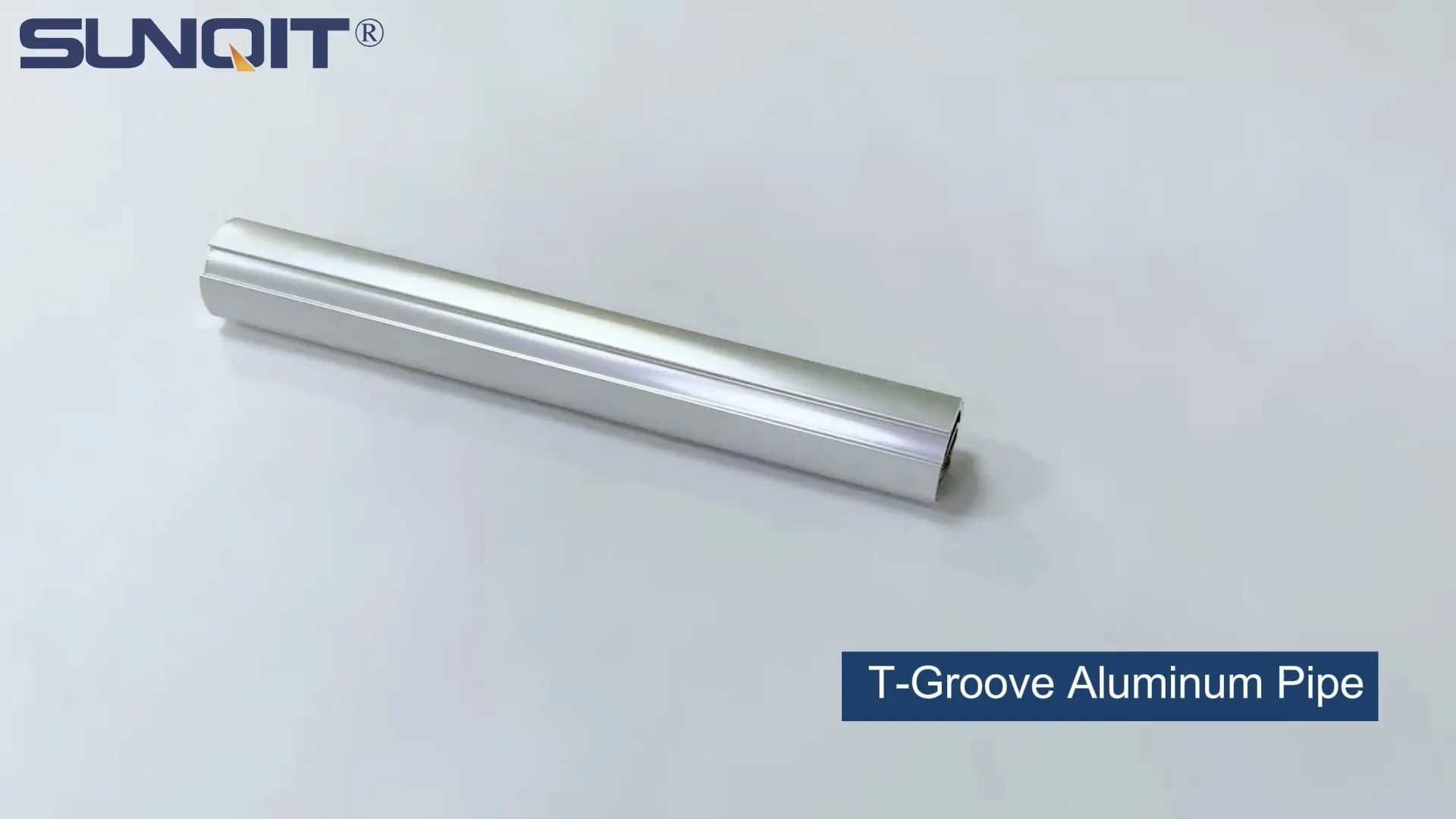
T-Groove Aluminum Pipe
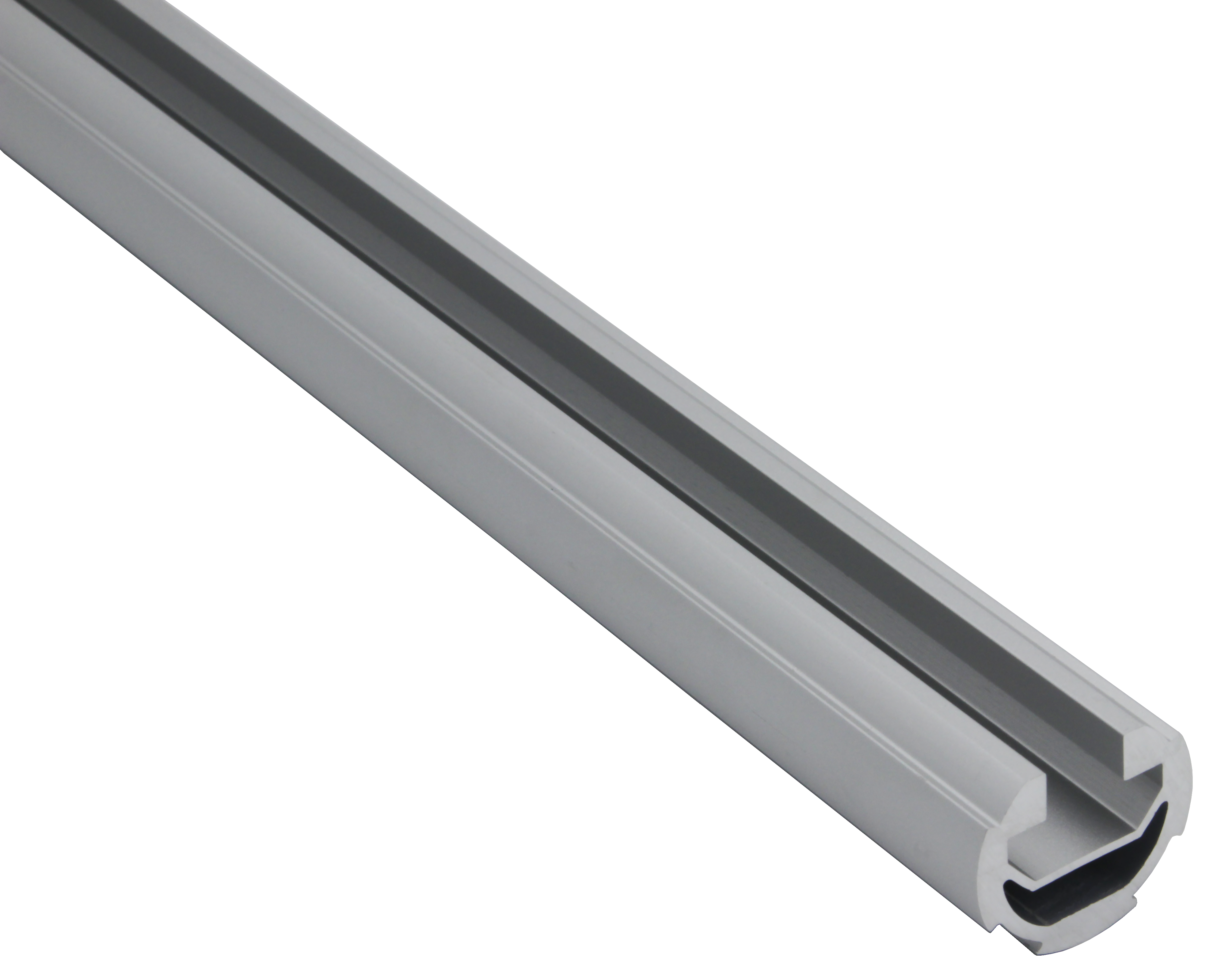
The aluminum pipe opening 10mm is installed into the T-shaped slider, which can be installed with casters or other matching functional parts. The groove can be used for positioning and is used for the track of the roller.
In the world of industrial design and manufacturing, the right materials don't just support operations—they transform them. From the assembly lines of automotive plants to the cleanrooms of electronics facilities, every industry has unique needs: durability, flexibility, hygiene, or precision. Among the materials rising to meet these demands, T-groove aluminum pipe stands out as a quiet workhorse. Its modular design, lightweight strength, and adaptability make it a go-to choice for businesses looking to optimize workflows, reduce costs, and future-proof their setups. But how do you know if it's the right fit for your industry? Let's dive into the specifics, exploring why T-groove aluminum pipe works, and how to tailor it to your sector's unique challenges.
What Is T-Groove Aluminum Pipe, Anyway?
At its core, T-groove aluminum pipe is exactly what it sounds like: an aluminum extrusion profile shaped with a T-shaped groove running along its length. This groove isn't just a design quirk—it's the secret to its versatility. Created through a process called aluminum extrusion (where heated aluminum is forced through a die to form specific cross-sections), these pipes are lightweight yet surprisingly strong, thanks to aluminum's natural strength-to-weight ratio. The T-groove allows for easy attachment of accessories—think brackets, connectors, shelves, or even wheels—without the need for welding or drilling. It's like building with industrial-grade Legos, but for grown-ups solving real-world efficiency problems.
Unlike traditional steel pipes, which are heavy and rigid, or plastic alternatives that lack durability, T-groove aluminum strikes a balance. It resists corrosion, won't rust in humid environments, and can be easily cut, adjusted, or reconfigured as your needs change. And because it's made from aluminum—a highly recyclable material—it aligns with the sustainability goals many modern businesses prioritize. But to truly appreciate its value, we need to compare it to other common materials across key metrics.
| Material | Weight | Strength | Customization | Corrosion Resistance | Cost (Long-Term) |
|---|---|---|---|---|---|
| T-Groove Aluminum | Light (1/3 the weight of steel) | High (supports heavy loads without bending) | Excellent (T-groove allows tool-free accessory attachment) | High (natural oxide layer prevents rust) | Moderate upfront, low long-term (reusable, low maintenance) |
| Steel Pipe | Heavy (limits mobility, increases installation labor) | Very High (but overkill for many applications) | Poor (requires welding/drilling for modifications) | Low (prone to rust without coatings) | Low upfront, high long-term (maintenance, replacement costs) |
| Plastic Pipe | Lightest | Low (bends under heavy loads, degrades in UV light) | Limited (fewer accessory options, weak joints) | High (resists chemicals, but not impact) | Low upfront, very high long-term (frequent replacement) |
Industry-Specific Recommendations: Where T-Groove Aluminum Shines
Now that we understand the basics, let's get granular. Every industry has unique pain points—whether it's the need for sterile workspaces in healthcare, the demand for quick reconfiguration in manufacturing, or the requirement for ESD (electrostatic discharge) protection in electronics. Here's how T-groove aluminum pipe addresses these needs, with real-world applications.
1. Manufacturing: Adapting to Changing Production Lines
Manufacturing facilities are dynamic environments. A plant might produce one product line this month and switch to a completely different model next quarter. Rigid steel workbenches or fixed material racks become liabilities in this scenario—they take days to dismantle and rebuild, costing time and labor. T-groove aluminum, however, thrives here.
Take the humble workbench, for example. A T-groove aluminum workbench can be customized with tool holders, bins, or even integrated lighting—all attached via the T-groove. When production needs shift, workers can swap out accessories or adjust the height in minutes, not hours. One automotive parts manufacturer in Michigan reported cutting workstation reconfiguration time by 70% after switching from steel to T-groove aluminum workbenches. "We used to have to call in a welder just to move a shelf," said their plant manager. "Now, a single operator can retool a station during a lunch break."
Material racks are another area where T-groove aluminum excels. In manufacturing, raw materials and (work-in-progress) need to be stored close to the line to minimize downtime. A T-groove aluminum material rack—say, a 3-row, 3-floor design—can be built to fit tight spaces, with adjustable shelving to accommodate different part sizes. Unlike steel racks, which are fixed in place, these can be moved with casters (another T-groove accessory) to follow the flow of production. And because aluminum is lightweight, even fully loaded racks can be repositioned without heavy machinery.
Durability is non-negotiable in manufacturing, where pipes might bump against forklifts or support heavy tooling. T-groove aluminum holds up: its extrusion process creates a uniform structure that resists dents, and its corrosion resistance means it won't degrade even in factories with coolant mist or lubricant spills. For high-wear areas, manufacturers can add aluminum profile accessories like protective edge guards or reinforced joints to extend lifespan further.
2. Electronics: Clean, Static-Safe, and Precise
Electronics manufacturing is a world of extremes: components are tiny, sensitive to static, and require pristine environments. Steel pipes risk scratching delicate PCBs; plastic might generate static electricity. T-groove aluminum? It checks all the boxes.
First, static control. Many electronics components (like microchips or circuit boards) are vulnerable to electrostatic discharge (ESD), which can fry them instantly. T-groove aluminum can be treated with ESD-safe coatings, turning it into a grounding surface that dissipates static. When paired with ESD-compliant aluminum profile accessories—like conductive casters or anti-static workbench mats—it creates a fully ESD-protected workspace. One semiconductor plant in California replaced all their plastic workbenches with T-groove aluminum versions and saw a 40% drop in component failures due to static damage.
Cleanliness is another priority. Electronics assembly often happens in cleanrooms, where dust and debris are enemy number one. Aluminum's smooth surface is easy to wipe down with disinfectants or alcohol, and it doesn't shed particles like wood or painted steel. Unlike porous materials that trap bacteria, T-groove aluminum resists microbial growth, making it ideal for environments where sterility matters—think medical device manufacturing or pharmaceutical electronics.
Precision is also key. Electronics production lines require exact spacing between tools, conveyors, and testing stations. T-groove aluminum's modular design allows for micron-level adjustments. For example, a conveyor system built with T-groove aluminum can have its roller tracks (fine-tuned) to ensure PCBs move smoothly without jamming. Aluminum guide rails, available in different profiles (like Aluminum Guide Rail A or B), can be attached to the T-groove to align components perfectly as they move down the line. And because aluminum doesn't warp over time (unlike plastic, which can degrade in heat), these setups maintain their precision for years.
3. Healthcare: Hygiene and Mobility in Critical Spaces
Hospitals, labs, and medical device facilities have unique demands: surfaces must be easy to sanitize, equipment must be mobile, and nothing can compromise patient safety. T-groove aluminum pipe meets these needs in ways few materials can.
Hygiene is paramount. Healthcare environments are breeding grounds for germs, so surfaces must withstand frequent cleaning with harsh chemicals like bleach or hydrogen peroxide. Aluminum's non-porous surface doesn't absorb liquids, and its corrosion resistance means disinfectants won't damage it over time. Unlike steel, which can chip or rust if the paint wears off, aluminum maintains its integrity even after years of daily wipe-downs. This makes T-groove aluminum ideal for medical workbenches, instrument carts, or even mobile medication stations that need to be sanitized between patients.
Mobility is another advantage. In hospitals, equipment often needs to move from room to room—think IV carts, surgical tool organizers, or lab sample transport trolleys. Steel carts are heavy and hard to maneuver; plastic carts lack the strength to support heavy medical equipment. T-groove aluminum carts, on the other hand, are lightweight enough for nurses to push with one hand but strong enough to hold EKG machines or oxygen tanks. Casters attached via the T-groove (like swivel caster wheels with brakes) ensure smooth movement, even over uneven hospital floors, while locking brakes keep carts stable during use.
Customization is critical in healthcare, where no two departments have the same needs. A pharmacy might need a T-groove aluminum shelf unit with adjustable dividers for medication bottles; a lab could use a workbench with built-in racks for test tubes. With aluminum profile accessories like internal rotary joints or adjustable brackets, these setups can be tailored to fit specific tools or workflows. And because T-groove aluminum is non-magnetic and non-conductive, it's safe to use near sensitive medical equipment like MRI machines.
4. Logistics & Warehousing: Streamlining the Flow of Goods
In warehouses and distribution centers, the name of the game is speed. Products need to move from receiving to shipping with minimal delays, and storage systems must maximize space efficiency. T-groove aluminum pipe plays a starring role here, particularly in material handling and storage.
Roller tracks are a perfect example. Used to move boxes, totes, or pallets along assembly lines or between warehouse zones, roller tracks built with T-groove aluminum are both durable and flexible. The T-groove allows for easy attachment of roller track placon mounts (brackets that hold the track in place) and connectors, so tracks can be curved, extended, or split to fit the warehouse layout. Unlike fixed steel roller tracks, which require welding and are hard to modify, T-groove versions can be adjusted as inventory needs change—say, adding a new branch to a track when a product line expands.
Turnover trolleys and racks are another logistics staple. These trolleys transport goods between picking stations and shipping, and they need to be lightweight enough for workers to push but sturdy enough to handle heavy loads. T-groove aluminum trolleys check both boxes. Their frames can be built with basic aluminum tubes and reinforced with parallel aluminum joints for extra strength, while swivel roller balls (1-inch or 0.5-inch, depending on load size) on the shelves allow easy sliding of boxes. One e-commerce warehouse in Texas replaced their plastic turnover trolleys with T-groove aluminum versions and reduced trolley damage by 60%—saving thousands in replacement costs annually.
Space is always at a premium in warehouses, and T-groove aluminum helps maximize it. Mobile shelving units, built with T-groove pipe and casters, can be compacted when not in use, freeing up floor space for other operations. Vertical storage racks, using aluminum extrusion profiles, can reach higher than traditional steel racks (since aluminum is lighter, ceiling supports can handle more weight), allowing for more storage in the same square footage. And because T-groove aluminum is easy to assemble, warehouses can quickly add or remove racks during peak seasons (like holiday shopping) without hiring outside contractors.
The Right Accessories: Making T-Groove Aluminum Work for You
A T-groove aluminum pipe is only as good as the accessories that bring it to life. Aluminum profile accessories are the unsung heroes here, turning basic pipes into fully functional systems. Let's break down the must-haves for different industries:
- Joints & Connectors: These are the "glue" of T-groove setups. 90-degree aluminum crossing joints connect pipes at right angles (perfect for workbench frames), while internal rotary aluminum joints allow for swiveling components (like adjustable shelves). Parallel aluminum joints keep pipes aligned horizontally, ideal for reinforcing trolley frames.
- Casters & Wheels: Essential for mobility. Swivel caster wheels with brakes are a logistics favorite, while heavy-duty casters with larger wheels work for manufacturing equipment that needs to move over rough floors.
- Roller Track Components: Roller track placon mounts (flat, high, or center support brackets) hold roller tracks in place, while end supports with stops prevent items from sliding off the track. Swivel roller balls (nylon or stainless steel) reduce friction for easy item movement.
- Workbench Add-Ons: Tool holders, bin rails, and monitor mounts attach to the T-groove, turning a basic workbench into a fully equipped workstation. ESD-safe mats and grounding clips are musts for electronics.
The beauty of these accessories is that they're standardized, meaning you can mix and match from different suppliers to create exactly what you need. A manufacturer might pair a 4080 aluminum extrusion profile with 90-degree joints and heavy-duty casters for a workbench, while a warehouse could use 2020 profiles with roller tracks and swivel balls for a lightweight trolley. It's all about flexibility.

Implementing T-Groove Aluminum: Tips for Success
Ready to make the switch? Here are a few practical tips to ensure your T-groove aluminum project goes smoothly:
Start with a needs assessment. Before ordering pipes and accessories, map out your workflow. What problems are you trying to solve? A cluttered workbench? A slow material transport system? A storage shortage? This will help you choose the right profiles (thicker pipes for heavy loads, thinner ones for light use) and accessories.
Work with a reputable supplier. Not all T-groove aluminum is created equal. Look for suppliers who specialize in aluminum extrusion profiles and can provide custom cuts or finishes (like ESD coatings). Ask for samples to test strength and compatibility with accessories.
Don't overcomplicate. T-groove aluminum is designed for simplicity. Start with a basic setup (e.g., a single workbench or trolley) and expand as you see results. You don't need to rebuild your entire facility at once.
Train your team. While T-groove aluminum is easy to assemble, your workers will need to know how to attach accessories, adjust joints, and maintain the system. A quick 30-minute demo can save hours of frustration later.

Final Thoughts: T-Groove Aluminum as a Long-Term Investment
At the end of the day, T-groove aluminum pipe isn't just a material—it's a tool for solving problems. Whether you're in manufacturing, electronics, healthcare, or logistics, its ability to adapt to your needs, reduce costs, and improve efficiency makes it a smart long-term investment. It's lightweight enough to move, strong enough to last, and flexible enough to grow with your business. And in a world where industries are constantly evolving, that flexibility might be the most valuable asset of all.
So, what are you waiting for? Take a look at your current workflow, spot the bottlenecks, and imagine (oops—scratch that) picture how T-groove aluminum could transform them. Chances are, you'll wonder how you ever worked without it.