- Company Articles
- Products and Technology
- Application Cases
- Industry-Specific Use: When to Pick Aluminum Workbench C Over Custom Steel

Industry-Specific Use: When to Pick Aluminum Workbench C Over Custom Steel
Related Product
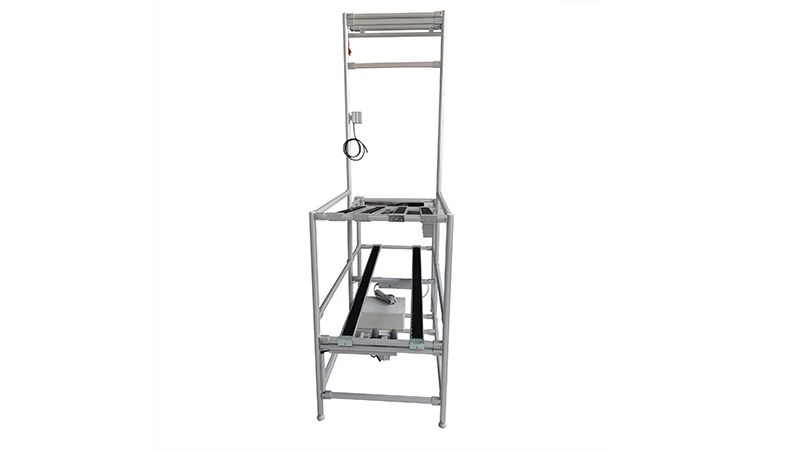
Aluminum Workbench C
aluminum-tube-workbench-is-more-flexible-and-durable,-compared-with-traditional-pe/abs-coated-steel-tube.-it-is-easy-to-assemble,-anti-corrosion,-rust-protection,-and-recycle-use-after-disassemble.
Walk into any manufacturing facility, and you'll notice something but critical: workbenches. They're the quiet backbone of production lines, where assemblers piece together circuit boards, mechanics tweak engine parts, and quality inspectors examine finished goods. But here's the thing—choosing the right workbench isn't just about "getting a surface to work on." It's about aligning your tools with your workflow, your industry's unique demands, and even your team's daily rhythms. And lately, one question has been popping up more than ever in factory manager meetings: "Should we stick with custom steel workbenches, or make the switch to something like Aluminum Workbench C?"
At first glance, steel seems like the obvious choice. It's tough, familiar, and has a reputation for "lasting forever." But custom steel workbenches often come with hidden costs—literally and figuratively. They're heavy, hard to reconfigure, and can become anchors dragging down lean manufacturing goals. Aluminum, on the other hand, is sometimes dismissed as "too light" or "not rugged enough." But Aluminum Workbench C isn't just a lighter version of steel. It's a reimagining of what a workbench can be: flexible, adaptable, and surprisingly durable in the right contexts. Let's dive into when this underdog material outshines steel—and why it might be the missing piece in your production puzzle.
First, Let's Get to Know Aluminum Workbench C
Before we compare, let's clarify what we're talking about. Aluminum Workbench C isn't some flimsy desk repurposed from a garage sale. It's a purpose-built tool designed for industrial environments, constructed from high-grade aluminum profile extrusions—those sleek, T-slot rails you've seen in modern factories that snap together with minimal effort. Unlike custom steel, which requires welding, cutting, and painting to fit specific needs, Aluminum Workbench C leans into modularity. Its frame uses aluminum profile accessories like internal rotary aluminum joints and quick-connect brackets, meaning you can add shelves, adjust height, or swap out components in minutes, not days.
And yes, it's lightweight—about 40% lighter than a steel workbench of the same size. But don't let that fool you. The aluminum profile here is engineered for strength; think aircraft-grade alloys that balance weight and rigidity. Most models come standard with features like built-in cable management, adjustable feet, and even pre-drilled holes for mounting tools or ESD (electrostatic discharge) mats. Oh, and mobility? Many versions include caster wheels that lock into place, so you can roll the workbench to where it's needed, then lock it down for stability. It's not just a workbench—it's a system designed to move with your workflow, not against it.
The Case Against Custom Steel: When "Tough" Becomes a Liability
Custom steel workbenches have their fans, and for good reason. If you need a surface that can withstand sledgehammer blows or hold 500-pound machinery, steel delivers. It's also cheap—at first. A local metal shop can weld together a steel frame in a day, and the upfront cost is often lower than aluminum. But here's where the "custom" part becomes a problem. Steel is rigid. Once it's welded, it's done . Want to add a shelf six months later? You'll need to cut into the frame, re-weld, and repaint. Need to move it to a new production line? Good luck—even with caster wheels, a steel workbench can weigh 300+ pounds, requiring two people to maneuver. And let's talk about corrosion: unless you spring for stainless steel (which hikes the cost), regular steel rusts, especially in humid or chemical-heavy environments. That means repainting every year or two, adding hidden maintenance costs.
Then there's ESD sensitivity—a big issue in electronics manufacturing. Steel conducts electricity, but without specialized coatings, it can't reliably dissipate static charges. That means adding expensive ESD mats or grounding straps as afterthoughts, which never fit as cleanly as integrated solutions. And in lean system environments, where the goal is to eliminate waste (including wasted space and time), steel's rigidity becomes a bottleneck. It can't adapt to small-batch runs, changing product sizes, or new assembly processes without significant rework. In short, custom steel is great for static workflows. But in today's fast-paced factories, where lines reconfigure weekly and agility is key, it's often more of a hindrance than a help.

Industry 1: Electronics Manufacturing—Where ESD Safety and Precision Collide
Let's start with an industry where the stakes are sky-high: electronics. Imagine you're running a PCB (printed circuit board) assembly line. Your workers handle components smaller than a grain of rice—microchips, resistors, capacitors—that can be fried by a single static discharge. In this world, an ESD workstation isn't a luxury; it's a requirement. Custom steel workbenches can technically work here, but they're a hassle. You'll need to coat the steel with anti-static paint (which wears off) or lay down thick ESD mats (which slide around unless glued down). And if you need to reposition the workbench to align with a new conveyor line? Good luck moving that 300-pound steel behemoth without risking a static spark from all that dragging.
Enter Aluminum Workbench C. Aluminum is naturally conductive, which means it can be engineered to safely dissipate static charges without extra coatings. Many models come pre-wired for ESD grounding, so you can plug them into your facility's ESD system and rest easy knowing sensitive components are protected. The aluminum profile frame also integrates seamlessly with ESD mats—no glue needed; the T-slots let you clamp mats in place securely. And mobility? With caster wheels, a single worker can reposition the workbench in seconds, aligning it perfectly with flow racks or pick stations. Plus, if your product line shifts from smartphones to wearables (smaller components, different tools), you can swap out the work surface or add a shelf in minutes using aluminum profile accessories. No welding, no repainting, no downtime. For electronics manufacturers, Aluminum Workbench C isn't just a workbench—it's an ESD safety net with built-in flexibility.

Industry 2: Aerospace and Defense—Every Ounce Counts
Aerospace manufacturing is a world of extremes: parts must be lightweight (to save fuel) but impossibly strong (to withstand 30,000 feet of altitude). Now, imagine your workers assembling aircraft avionics—delicate sensors, wiring harnesses, and control modules. The workbench they use needs to be stable, but also movable . In many aerospace facilities, production lines are reconfigured for each aircraft model, so tools and workbenches need to shift quickly.
Custom steel workbenches here are a non-starter. A steel bench big enough for avionics work can weigh 400 pounds or more. Moving it requires a forklift or two coworkers, which wastes time and risks injury. Aluminum Workbench C, by contrast, weighs in at around 150 pounds (with caster wheels), so one person can maneuver it. But weight isn't the only factor. Aerospace facilities also prioritize cleanlines—no rust, no flaking paint, no debris that could contaminate sensitive parts. Aluminum's smooth, corrosion-resistant surface wipes clean easily, and since it doesn't rust, you avoid the flaking paint issues of steel. Plus, aluminum profile frames are designed with minimal crevices, so dust and debris don't get trapped—critical for meeting strict aerospace cleanliness standards. When every second and every ounce matters, Aluminum Workbench C keeps your line moving without sacrificing precision.

Industry 3: Small-Batch Production—Flexibility Over Permanence
Let's shift to a different scenario: a small manufacturer making custom medical devices. Your production runs are tiny—maybe 50 units of one model, then 30 of another, then back to a revised version of the first. Your workflow changes weekly, and your workbenches need to keep up. Custom steel workbenches? They're like concrete—great for building a foundation, but terrible if you need to rearrange the room. Want to add a bin for new tools? You'll need to drill into the steel, which weakens the frame. Need to lower the work surface for shorter workers? Unless you built it with adjustable legs (which adds cost), you're stuck.
Aluminum Workbench C thrives here because it's built for lean system principles—eliminating waste, adapting to change, and maximizing value. The aluminum profile frame uses quick-connect joints, so you can add a shelf, swap out a work surface, or adjust the height in 10 minutes flat. No tools needed—just snap, twist, and lock. And since it's lightweight, you can reconfigure your entire production line over a weekend without hiring extra help. One small medical device manufacturer I worked with recently swapped out all their steel workbenches for Aluminum Workbench C. They reported cutting setup time for new product runs by 60% and reducing worker fatigue (no more straining to move heavy benches). For small-batch producers, where agility is your competitive edge, Aluminum Workbench C isn't an expense—it's an investment in staying nimble.
Aluminum Workbench C vs. Custom Steel: A Side-by-Side Breakdown
| Factor | Aluminum Workbench C | Custom Steel Workbench |
|---|---|---|
| Weight (Standard 6ft Model) | ~150 lbs (with caster wheels) | ~300–400 lbs (with caster wheels) |
| ESD Compatibility | Integrated grounding options; compatible with ESD mats via T-slots | Requires aftermarket coatings/mats (prone to wear) |
| Customization Time | 10–15 minutes (no tools needed for basic changes) | 1–2 days (requires welding/cutting) |
| Corrosion Resistance | High (no rust; ideal for humid/cleanroom environments) | Low (rusts without regular painting; stainless steel option is costly) |
| Mobility | Easy to move solo (caster wheels standard on most models) | Requires 2+ people or forklift |
| Long-Term Cost | Higher upfront, but lower maintenance (no repainting, minimal rework) | Lower upfront, but higher over time (repainting, rework, replacement) |
Industry 4: Cleanrooms and Lab Environments—Where Contamination Is Public Enemy #1
Cleanrooms are another space where material matters. Whether you're manufacturing semiconductors, pharmaceutical equipment, or sterile medical tools, even a tiny speck of dust or rust can ruin a batch. Steel workbenches are a nightmare here. Regular steel rusts, and that rust flakes off into the air. Stainless steel resists rust but is expensive and still heavy. Plus, steel's porous surface (even when painted) traps bacteria and particles, making it hard to sanitize to cleanroom standards.
Aluminum Workbench C, with its smooth aluminum profile surface, is a cleanroom's best friend. Aluminum doesn't rust, and its non-porous finish wipes clean with disinfectants or alcohol. The T-slot design minimizes crevices where dust could hide, and aluminum profile accessories like end caps seal off any open edges. Some manufacturers even offer anodized aluminum options, which add a protective layer that's extra resistant to chemicals and scratches. One biotech lab I consulted for switched to Aluminum Workbench C after a steel workbench rusted and contaminated a $50,000 batch of test kits. They now report zero contamination issues and spend 70% less time cleaning workbenches—time better spent on research, not scrubbing.
Real-World Stories: When Aluminum Workbench C Made All the Difference
Let's hear from people who've made the switch. Take Maria, a production manager at a mid-sized electronics firm in Texas. Her team assembled smart home devices, and they were using custom steel workbenches. "We were reconfiguring our line every month for new products, and moving those steel benches was a nightmare," she told me. "Two guys would strain to push them, and we'd scratch the floor. Then, when we added ESD mats, they kept sliding because the steel was so smooth. We switched to Aluminum Workbench C, and it was like night and day. One person can move a bench now, the ESD mats clamp right into the T-slots, and we saved 12 hours a month on setup time. The upfront cost hurt a little, but we made it back in three months."
Then there's Raj, who runs a small aerospace parts shop in California. "We build custom brackets for drones—small runs, lots of design changes," he explained. "Our steel workbenches were welded with fixed shelves, and every time we changed a part size, we had to hack off the shelves and reweld. It looked terrible, and the welds would weaken the frame over time. Aluminum Workbench C let us add or remove shelves in minutes. We even use the T-slots to mount 3D printers right on the bench. Our scrap rate dropped 20% because workers could adjust the setup to fit the part, not the other way around."
The Bottom Line: When to Choose Aluminum Workbench C
Custom steel workbenches aren't "bad"—they're just specialized. If you need a permanent, ultra-heavy-duty surface for repetitive, unchanging tasks, steel might still be your best bet. But for most modern manufacturers, Aluminum Workbench C is the smarter choice in these scenarios:
- You work in electronics, aerospace, or cleanrooms (ESD sensitivity, weight, or contamination risks).
- Your production runs are small or frequently changing (you need flexibility to reconfigure quickly).
- Mobility matters—you need workbenches that can move with your workflow.
- You want to reduce long-term costs (lower maintenance, less downtime, no rework).
At the end of the day, a workbench isn't just a piece of furniture. It's a tool that shapes how your team works, how efficient your line is, and how quickly you can adapt to change—especially when following lean system principles. Aluminum Workbench C doesn't just replace steel; it redefines what a workbench can do. So the next time you're shopping for workbenches, ask yourself: Do I need something that stays the same, or something that grows with my business? For most of us, the answer is clear.