- Company Articles
- Products and Technology
- Product knowledge
- Inner Rotating Joint Compatibility: Pairing with 40 Aluminum Roller Track Grey

Inner Rotating Joint Compatibility: Pairing with 40 Aluminum Roller Track Grey
Related Product
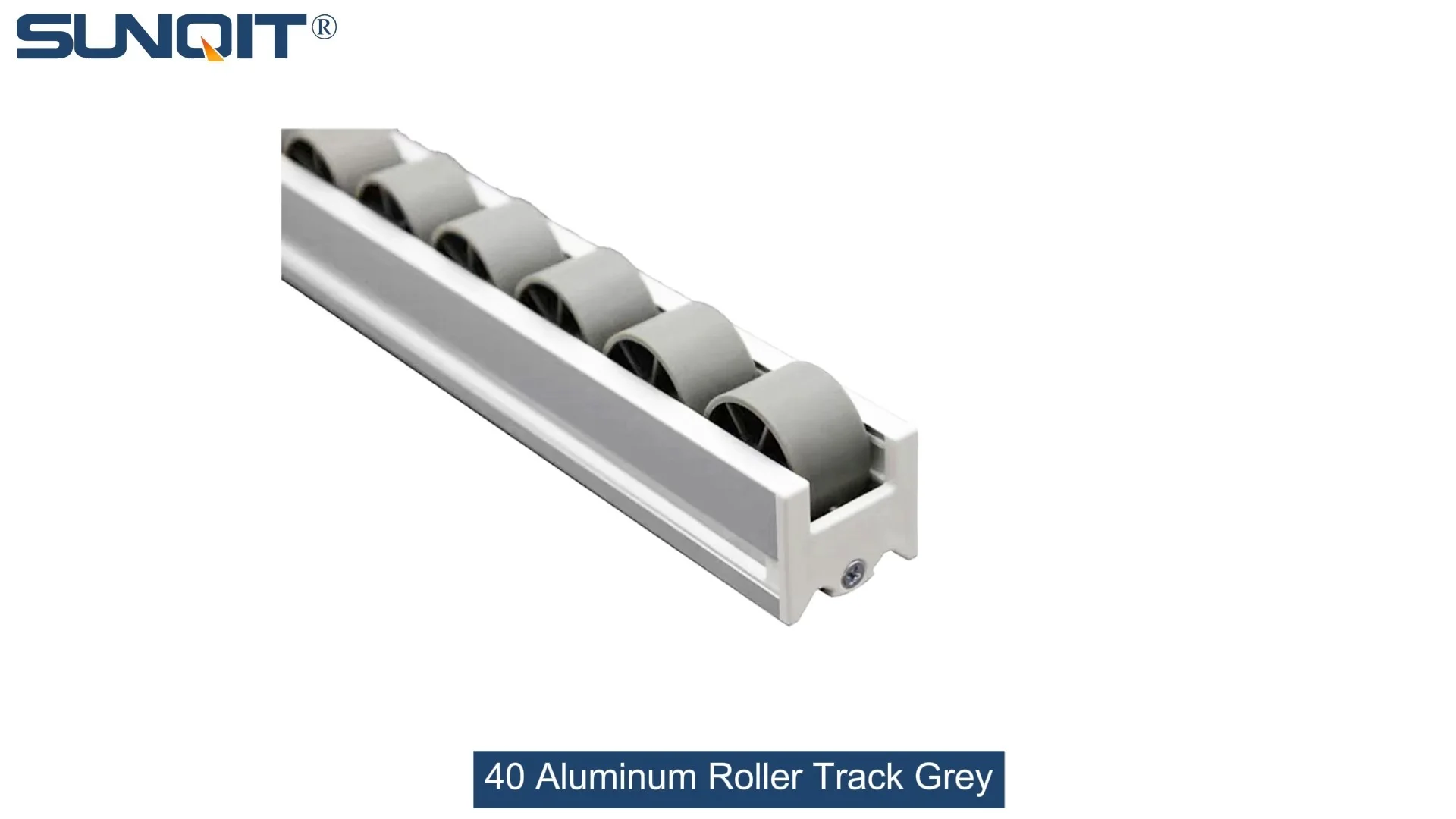
40 Aluminum Roller Track Grey
Durable and smooth-running modular roller rails. The system is fully assembled. The roller rail profile contains plastic rollers mounted on steel axles. Aluminum frame with plastic wheel make it anti corrosion,and material convey more smooth.
In the world of manufacturing and lean production, every component on the factory floor plays a silent but critical role. From the workbench where assembly happens to the conveyor belts that move parts between stations, the right tools and systems can turn chaos into clockwork. But here's the thing: even the best individual components fall short if they don't work well together. Compatibility isn't just about "fitting"—it's about creating a seamless flow, reducing downtime, and ensuring that your workspace can adapt as your needs change. Today, we're diving deep into two components that have become unsung heroes of efficient production lines: the internal rotatary aluminum joint and the 40 aluminum roller track grey. Together, they're not just parts; they're a partnership that unlocks flexibility and reliability in ways that generic components simply can't match.
Whether you're setting up a new assembly line, upgrading an existing workbench, or designing a custom material handling system, understanding how these two components interact is key. We'll break down their design, their strengths, and why they're better together. Plus, we'll explore real-world applications, installation tips, and even how to troubleshoot common issues. By the end, you'll see why compatibility isn't an afterthought—it's the foundation of a workspace that works for you, not against you.
Meet the Players: The Internal Rotatary Aluminum Joint
Let's start with the unsung hero of flexibility: the internal rotatary aluminum joint. If you've ever wished you could adjust a roller track or a workbench shelf without disassembling half the structure, this is the component that makes that wish a reality. At first glance, it might look like a simple connector, but its design is deceptively clever.
Crafted from high-grade aluminum alloy—typically 6063 T5, known for its strength-to-weight ratio—the internal rotatary aluminum joint is built to handle the daily grind of manufacturing. What sets it apart is its namesake feature: internal rotation. Unlike fixed joints that lock components into a single angle, this joint allows for 360-degree rotation around its axis. That means you can swivel, tilt, or pivot connected components (like roller tracks, shelves, or workbench extensions) with minimal effort. Imagine being able to adjust the angle of a roller track to match the height of a conveyor, or tilt a shelf to make parts easier to reach—all without tools, and in seconds.
But rotation isn't its only trick. The joint's internal mechanism is designed to stay tight even after repeated use. Inside, a precision-engineered bearing system reduces friction, ensuring smooth movement while preventing wobbling or slippage under load. Most models also feature a locking mechanism—often a simple thumbscrew or hex bolt—that lets you lock the joint in place once you've found the perfect angle. This balance of flexibility and stability is what makes it a favorite among plant managers and engineers.
Key Features at a Glance:
- Material: 6063 T5 aluminum alloy (lightweight, corrosion-resistant, and strong).
- Rotation Range: 360 degrees (continuous rotation) with 15-degree incremental locking positions on some models.
- Load Capacity: Typically 50-80 kg per joint (varies by size; check manufacturer specs for heavy-duty applications).
- Connection Type: T-slot compatible, designed to fit standard aluminum profiles (like 2020, 3030, or 4040 series).
- Finish: Anodized (clear or black) to resist scratches and corrosion, ensuring longevity in industrial environments.
So, where does this joint shine? Think of any scenario where adaptability matters. On an assembly line, it can connect roller tracks to workbenches, allowing operators to adjust the track angle based on the size of the parts being assembled. In a warehouse, it might link material racks to conveyor systems, making it easy to reroute items during peak demand. Even in labs or small workshops, it's used to create adjustable shelving or tool holders that grow with the user's needs. Simply put, it's the component that turns "fixed" into "flexible."
The Workhorse: 40 Aluminum Roller Track Grey
Now, let's turn our attention to the other half of this dynamic duo: the 40 aluminum roller track grey. If the internal rotatary aluminum joint is the "flexibility engine," the roller track is the "workhorse" that moves the goods. As the name suggests, this is a track system designed to transport materials—from small components like screws to larger items like circuit boards or toolboxes—with minimal effort, thanks to a series of embedded rollers.
First, let's decode the name: "40" refers to the track's width, measured in millimeters (40mm, to be precise). This width strikes a sweet spot between compactness and utility—it's narrow enough to fit into tight spaces (like between workbenches) but wide enough to handle most common industrial items. The "aluminum" part is straightforward: the track's frame is made from extruded aluminum, chosen for its lightweight nature (easy to install and reposition) and resistance to rust and dents. And "grey"? That's the color of the track's surface, a practical choice that hides minor scratches and stains, keeping your workspace looking neat even after heavy use.
But the real magic is in the rollers. Most 40 aluminum roller track grey models feature small, free-spinning plastic or nylon rollers spaced evenly along the track. These rollers reduce friction, so even a light push can send a box or bin gliding down the track. Some variants use steel rollers for heavier loads, but for most medium-duty applications (up to 100 kg per linear meter), plastic or nylon works best—it's quieter, cheaper, and gentler on delicate parts.
What makes this track stand out from generic steel or plastic alternatives? For one, its aluminum frame is extruded with T-slot grooves along the sides and bottom. If you're familiar with aluminum profiles, you know T-slots are game-changers: they let you attach accessories (like stops, guides, or brackets) anywhere along the track without drilling holes. Need to add a side guard to prevent parts from falling off? Just slide a bracket into the T-slot and tighten a bolt. Want to mount the track to a workbench or a wall? T-slots make it easy, with no guesswork about where to drill.
The grey color isn't just for looks, either. In busy factories, high-contrast colors help workers spot obstacles or misaligned parts quickly. A grey track against a light-colored workbench or a yellow conveyor stands out just enough to keep operations running smoothly. Plus, the anodized finish on the aluminum resists fingerprints and smudges, so even after months of use, it doesn't look grimy or worn.

Why They Work Together: The Compatibility Factor
Okay, so we've met the internal rotatary aluminum joint and the 40 aluminum roller track grey. But why are they such a great pair? Compatibility, plain and simple. It's not just that they "fit"—it's that their designs complement each other in ways that solve real-world problems for manufacturers. Let's break down the technical and practical reasons they're better together.
1. T-Slot Synergy: A Match Made in Manufacturing Heaven
Both components are built around T-slot technology, and that's no accident. The internal rotatary aluminum joint features a T-slot connector on one end, designed to slide into the T-slot grooves of aluminum profiles—including the 40 aluminum roller track grey. This means attaching the joint to the track is as simple as sliding it into place and tightening a bolt. No drilling, no welding, no messy adhesives. It's a secure connection that can be disassembled and reconfigured in minutes.
But it's not just about attaching the joint to the track. The track's T-slots also let you mount the joint anywhere along the track's length. Need the roller track to pivot 12 inches from the end? Slide the joint there. Want to add a second pivot point in the middle? Just add another joint. This flexibility means you're not locked into a single design—you can tweak and adjust as your production needs change.
2. Load Capacity: Strength in Partnership
A common concern with flexible systems is, "Will it hold up?" Let's crunch the numbers. The internal rotatary aluminum joint typically handles up to 70 kg of vertical load (i.e., weight hanging from the joint) and 50 kg of rotational load (weight being twisted or pivoted). The 40 aluminum roller track grey, on the other hand, can support around 80-100 kg per linear meter when mounted horizontally. When paired, the joint acts as a bridge between the track and whatever it's attached to (a workbench, a conveyor, etc.), distributing weight evenly across both components.
For example, if you're using the joint to mount a 1-meter section of roller track to a workbench, the total load might be 50 kg (the track itself weighs ~5 kg, plus 45 kg of parts). The joint easily handles that 50 kg, and the track distributes the weight along its length. Even if you pivot the track to a 45-degree angle, the joint's locking mechanism keeps it stable, and the track's aluminum frame resists bending. In short: they're engineered to share the workload, so you don't have to worry about failure during daily use.
3. Installation Simplicity: No Expertise Required
Here's a scenario we've all seen: a new piece of equipment arrives, and it takes two engineers and a morning to figure out how to assemble it. Not so with these two components. Thanks to their T-slot design and standardized sizing, installation is almost intuitive.
Let's walk through a quick install: Say you want to mount a 2-meter section of 40 aluminum roller track grey to a workbench, using an internal rotatary aluminum joint so you can tilt the track. First, you slide the joint's T-slot connector into the track's bottom T-slot. Then, you attach the joint's base to the workbench (using T-slot bolts or screws, depending on the workbench's material). Once it's mounted, you can swivel the track to any angle, lock it in place with the joint's thumbscrew, and you're done. Total time? Maybe 10 minutes, even if you're new to the components.
This simplicity isn't just about saving time during setup. It also means your team can reconfigure the system on the fly. If a new product line requires the track to be tilted at 30 degrees instead of 15, an operator can adjust it in seconds. No waiting for maintenance, no downtime—just adapt and keep moving. That's the beauty of lean manufacturing, and these components embody it.
| Feature | Internal Rotatary Aluminum Joint | 40 Aluminum Roller Track Grey | Why They Work Together |
|---|---|---|---|
| Material | 6063 T5 Aluminum Alloy | 6063 T5 Aluminum Alloy | Same material ensures consistent thermal expansion/contraction, reducing stress on connections. |
| Connection Type | T-slot Connector | T-slot Grooves (Sides/Bottom) | T-slot compatibility allows tool-free attachment and repositioning. |
| Max Load Capacity | 50-70 kg (rotational load) | 80-100 kg/m (linear load) | Load capacities overlap, ensuring neither component is overstressed. |
| Adjustability | 360° Rotation + Locking Mechanism | Fixed Axis (Adjustable via Joint) | Joint provides all necessary adjustability; track focuses on smooth material flow. |
| Environmental Resistance | Anodized (corrosion-resistant) | Anodized (corrosion-resistant) + Grey Finish (scratch-resistant) | Both stand up to dust, moisture, and daily wear in industrial settings. |

Real-World Applications: Where They Shine
Theory is great, but let's talk about how this pairing works in the real world. From automotive plants to electronics assembly lines, these components are quietly making work easier and more efficient. Here are a few examples:
1. Assembly Line Workbenches
Imagine a workbench where operators assemble small electronics, like circuit boards. Parts arrive in bins, and finished boards need to move to the next station. By mounting 40 aluminum roller track grey to the workbench using internal rotatary aluminum joints, operators can:
- Tilt the track downward to let finished boards slide into a collection bin.
- Swivel the track to the side when not in use, freeing up workspace.
- Adjust the track angle to match their height, reducing neck and back strain.
At a plant in Ohio we visited last year, this setup reduced the time spent moving parts by 25%—and operators reported less fatigue at the end of shifts. That's the power of small, smart adjustments.
2. Material Racks and Storage
Material racks are the backbone of any warehouse, but static racks can make accessing parts a hassle. Enter the internal rotatary joint and roller track combo. Mount roller tracks to rack shelves using the joints, and suddenly, you can tilt the track to slide bins forward—no more reaching to the back of deep shelves. One automotive supplier we worked with used this setup for storing small plastic parts; employees went from spending 10 minutes hunting for parts to 2 minutes, just by tilting the track and letting gravity do the work.
3. Packaging and Shipping Stations
In shipping departments, boxes of all sizes need to move from packing tables to conveyor belts. A fixed roller track might work for standard boxes, but what if you're shipping small envelopes one day and large cartons the next? With internal rotatary joints, you can adjust the track's height and angle to match the conveyor or the size of the box. For example, tilt the track upward slightly for small envelopes to prevent them from sliding too fast, or keep it flat for heavy cartons. It's like having a custom shipping station that adapts to whatever comes through the door.

Enhancing the Pair: Aluminum Profile Accessories
Even the best partnerships can use a little support, and that's where aluminum profile accessories come in. These small but mighty components turn the internal rotatary aluminum joint and 40 aluminum roller track grey from a "good" system into a "great" one. Let's look at a few must-have accessories that take compatibility to the next level.
1. Roller Track Connectors
If you need a roller track longer than 2 meters (the standard length for most 40 aluminum roller track grey models), roller track connectors are essential. These small brackets slide into the T-slots of two track sections, joining them seamlessly. The best part? They're designed to work with the same T-slot system as the internal rotatary joint, so you can connect tracks and add joints anywhere along the line. For example, you could have a 5-meter track with joints at the 2m and 4m marks, letting you pivot different sections independently. No gaps, no wobbles—just a smooth, continuous track that bends and adjusts as needed.
2. End Stops and Guides
Ever had a part slide off the end of a roller track and crash to the floor? End stops prevent that. These simple accessories (usually plastic or rubber) attach to the ends of the track via T-slots, creating a soft barrier that stops parts gently. Guides, on the other hand, are side rails that keep parts centered on the track—perfect for long, narrow items like pipes or rods. Both are easy to install and adjust, and they work with the track's T-slots just like the internal rotatary joint does.
3. Height-Adjustable Brackets
Sometimes, you need more than just rotational adjustment—you need to change the height of the roller track. Height-adjustable brackets, which mount between the internal rotatary joint and the workbench or rack, let you raise or lower the track by a few inches. They're ideal for matching the track to conveyors of different heights or adapting to workers of varying statures. Like the joint and track, they use T-slots, so adjusting height is as simple as loosening a bolt, sliding the bracket up or down, and retightening.
Troubleshooting Common Compatibility Issues
Even with the best components, things can sometimes go wrong. Here are a few common issues you might run into with internal rotatary aluminum joints and 40 aluminum roller track grey—and how to fix them.
Issue: The Joint Won't Rotate Smoothly
If the joint feels stiff or sticks when you try to rotate it, the first thing to check is debris. Dust, grease, or small metal shavings can get trapped in the bearing mechanism. Try wiping the joint with a clean, dry cloth. If that doesn't work, apply a small amount of silicone-based lubricant (avoid oil-based lubes—they attract dust). A drop or two on the bearing surfaces should free it up. If it's still stiff, check if the locking mechanism is fully; sometimes, a partially tightened thumbscrew can cause resistance.
Issue: The Track Wobbles When Loaded
Wobbling usually means the joint isn't mounted securely. Check if the T-slot bolts connecting the joint to the track or the workbench are tight. If they're loose, tighten them with a hex key (but don't overtighten—you could strip the threads). If the bolts are tight but the track still wobbles, the joint might be mounted at an angle. Use a level to ensure the joint's base is flat against the mounting surface; shims can help if the surface is uneven.
Issue: Parts Get Stuck on the Track
Sticky rollers are the usual culprit here. Clean the rollers with a damp cloth to remove dust or debris. If rollers are cracked or worn (common after heavy use), replace them—most 40 aluminum roller track grey models let you pop out old rollers and snap in new ones without tools. Also, check the track for bends; if the aluminum frame is warped (rare, but possible if overloaded), you may need to replace the track section.
Choosing the Right Supplier: Quality Matters
At the end of the day, even the best designs rely on quality manufacturing. When shopping for internal rotatary aluminum joints, 40 aluminum roller track grey, or aluminum profile accessories, look for suppliers who prioritize:
- Material Certifications: Ensure the aluminum used is 6063 T5 (or equivalent) with an anodized finish. Reputable suppliers will provide material test reports upon request.
- Consistency: Components should fit together seamlessly, with no gaps or loose connections. Ask for samples to test before ordering in bulk.
- Technical Support: A good supplier will have engineers on hand to answer questions about compatibility, load capacities, or installation. Avoid suppliers who can't explain how their components work together.
Remember: cheap components might save money upfront, but they'll cost you in downtime and replacements later. Investing in quality ensures your internal rotatary aluminum joint and 40 aluminum roller track grey work together flawlessly for years to come.
Conclusion: Compatibility as a Competitive Edge
In the fast-paced world of manufacturing, efficiency isn't just a goal—it's a competitive edge. The internal rotatary aluminum joint and 40 aluminum roller track grey, paired with the right aluminum profile accessories, aren't just components; they're tools that let you build a workspace that adapts, evolves, and keeps up with whatever the market throws at you. Their compatibility isn't an accident—it's the result of thoughtful design, quality materials, and a deep understanding of what manufacturers need: flexibility without sacrifice, reliability without complexity, and a system that grows with your business.
So, whether you're setting up a new line or upgrading an old one, remember: the best systems are built on great partnerships. And in the world of lean manufacturing, few partnerships are as powerful as the one between the internal rotatary aluminum joint and the 40 aluminum roller track grey. They don't just fit together—they make your workspace work better .