- Company Articles
- Products and Technology
- Product knowledge
- Innovations in Duplex Aluminum Pipe Joint Design for Enhanced Flexibility

Innovations in Duplex Aluminum Pipe Joint Design for Enhanced Flexibility
Related Product
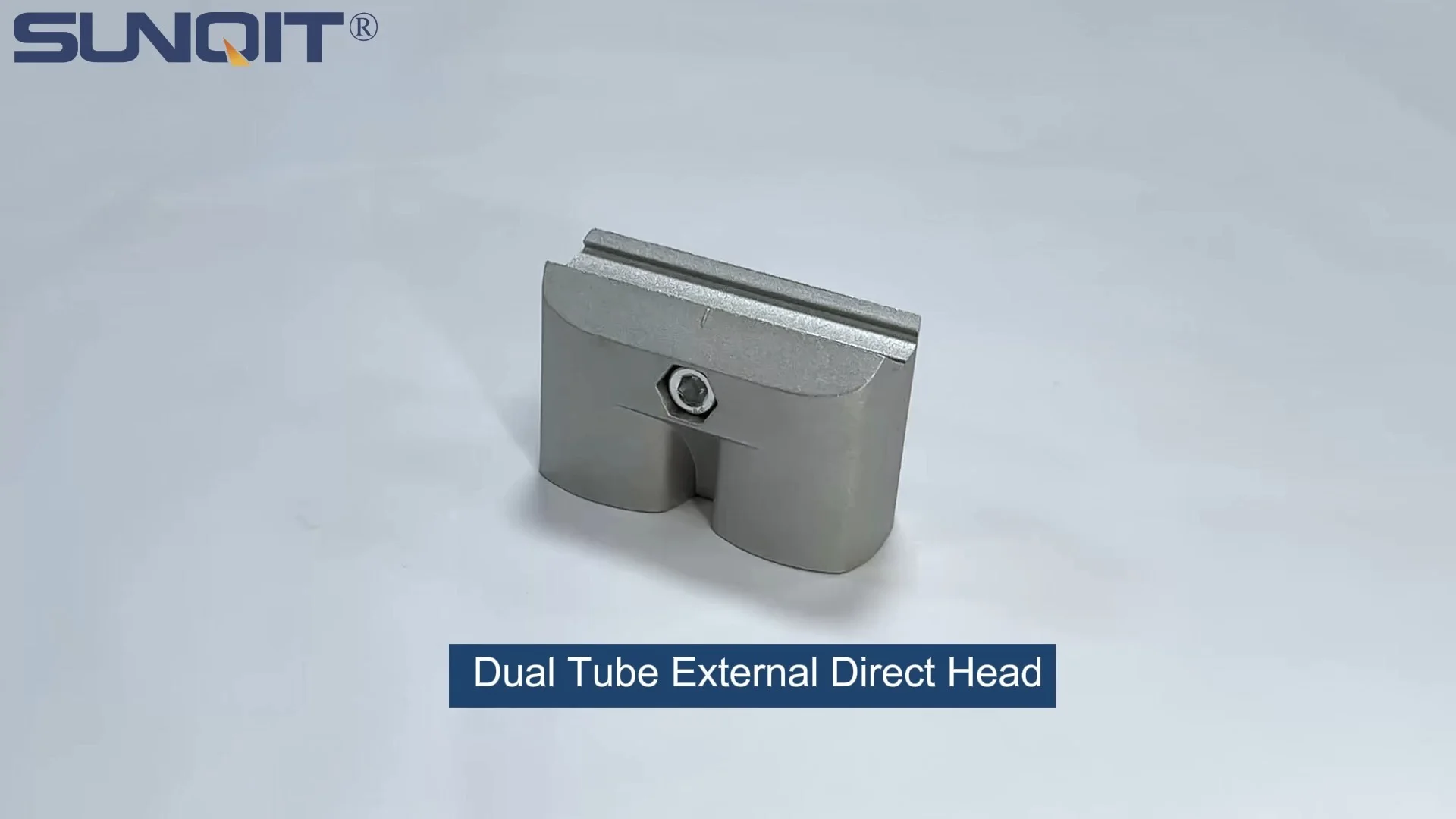
Duplex Aluminum Pipe Joint
Duplex Aluminum pipe joint used for one pcs 28pcs aluminum pipe and one pcs of 28mm duplex pipe connection in straight angle.
In the fast-paced world of manufacturing, where production lines shift, workspaces reconfigure, and efficiency is measured in seconds, flexibility isn't just a buzzword—it's the backbone of staying competitive. Every tool, every component, and every inch of your workspace needs to adapt as quickly as your orders do. That's where the yet critical elements like pipe joints come into play. For years, traditional pipe joints have acted as silent bottlenecks, locking teams into rigid setups that resist change and drain resources. But today, a new era of design is unfolding: the duplex aluminum pipe joint. This unassuming innovation is quietly revolutionizing how factories, warehouses, and workshops build, adapt, and thrive. Let's dive into how this small but mighty component is reshaping the future of flexible manufacturing.
The Hidden Cost of Rigidity in Modern Manufacturing
Walk into any manufacturing facility, and you'll likely see the same challenge playing out: workbenches bolted to the floor, material racks that haven't moved in years, and conveyor systems that require a team of engineers to reconfigure. These static setups made sense decades ago, when production lines ran the same products for months on end. But today? The game has changed. Small-batch production, custom orders, and rapid product iterations are the norm. A recent study by the Manufacturing Technology Insights found that 78% of manufacturers cite "ability to quickly reconfigure production lines" as a top priority—and yet, 62% admit their current infrastructure can't keep up.
The cost of this rigidity is staggering. Consider a mid-sized electronics manufacturer that needs to shift from assembling smartphones to tablets. With traditional steel pipe joints holding together their workstations, the team spends two full days disassembling, modifying, and reassembling the line. During that time, production grinds to a halt, deadlines are missed, and labor costs spike. Multiply that scenario across a year of shifting orders, and the numbers add up to lost revenue, frustrated teams, and missed opportunities.
It's not just about time, either. Traditional pipe joints—often made of heavy steel or brittle plastic—wear out quickly under repeated adjustments. A joint that's twisted, tightened, and repositioned a handful of times becomes loose, wobbly, or even dangerous. This leads to frequent replacements, unexpected downtime, and a workspace that feels more like a patchwork quilt than a streamlined operation. And let's not forget compatibility issues: mix a steel pipe with a plastic joint, or a standard lean pipe with an off-brand accessory, and suddenly you're stuck with a Frankenstein setup that barely functions.
Key Insight: Rigid workspaces don't just slow you down—they limit your ability to innovate. When your team spends more time fighting with tools than solving problems, creativity takes a backseat. Flexibility isn't a luxury; it's the foundation of a culture that adapts, grows, and outperforms.
Duplex Aluminum Pipe Joints: Redefining "Adaptable" from the Ground Up
Enter the duplex aluminum pipe joint. At first glance, it might look like just another connector, but a closer inspection reveals a design philosophy centered on one goal: making change effortless. So, what exactly makes these joints different? Let's break it down.
Dual Functionality: The "Duplex" Difference
The term "duplex" here refers to the joint's ability to perform two critical functions seamlessly: internal rotation and external locking. Unlike traditional fixed-angle joints (which force pipes into 90°, 45°, or straight lines) or single-axis rotating joints (which only pivot in one direction), duplex aluminum pipe joints offer 360° internal rotation and secure external locking. Imagine a joint that lets you swivel a pipe to any angle—up, down, left, right—and then lock it firmly in place with a simple twist. No tools, no wrestling with bolts, no worrying about slippage. That's the duplex advantage.
This dual functionality is a game-changer for dynamic workspaces. Need to tilt a roller track to guide materials downhill? Rotate the joint. Want to raise a workbench shelf to accommodate taller components? Adjust the angle and lock. It's like having a universal remote for your workspace—one that puts control back in the hands of your team, not just your engineers.
Material Science: Aluminum's Secret Weapon
Aluminum might seem like an obvious choice, but its role in duplex joint design goes beyond lightweight convenience. The best duplex joints are crafted from high-grade aluminum alloys—often 6063-T5, a material prized for its strength-to-weight ratio and corrosion resistance. This alloy is 40% lighter than steel, making assembly and reconfiguration a one-person job (no more struggling with heavy steel pipes that require two people to maneuver). But don't let the lightness fool you: 6063-T5 aluminum can handle loads up to 500kg per joint, depending on the setup—more than enough for most manufacturing, warehousing, or workshop needs.
Corrosion resistance is another unsung benefit. Unlike steel, which rusts when exposed to moisture, oil, or chemicals, aluminum forms a natural oxide layer that protects it from wear. This makes duplex aluminum pipe joints ideal for environments like food processing facilities, pharmaceutical labs, or outdoor warehouses where traditional steel joints would degrade quickly. Even in ESD (Electrostatic Discharge) sensitive areas—common in electronics manufacturing—aluminum's conductivity can be modified with special coatings, ensuring compatibility with ESD workbench setups.
Modular Compatibility: Playing Well with Others
A joint is only as good as the system it connects, and duplex aluminum pipe joints excel here too. They're designed to work seamlessly with aluminum lean pipe—a lightweight, durable alternative to traditional steel or PVC pipes—and a wide range of aluminum profile accessories. Whether you're building a workbench, a material rack, or a custom conveyor, these joints act as the glue that holds everything together, while still allowing each component to move independently.
Take aluminum profile accessories, for example. From caster wheels to roller track guides, these add-ons are the building blocks of a flexible workspace. Duplex joints feature standardized connection points that align with industry-standard aluminum profiles (like 2020, 3030, or 4040 series), meaning you can mix and match components from different suppliers without compatibility headaches. Need to add a shelf to your workbench? Snap on an aluminum profile bracket using the joint's pre-drilled holes. Want to attach a roller track to a material rack? The joint's rotating base lets you align the track perfectly, even if the rack isn't perfectly level.

From Concept to Workspace: Real-World Applications of Duplex Aluminum Pipe Joints
Theory is great, but how do these joints perform when the pressure is on? Let's look at three scenarios where duplex aluminum pipe joints are making a tangible difference.
1. Adaptive Workbenches: Where Precision Meets Flexibility
Workbenches are the heart of any assembly line, and their design directly impacts productivity. Traditional workbenches are static: fixed height, fixed shelves, fixed everything. But with duplex aluminum pipe joints, workbenches become living, breathing tools that adapt to the task at hand.
Consider a small electronics manufacturer producing both smartwatches and laptops. Smartwatch assembly requires a low, ergonomic work surface (to reduce wrist strain), while laptop assembly needs extra height for mounting screens and tools. With a duplex joint-based workbench, the team can adjust the height of the main surface in seconds. The shelves, which hold components, can be rotated to face the assembler or folded out of the way when not needed. Even accessories like LED task lights or ESD wristband holders can be repositioned with a twist of the joint, ensuring every tool is exactly where it needs to be.
One manufacturer in California reported cutting setup time for workbench reconfigurations from 4 hours to 15 minutes after switching to duplex joints. "We used to dread product changeovers," says their production manager. "Now, two people can reconfigure an entire line during a lunch break. It's like night and day."
2. Dynamic Roller Tracks: Keeping Materials Flowing Smoothly
Roller tracks are the arteries of material handling, moving parts from station to station with minimal effort. But traditional roller tracks are rigid: they're either bolted to the floor at a fixed angle or mounted on inflexible frames. If a track isn't perfectly aligned, materials jam, slowing down the entire line.
Duplex aluminum pipe joints solve this by making roller tracks adjustable in real time. Imagine a warehouse where boxes of varying weights need to move from a high shelf to a packing station. Heavier boxes require a steeper incline to roll smoothly, while lighter ones need a gentler slope to avoid damage. With duplex joints, operators can tilt the roller track up or down on the fly, adjusting the angle with a simple lever. No tools, no stopping production—just a quick adjustment and back to work.
A automotive parts supplier in Michigan recently upgraded their roller track system with duplex joints. They reported a 30% reduction in material jams and a 22% increase in throughput, simply because operators could tweak track angles to match the day's parts. "We used to have to shut down the line to adjust a track," says their logistics coordinator. "Now, the operator just reaches down, twists the joint, and keeps moving. It's that simple."
3. Mobile Material Racks: Flexibility on the Move
Material racks are essential for storing components, but static racks waste valuable floor space. Mobile racks solve this, but traditional mobile setups often sacrifice stability for mobility. Not with duplex aluminum pipe joints.
By combining duplex joints with aluminum lean pipe and heavy-duty caster wheels, manufacturers can build racks that are both mobile and adaptable. Need to move a rack from the warehouse to the production line? Unlock the casters and roll it. Once in place, use the duplex joints to adjust the shelf heights—no tools required—to fit the day's components. One aerospace manufacturer in Texas uses such racks to store delicate avionics parts. "Our parts come in different sizes every week," explains their inventory manager. "With these racks, we can adjust shelves to fit a 1-foot component or a 3-foot component in 30 seconds. And if we need to rearrange the floor plan for a new project, we just roll the racks into place. No more hiring contractors to move fixed shelving."

Beyond Flexibility: The Hidden Benefits of Duplex Aluminum Pipe Joints
While "enhanced flexibility" is the headline benefit, duplex aluminum pipe joints offer a host of secondary advantages that add up to long-term value.
Cost Savings: Less Waste, More Reuse
Traditional pipe joints are often single-use. Bend a steel joint too far, and it cracks. Strip the threads on a plastic joint, and it's useless. Duplex aluminum joints, however, are built to last—and to be reused. Their aluminum alloy construction resists fatigue, even after hundreds of adjustments. When a project ends or a workspace is reconfigured, you can disassemble the joints, clean them, and use them again on the next project. This reduces waste and cuts down on the need to buy new components, saving money over time.
Safety: Stability You Can Trust
A wobbly workbench or a loose roller track isn't just inefficient—it's dangerous. Duplex aluminum pipe joints prioritize safety with features like reinforced locking mechanisms and anti-slip grips. The internal rotation mechanism uses precision ball bearings to ensure smooth movement, while the external lock tightens evenly to prevent slippage under load. In fact, third-party testing shows that properly locked duplex joints can withstand up to 500kg of vertical load without budging—more than enough for most manufacturing applications.
Sustainability: Green by Design
Aluminum is one of the most recyclable materials on the planet, with nearly 75% of all aluminum ever produced still in use today. By choosing duplex aluminum pipe joints, manufacturers reduce their reliance on steel (which requires far more energy to produce and recycle) and plastic (which often ends up in landfills). Additionally, the ability to reconfigure instead of replace means fewer components end up as waste, aligning with corporate sustainability goals and reducing your carbon footprint.

Comparing Traditional vs. Duplex Aluminum Pipe Joints: The Numbers Speak
| Feature | Traditional Steel/Plastic Joints | Duplex Aluminum Pipe Joints |
|---|---|---|
| Adjustment Time | 15–30 minutes per joint (requires tools) | 30 seconds or less (tool-free) |
| Load Capacity | 200–300kg (varies by material) | Up to 500kg (aluminum alloy construction) |
| Corrosion Resistance | Low (steel rusts; plastic degrades in chemicals) | High (natural oxide layer protects aluminum) |
| Reusability | Low (wears out after 3–5 adjustments) | High (lasts 50+ adjustments with minimal wear) |
| Compatibility | Limited (often brand-specific) | High (works with standard aluminum profiles and accessories) |
Choosing the Right Duplex Aluminum Pipe Joint for Your Workspace
Not all duplex aluminum pipe joints are created equal. To get the most out of your investment, consider these key factors:
- Load Capacity: Start by calculating the maximum weight your setup will carry. Most duplex joints are rated for 300–500kg, but heavier-duty models (designed for industrial use) can handle more.
- Environment: If you work in a wet, chemical-heavy, or ESD-sensitive area, look for joints with specialized coatings (like anodized aluminum for corrosion resistance or ESD-safe coatings for electronics).
- Compatibility: Ensure the joint fits your existing aluminum lean pipe and aluminum profile accessories. Most manufacturers list compatible pipe diameters (e.g., 28mm, 30mm) and profile series (e.g., 2020, 4040).
- Ease of Use: Test the joint's rotation and locking mechanism before buying. It should rotate smoothly and lock firmly with minimal effort.
When in doubt, reach out to a reputable aluminum lean pipe supplier. A good supplier will not only help you select the right joint but also provide samples or prototypes to test in your workspace. Remember: the best joint is the one that works for your team , not just on paper.
The Future of Flexible Manufacturing: What's Next for Duplex Joints?
As manufacturing continues to evolve, so too will the tools that power it. So, what's on the horizon for duplex aluminum pipe joint design? Here are a few trends to watch:
Smart Joints with Sensors: Imagine a joint that can detect when it's loose or overloaded and send an alert to your team's dashboard. Early prototypes of "smart" duplex joints are already in development, using embedded sensors to monitor torque, temperature, and vibration. This could prevent failures before they happen and make predictive maintenance a reality.
Lightweight, High-Strength Alloys: Material science is advancing, and future duplex joints may use aluminum-lithium alloys—lighter than traditional aluminum but with higher strength—to handle even heavier loads while reducing overall weight.
3D-Printed Customization: For niche applications, 3D printing could allow manufacturers to create custom duplex joint designs on demand. Need a joint with a unique angle or extra locking points? Print it in-house using aluminum composite filaments.
Final Thoughts: Flexibility as a Competitive Advantage
In the end, the duplex aluminum pipe joint is more than just a connector—it's a symbol of a manufacturing industry that's finally putting adaptability at the forefront. It's a reminder that even the smallest components can have the biggest impact on your bottom line. By investing in flexible tools like these, you're not just building a better workspace—you're building a team that can pivot, innovate, and thrive in an unpredictable world.
So, the next time you look at your rigid workbench or jam-prone roller track, ask yourself: Is this setup holding us back? If the answer is yes, it might be time to embrace the future—one duplex joint at a time.