- Company Articles
- Products and Technology
- Product knowledge
- Innovations in One Way Rotatory Straight Lean Pipe Joint Chrome Design for 3C Electronics

Innovations in One Way Rotatory Straight Lean Pipe Joint Chrome Design for 3C Electronics
Related Product
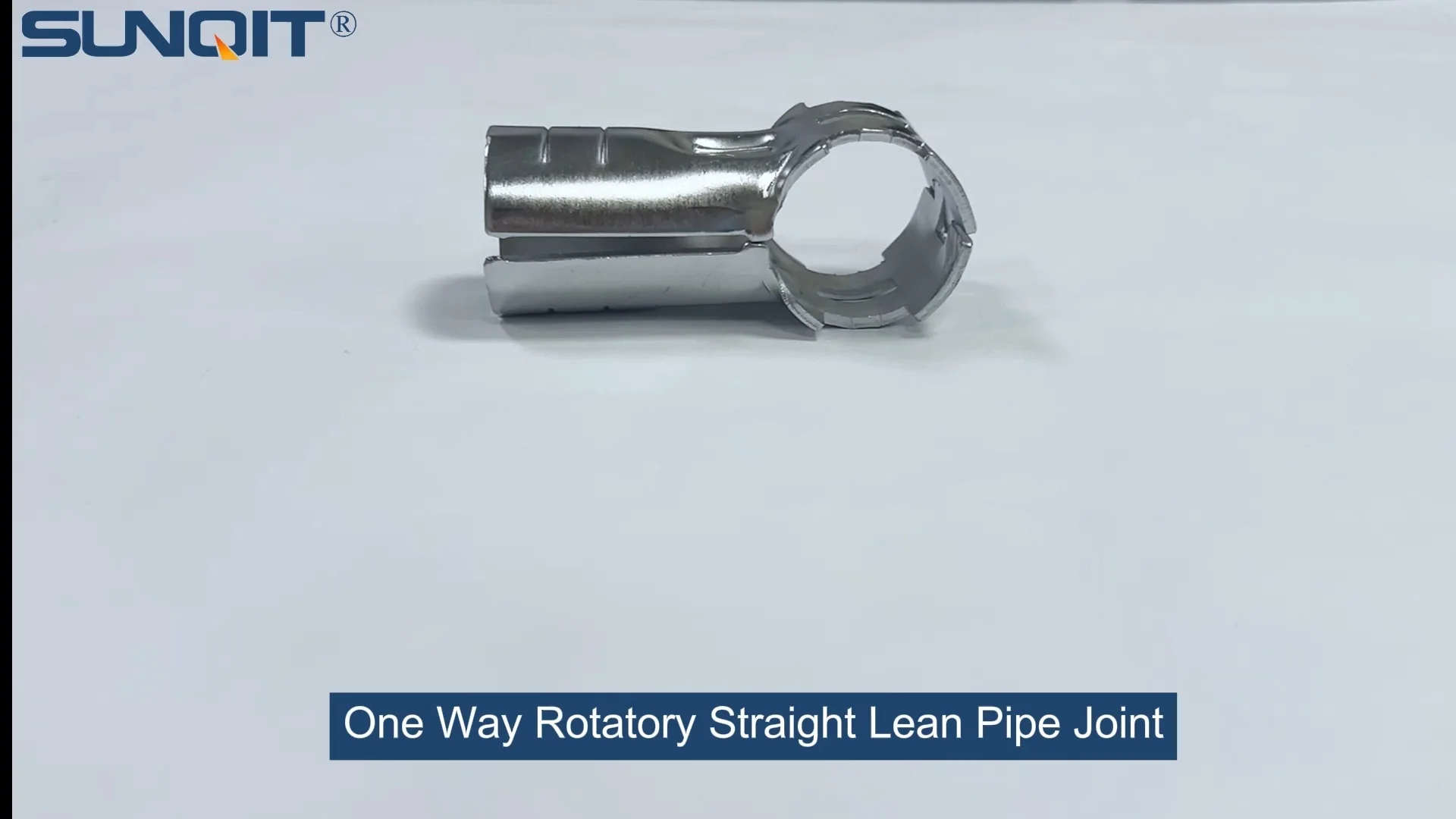
One Way Rotatory Straight Lean Pipe Joint Chrome
Two way lean pipe joint for 2 pcs 28MM lean pipe connection in straight angle with rotatory fucntion, which used widely in workbench, flow rack, hand trolley frame connection.
Step inside a 3C electronics manufacturing plant, and you'll immediately sense the pressure of precision. Assembly lines move with the urgency of a clock ticking toward a product launch—tiny circuit boards glide along conveyors, workers in anti-static gloves handle components smaller than a fingernail, and every station hums with the quiet intensity of creating devices that millions will rely on. But for all the advanced robotics and cutting-edge tech in these facilities, there's a humble hero that often goes unnoticed: the lean pipe system. And at the heart of that system? The lean pipe joint. Today, we're shining a light on a design that's quietly revolutionizing 3C production floors: the one way rotatory straight lean pipe joint chrome. Let's dive into how this small but mighty component is solving big problems for manufacturers of smartphones, laptops, and other 3C gadgets.
The 3C Manufacturing Challenge: Flexibility in a Fast-Changing World
First, let's talk about why 3C electronics demand something different from traditional manufacturing. Unlike cars or appliances, 3C products—think smartphones, tablets, smartwatches—have lifecycles that can be measured in months, not years. A new phone model launches, and suddenly, the assembly line that built last year's version needs to pivot. Components shrink, designs change, and production volumes spike or dip overnight. This pace creates a unique set of headaches for factory managers:
1. Rigid workstations slow down reconfiguration. If your workbench is bolted together with fixed joints, rearranging it to fit a new product's assembly steps means hours (or days) of disassembly, drilling, and reassembly. That downtime? It's the difference between hitting a launch deadline and falling behind competitors.
2. Precision matters—even for the tools. 3C components are delicate. A workbench that wobbles, a flow rack that doesn't align perfectly, or a conveyor that jostles parts can lead to scratches, misalignments, or even damaged circuit boards. Traditional lean pipe joints, with their clunky adjustments and uneven weight distribution, often fail here.
3. Static is the enemy. Electrostatic discharge (ESD) can fry a microchip in an instant. That's why 3C factories require ESD-safe equipment. Many older lean pipe joints, made with non-conductive plastics or uncoated metals, don't offer the protection needed, forcing managers to add costly ESD mats or coatings as band-aids.
For years, these challenges felt like unavoidable trade-offs. "Lean" manufacturing was supposed to mean efficiency, but rigid tools were making it anything but. Then came the one way rotatory straight lean pipe joint chrome—a design that didn't just tweak the old formula, but reimagined it.
Lean Pipe Joints: The Unsung Backbone of Assembly Lines
Before we get into the innovations, let's clarify what a lean pipe joint actually does. In a lean system, aluminum or steel pipes (lean pipes) are connected using joints to build everything from workbenches and material racks to turnover trolleys and conveyor supports. Think of it as industrial Legos: the pipes are the bricks, and the joints are the connectors that hold them in place. Simple enough, right? But simplicity is where the old designs fell short.
Traditional lean pipe joints are often "fixed-angle"—meaning once you lock them into place at 90°, 45°, or 180°, they stay there. To adjust them, you need tools: wrenches to loosen bolts, pliers to twist clamps, maybe even a rubber mallet to tap them into a new position. And if you need to rotate a section (say, to angle a flow rack downward for better material flow), forget it—fixed joints just don't budge. Over time, this rigidity becomes a bottleneck. A factory floor manager I spoke with recently put it bluntly: "We were spending more time adjusting our tools than we were assembling products. It was like trying to dance in a straightjacket."
The Innovation: One Way Rotatory Straight Lean Pipe Joint Chrome—What Makes It Different?
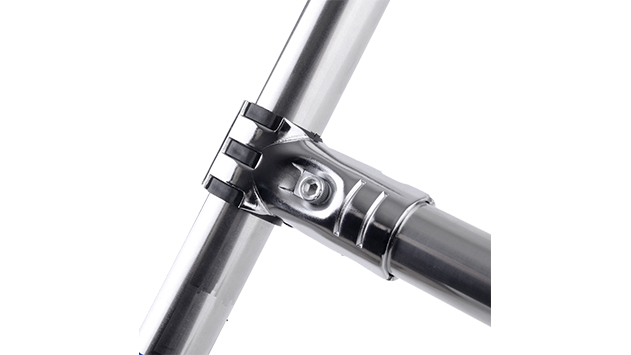
Enter the one way rotatory straight lean pipe joint chrome. At first glance, it might look similar to its predecessors, but a closer inspection reveals the genius in the details. Let's break down the key innovations that make this joint a game-changer for 3C manufacturing:
1. One-Way Rotation: Controlled Flexibility When You Need It
The "one way rotatory" feature is exactly what it sounds like: the joint can rotate in one direction (usually 180°) but locks securely when turned the other way. This might seem small, but it solves a huge problem. Imagine you're building a workbench for assembling smartphone screens. You need the surface to tilt slightly so that small screws and connectors don't roll off—but you don't want it to tilt too far. With a traditional joint, you'd have to measure, mark, and lock it into place with bolts. If you get it wrong? Start over. With the one way rotatory joint, you simply rotate the pipe to the angle you need, and it clicks into place. No tools, no guesswork, no wasted time.
This is a lifesaver for 3C lines, where workstations often need (fine adjustments) between shifts or even between products. A worker assembling a 6.7-inch phone screen might prefer a 5° tilt, while the next worker, handling a smaller smartwatch screen, needs 3°. With this joint, they can make that change in seconds, not minutes.
2. Chrome Plating: Durability Meets ESD Safety
The "chrome" in the name isn't just for show. Chrome plating adds two critical benefits: durability and ESD compatibility. 3C factories are tough environments—pipes get bumped by trolleys, joints get tightened and loosened repeatedly, and chemicals from cleaning agents can eat away at uncoated metals. Chrome resists corrosion, scratches, and wear, meaning the joint lasts longer (we're talking years, not months) even with heavy use.
But the bigger win? Chrome is conductive, making the joint ESD-safe by default. In 3C manufacturing, static electricity is a silent killer. A single spark can destroy a $500 circuit board in milliseconds. Traditional plastic or uncoated steel joints often act as insulators, trapping static charge. The chrome-plated joint, though, grounds the static, channeling it safely away from sensitive components. This eliminates the need for extra ESD mats or sprays, cutting costs and reducing the risk of costly defects.
3. Smooth Operation: Precision Engineering for Tight Tolerances
3C manufacturing isn't just about speed—it's about precision. A joint that wobbles or slips can throw off the alignment of a conveyor, leading to misaligned parts and scrapped materials. The one way rotatory joint addresses this with precision-engineered internal components: ball bearings for smooth rotation, a spring-loaded locking mechanism that ensures a tight fit, and a friction ring that prevents unintended movement. I visited a factory in Shenzhen last month where they'd replaced all their old joints with these, and the production manager showed me a video: a worker rotated a flow rack from 0° to 30° with one hand, and it stayed rock-solid, even when loaded with 20kg of circuit boards. "No more 'adjust and hope'," he said. "Now, it's 'set and forget'."
4. Compatibility: Works with Existing Lean Pipe Systems
Innovation is great, but if it requires a complete overhaul of your existing setup, it's often a non-starter. The one way rotatory straight lean pipe joint chrome plays nice with standard lean pipes (both aluminum and steel), as well as most aluminum profile accessories. This means factories don't have to replace all their pipes—just the joints. For a mid-sized 3C manufacturer, this can cut the upgrade cost by 60% or more, making the switch a no-brainer.

Real-World Impact: How Factories Are Using the Joint Today
Numbers and specs are one thing, but hearing how this joint is transforming actual production floors is where the story comes alive. Let's look at a few examples from 3C factories that have made the switch:
Case Study 1: Smartphone Assembly Line in Dongguan
A factory producing mid-range smartphones was struggling with frequent line reconfigurations. Every time a new model launched, they needed to adjust workbench heights, reangle flow racks, and modify conveyor paths. With traditional joints, this took 8 hours per line. After switching to one way rotatory joints, that time dropped to 1.5 hours. "We used to schedule reconfigurations over weekends," the operations director told me. "Now, we can do it between shifts. That's 16 hours of production we're getting back every month."
Case Study 2: Laptop Battery Assembly in Suzhou
Battery assembly requires extreme precision—even a tiny misalignment can lead to short circuits. A factory here was using fixed-joint workbenches that often wobbled under the weight of battery testing equipment. The one way rotatory joints, with their stable locking mechanism, eliminated the wobble. Defect rates dropped by 23%, and workers reported less fatigue from adjusting to uneven surfaces.
Case Study 3: Smartwatch Component Storage in Shanghai
Storing small components (like watch bezels and sensors) requires flow racks that can be adjusted to different angles for easy access. With traditional joints, changing the angle of a rack's rollers took 20 minutes per section. With the new joints? 2 minutes. "Our warehouse staff used to dread restocking," the logistics manager laughed. "Now, they actually volunteer—because it's so much easier."
Comparing the Options: Traditional vs. One Way Rotatory Chrome Joints
Still on the fence? Let's put the one way rotatory straight lean pipe joint chrome head-to-head with traditional lean pipe joints to see how they stack up in key areas for 3C manufacturing:
| Feature | Traditional Lean Pipe Joints | One Way Rotatory Straight Lean Pipe Joint Chrome |
|---|---|---|
| Adjustment Time | 30–60 minutes per joint (with tools) | 30–60 seconds per joint (no tools) |
| Rotation Range | Fixed (0°, 45°, 90°, 180° only) | 180° one-way rotation (infinite angle adjustments) |
| ESD Compatibility | Requires additional mats/coatings | Chrome-plated (naturally ESD-safe) |
| Durability | Wears out after 6–12 months of frequent adjustments | Lasts 3–5 years with heavy use (chrome resists corrosion) |
| Installation Complexity | Requires technical training; bolts/nuts to tighten | Tool-free; intuitive "click-and-lock" mechanism |
| Cost Over Time | Higher (frequent replacements + downtime) | Lower (longer lifespan + reduced downtime) |
Looking Ahead: The Future of Lean Systems in 3C Manufacturing
The one way rotatory straight lean pipe joint chrome is just the beginning. As 3C manufacturing continues to evolve—with more automation, smaller components, and even faster production cycles—we can expect to see even more innovations in lean pipe systems. Imagine joints with built-in sensors that alert managers when they're loose, or AI-powered workbenches that automatically adjust angles based on the product being assembled. But for now, this joint is leading the charge, proving that sometimes, the biggest improvements come from reimagining the smallest parts.
For 3C factories, the message is clear: flexibility isn't a luxury anymore—it's a necessity. And the one way rotatory straight lean pipe joint chrome delivers that flexibility in a package that's affordable, durable, and easy to use. It's not just a tool; it's a partner in keeping up with the relentless pace of innovation in 3C electronics.
So the next time you pick up your smartphone or laptop, take a moment to appreciate the precision that went into making it. And remember: behind that precision, there's a good chance a humble lean pipe joint—one that rotates, locks, and lasts—played a role in bringing it to life.