- Company Articles
- Products and Technology
- Product knowledge
- Innovative Design Features of Modern One Side Rotatory Chrome Parallel Lean Pipe Joints

Innovative Design Features of Modern One Side Rotatory Chrome Parallel Lean Pipe Joints
Related Product
Parallel Lean Pipe Joint
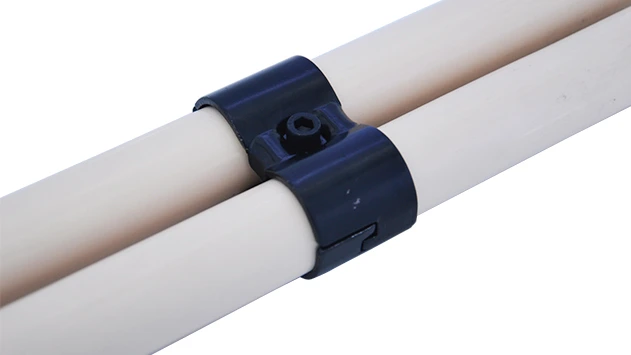
Parallel lean pipe joint used for 2 pcs 28MM lean pipe connection in parallel direction to enhance frame structure, usually for heavy payload requirement for workbench. flow rack, hand trolley.
Step onto the floor of a modern electronics assembly plant, and you'll notice something quietly revolutionary: workstations that adapt like living organisms. A production line reconfigured in hours instead of days. Material racks that shift seamlessly to accommodate new product dimensions. At the heart of this flexibility lies a humble yet critical component: the lean pipe joint. Among the many types of joints that power lean manufacturing systems, the one side rotatory chrome parallel lean pipe joint stands out as a paragon of thoughtful engineering. Designed to balance rigidity with adaptability, this small but mighty component is redefining how factories build, modify, and optimize their workflows. In this article, we'll dive deep into its design features, explore why it matters for production assemble lines, and uncover how it integrates with broader lean system ecosystems—including compatibility with aluminum profile setups and traditional lean pipe structures.
1. The Backbone of Lean Manufacturing: Why Joints Matter More Than You Think
Lean manufacturing isn't just a buzzword—it's a philosophy built on eliminating waste, streamlining processes, and empowering teams to adapt quickly. At its core is the idea that a production system should be as flexible as the market demands. Enter lean pipe systems: modular frameworks built from pipes, joints, and accessories that form workbenches, flow racks, conveyor lines, and material trolleys. These systems are the unsung heroes of modern factories, allowing teams to customize their workspace without welding, drilling, or specialized tools.
But here's the truth: the strength of a lean pipe system lies not in its pipes, but in its joints. A poorly designed joint can turn a "flexible" workstation into a wobbly liability. It can slow down reconfiguration, limit load capacity, or corrode after months of use. On the flip side, a well-engineered joint becomes invisible—seamlessly connecting components while supporting the dynamic needs of the line. This is where the one side rotatory chrome parallel lean pipe joint shines. It's not just a connector; it's a bridge between rigidity and adaptability, between durability and ease of use.
2. Decoding the Design: What Makes This Joint a Game-Changer
Let's break down the features that set the one side rotatory chrome parallel lean pipe joint apart. From its chrome plating to its precision rotation mechanism, every detail is engineered with the realities of factory life in mind.
2.1 Chrome Plating: Durability That Stands Up to the Factory Floor
Walk through any manufacturing plant, and you'll encounter a gauntlet of challenges: oil spills, chemical splashes, constant vibration, and the wear and tear of daily use. A joint that can't withstand these conditions becomes a maintenance headache. That's why this joint features a thick chrome plating—not for aesthetics, but for survival.
Chrome plating adds a hard, corrosion-resistant layer to the joint's base material (typically high-grade steel). Unlike painted or powder-coated alternatives, chrome doesn't chip when bumped by a trolley or scratch when adjusted. It resists rust even in humid environments, such as those found in food processing or electronics manufacturing where moisture control is critical. For production assemble lines that run 24/7, this durability translates to less downtime, fewer replacements, and a longer lifespan for the entire lean system.
2.2 One-Side Rotation: Precision Movement for Adaptive Workflows
The "one side rotatory" feature is where this joint truly earns its name—and its keep. Imagine a workstation where one section needs to pivot to load materials, while the other remains fixed to hold tools. Traditional fixed joints would require disassembling and reassembling the entire structure. With this joint, only one side rotates, allowing for partial reconfiguration without disrupting the entire setup.
The rotation mechanism is a study in precision. Inside the joint, a set of ball bearings ensures smooth, controlled movement—no jerky shifts or stuck positions. A locking collar lets operators set the angle (from 0° to 180°, depending on the model) and secure it in place, so the joint stays rigid during use but releases easily when adjustments are needed. This is a game-changer for tasks like batch production, where a single workstation might assemble multiple product variants. For example, a smartphone assembly line can pivot its component tray from horizontal to 45° to reduce operator strain, then lock it back in place for the next shift.
2.3 Parallel Alignment: Stability Without Sacrificing Flexibility
Parallelism might sound like a term from geometry class, but in lean pipe design, it's critical. When two pipes are connected, they need to stay aligned to maintain structural integrity—especially when supporting heavy loads, like a rack of automotive parts or a conveyor full of circuit boards. The "parallel" in this joint's name refers to its ability to keep connected pipes in straight, parallel lines, even after rotation.
Here's how it works: the joint's clamping surfaces are machined to exact tolerances, ensuring that when pipes are inserted and tightened, they sit perfectly parallel. This prevents the "splayed" effect common in cheaper joints, where pipes drift out of alignment over time, weakening the structure. For lean system setups that need to support hundreds of pounds—think of a flow rack holding 20kg material bins—this stability is non-negotiable. It also reduces the risk of product damage; a wobbly rack might cause bins to tip, but a parallel-aligned joint keeps everything secure.
2.4 Material Science: The Sweet Spot Between Strength and Weight
A joint needs to be strong enough to hold heavy loads but light enough to make reconfiguration easy. The one side rotatory chrome parallel joint strikes this balance using a high-strength steel alloy for the core, paired with lightweight aluminum components in non-load-bearing areas. The result? A joint that can support up to 200kg per connection (depending on pipe diameter) but weighs just 300-400 grams—light enough for a single operator to adjust without tools.
This material choice also plays well with aluminum profile systems, which are growing in popularity for their lightweight, corrosion-resistant properties. Many manufacturers now offer hybrid setups, where aluminum profiles form the main structure and lean pipes handle dynamic components (like conveyor rails). The joint's steel core ensures compatibility with steel lean pipes, while its precision machining allows it to clamp securely onto aluminum profiles with T-slots—no need for special adapters.
2.5 Compatibility: The Glue That Holds Lean Ecosystems Together
A lean pipe joint is only as useful as its ability to work with existing components. The one side rotatory chrome parallel joint is designed to be a team player, compatible with:
- Standard lean pipes (1.2mm to 2.0mm PE-coated or stainless steel, 28mm to 38mm diameter)
- Aluminum profiles (2020, 3030, 4040 series, common in modular workbenches)
- Accessories like caster wheels, roller tracks, and workbench panels
- ESD (electrostatic discharge) components , critical for electronics manufacturing, where static can damage sensitive parts
This compatibility means factories don't have to scrap their existing lean systems to upgrade. A plant using traditional PE-coated lean pipes can add these joints to introduce rotation, while a facility with aluminum profile workstations can integrate them to connect dynamic elements like roller conveyors. It's a future-proof design that grows with the factory.

3. Real-World Impact: How This Joint Transforms Production Assemble Lines
To understand why this joint matters, let's look at a hypothetical (but realistic) scenario: a mid-sized medical device manufacturer producing surgical tools. The company recently won a contract for a new tool variant, requiring its assembly line to handle smaller components and tighter tolerances. With traditional fixed joints, reconfiguring the line would take 2-3 days: disassembling workstations, drilling new holes, welding supports, and testing stability. With one side rotatory chrome parallel joints, the process takes 4 hours.
Here's how it plays out: operators release the locking collars on the workstation's material rack, rotate the upper shelf to a 30° angle to better position small screws and springs, then lock it in place. They adjust the adjacent conveyor by rotating the joint connecting the roller track, tilting it slightly to improve component flow. No welding, no drilling, no downtime beyond a lunch break. The line is back up and running, with operators reporting less strain and faster assembly times. This is the power of adaptive lean systems—and it all starts with the joint.
Another example: a furniture manufacturer using lean pipe flow racks to move wooden panels. The panels vary in size (from 1m to 2m), and traditional racks require manual adjustment of shelf heights—often a two-person job. With these rotatory joints, a single operator can pivot the shelf supports, aligning them with new height markers, and lock them. The parallel alignment ensures the shelves stay level, preventing panels from sliding off. Over time, this reduces labor costs and minimizes the risk of workplace injuries.

4. Comparing the Competition: How This Joint Stacks Up
Not all lean pipe joints are created equal. To highlight what makes the one side rotatory chrome parallel joint unique, let's compare it to three common alternatives:
| Feature | One Side Rotatory Chrome Parallel Joint | Traditional Fixed Joint | Basic Rotatory Joint (Non-Chrome) | Aluminum Profile Joint |
|---|---|---|---|---|
| Rotation Capability | One side, 0°-180°, lockable | None (fixed at 90°/180°) | Full rotation, no locking | Limited (depends on profile, often fixed) |
| Durability | High (chrome-plated steel, corrosion-resistant) | Medium (steel, prone to rust without coating) | Low (plastic or uncoated steel) | High (aluminum, corrosion-resistant) |
| Load Capacity | Up to 200kg per joint | Up to 150kg per joint | Up to 80kg per joint | Up to 250kg (with profile reinforcement) |
| Compatibility | Lean pipe, aluminum profile, ESD components | Lean pipe only | Lean pipe only | Aluminum profile only |
| Best For | Dynamic production lines, mixed-variant assembly | Static workstations, fixed workflows | Light-duty, temporary setups | Heavy-duty, long-term structures |
The table tells a clear story: this joint bridges the gap between fixed rigidity and unstructured flexibility. It offers the durability of aluminum profile joints with the adaptability of rotatory designs, all while playing well with existing lean pipe systems. For manufacturers balancing cost, flexibility, and longevity, it's a sweet spot.
5. Looking Ahead: The Future of Lean Systems and Adaptive Joints
As manufacturing evolves—driven by trends like Industry 4.0, mass customization, and shorter product lifecycles—the demand for adaptive lean systems will only grow. Factories need to be not just flexible, but intelligently flexible: able to adjust quickly without sacrificing safety, quality, or efficiency. Joints like the one side rotatory chrome parallel lean pipe joint are at the forefront of this evolution.
Future iterations may integrate smart features, like sensors that alert operators when a joint is loose or due for maintenance, or digital locks that sync with production schedules to automatically adjust angles for different product runs. For now, though, the current design already delivers tangible value: reducing downtime, improving ergonomics, and empowering teams to own their workspace.
6. Conclusion: The Small Component That Drives Big Change
In the grand scheme of manufacturing, a lean pipe joint might seem insignificant. But as we've explored, it's the linchpin of adaptive lean systems—the component that turns rigid workstations into dynamic, responsive tools. The one side rotatory chrome parallel lean pipe joint, with its chrome durability, precision rotation, parallel stability, and broad compatibility, embodies the lean philosophy: eliminate waste (in time, labor, and materials) and empower people to do their best work.
Whether you're running a high-volume electronics plant or a small custom fabrication shop, the right lean components matter. They're not just parts—they're investments in your team's ability to adapt, innovate, and thrive in a fast-changing market. So the next time you walk through a factory, take a closer look at those unassuming joints. You might just be looking at the future of manufacturing.