- Company Articles
- Products and Technology
- Product knowledge
- Innovative Features of Modern Aluminum Workbench C for Smart Factories

Innovative Features of Modern Aluminum Workbench C for Smart Factories
Related Product
Aluminum Workbench C
aluminum-tube-workbench-is-more-flexible-and-durable,-compared-with-traditional-pe/abs-coated-steel-tube.-it-is-easy-to-assemble,-anti-corrosion,-rust-protection,-and-recycle-use-after-disassemble.
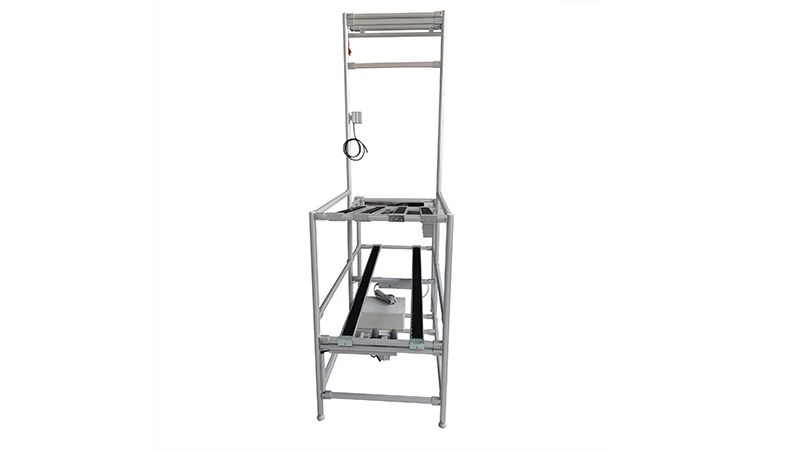
In the era of smart manufacturing, where automation, IoT integration, and data-driven efficiency define production floors, every component of the factory ecosystem matters—even the humble workbench. Often overlooked, the workbench is the silent backbone of daily operations: a hub where assembly, testing, and quality checks converge. As factories evolve into "smart" environments, the demands on these workhorses have skyrocketed. Enter the Aluminum Workbench C —a purpose-built solution engineered to align with the agility, durability, and precision required of modern manufacturing. More than just a table, it's a modular, operator-centric tool designed to enhance productivity, reduce waste, and seamlessly integrate with lean systems. Let's explore the innovative features that make Aluminum Workbench C a game-changer for smart factories.
1. Modular Design: Built on Aluminum Extrusion Profiles for Unmatched Flexibility
At the heart of Aluminum Workbench C lies its modular architecture, powered by aluminum extrusion profiles —a material celebrated for its strength, lightness, and adaptability. Unlike traditional workbenches made from fixed wood or welded steel, Aluminum Workbench C leverages the versatility of aluminum extrusion profiles to transform how factories design and reconfigure workspaces.
Aluminum extrusion profiles are created by pushing heated aluminum through a die, resulting in consistent, precision-engineered shapes with built-in T-slots. These slots act as universal connection points, allowing for quick attachment of aluminum profile accessories such as brackets, joints, shelves, and tool holders—no welding, drilling, or specialized tools required. For example, adding a second shelf or mounting a monitor arm takes minutes, not hours, using simple fasteners that slide into the T-slots. This modularity is a lifeline for smart factories, where production lines frequently retool to accommodate new products or processes.
Consider a scenario where a electronics manufacturer shifts from assembling smartphones to wearables. With Aluminum Workbench C, the same workbench can be reconfigured: lower the height for smaller components, add dividers to organize tiny parts, or attach a mini conveyor to feed materials directly to the operator. This flexibility eliminates the need to invest in new workbenches for every product change, reducing capital costs and downtime.
The modularity extends to disassembly, too. If a factory relocates or expands, Aluminum Workbench C can be taken apart, transported, and reassembled on-site with minimal effort—unlike heavy steel workbenches that often end up in landfills during facility upgrades. This not only supports sustainability goals but also aligns with the "lean" principle of maximizing resource efficiency.
2. Ergonomics Redefined: Prioritizing Operator Wellbeing in High-Tempo Environments
Smart factories thrive on human-machine collaboration, and the productivity of that collaboration hinges on operator comfort. Aluminum Workbench C reimagines ergonomics, moving beyond basic adjustability to create a workspace that adapts to the operator, not the other way around.
One of its standout features is height adjustability, made possible by durable aluminum legs and precision-engineered casters. Operators can tweak the workbench height from 70cm to 95cm with a simple hand crank or electric lift (depending on the model), ensuring optimal alignment with their elbows—critical for reducing strain during repetitive tasks like assembly or packaging. For factories with operators of varying heights, this eliminates the one-size-fits-all problem of traditional workbenches, where tall workers hunch and shorter ones stretch, leading to fatigue and injuries.
The work surface itself is another ergonomic win. Crafted from a scratch-resistant aluminum honeycomb panel, it balances rigidity with a slight give, reducing pressure on wrists during prolonged use. Optional add-ons like anti-fatigue mats (secured via T-slots) further cushion standing operators, while tiltable sections (adjustable from 0° to 30°) allow workers to position materials at a comfortable angle—ideal for tasks like soldering or inspecting intricate components.
Cable management is often an afterthought in workbench design, but not here. Aluminum Workbench C integrates hidden channels and clip-on cable trays (another example of aluminum profile accessories ) to route power cords, data cables, and air hoses neatly beneath the surface. This eliminates tangled wires that trip operators or create clutter, keeping the workspace organized and reducing the risk of accidents. For operators who use tablets or barcode scanners, integrated USB ports in the workbench edge provide easy access to power, keeping devices charged without cluttering the surface.
The result? A workspace that reduces physical strain, cuts down on fatigue-related errors, and boosts overall operator satisfaction. In smart factories, where every second counts, this translates directly to higher throughput and lower absenteeism.

3. Durability & Longevity: Aluminum's Strength Meets Factory Toughness
Smart factories operate 24/7, with workbenches enduring constant use, heavy loads, and exposure to oils, coolants, and dust. Aluminum Workbench C is built to withstand this chaos, thanks to the inherent properties of aluminum extrusion profiles and thoughtful engineering.
Aluminum is renowned for its strength-to-weight ratio: it's 30% lighter than steel but offers comparable load-bearing capacity. This means Aluminum Workbench C can support up to 500kg of equipment—think industrial printers, testing machines, or stacks of heavy component boxes—without bending or warping. The aluminum extrusion profiles are reinforced with internal ribs, adding rigidity that prevents sagging even under prolonged stress. Unlike wood, which splinters or warps with moisture, or steel, which rusts when exposed to chemicals, aluminum resists corrosion, making it ideal for factories with strict hygiene standards (e.g., food packaging or pharmaceutical manufacturing).
Maintenance is equally hassle-free. A quick wipe with a damp cloth removes oil or dust, and minor scratches can be buffed out without compromising the material's integrity. Unlike painted steel workbenches, aluminum doesn't chip or peel, ensuring the workbench retains its professional appearance for years. In fact, manufacturers report a lifespan of 15–20 years for Aluminum Workbench C, compared to 5–7 years for traditional steel models—a testament to its durability.
Even the smallest components are built to last. The casters, for example, use high-grade polyurethane wheels that roll smoothly over factory floors without marking them, while the aluminum profile accessories (like joints and brackets) are anodized to resist wear and tear. This attention to detail ensures the workbench remains functional and reliable, even in the most demanding environments.

4. ESD Compatibility: Safeguarding Sensitive Electronics in Smart Manufacturing
Smart factories often specialize in high-tech products—semiconductors, IoT sensors, robotics components—where even a tiny static discharge can destroy millions of dollars in equipment. Aluminum Workbench C addresses this critical need by doubling as an ESD workstation , integrating features that neutralize static electricity and protect sensitive electronics.
At its core is an ESD-safe work surface: a conductive aluminum honeycomb panel coated with a static-dissipative finish. This surface ensures any static charge generated by operator movement or equipment is safely grounded, rather than building up and discharging onto components. The workbench legs are fitted with anti-slip, conductive feet that connect to the factory's grounding system, creating a continuous path for static to flow away from the workspace.
For added protection, optional ESD accessories can be integrated via the T-slots: grounding wristband ports, ionizing air nozzles to neutralize static on incoming parts, and conductive bins to store sensitive components. Even the aluminum profile accessories, like tool holders and dividers, are made from static-dissipative materials, ensuring no part of the workspace becomes a static hazard.
In industries like automotive electronics or medical device manufacturing, where ESD compliance is mandated by standards like ANSI/ESD S20.20, Aluminum Workbench C isn't just a convenience—it's a necessity. By integrating ESD protection directly into the workbench design, factories avoid the cost of retrofitting traditional workbenches with aftermarket static-control solutions, which are often less reliable and more prone to failure.

5. Seamless Integration with Lean Systems: Eliminating Waste, Boosting Flow
Smart factories are built on the principles of lean system —maximizing value while minimizing waste. Aluminum Workbench C is designed to be a linchpin in this ecosystem, connecting with other lean tools like flow racks, conveyors, and turnover trolleys to create a seamless, efficient workflow.
Consider material flow: in a lean production line, materials should arrive at the operator's fingertips exactly when needed (the "just-in-time" principle). Aluminum Workbench C can be equipped with side-mounted roller tracks (using aluminum profile accessories like roller track connectors) that feed parts directly from a flow rack or conveyor. This eliminates time wasted walking to fetch materials, reducing non-value-added movement and cutting cycle times.
For assembly lines, the workbench can be configured with built-in bins and dividers (attached via T-slots) to organize components by sequence, ensuring operators follow the most efficient order. Excess inventory is minimized, as only the necessary parts are stored at the workbench—another lean hallmark. When production is complete, finished products can slide onto a gravity conveyor (mounted to the workbench's rear) and move to the next station, creating a continuous flow that eliminates bottlenecks.
The workbench also supports visual management, a key lean practice. Magnetic whiteboard panels (attached via T-slots) can display standard operating procedures (SOPs) or production metrics, keeping operators aligned on goals. Color-coded bins and tool holders reduce errors by making it easy to identify the right part or tool at a glance. Even the workbench's modularity supports "5S"—a lean methodology for workplace organization—by allowing operators to "sort" (remove unnecessary items), "set in order" (arrange tools logically), and "sustain" (maintain the setup) with minimal effort.
By integrating so tightly with lean systems, Aluminum Workbench C doesn't just improve individual operator productivity—it elevates the entire production line. Factories report up to 20% reductions in lead times and 15% fewer defects after adopting the workbench, as waste is eliminated and workflows become more predictable.
Traditional vs. Modern: How Aluminum Workbench C Stacks Up
| Feature | Traditional Steel Workbench | Aluminum Workbench C |
|---|---|---|
| Material | Heavy steel; prone to rust and corrosion | Aluminum extrusion profile; corrosion-resistant and lightweight |
| Customization | Fixed design; requires welding or drilling for modifications | Modular with aluminum profile accessories; reconfigurable in minutes |
| Ergonomics | Static height; minimal adjustability | Height-adjustable; tiltable surface; integrated cable management |
| ESD Protection | Aftermarket add-ons (unreliable) | Built-in ESD-safe surface and grounding; optional ESD accessories |
| Lean Integration | Standalone; limited compatibility with flow racks/conveyors | Seamless connection to lean tools; supports flow and visual management |
| Lifespan | 5–7 years (often replaced due to rust/damage) | 15–20 years (durable aluminum and wear-resistant components) |
Conclusion: The Workbench as a Catalyst for Smart Factory Success
In the rush to adopt cutting-edge automation and IoT, it's easy to overlook the foundational tools that keep smart factories running. Aluminum Workbench C reminds us that innovation isn't just about high-tech gadgets—it's about reimagining even the most basic components to align with modern manufacturing needs. With its modular aluminum extrusion profile design, ergonomic focus, durability, ESD safety, and lean system integration, it's more than a workbench: it's a strategic asset that enhances productivity, protects sensitive equipment, and supports the wellbeing of the operators who power smart factories.
As factories continue to evolve, Aluminum Workbench C stands ready to adapt—whether that means integrating with new automation tools, supporting sustainable manufacturing goals, or scaling to meet growing demand. In the end, it's a testament to the power of thoughtful design: by focusing on flexibility, durability, and human-centricity, Aluminum Workbench C doesn't just keep up with smart factories—it helps them thrive.