- Company Articles
- Products and Technology
- Product knowledge
- Innovative Locking Mechanisms for Castor Install Bases in Stationary Work Modes

Innovative Locking Mechanisms for Castor Install Bases in Stationary Work Modes
Related Product
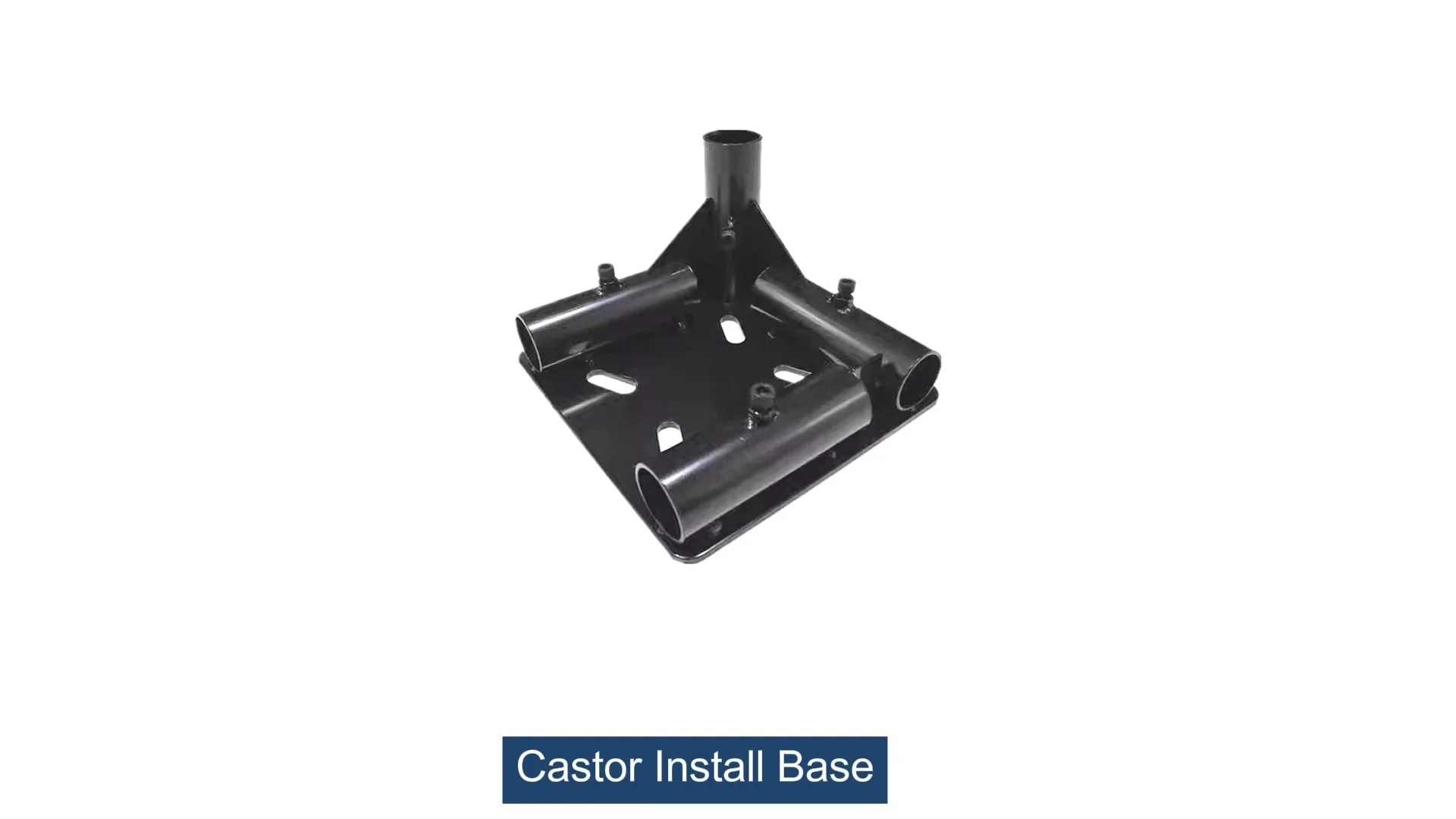
Castor Install Base
Castor install base, used for connection between pipe and castor, it can connect 4 pcs pipe by 1 pcs castor base, to make the structure strong and stable.
Introduction: The Unsung Hero of Workplace Mobility and Stability
Walk into any manufacturing plant, warehouse, or even a busy office, and you'll likely spot equipment on wheels—trolleys, workbenches, tool cabinets, and more. That mobility is a game-changer, allowing teams to rearrange spaces, transport materials, and adapt to shifting workflow needs in minutes. But here's the thing: for all the convenience of moving these tools around, there's a critical moment when they need to stay put. Whether it's a workbench where a technician is assembling delicate electronics, a material rack loaded with heavy components, or a mobile station in a lab conducting precision tests, stationary stability is just as important as mobility. And that's where the castor install base steps into the spotlight.
The castor install base is the unsung hero that connects caster wheels to the equipment itself. It's not just a simple bracket; it's the bridge between movement and stillness. When designed well, it ensures smooth rolling when you need it and rock-solid stability when you don't. But for years, many workplaces have relied on basic, outdated locking mechanisms—think flimsy foot brakes that slip on smooth floors, or manual levers that require Herculean effort to engage. These old-school solutions don't just frustrate workers; they create real risks. A workbench that shifts mid-assembly can ruin hours of precise work. A material rack that rolls unexpectedly might lead to spills, damaged inventory, or worse, injuries. In high-stakes environments like production assemble lines or ESD workstations, where even a millimeter of movement can compromise quality or safety, these issues aren't just annoyances—they're liabilities.
This article dives into the world of innovative locking mechanisms for castor install bases, specifically designed to address the challenges of stationary work modes. We'll explore why traditional locks fall short, the cutting-edge designs reshaping workplace stability, and how these innovations are making workspaces safer, more efficient, and more adaptable than ever. Along the way, we'll touch on key components like adjustable leveling feet, the role of workbenches in showcasing these technologies, and how choosing the right caster and accessories can transform your operations. Let's start by unpacking why the humble castor install base deserves more attention than it often gets.
The Critical Role of Castor Install Bases in Modern Workspaces
To understand why innovative locking mechanisms matter, we first need to appreciate what a castor install base actually does. At its core, this component is the interface between the equipment (say, a workbench or trolley) and the caster wheels. It's responsible for distributing the equipment's weight evenly across the casters, ensuring smooth movement, and—most importantly—housing the locking mechanism that keeps everything stationary when needed. Think of it as the foundation of a building: if the foundation is weak, the entire structure is at risk, no matter how well the rest is built.
Modern workspaces are all about flexibility. A manufacturing floor might reconfigure its layout weekly to accommodate new product runs. A warehouse might shift storage racks to optimize picking routes. Even offices now use mobile furniture to create collaborative zones on the fly. In all these scenarios, equipment needs to transition seamlessly from "moving mode" to "stationary mode." The castor install base is the linchpin of that transition. A poorly designed base can lead to uneven weight distribution, making the equipment wobble when moving or, worse, tip over. A subpar locking mechanism can mean the equipment never truly locks, leading to constant readjustments and wasted time.
Consider a typical workbench in a production line. This isn't just a table; it's a hub of activity where workers assemble, test, or package products. Depending on the task, the workbench might need to be moved to a new location (say, closer to a conveyor belt) and then locked down for hours of precise work. If the castor install base's locking mechanism slips even slightly during that time, the worker might have to stop, readjust the bench, and recheck their measurements—costing valuable minutes and risking errors. Multiply that by dozens of workbenches across a facility, and the productivity loss adds up fast.
Another example: ESD workstations, which are critical in electronics manufacturing to prevent static electricity from damaging sensitive components. These workstations often need to be grounded and perfectly stable to ensure accurate testing and assembly. A castor install base that doesn't lock securely could compromise the grounding or introduce micro-movements that affect test results. In industries where quality control is non-negotiable, this isn't just a productivity issue—it's a compliance issue.
The bottom line? The castor install base isn't an afterthought. It's a critical component that impacts safety, efficiency, and product quality. And as workspaces evolve to be more dynamic, the demands on these bases are only growing. That's why innovative locking mechanisms are no longer "nice-to-haves"—they're essential tools for modern operations.

The Problem with Traditional Locking Mechanisms: Why "Good Enough" Isn't Enough Anymore
For decades, the default approach to locking casters has been surprisingly basic. Many facilities still rely on two main types: the foot brake and the side lever lock. Let's break down how these work—and why they're failing to keep up with today's workplace demands.
First, the foot brake. This is the most common design: a small pedal attached to the caster wheel that you press down with your foot to engage a brake pad against the wheel. It's simple, inexpensive, and intuitive. But simplicity often comes with trade-offs. Foot brakes are prone to slipping, especially on smooth or oily floors common in manufacturing settings. The brake pad itself wears down over time, reducing its grip. And if the floor is uneven (which, let's be honest, most industrial floors are), pressing the pedal might not fully engage the brake on all four casters, leaving the equipment teetering or slowly rolling.
Then there's the side lever lock, which uses a lever to manually engage a pin or clamp that locks the wheel in place. While more durable than foot brakes in some cases, these levers can be hard to reach, especially on low-profile equipment. Workers might have to kneel or bend awkwardly to engage them, increasing the risk of strain injuries. Worse, if the lever isn't fully engaged (a common issue with tired or distracted workers), the lock can disengage unexpectedly. In busy environments, where workers are juggling multiple tasks, this human error factor is a significant risk.
Beyond these design flaws, traditional locking mechanisms often fail to address two critical challenges: uneven floors and heavy loads. Most workplaces aren't perfectly level. A slight slope, a cracked tile, or a raised threshold can throw off even the best foot brake, causing the equipment to "walk" slowly over time. And as equipment gets heavier—think workbenches loaded with tools, or material racks stacked with components—traditional locks struggle to handle the pressure. The brake pads or pins wear out faster, and the castor install base itself might flex under the weight, reducing locking efficiency.
Let's add another layer: maintenance. Traditional locks are often difficult to service. If a foot brake pad wears out, replacing it might require removing the entire caster, which takes time and specialized tools. In facilities with tight production schedules, downtime for maintenance is a major headache. As a result, many teams put off repairs, letting the problem get worse until the lock fails completely.
Perhaps the biggest issue, though, is safety. A workbench that rolls unexpectedly can cause a worker to lose balance, leading to falls. A material rack that shifts might topple, injuring someone or damaging expensive inventory. In industries like aerospace or medical device manufacturing, where precision is critical, even a tiny movement can ruin a batch of products, costing thousands of dollars. Traditional locks simply can't guarantee the level of reliability needed in these high-stakes environments.
It's clear: "good enough" locking mechanisms are holding workplaces back. They're costing time, increasing risks, and limiting the flexibility of modern operations. The good news? Innovators in material handling and industrial design have been hard at work developing solutions that address these flaws head-on. Let's explore the cutting-edge locking mechanisms that are redefining what's possible for castor install bases.

Innovative Locking Mechanisms: Redefining Stability in Stationary Modes
Today's manufacturers and facility managers demand more from their castor install bases: reliability, ease of use, durability, and adaptability. To meet these needs, engineers have developed a new generation of locking mechanisms that go far beyond the basic foot brake. Let's dive into four of the most promising innovations, how they work, and why they're changing the game.
1. Heavy-Duty Cam Locking Systems: Power and Precision in One
Cam locking systems are quickly becoming a favorite in industrial settings, and for good reason. Unlike traditional foot brakes that press a pad against the wheel, cam locks use a rotating cam (a curved or eccentric disc) to clamp down on the wheel axle, effectively locking it in place. This design distributes pressure evenly across the axle, creating a much stronger hold than brake pads alone.
Here's how it works: When you engage the lock (usually via a foot pedal or a lever), the cam rotates into position, gripping the axle tightly. Because the cam is made from high-strength steel, it can withstand heavy loads without deforming. Many cam lock systems also include a secondary lock that prevents the cam from rotating back accidentally, adding an extra layer of safety.
The benefits are clear. Cam locks offer superior load capacity—some models can handle up to 2,000 pounds per caster, making them ideal for heavy equipment like industrial workbenches or material racks. They're also more resistant to slipping, even on oily or uneven floors, because they lock the axle rather than just the wheel surface. And since the cam doesn't rub against the wheel (which causes wear), these locks have a much longer lifespan than traditional foot brakes.
One of the best features of modern cam lock systems is their adjustability. Many models allow you to fine-tune the cam's position to account for wear over time, ensuring a tight lock even after years of use. This adjustability also makes them compatible with a wide range of caster wheel sizes and materials, from rubber to polyurethane.
2. Pneumatic Locking Mechanisms: Smooth, Effortless Control for Sensitive Environments
For environments where precision and ease of use are top priorities—think labs, cleanrooms, or electronics manufacturing—pneumatic locking mechanisms are a game-changer. These systems use compressed air to engage the lock, eliminating the need for manual force and ensuring consistent, smooth operation every time.
The setup is surprisingly straightforward: a small air cylinder is integrated into the castor install base, connected to a foot pedal or a push-button control. When you activate the lock, compressed air flows into the cylinder, pushing a piston that engages a brake pad or clamp against the wheel or axle. Releasing the lock vents the air, retracting the piston and freeing the wheel.
Why pneumatic? For starters, they're incredibly easy to use. Engaging the lock requires minimal effort—just a light tap on the pedal or a press of a button—reducing strain on workers. This is especially valuable in facilities where workers might need to lock and unlock equipment dozens of times a day. Pneumatic systems also provide consistent locking force, so you don't have to worry about "half-locked" casters due to uneven foot pressure.
Another advantage is cleanliness. Pneumatic locks have fewer moving parts than mechanical systems, which means less dust and debris buildup—critical in cleanrooms or ESD environments where contamination is a risk. They're also quieter than traditional locks, which is a big plus in noise-sensitive settings like offices or research labs.
The main downside? Pneumatic systems require a compressed air source, which might not be available in all facilities. However, many modern systems come with small, portable air compressors or can be integrated into existing facility air lines, making them more accessible than you might think.
3. Electromagnetic Locking Systems: Smart Locks for the Connected Workplace
As Industry 4.0 transforms manufacturing and logistics, it's no surprise that castor install bases are getting smarter too. Electromagnetic locking systems use electricity to engage powerful magnets that lock the caster wheels in place, offering unprecedented control and integration with smart workplace systems.
Here's the tech breakdown: An electromagnet is embedded in the castor install base, positioned near a metal plate on the wheel or axle. When electricity flows to the magnet, it creates a strong magnetic field that pulls the metal plate into place, locking the wheel. Cutting the power releases the magnet, allowing the wheel to roll freely. Many systems also include sensors that detect when the equipment is in position and automatically engage the lock—no human input required.
The possibilities here are endless. Imagine a production line where workbenches automatically lock into place when they reach their designated position on the factory floor, guided by RFID tags or GPS. Or a lab where mobile testing stations lock down the moment a test starts, ensuring no movement during data collection. Electromagnetic locks can also be integrated with safety systems: if a worker approaches a moving piece of equipment, the locks could engage automatically to prevent collisions.
Beyond smart integration, electromagnetic locks offer exceptional holding power. The magnetic force can be adjusted based on the load, ensuring a secure lock for everything from lightweight carts to heavy machinery. They're also highly durable, with no moving parts to wear out, and require minimal maintenance—just occasional checks to ensure the electrical connections are secure.
The main considerations? Cost and power. Electromagnetic systems are more expensive upfront than mechanical or pneumatic options, and they require a power source (battery or wired). However, for facilities already invested in smart technologies, the benefits in terms of automation and data collection often outweigh the costs.
4. Dual-Action Locking Casters: Redundancy for Maximum Safety
Sometimes, the best innovation is combining proven designs to create something stronger. Dual-action locking casters do just that by integrating two locking mechanisms into one castor install base—usually a wheel lock and an axle lock—to ensure maximum stability.
Here's the logic: Wheel locks (like traditional foot brakes) prevent the wheel from rotating, while axle locks prevent the wheel from swiveling. By engaging both at once, you eliminate two potential points of movement. For example, if the wheel lock slips slightly, the axle lock keeps the caster from turning, preventing the equipment from rolling sideways. This redundancy is critical in high-risk environments where even a small movement could have serious consequences.
Dual-action locks are often operated via a single lever or pedal, making them easy to use despite their complexity. When you engage the lock, both mechanisms activate simultaneously; disengage, and both release. This simplicity ensures workers don't forget to engage one lock, which could defeat the purpose of the redundancy.
These locks are particularly popular in material handling, where equipment is often loaded unevenly or moved over rough terrain. For example, a turnover trolley loaded with boxes might have uneven weight distribution, making it prone to tipping if only one lock is engaged. Dual-action locks reduce that risk by securing both rotation and swiveling.
The trade-off? Dual-action locks are bulkier than single-mechanism locks, so they might not fit in tight spaces. They're also slightly more expensive, but the added safety is often worth the investment for high-stakes applications.

The Benefits of Innovative Locking Mechanisms: More Than Just "Staying Put"
At first glance, the main benefit of a better locking mechanism is obvious: equipment stays put. But dig deeper, and you'll find that these innovations deliver a host of secondary benefits that impact everything from worker safety to the bottom line. Let's break down the most significant advantages.
Safety First: Reducing Accidents and Injuries
Safety is the most critical benefit, and it can't be overstated. According to the Bureau of Labor Statistics, slips, trips, and falls are among the leading causes of workplace injuries, often due to unstable equipment or rolling objects. Innovative locking mechanisms drastically reduce these risks by ensuring equipment stays locked until intentionally released. Cam locks and dual-action locks, with their superior grip, prevent slow rolling on slopes or uneven floors. Pneumatic and electromagnetic systems reduce human error by making locks easier to engage fully. Even something as simple as a more durable lock can prevent accidents caused by worn-out brake pads.
Injuries from unstable equipment aren't just bad for workers—they're bad for business. Workers' compensation claims, downtime, and lost productivity add up fast. By investing in better locking mechanisms, facilities can reduce these costs while creating a safer, more supportive work environment.
Efficiency Gains: Less Time Adjusting, More Time Working
How many times a day do workers stop what they're doing to readjust a wobbly workbench or reposition a rolling cart? It might seem like a minor annoyance, but those minutes add up. A study by the Manufacturing Institute found that workers spend up to 15% of their time on non-value-added tasks like equipment adjustment. Innovative locking mechanisms cut that time dramatically by keeping equipment stable from the start.
For example, a cam lock that engages with a single, firm press means no more "testing" the lock by gently pushing the equipment. A pneumatic system that locks all four casters simultaneously eliminates the need to check each caster individually. And electromagnetic locks that integrate with smart systems can automatically lock equipment in the optimal position, reducing setup time for new workflows.
The result? Workers spend more time on core tasks—assembling products, picking orders, conducting tests—and less time wrestling with equipment. Over a year, that efficiency gain can translate to thousands of dollars in saved labor costs.
Durability and Longevity: Lower Maintenance, Fewer Replacements
Traditional locking mechanisms wear out quickly, especially under heavy use. Brake pads need replacing, levers bend, and springs lose tension. Each replacement means downtime for the equipment and added costs for parts and labor. Innovative mechanisms, by contrast, are built to last. Cam locks use high-strength steel components that resist wear. Pneumatic systems have fewer moving parts, reducing points of failure. Electromagnetic locks have no physical contact during operation, minimizing friction and wear.
Many modern systems also include self-diagnostic features, like sensors that alert maintenance teams when parts are wearing out—allowing for proactive repairs before a lock fails. This predictive maintenance approach further reduces downtime and extends the lifespan of the castor install base and casters.
Adaptability: Thriving in Dynamic Workspaces
Today's workspaces aren't static, and neither should their equipment. Innovative locking mechanisms are designed to adapt to changing needs. For example, adjustable leveling feet (a key accessory in many caster systems) work hand-in-hand with locking mechanisms to stabilize equipment on uneven floors. These feet can be extended or retracted to compensate for slopes or cracks, ensuring the equipment sits level even when the lock is engaged.
Dual-action locks, with their ability to lock both rotation and swiveling, make equipment more versatile. A single workbench can be moved to a new location, locked down for assembly, then unlocked and repositioned as a mobile testing station—all without compromising stability. This adaptability is critical for facilities that need to quickly reconfigure layouts for new product lines or seasonal demand.
Application Spotlight: How Innovative Castor Install Bases Transform Workbenches
If there's one piece of equipment that benefits most from innovative locking mechanisms, it's the workbench. Workbenches are the heart of countless operations—from manufacturing and assembly to labs and repair shops. They need to be mobile enough to reposition as workflows change and stable enough to support precise, detailed work. Let's take a closer look at how advanced castor install bases are elevating workbench performance.
Consider a typical production workbench in an electronics plant. This bench might hold a soldering iron, a microscope, bins of components, and a laptop for quality control checks. When the line needs to reconfigure for a new circuit board design, the bench is wheeled to a new position. Once there, it needs to stay perfectly still for hours while a technician solders tiny components onto the board—one wrong move, and the solder joint is ruined. A traditional foot brake might slip, causing the bench to shift mid-solder. A cam lock, with its tight axle grip, ensures the bench stays put, even if someone bumps into it.
For ESD workbenches, which are critical for preventing static damage to electronics, stability is even more important. These benches are grounded to dissipate static electricity, and any movement could disrupt that grounding path. A pneumatic locking system that engages all four casters at once ensures the bench is level and stable, maintaining consistent grounding throughout the workday. The smooth, effortless engagement of the pneumatic lock also reduces the risk of static buildup caused by friction from manual lever operation.
In industrial settings, heavy-duty workbenches loaded with tools and materials require locks that can handle extreme weight. A dual-action cam lock system, with its ability to lock both the wheel and axle, is ideal here. For example, a workbench used in automotive repair might weigh 500 pounds or more when fully loaded. A dual-action lock prevents both rolling and swiveling, even if the bench is jostled while a mechanic is using a torque wrench or hammer.
Adjustable leveling feet are another key accessory that pairs perfectly with innovative castor install bases on workbenches. Many industrial floors are far from level, with cracks, bumps, or slopes that can make even a locked workbench wobble. Leveling feet allow workers to fine-tune the bench's height and stability, compensating for floor irregularities. When combined with a strong locking mechanism, this ensures the bench is both stable and level—critical for tasks like measurements, assembly, or inspection.
Perhaps the most exciting development is the integration of smart locking mechanisms with modular workbenches. These workbenches can be reconfigured with different accessories (shelves, tool holders, lighting) and moved to different areas of the facility. Electromagnetic locks that connect to the facility's IoT system can automatically lock the bench when it's in a designated zone, track its location, and even alert managers if it's moved without authorization. This level of control and visibility is transforming how facilities manage their workspaces.
In short, workbenches are a perfect example of how innovative locking mechanisms turn good equipment into great equipment. By ensuring mobility when needed and rock-solid stability when not, these mechanisms make workbenches more versatile, efficient, and safe—ultimately driving better outcomes for workers and businesses alike.
Comparing Innovative Locking Mechanisms: Which One Is Right for You?
With so many options available, choosing the right locking mechanism for your castor install base can feel overwhelming. To help simplify the decision, we've put together a comparison table of the four main types we've discussed, evaluating key factors like load capacity, ease of use, maintenance needs, and ideal applications.
| Locking Mechanism | Max Load Capacity (per caster) | Ease of Engagement | Maintenance Requirements | Best For | Cost Range |
|---|---|---|---|---|---|
| Heavy-Duty Cam Lock | Up to 2,000 lbs | Medium (foot pedal or lever, firm pressure needed) | Low (adjustable cam for wear; occasional lubrication) | Heavy equipment, industrial workbenches, material racks | Moderate ($50–$150 per caster) |
| Pneumatic Lock | Up to 1,500 lbs | High (light foot pedal or push-button) | Medium (air filter changes, occasional cylinder checks) | Labs, cleanrooms, ESD workstations, sensitive environments | High ($100–$300 per caster, plus air system costs) |
| Electromagnetic Lock | Up to 1,800 lbs | Very High (automatic or push-button) | Low (no physical wear; electrical connection checks) | Smart factories, automated workflows, IoT-integrated facilities | Very High ($200–$500 per caster, plus power and control system costs) |
| Dual-Action Lock | Up to 1,200 lbs | Medium (single lever/pedal for both locks) | Medium (two mechanisms to inspect; occasional adjustment) | Uneven floors, material handling, equipment with uneven loads | Moderate-High ($75–$200 per caster) |
As you review this table, keep in mind your facility's specific needs. For example, if you're running a heavy manufacturing plant with loads over 1,500 pounds, cam locks are likely the best fit. If you're in a lab where ease of use and cleanliness are critical, pneumatic might be worth the investment. And if you're building a smart factory with IoT integration, electromagnetic locks could future-proof your operations.
Other factors to consider: floor type (smooth vs. rough), frequency of lock engagement (do workers lock/unlock dozens of times a day?), and industry regulations (e.g., ESD requirements, safety standards). It's also worth consulting with a caster and accessories supplier who can assess your facility and recommend the best solution based on your unique workflow.
The Future of Castor Install Bases: What's Next for Locking Mechanisms?
As workplaces continue to evolve, so too will the technology behind castor install bases and their locking mechanisms. Here are a few trends to watch in the coming years that could further transform how we balance mobility and stability.
Smart Locks with IoT Integration
The rise of Industry IoT (IIoT) is opening new possibilities for locking mechanisms. Future systems could include sensors that monitor lock engagement in real time, sending data to facility management software to alert teams if a lock fails or if equipment is moved without authorization. Imagine a scenario where your facility's dashboard shows the status of every caster lock in real time—green for locked, yellow for partially engaged, red for unlocked. This level of visibility would allow for instant response to issues before they become accidents.
Some manufacturers are already experimenting with self-locking casters that use AI to "learn" workflow patterns. For example, a workbench that automatically locks when it enters a designated assembly zone and unlocks when it's time to move to the next station. This automation could eliminate human error entirely and further boost efficiency.
Eco-Friendly Materials and Designs
Sustainability is becoming a top priority for facilities worldwide, and castor install bases are no exception. Future locks may use recycled or biodegradable materials for components like brake pads or casters. Pneumatic systems could integrate with energy-efficient compressors that reduce air consumption. Even electromagnetic locks might use rare-earth magnets sourced from sustainable mines or recycled materials.
Another trend is modular design, which allows components to be replaced individually rather than replacing the entire castor install base when a part wears out. This "repairable" approach reduces waste and extends the lifespan of the equipment, aligning with circular economy principles.
Adaptive Locking for Extreme Environments
As manufacturing and logistics expand into more extreme environments—think Arctic warehouses, desert facilities, or offshore platforms—locking mechanisms will need to adapt. Future designs might include temperature-resistant materials for cam locks, corrosion-proof coatings for pneumatic cylinders, or waterproof enclosures for electromagnetic systems. Some companies are even exploring vacuum-based locks that create a seal with the floor, providing extra grip in low-friction environments like ice or sand.
Conclusion: Investing in Stability to Unlock Workplace Potential
The castor install base might not be the most glamorous piece of equipment in your facility, but its impact on safety, efficiency, and productivity is undeniable. For too long, workplaces have settled for basic, unreliable locking mechanisms that do more harm than good—causing accidents, wasting time, and limiting flexibility. But as we've explored, innovative locking mechanisms are changing the game.
From heavy-duty cam locks that grip axles like a vice to smart electromagnetic systems that integrate with IoT, these technologies offer a better way to balance mobility and stability. They reduce injuries, cut downtime, and make workplaces more adaptable to changing needs. And when paired with accessories like adjustable leveling feet and high-quality caster wheels, they transform ordinary equipment into powerful tools that support modern workflows.
The question isn't whether you should upgrade your locking mechanisms—it's when. Whether you're running a small workshop or a large manufacturing plant, the benefits of these innovations far outweigh the upfront costs. By investing in better castor install bases, you're not just buying locks—you're investing in a safer, more efficient, and more productive workplace for your team.
So take a look around your facility. How many workbenches, carts, or racks are using outdated locks? Which pieces of equipment cause the most frustration due to instability? Those are your starting points. Consult with a reputable caster and accessories supplier to assess your needs, and start small if you need to—upgrade one workbench or one material rack and see the difference for yourself. We're willing to bet you'll wonder how you ever worked without them.
In the end, stability isn't just about keeping equipment still. It's about unlocking your team's potential to do their best work, free from the distractions and dangers of unreliable tools. And that's an investment that pays dividends for years to come.