- Company Articles
- Products and Technology
- Product knowledge
- Innovative Uses of Lean Pipe Clamp Chrome in Smart Manufacturing

Innovative Uses of Lean Pipe Clamp Chrome in Smart Manufacturing
Related Product
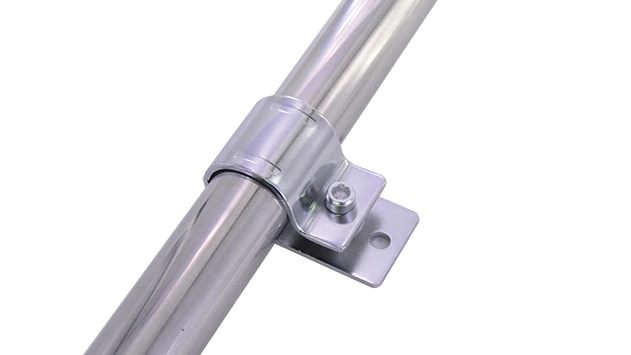
Lean Pipe Clamp Chrome
Lean pipe clamp is used for rack system hang monitor or other panel for workbenck, flowrack in production daily use.
Redefining Flexibility and Efficiency in Modern Production Lines
The New Era of Smart Manufacturing: Why Modularity Matters
Smart manufacturing isn't just a buzzword—it's a fundamental shift in how factories operate. Today's production lines face unprecedented demands: shorter product lifecycles, frequent design changes, and the need to scale operations up or down at a moment's notice. Traditional rigid infrastructure—welded metal frames, fixed conveyor belts, and one-size-fits-all workbenches—simply can't keep pace. Enter modular solutions: the unsung heroes that empower manufacturers to adapt, innovate, and stay competitive.
At the heart of this modular revolution lies a humble yet powerful component: the lean pipe clamp chrome. Often overlooked in discussions about Industry 4.0, this small but mighty tool is transforming how production lines are built, reconfigured, and optimized. Unlike conventional clamps that lock systems into permanent layouts, lean pipe clamp chrome offers a unique blend of strength, versatility, and ease of use. It's the connective tissue that turns disjointed parts—lean pipe joints, aluminum profiles, roller tracks—into cohesive, adaptable systems. In this article, we'll explore how this unassuming component is driving innovation in smart manufacturing, from custom workbenches to dynamic material handling setups.
Understanding Lean Pipe Clamp Chrome: More Than Just a Fastener
Before diving into its applications, let's take a closer look at what makes lean pipe clamp chrome special. At its core, it's a clamping device designed to secure lean pipes (often made of steel or aluminum) to joints, profiles, or other structural elements. What sets it apart is its material and design: constructed from high-grade chrome-plated steel, it boasts exceptional corrosion resistance, making it ideal for harsh factory environments where moisture, oils, or chemicals are present. The chrome finish isn't just for show—it adds a layer of durability that extends the clamp's lifespan, even with frequent adjustments.
But the real genius is in its simplicity. Unlike welding or bolted connections that require specialized tools and permanent modifications, lean pipe clamp chrome can be installed or removed by hand or with basic hand tools. Its split design allows it to wrap around the pipe, and a tightening bolt (often with a wing nut for quick adjustments) secures it in place. This means workers on the factory floor can reconfigure a production line in hours, not days. And because it's reusable, old setups can be disassembled, and components repurposed for new projects—reducing waste and cutting costs.
Another key feature is its compatibility. Lean pipe clamp chrome isn't limited to one type of pipe or joint. It works seamlessly with standard lean pipe joints, aluminum profiles, and even roller track components, making it a universal connector in modular systems. Whether you're building a lightweight workbench or a heavy-duty material rack, this clamp provides the flexibility to mix and match components without sacrificing stability.

Core Advantages: Why Smart Manufacturers Are Choosing Lean Pipe Clamp Chrome
In smart manufacturing, every component is evaluated on how well it supports three goals: agility, efficiency, and cost-effectiveness. Lean pipe clamp chrome excels on all three fronts. Let's break down its key advantages:
Unmatched Flexibility : Smart factories can't afford downtime for retooling. With lean pipe clamp chrome, reconfiguring a production line is as simple as loosening a bolt, adjusting the pipe, and retightening. This is a game-changer for manufacturers producing multiple product variants. For example, a electronics plant switching from assembling smartphones to tablets can quickly adjust workbench heights, reposition roller tracks, or add new material racks—all without halting production for days.
Durability That Stands Up to Factory Life : Chrome-plated steel isn't just resistant to corrosion; it's also tough enough to handle the daily wear and tear of manufacturing. Dropped tools, heavy loads, and constant vibration are no match for these clamps. Unlike plastic clamps that crack or standard steel clamps that rust, lean pipe clamp chrome maintains its integrity over years of use, reducing the need for frequent replacements.
Cost Savings Through Reusability : Traditional production setups often end up in landfills when a product line is retired. Lean pipe clamp chrome changes that. When a factory updates its layout, the clamps can be stripped from old pipes, cleaned, and reused in new configurations. This not only cuts down on waste but also lowers long-term material costs. A study by the Modular Manufacturing Association found that companies using reusable clamps reduced their equipment costs by up to 30% over five years.
Seamless Compatibility : No component works in isolation, and lean pipe clamp chrome plays well with others. It pairs effortlessly with lean pipe joints to create sturdy angles, connects to aluminum profiles for lightweight yet rigid structures, and even integrates with roller tracks to guide materials smoothly through the production line. This compatibility means manufacturers don't have to invest in proprietary systems—they can build on existing infrastructure, further lowering costs.
Innovative Applications: How Lean Pipe Clamp Chrome is Transforming Production
Now that we understand its benefits, let's explore how lean pipe clamp chrome is being put to work in real-world smart manufacturing settings. From custom workbenches to dynamic material handling, its applications are limited only by imagination.
1. Custom Workbenches: Ergonomic, Adaptable, and Worker-Centric
Workbenches are the backbone of any production line, and one-size-fits-all models often lead to inefficiencies and worker fatigue. Lean pipe clamp chrome is revolutionizing workbench design by making customization accessible. Here's how:
Using lean pipe clamp chrome, manufacturers can build workbenches tailored to specific tasks and worker heights. For example, a assembly station for small electronics might need a lower bench with integrated tool holders, while a packaging station could require a higher surface with roller tracks for easy box movement. By clamping aluminum profiles or lean pipes to adjustable frames, workers can tweak the height, add shelves, or attach accessories (like monitor mounts or cable organizers) in minutes.
Ergonomics is another key benefit. A study by the Occupational Safety and Health Administration (OSHA) found that ergonomic workstations reduce musculoskeletal injuries by 40%. With lean pipe clamp chrome, supervisors can adjust workbench heights on the fly to accommodate workers of different statures, or reposition tools to minimize reaching and bending. This not only boosts worker satisfaction but also productivity—happy, healthy workers are 12% more productive, according to Gallup research.
Take the example of a automotive parts manufacturer in Michigan. They replaced their fixed wooden workbenches with modular setups using lean pipe clamp chrome, aluminum profiles, and adjustable legs. Within three months, they reported a 25% reduction in worker complaints about back pain and a 15% increase in assembly speed, as tools and materials were now within easy reach.
2. Material Handling: Smoother Flow with Roller Tracks
Efficient material handling is critical in smart manufacturing, where delays in one part of the line can ripple through the entire operation. Lean pipe clamp chrome plays a vital role here by enabling the creation of custom roller track systems that move materials quickly and smoothly.
Roller tracks—whether made of steel, aluminum, or plastic—rely on stable mounting to function properly. A loose or misaligned track can cause jams, slow down production, or even damage products. Lean pipe clamp chrome solves this by securely attaching roller tracks to support frames (often built with aluminum profiles). The clamps ensure the track remains level and stable, even when carrying heavy loads like automotive components or large appliance parts.
What's more, these systems are easily adjustable. If a production line needs to be extended or re-routed, workers can add new roller track sections using the same clamps, without welding or drilling. For instance, a food packaging plant in California needed to adapt to a surge in demand for frozen meals. Using lean pipe clamp chrome, they extended their existing roller track system by 20 feet in just one afternoon, allowing them to increase throughput by 30% without disrupting existing operations.
Another advantage is the ability to integrate with other material handling equipment. Roller tracks mounted with lean pipe clamp chrome can connect to conveyors, lift tables, or automated guided vehicles (AGVs), creating a seamless flow from raw materials to finished goods. This integration reduces manual handling, cutting down on labor costs and human error.
3. Modular Production Lines: Adapting to Change in Real Time
Perhaps the most exciting application of lean pipe clamp chrome is in building modular production lines that can evolve with changing market demands. In the past, reconfiguring a production line meant shutting it down for weeks, hiring contractors, and investing in new equipment. Today, with lean pipe clamp chrome, manufacturers can make changes in hours.
Here's how it works: Production lines are built using a "kit of parts"—lean pipes, aluminum profiles, lean pipe joints, and lean pipe clamp chrome. These parts are connected to form stations, conveyors, and storage areas. When a new product is introduced or demand shifts, workers can disassemble sections of the line, rearrange the parts, and reassemble them into a new layout. For example, a furniture manufacturer switching from dining chairs to office chairs can reposition workstations, adjust conveyor heights, and modify storage racks using the same components—all with basic tools.
This modularity is especially valuable for small and medium-sized manufacturers (SMEs) that can't afford to invest in dedicated production lines for every product. A SME in Texas that produces custom metal parts used lean pipe clamp chrome to build a single line that can switch between 10 different product types. The result? They reduced their time-to-market for new products by 50% and cut setup costs by 40% compared to their old fixed line.
Even large manufacturers are embracing this approach. A Fortune 500 consumer goods company used lean pipe clamp chrome to build a "plug-and-play" production line for their personal care products. When they launched a new shampoo variant, they simply swapped out the filling station, adjusted the labeling conveyor with roller tracks, and were up and running in 48 hours—far faster than the two weeks it would have taken with their old system.
Lean Pipe Clamp Chrome vs. Traditional Clamps: A Comparative Analysis
To truly appreciate the impact of lean pipe clamp chrome, it helps to see how it stacks up against traditional clamping solutions. Below is a comparison table highlighting key differences in performance, cost, and usability:
| Feature | Traditional Steel Clamps | Plastic Clamps | Lean Pipe Clamp Chrome |
|---|---|---|---|
| Material | Uncoated steel | ABS plastic | Chrome-plated steel |
| Corrosion Resistance | Low (prone to rust) | High (but prone to UV damage) | Excellent (chrome finish prevents rust) |
| Installation Time | 30–60 minutes (requires tools/welding) | 5–10 minutes (hand-tightened) | 5–15 minutes (hand or basic tool adjustment) |
| Reusability | Low (often damaged during removal) | Medium (can crack with repeated use) | High (durable, no damage during removal) |
| Load Capacity | High (but fixed position) | Low (not suitable for heavy loads) | High (supports up to 500 lbs per clamp) |
| Compatibility | Limited (works with specific pipe sizes) | Limited (proprietary designs) | High (works with lean pipes, aluminum profiles, roller tracks) |
| Long-Term Cost | High (frequent replacement due to rust/damage) | Medium (replacement needed every 1–2 years) | Low (lasts 5+ years with reuse) |
As the table shows, lean pipe clamp chrome outperforms traditional options in almost every category. Its combination of durability, reusability, and compatibility makes it a clear choice for smart manufacturers looking to future-proof their operations.
Case Study: How a Medical Device Manufacturer Boosted Efficiency with Lean Pipe Clamp Chrome
The Challenge
A mid-sized medical device manufacturer in Minnesota was struggling with inefficiencies in their assembly line for surgical tools. Their production line was built with fixed steel frames and welded workbenches, which made it difficult to adapt to new product designs. When they introduced a new line of minimally invasive surgical tools, they faced two major issues: the existing workbenches were too low for the new assembly process, and the material racks couldn't accommodate the smaller, more delicate components. Retooling the line with traditional methods would have taken 6 weeks and cost $75,000—time and money they didn't have, as competitors were already launching similar products.
The Solution
The manufacturer turned to modular solutions, specifically lean pipe clamp chrome, aluminum profiles, and lean pipe joints. They worked with a supplier to design a new line using these components. The plan included:
- Adjustable workbenches built with aluminum profiles and lean pipe clamp chrome, allowing heights to be tweaked from 30" to 42".
- Custom material racks with roller tracks (secured with lean pipe clamp chrome) to gently transport small components without damage.
- Quick-connect stations that could be reconfigured in hours, not days, using reusable clamps and joints.
The Results
The new line was installed in just 5 days, at a cost of $22,000—70% cheaper and 92% faster than the traditional retooling plan. Within the first month, the manufacturer saw:
- A 35% increase in assembly speed, as workers could adjust their workbenches to ergonomic heights.
- A 90% reduction in component damage, thanks to the smooth roller track system secured by lean pipe clamp chrome.
- The ability to launch the new product line 5 weeks ahead of schedule, capturing a 20% larger market share than projected.
"We were skeptical at first—how could a simple clamp make that much difference?" said the plant manager. "But now, we can't imagine going back. We've since reconfigured the line three more times for new products, and each time takes less than a day. Lean pipe clamp chrome didn't just solve a problem; it changed how we think about production."
Future Trends: Where Lean Pipe Clamp Chrome Fits in the Next Wave of Smart Manufacturing
As smart manufacturing evolves, so too will the tools that power it. Here are three trends where lean pipe clamp chrome is poised to play a key role:
Integration with IoT and Digital Twins : Digital twins—virtual replicas of physical production lines—are becoming standard in smart factories. Lean pipe clamp chrome's modularity makes it easy to update the physical line to match changes in the digital twin. For example, if a digital simulation shows that moving a workstation 2 feet to the left improves flow, workers can use the clamps to reposition the station and update the twin in real time. This closed-loop feedback between physical and virtual systems will become even more critical as AI-driven optimization becomes widespread.
Sustainability and Circular Manufacturing : With pressure to reduce carbon footprints, manufacturers are prioritizing reusable, recyclable components. Lean pipe clamp chrome aligns perfectly with this trend. Its durability means fewer replacements, and its reusability reduces waste. Some suppliers are even developing chrome-plating processes with lower environmental impact, using recycled steel and eco-friendly chemicals. In the future, we may see "green certifications" for modular components like lean pipe clamp chrome, further driving adoption.
Collaborative Robots (Cobots) and Human-Machine Interaction : Cobots are working alongside humans in more factories, and their workspaces need to be flexible. Lean pipe clamp chrome enables the creation of cobot workstations that can be adjusted as tasks change. For example, a cobot arm mounted on a modular frame (secured with lean pipe clamp chrome) can be repositioned to assist with different assembly steps, or moved to a new line entirely. This flexibility ensures that cobots, which are often a significant investment, deliver maximum value across multiple production scenarios.
Conclusion: The Small Component with a Big Impact
In the grand scheme of smart manufacturing—with its robots, AI, and connected systems—it's easy to overlook components like lean pipe clamp chrome. But as we've explored, this small tool is a cornerstone of modular production, enabling the flexibility, efficiency, and adaptability that modern factories demand. It turns static lines into dynamic ecosystems that can evolve with market needs, reduce costs, and keep workers safe and productive.
Whether you're a small manufacturer looking to compete with larger players or a Fortune 500 company aiming to stay ahead of the curve, lean pipe clamp chrome offers a path forward. It's not just about clamping pipes—it's about clamping down on inefficiency, embracing change, and building production lines that grow with your business.
As one industry expert put it: "The future of manufacturing isn't about building bigger machines. It's about building smarter connections. And lean pipe clamp chrome is one of the smartest connections out there."