- Company Articles
- Products and Technology
- Product knowledge
- Innovative Uses of Parallel Lean Pipe Joint One Side Rotatory Chrome in Logistics

Innovative Uses of Parallel Lean Pipe Joint One Side Rotatory Chrome in Logistics
Related Product
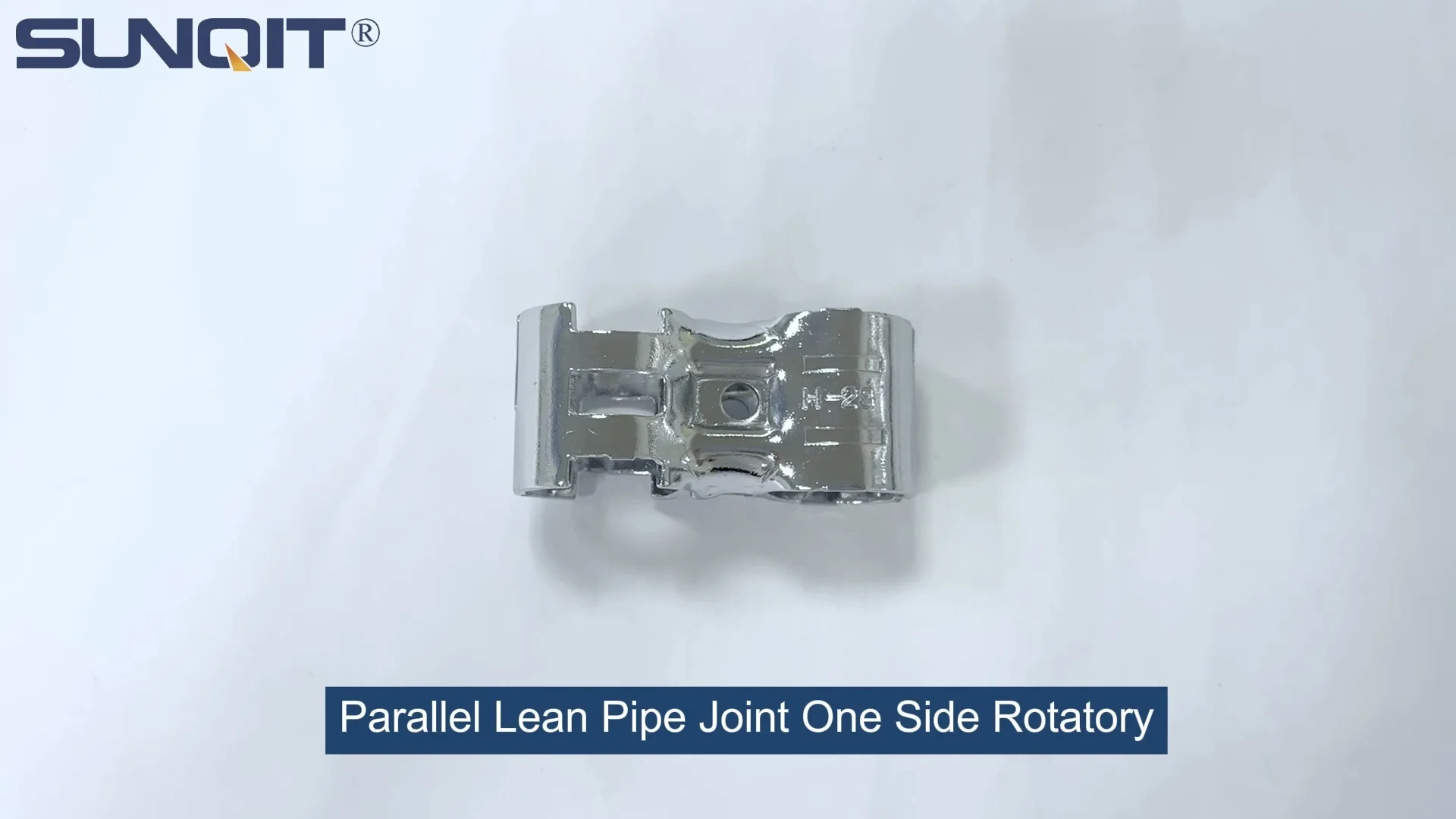
Parallel Lean Pipe Joint One Side Rotatory Chrome
Parallel rotatory lean pipe joint, for 2 pcs 28mm pipe conenction in parallel direction with one side rotatory function.
Introduction: The Unsung Hero of Logistics Flexibility
Logistics isn't just about moving boxes from point A to B—it's the invisible engine that keeps supply chains breathing, factories humming, and store shelves stocked. In today's fast-paced market, where customer demands shift overnight and product lifecycles shrink by the month, logistics operations can't afford to be rigid. Warehouses need to reconfigure storage racks in hours, assembly lines must adapt to new product specs in days, and material handling systems should pivot without halting productivity. Yet, for all the talk of "smart logistics" and automation, the most impactful innovations often lie in the smallest components: the nuts, bolts, and joints that hold these systems together.
Enter the Parallel Lean Pipe Joint One Side Rotatory Chrome —a unassuming yet revolutionary component that's quietly transforming how logistics professionals build, adapt, and optimize their workflows. At first glance, it might look like just another metal joint, but its unique design—chrome-plated durability paired with a single-side rotatory mechanism—unlocks a level of flexibility that traditional fixed joints simply can't match. In this article, we'll dive into how this tiny but mighty component is redefining efficiency in logistics, from flow rack assembly to workbench setups, and why it's becoming a go-to choice for lean system enthusiasts and supply chain managers alike.
What Makes This Joint Different? A Closer Look at Its Design
Before we explore its applications, let's break down what makes the Parallel Lean Pipe Joint One Side Rotatory Chrome stand out. At its core, it's a connecting piece designed to link lean pipes, aluminum profiles, and other structural elements in modular systems. But three key features set it apart:
1. Chrome-Plated Durability for Heavy-Duty Use
Logistics environments are tough. Warehouses see constant foot traffic, material handling equipment, and exposure to dust, moisture, and occasional impacts. This joint's chrome plating isn't just for shine—it's a protective barrier that resists corrosion, scratches, and wear. Unlike plain steel joints that rust over time or plastic variants that crack under pressure, the chrome finish ensures longevity, even in high-traffic areas like loading docks or production floors.
2. One-Side Rotatory Mechanism: Flexibility Without Compromise
The real game-changer is its rotatory function. Traditional parallel joints lock pipes into fixed angles, meaning reconfiguring a rack or workbench often requires disassembling the entire structure, replacing joints, or even cutting new pipes. With this joint, one side rotates 360 degrees while the other remains fixed, allowing users to adjust angles, heights, or layouts on the fly. Tighten the bolt, and it locks securely in place—no welding, no special tools, no downtime.
3. Compatibility with Lean Systems and Aluminum Profiles
Logistics systems aren't one-size-fits-all, and neither is this joint. It plays well with a range of materials, including standard lean pipes (often used in kanban systems), aluminum profiles (popular for lightweight yet sturdy structures), and even stainless steel pipes for hygienic environments like food processing facilities. This versatility means it can integrate into existing lean system setups without requiring a complete overhaul—a critical advantage for businesses looking to upgrade incrementally.

Innovative Use #1: Reimagining Flow Racks for Dynamic Inventory
Flow racks are the workhorses of order picking and material storage, using gravity to slide products toward the front for easy access. But traditional flow racks are built with fixed angles and rigid shelving—great for static inventory, but a nightmare when product sizes change. Imagine a beauty brand that suddenly switches from 10oz bottles to 16oz bottles, or an electronics retailer that starts stocking bulkier gadgets for the holiday season. With fixed joints, adjusting the rack's slope or shelf spacing would mean (dismantling) sections, drilling new holes, or buying entirely new racks.
Here's where the Parallel Lean Pipe Joint One Side Rotatory Chrome shines. By replacing fixed joints with these rotatory versions, logistics teams can adjust the angle of roller tracks in minutes. Need a steeper slope for heavier products? Rotate the joint to increase the incline. Switching to smaller items that need a gentler slide? Tilt it back—no tools required beyond a wrench to lock the position. This flexibility isn't just about saving time; it's about maximizing storage density. A single flow rack can now handle everything from small components (like 0.5-inch swivel roller balls) to larger boxes, simply by tweaking the joint angles.
Take the example of a regional distribution center for a clothing retailer. Each season, they switch from storing lightweight t-shirts (which need shallow slopes to prevent tangling) to bulky winter coats (which require steeper angles to slide smoothly). Before using rotatory joints, they'd have to swap out entire roller track sections, costing 8–10 hours of downtime per rack. Now, with the Parallel Lean Pipe Joint One Side Rotatory Chrome, two workers can reconfigure 10 racks in under 2 hours. "It's like having a rack that adapts to our inventory, not the other way around," says Maria, the warehouse manager. "We used to dread seasonal transitions; now, we barely notice them."

Innovative Use #2: Smoothing Material Flow in Roller Track Systems
Roller tracks are the arteries of material handling, carrying everything from raw materials to finished products across warehouses and assembly lines. But getting materials to flow smoothly around corners, up ramps, or between workstations has always been a challenge. Traditional roller track setups rely on fixed connectors that force 90-degree or 45-degree angles, creating "dead zones" where products get stuck or slow down. This isn't just frustrating—it's a productivity killer, especially in high-volume environments like automotive or e-commerce fulfillment centers.
The rotatory joint solves this by enabling custom angle connections between roller track segments. Let's say a factory needs to route materials from a conveyor to a workbench that's offset by 30 degrees—not a standard angle. With fixed joints, this would require custom-fabricated brackets or a clunky series of straight segments. With the Parallel Lean Pipe Joint One Side Rotatory Chrome, the roller track can be bent to that exact 30-degree angle, creating a seamless path. The rotatory side allows for precise alignment, ensuring rollers stay level and products glide without jams.
This is particularly valuable for integrating with roller track and accessories like plastic guide rails (yellow or grey) or aluminum guide rail A/B profiles. For instance, in a electronics manufacturing plant, sensitive circuit boards need to move along roller tracks without scraping against edges. By using rotatory joints to angle the aluminum guide rails, the team created a "buffer zone" that guides boards gently, reducing defects by 15% in the first month. "We used to have to slow down the track speed to prevent jams," explains Raj, a production engineer. "Now, the joints let us shape the track to the product, so we can run faster with fewer errors."
Innovative Use #3: Building Workbenches That Grow With Your Team
Workbenches are the heart of any assembly or packing station, but they're often designed with a "set-it-and-forget-it" mindset. A workbench that's perfect for assembling small electronics might be too low for packing large appliances, or too narrow when a team needs to collaborate on a project. Traditionally, adjusting a workbench meant either buying a new one or hiring a welder to modify the frame—both costly and time-consuming.
The Parallel Lean Pipe Joint One Side Rotatory Chrome turns workbenches into modular workhorses . Let's say a team needs to add a side extension to their workbench to accommodate a new tool. With fixed joints, they'd have to unbolt the entire frame, add new pipes, and reattach everything. With a rotatory joint, they can simply rotate the side arm into place, lock it, and start working. Need to adjust the height for a taller employee? Loosen the joint, tilt the legs to the desired angle, and tighten—no disassembly required. This is a game-changer for lean system setups, where "5S" principles (sort, set in order, shine, standardize, sustain) demand that workspaces adapt to human needs, not the other way around.
Consider a small manufacturing shop that builds custom machinery parts. Their workbenches (like the "Workbench E (Single Deck-Without Caster)" model) are used by machinists, assemblers, and quality inspectors—each with different height preferences. Before rotatory joints, they had three separate workbenches, taking up valuable floor space. Now, they use one bench with rotatory joints on the legs, allowing each user to adjust the height in under a minute. "It's not just about space," says Tom, the shop foreman. "It's about morale. When your workspace fits you , you work better—and safer. We've seen fewer back strains since switching to these joints."
Traditional vs. Rotatory: A Comparison That Speaks for Itself
| Feature | Traditional Fixed Joints | Parallel Lean Pipe Joint One Side Rotatory Chrome |
|---|---|---|
| Flexibility | Fixed angles only; requires disassembly to reconfigure | 360° rotation on one side; adjust angles in seconds |
| Installation Time | 20–30 minutes per joint (requires precise alignment) | 5–10 minutes per joint (no alignment tools needed) |
| Durability | Prone to rust (uncoated steel) or cracking (plastic) | Chrome-plated steel; resists corrosion and wear |
| Cost Over Time | Higher (needs replacement for reconfigurations) | Lower (reusable across multiple setups) |
| Compatibility | Limited to specific pipe/ profile sizes | Works with lean pipes, aluminum profiles, and stainless steel pipes |
Beyond the Basics: Pairing With Other Lean Components
The true power of the Parallel Lean Pipe Joint One Side Rotatory Chrome lies in how it plays well with others. It's not a standalone solution but a linchpin that amplifies the value of other lean system components. For example:
• Aluminum Profiles: Lightweight Strength, Unmatched Versatility
Aluminum profiles are prized in logistics for their strength-to-weight ratio, but their T-slot design can be tricky to connect at angles. The rotatory joint simplifies this by acting as a bridge between profiles, allowing users to build everything from adjustable material racks (like Material Rack B, 3 row and 3 floor) to custom workstations. Pair it with aluminum profile accessories like end caps or rubber strips, and you get a system that's both sturdy and safe.
• Caster Wheels: Mobility Meets Adaptability
Turnover trolleys and mobile workbenches need to be both stable and movable. By using rotatory joints on the trolley frame, users can adjust the height of shelves to match conveyor heights or loading docks, ensuring seamless material transfer. Combine this with swivel caster wheels, and you've got a trolley that can navigate tight aisles and adapt to different loading heights—no more lifting heavy items to reach awkward shelves.
• Roller Track Connectors: Smoother Flow, Fewer Jams
Roller track systems rely on precise alignment to prevent product jams. The rotatory joint's ability to (fine-tune) angles ensures that roller tracks (whether plastic, aluminum, or steel) stay level and connected, even when spanning long distances. This is especially useful for connecting roller track placon mounts (like those used for aluminum profile flat or high connections), where misalignment can spell disaster for material flow.
Why It's a Must-Have for Lean System Suppliers and Users
For lean system suppliers, the Parallel Lean Pipe Joint One Side Rotatory Chrome is more than a product—it's a selling point. In a market flooded with generic lean components, offering a joint that delivers tangible flexibility sets suppliers apart. "Customers don't just want parts; they want solutions that grow with their business," says Li Wei, a sales manager at a leading lean pipe supplier. "When we show them how this joint can reduce reconfiguration time by 70%, they don't just buy a box of joints—they buy into a vision of a logistics operation that's future-proof."
For end-users, the benefits boil down to three words: time, money, and peace of mind . Time saved on reconfigurations means more uptime for critical operations. Money saved on avoiding custom fabrication or replacement parts boosts the bottom line. And peace of mind comes from knowing that your logistics system can handle whatever the market throws at it—whether it's a sudden surge in orders, a new product launch, or a last-minute change in packaging.
Conclusion: The Joint That Keeps Logistics Moving Forward
In the grand scheme of logistics, the Parallel Lean Pipe Joint One Side Rotatory Chrome might seem small. But as any engineer will tell you, the strength of a system lies in its weakest link—and this joint is anything but weak. It's a testament to the power of "lean thinking" applied to the smallest details: why build something fixed when you can build it flexible? Why waste time on rework when you can adapt in minutes?
As logistics operations continue to evolve, driven by e-commerce growth, sustainability goals, and the need for agility, components like this rotatory joint will become even more critical. They're not just tools for building systems—they're tools for building resilience. So the next time you walk through a warehouse, a factory, or a distribution center, take a closer look at the racks, the workbenches, and the roller tracks. Chances are, you'll spot this unassuming joint hard at work, keeping logistics flexible, efficient, and ready for whatever comes next.