- Company Articles
- Products and Technology
- Application Cases
- Innovative Uses of Parallel Lean Pipe Joints in Modern Factories

Innovative Uses of Parallel Lean Pipe Joints in Modern Factories
Related Product
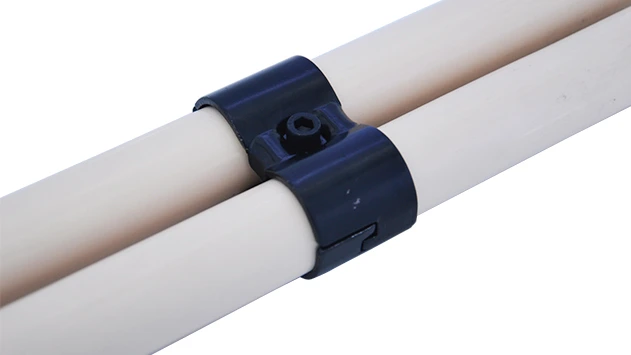
Parallel Lean Pipe Joint
Parallel lean pipe joint used for 2 pcs 28MM lean pipe connection in parallel direction to enhance frame structure, usually for heavy payload requirement for workbench. flow rack, hand trolley.
Walk into any modern factory today, and you'll notice a quiet revolution unfolding. Gone are the days of rigid, one-size-fits-all production lines bolted to the floor—replaced instead by dynamic, adaptable workspaces that bend and evolve with the needs of workers, products, and markets. At the heart of this transformation lies a humble yet powerful tool: the parallel lean pipe joint. More than just a connector, it's a catalyst for flexibility, empowering factories to move beyond static setups and embrace a future where agility isn't just an advantage, but a necessity.
In this article, we'll explore how parallel lean pipe joints are redefining factory workflows, from custom workbenches that adapt to human ergonomics to flow racks that keep pace with shifting demand, and roller tracks that streamline material movement. We'll dive into real-world examples of factories that have harnessed these unassuming components to cut downtime, boost productivity, and put workers at the center of the process. Whether you're a production manager grappling with tight deadlines, a facility planner designing the next generation of workspaces, or simply curious about the tools shaping modern manufacturing, this deep dive into parallel lean pipe joints will show you why they're quickly becoming indispensable in factories worldwide.
What Are Parallel Lean Pipe Joints, Anyway?
Before we jump into their innovative uses, let's start with the basics: What exactly is a parallel lean pipe joint? At its core, it's a modular, reusable component designed to connect lean pipes—typically made of aluminum, steel, or plastic-coated steel—in parallel configurations. Unlike traditional fixed joints that lock pipes into a single angle or position, parallel lean pipe joints are engineered for adjustability. They feature precision-machined slots, bolts, or clips that allow pipes to be aligned side-by-side, spaced evenly, or angled slightly, all while maintaining structural integrity.
Most parallel lean pipe joints are made from high-grade materials like die-cast aluminum or stainless steel, chosen for their strength and resistance to wear. They come in various designs: some are simple two-way connectors, others feature multiple ports for branching into complex structures, and many include built-in swivel or rotation mechanisms for added flexibility. What truly sets them apart, though, is their compatibility with a vast ecosystem of factory components—think lean pipe workbenches, flow racks, roller tracks, casters, and aluminum profiles. This compatibility turns a single joint into a building block for almost any workspace configuration.
Quick Fact: A standard parallel lean pipe joint can typically support loads between 50kg and 200kg, depending on material and design. Heavy-duty versions, used in automotive or aerospace factories, can handle up to 500kg—enough to support large engine components or bulky raw materials.
Key Features That Make Them Game-Changers
What makes parallel lean pipe joints so transformative? Let's break down their standout features:
- Unmatched Flexibility: Unlike welded or glued joints, parallel lean pipe joints can be loosened, repositioned, and retightened in minutes. Need to raise a workbench by 10cm to reduce worker strain? Swap out a joint. Want to add a new shelf to a flow rack for a sudden influx of parts? Just clip on a few extra pipes. This flexibility turns "permanent" structures into temporary setups that evolve with your needs.
- Durability Without Compromise: Don't let their adjustability fool you—these joints are built to last. High-tensile bolts, corrosion-resistant coatings (like zinc plating or anodized aluminum), and reinforced stress points mean they can withstand the daily grind of factory life, from vibrations to temperature fluctuations.
- Cost-Effective Scalability: Traditional factory setups often require custom fabrication for every new project—think hiring welders or ordering bespoke metal frames. Parallel lean pipe joints eliminate this need. Instead of investing in new infrastructure, you can reuse existing pipes and joints, cutting costs by 30-50% on reconfigurations.
- Worker-Centric Design: Modern factories prioritize ergonomics, and parallel lean pipe joints deliver. By letting teams adjust workbench heights, tool placement, and material flow paths, these joints reduce repetitive strain injuries and make tasks feel less like a chore and more like a collaborative effort. As one factory foreman put it: "When workers can tweak their workspace to fit them , you don't just get better productivity—you get happier teams."
Innovative Uses: How Factories Are Putting Parallel Lean Pipe Joints to Work
Now that we understand what parallel lean pipe joints are and why they matter, let's explore how forward-thinking factories are using them to solve real-world challenges. From small electronics plants to large automotive facilities, these joints are proving their worth in ways that go far beyond basic pipe connection.
1. Custom Lean Pipe Workbenches: Where Ergonomics Meets Adaptability
The workbench is the heart of any factory floor—a space where precision, comfort, and efficiency collide. Yet for decades, workbenches have been static, one-size-fits-all fixtures. A 5'2" worker might struggle with a bench built for someone 6' tall; a team assembling tiny circuit boards needs different tool placement than one building heavy machinery. Enter parallel lean pipe joints, which are turning workbenches into customizable hubs that adapt to people , not the other way around.
Consider the case of GreenTech Electronics, a mid-sized manufacturer of solar panel inverters. A few years ago, their assembly line was struggling with high turnover and frequent errors. An ergonomic audit revealed the culprit: fixed-height workbenches that forced workers into awkward postures, leading to fatigue and mistakes. The solution? A complete overhaul using lean pipe workbenches built with parallel lean pipe joints.
Case Study: GreenTech Electronics' Workbench Revolution
GreenTech's old workbenches were welded steel frames with a fixed height of 36 inches. Workers couldn't adjust them, so those on the shorter side stooped, while taller team members hunched. Productivity suffered, and injury reports spiked. When production manager Lina Torres discovered parallel lean pipe joints, she saw an opportunity. She ordered a kit of aluminum lean pipes, parallel joints, and adjustable feet, then tasked her team with designing their own workbenches.
Within a week, the line looked unrecognizable. Workers had raised some benches to 40 inches, lowered others to 32, and added custom tool rails using parallel joints to hold screwdrivers, wire cutters, and ESD-safe mats. One team even added a small shelf above their bench for instruction manuals, positioned at eye level to avoid neck strain. The results? Error rates dropped by 22% in the first month, and turnover decreased by 15% in six months. "It wasn't just about the benches," Torres recalls. "It was about giving workers control. When they could build a workspace that fit them , they took ownership of their jobs."
What makes these workbenches so effective is the parallel lean pipe joint's ability to integrate with accessories. Want to add a monitor arm for digital work instructions? Clip it onto the frame using a parallel joint. Need a bin for scrap materials? Attach a small shelf below the bench. Even specialized features like ESD (electrostatic discharge) protection—critical for electronics manufacturing—can be added by incorporating conductive pipes and joints into the design. The possibilities are limited only by the team's creativity.
2. Dynamic Flow Racks: Keeping Materials Moving at the Speed of Demand
In warehouses and production facilities, flow racks are the unsung heroes of material handling. Using gravity to slide products from the back to the front, they reduce picking time and keep inventory organized. But traditional flow racks have a flaw: they're designed for a specific product size and volume. A sudden shift—say, a new product line with larger boxes or a seasonal spike in orders—can render them obsolete. Parallel lean pipe joints are changing that by making flow racks as dynamic as the demand they support.
Take the example of MetroLogistics, a third-party logistics provider that handles parts for medical device manufacturers. Their warehouse deals with over 500 unique part SKUs, ranging from tiny screws to bulky plastic housings. Before parallel lean pipe joints, their flow racks were static: each shelf was fixed at a 5-degree angle, with dividers spaced 12 inches apart. When a client introduced a new housing that was 18 inches wide, MetroLogistics had to either buy new racks or leave valuable space unused.
Today, their flow racks are built with parallel lean pipe joints and aluminum profiles, allowing for on-the-fly adjustments. Need to widen a divider? Loosen the parallel joints holding the divider in place, slide it over, and retighten. Want to steepen the shelf angle to speed up material flow during peak season? Adjust the joint angles at the rack's base. They even added roller tracks—connected via parallel joints—to some shelves, turning gravity-fed flow into a smoother, faster process for fragile parts.
The impact? MetroLogistics reduced picking errors by 18% and cut the time to reconfigure racks from 8 hours (with traditional tools) to just 45 minutes. "We used to dread client product changes," says warehouse manager Raj Patel. "Now, we just grab a wrench and a few extra joints. It's like having a warehouse that can read minds."
2. Adaptive Roller Tracks: Rethinking Material Flow
Roller tracks are the arteries of a factory, carrying materials from point A to B with minimal effort. But traditional roller tracks are rigid: they're either bolted to the floor in straight lines or custom-curved at great expense. For factories handling varied product sizes or shifting production lines, this rigidity is a bottleneck. Parallel lean pipe joints are changing that by turning roller tracks into adaptable systems that can curve, split, and rejoin as needed.
Consider AutoParts Co., a manufacturer of brake components for electric vehicles. Their production line involves moving parts from machining to quality control (QC) to packaging—a journey that requires roller tracks to handle everything from small brake pads (6 inches long) to large calipers (24 inches wide). In the past, they had separate tracks for each part type, cluttering the floor and making it hard to reroute materials when a machine broke down.
Today, their roller tracks are built using parallel lean pipe joints and aluminum guide rails. Here's how it works: The tracks are supported by aluminum profiles connected via parallel joints, which allow the team to adjust track width by sliding the rails apart or together. For narrow parts like brake pads, they set the width to 8 inches; for calipers, they widen it to 26 inches. They've even added "switch" junctions—using parallel joints to split a single track into two—so if the main QC station is busy, parts can be rerouted to a backup station.
The result? AutoParts Co. reduced track clutter by 40% and cut material rerouting time from 2 hours to 15 minutes. "When a machine goes down, we don't panic anymore," says production supervisor Mia Chen. "We just loosen a few parallel joints, adjust the roller track, and keep moving. It's like having a traffic system that can rearrange itself."
3. Modular Assembly Lines: Scaling Up (or Down) Without the Headache
Seasonal demand, product launches, and market trends can turn factory production needs on their head. A toy manufacturer might need to triple output in Q4, then scale back in Q1; a medical device company might rush to produce ventilators during a crisis, then shift to other products later. For these scenarios, fixed assembly lines are a liability—they're expensive to build, hard to modify, and even harder to store. Parallel lean pipe joints, however, are enabling factories to build modular assembly lines that can be set up, torn down, and reconfigured with minimal fuss.
Take PlayWorld Toys, a manufacturer of educational games and puzzles. Every fall, they hire 100+ temporary workers to meet holiday demand, requiring 5 extra assembly lines. In the past, this meant renting expensive prefab lines or paying contractors to build new ones—costing upwards of $50,000 per season. Today, they use parallel lean pipe joints to build lines in days, not weeks, and store the components in a small warehouse corner during slow months.
PlayWorld's modular lines consist of lean pipe workbenches (connected via parallel joints), roller tracks for moving parts between stations, and mobile carts for waste removal. Each line is built on casters, so it can be wheeled into place and locked down. When the holiday rush ends, the team disassembles the lines, sorts the pipes and joints by type, and stores them in labeled bins. "Last year, we set up 5 lines in 3 days with just 4 people," says operations director Tom Wilson. "And when January hit, we took them down in 2 days. No more renting, no more storage nightmares—just a system that grows and shrinks with us."
4. Sustainability: Building Factories That Respect the Planet
Sustainability isn't just a buzzword in manufacturing—it's a business imperative. Factories are under pressure to reduce waste, cut carbon footprints, and reuse resources. Parallel lean pipe joints are emerging as a secret weapon in this fight, thanks to their focus on reusability and compatibility with eco-friendly materials like aluminum profiles.
Aluminum is infinitely recyclable, and when paired with parallel lean pipe joints, it becomes a circular solution. Unlike steel, which can rust or degrade over time, aluminum profiles (used with parallel joints) have a lifespan of 10+ years, and when they finally wear out, they can be melted down and repurposed into new pipes. This reduces the need for mining raw materials and cuts down on waste sent to landfills.
Consider EcoPack Solutions, a packaging manufacturer that aims for net-zero waste by 2030. They've replaced all their traditional steel workbenches and racks with aluminum-based systems using parallel lean pipe joints. When a workbench is no longer needed, they don't throw it away—they disassemble it and reuse the pipes and joints elsewhere. In 2023 alone, this approach saved them 12 tons of steel waste and reduced their carbon footprint by 18%. "Sustainability used to feel like a trade-off—either you're green, or you're efficient," says sustainability manager Priya Sharma. "Parallel lean pipe joints changed that. Now, we're both."

The Road Ahead: Why Parallel Lean Pipe Joints Are Here to Stay
As manufacturing evolves—driven by automation, customization, and the need for agility—tools like parallel lean pipe joints will only grow in importance. They're not just about connecting pipes; they're about connecting people to their workspaces, businesses to their markets, and factories to a more sustainable future.
For production managers, the message is clear: rigid systems belong in the past. To stay competitive, you need tools that can keep up with change—and parallel lean pipe joints deliver. They're affordable, adaptable, and designed with the realities of factory life in mind. As one industry report put it: "The factory of the future won't be defined by robots alone—it will be defined by how well humans and machines can collaborate in spaces that feel less like prisons and more like partners."
So, whether you're running a small workshop or a global manufacturing plant, it's time to ask: What could your team accomplish if they could reimagine their workspace tomorrow? With parallel lean pipe joints, the answer might be simpler than you think.

Traditional Joints vs. Parallel Lean Pipe Joints: A Quick Comparison
| Feature | Traditional Fixed Joints (Welded/Glued) | Parallel Lean Pipe Joints |
|---|---|---|
| Reconfigurability | Impossible without cutting/welding; permanent by design. | Adjustable in minutes with basic tools; can be reused indefinitely. |
| Cost | High upfront cost (custom fabrication, labor); expensive to modify. | Lower upfront cost; 30-50% savings on reconfigurations due to reuse. |
| Ergonomics | Static; no ability to adapt to worker height, posture, or task changes. | Worker-centric; adjustable heights, tool placement, and flow paths reduce strain. |
| Sustainability | Single-use; often ends up in landfills when no longer needed. | Reusable for decades; compatible with recyclable materials like aluminum. |
| Setup Time | Weeks (requires welding, painting, and curing). | Hours (simple bolt-on assembly with no special skills). |
In the end, parallel lean pipe joints are more than just hardware—they're a mindset shift. They represent a future where factories are not just places of production, but places of innovation, collaboration, and adaptability. And in that future, the most successful factories won't be the ones with the biggest machines—they'll be the ones with the smartest, most human-centered tools. Parallel lean pipe joints are leading the way.