- Company Articles
- Products and Technology
- Application Cases
- Innovative Uses of Roller Track Placon Mount Joints in Flexible Production

Innovative Uses of Roller Track Placon Mount Joints in Flexible Production
Related Product
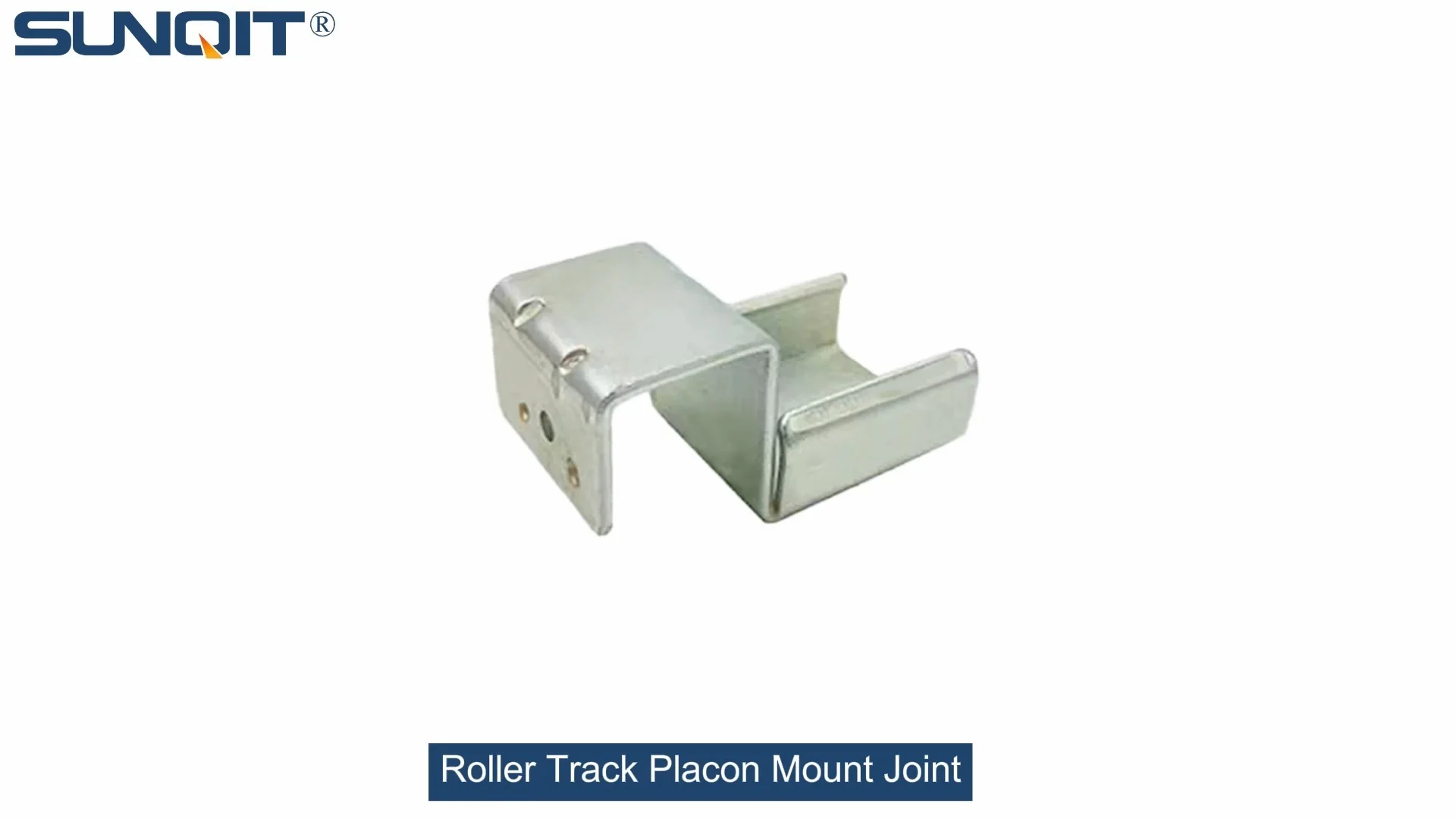
Roller Track Placon Mount Joint
Roller track placon mount work as a connector for roller track and pipe or aluminum profile in rack syetem, it is a necessary parts in rack system which widely used in industrial plant and logistic,warehouse storage.
In today's fast-paced manufacturing landscape, adaptability isn't just an advantage—it's a necessity. As industries from 3C assembly to medical device production face evolving consumer demands and shorter product lifecycles, the ability to reconfigure production lines quickly has become a make-or-break factor. At the heart of this flexibility lies a component that often goes unnoticed but plays a critical role: the roller track placon mount joint. These unassuming connectors are the unsung heroes of lean systems, enabling seamless integration between roller tracks, lean pipes, and other modular components. Let's explore how these small but mighty parts are transforming flexible production across industries.
Understanding Roller Track Placon Mount Joints: More Than Just Connectors
Before diving into their applications, let's take a closer look at what makes roller track placon mount joints indispensable. Designed with precision and versatility in mind, these joints serve as the "glue" that holds modular production systems together. Crafted from high-grade aluminum—chosen for its lightweight strength and resistance to corrosion—they come in various configurations to meet specific needs: from center support brackets that reinforce long roller tracks to rail connection mounts that ensure smooth transitions between sections. What truly sets them apart, though, is their modularity. Like building blocks in a child's toy set, they allow teams to assemble, disassemble, and reconfigure roller tracks with minimal effort, aligning perfectly with the "reusable, continuously improvable" lean philosophy.
But their value goes beyond mere functionality. In an era where sustainability is a growing concern, these joints embody eco-friendly manufacturing: their durable design reduces waste from frequent replacements, and their compatibility with existing lean pipes and aluminum profiles means companies can upgrade systems without scrapping entire setups. For manufacturers aiming to balance efficiency with environmental responsibility, this is a game-changer.
Innovative Applications Across Key Industries
Roller track placon mount joints aren't one-size-fits-all solutions—they thrive in diverse environments, adapting to the unique challenges of each industry. Let's explore how they're making an impact in three critical sectors:
3C Assembly: Speed and Precision in a Rapidly Changing World
The 3C (Computer, Communication, Consumer Electronics) industry is defined by constant innovation. New smartphones, laptops, and wearables hit the market every few months, demanding production lines that can pivot at a moment's notice. Here, roller track placon mount joints shine by enabling rapid reconfiguration . Imagine a facility producing smartwatches today and fitness trackers tomorrow—with these joints, the roller tracks that carry components can be adjusted in hours, not days. For example, when a manufacturer needed to switch from assembling 6-inch to 7-inch tablets, the ability to reposition roller tracks using placon mount joints cut downtime from 48 hours to just 6, keeping production on schedule and avoiding costly delays.
Another key need in 3C assembly is ESD (Electrostatic Discharge) protection, as sensitive electronics are prone to damage from static. Roller track placon mount joints, when paired with ESD-compliant lean pipes and workbenches, create grounded systems that dissipate static safely. This integration ensures that even as lines are reconfigured, protective measures remain intact—a critical detail in maintaining product quality.
Medical Device Manufacturing: Cleanliness and Compliance Without Compromise
Medical device production operates under strict regulations, where cleanliness and precision are non-negotiable. Roller track placon mount joints, made from smooth aluminum, are easy to sanitize, making them ideal for cleanroom environments. Unlike traditional steel connectors, their non-porous surface resists bacterial growth, and they withstand frequent wipe-downs with disinfectants—essential for meeting FDA and ISO standards.
Consider a facility producing surgical instruments. The roller tracks, secured by placon mount joints, must transport delicate tools without jostling or contamination. The joints' tight, rattle-free connections ensure movement, reducing the risk of scratches or misalignment. When the facility expanded to produce a new line of diagnostic devices, the same joints were reused to extend the roller track system, eliminating the need for new parts and supporting the company's sustainability goals.
Warehouse Logistics: Streamlining Material Flow in High-Demand Spaces
In, efficiency is measured by how quickly materials move from point A to point B. Roller track placon mount joints play a vital role here by optimizing flow rack and conveyor systems. In busy distribution centers, (flow racks) equipped with these joints ensure that boxes and packages glide smoothly, reducing friction and minimizing manual handling. For instance, a third-party logistics provider handling e-commerce orders saw a 30% increase in picking speed after upgrading their flow racks with placon mount joints, which reduced jams and allowed for steeper inclines without sacrificing stability.
Conveyors, too, benefit from these joints' adaptability. When a warehouse needed to reroute a conveyor line to accommodate a new automated sorting system, placon mount joints enabled workers to disassemble sections, adjust angles, and reassemble in a single shift. This flexibility meant the warehouse stayed operational during the transition, avoiding disruptions to customer deliveries.

The Technical Edge: Why These Joints Stand Out
What makes roller track placon mount joints a preferred choice for lean systems? Let's break down their key advantages:
| Advantage | Description | Impact on Production |
|---|---|---|
| Modular Design | Easy to assemble, disassemble, and reconfigure without specialized tools | Reduces setup time by 60-70% compared to welded or fixed systems |
| Aluminum Construction | Lightweight yet strong; resistant to rust and corrosion | Extends lifespan to 5+ years with minimal maintenance |
| Universal Compatibility | Works seamlessly with lean pipes, flow racks, conveyors, and aluminum profiles | Eliminates the need for custom components, lowering costs |
| High Load Capacity | Supports weights up to 200kg per linear meter (depending on configuration) | Safe for heavy-duty applications like automotive part handling |
| Sustainability | 100% reusable and recyclable at end-of-life | Reduces waste and aligns with circular economy goals |
These features combine to create a component that doesn't just solve immediate problems but also future-proofs production systems. In an industry where change is constant, this adaptability is invaluable.

Working in Harmony: Synergy with Other Lean Components
Roller track placon mount joints rarely work alone—their true power lies in how they complement other lean system components. Let's explore these partnerships:
Lean Pipes: Building the Backbone of Flexibility
Lean pipes (or aluminum lean pipes) are the skeleton of modular production systems, and placon mount joints are the joints that give this skeleton mobility. Together, they form everything from workbenches to material racks. For example, a lean pipe workbench used in automotive assembly might feature roller tracks secured by placon mount joints, allowing tools and parts to slide easily across the surface. When the assembly process changes, the joints let workers adjust the track position or even repurpose the bench entirely—no need for new furniture, just a quick reconfiguration.
Flow Racks: Ensuring Smooth Material Flow
Flow racks rely on gravity to move materials, but without stable, well-aligned roller tracks, jams and bottlenecks occur. Placon mount joints ensure that each roller track section is perfectly level and connected, creating a continuous, friction-free path for boxes or bins. In a electronics warehouse, this means components move from storage to assembly lines without manual intervention, cutting down on wait times and human error.
Conveyors: Powering Automated Production
Conveyor systems are the arteries of modern manufacturing, and placon mount joints help keep these arteries unblocked. Whether integrating roller conveyors for heavy parts or belt conveyors for delicate items, these joints provide the flexibility to adjust angles, add branches, or extend lines as production needs grow. A food packaging plant, for instance, used placon mount joints to add a 90-degree turn to their conveyor system, allowing products to switch between labeling and packaging stations without stopping the line.

Real-World Impact: A Case Study in Efficiency
To truly grasp the difference roller track placon mount joints can make, let's look at a real-world example. A mid-sized manufacturer of home appliances was struggling with outdated, fixed production lines. Changing from producing blenders to toasters took weeks of downtime, and the company was losing market share to competitors with more agile operations. Here's how implementing placon mount joints transformed their process:
| Metric | Before Implementation | After Implementation | Improvement |
|---|---|---|---|
| Line Reconfiguration Time | 14 days | 8 hours | 95% reduction |
| Production Efficiency | 65 units/hour | 81 units/hour | 25% increase |
| Material Handling Errors | 12% error rate | 3% error rate | 75% reduction |
| Annual Maintenance Cost | $45,000 | $18,000 | 60% reduction |
The results speak for themselves. By switching to a modular system built around roller track placon mount joints and lean pipes, the company not only cut costs but also regained its competitive edge. Workers reported higher job satisfaction, too—no more struggling with heavy, fixed equipment, just quick, tool-free adjustments that let them focus on what matters: building quality products.
Conclusion: The Invisible Force Driving Flexible Manufacturing
In the grand scheme of manufacturing, roller track placon mount joints might seem small, but their impact is enormous. They are the quiet innovators that enable companies to adapt, grow, and thrive in an unpredictable world. From 3C assembly lines racing to meet product launches to medical facilities ensuring compliance with life-saving standards, these joints work behind the scenes to keep production moving—efficiently, sustainably, and flexibly.
As manufacturing continues to evolve, one thing is clear: the demand for adaptable systems will only grow. Roller track placon mount joints, with their modular design, durability, and compatibility, are poised to remain at the forefront of this evolution. They aren't just components; they're partners in progress—helping businesses turn challenges into opportunities and vision into reality.
So the next time you see a smooth-running production line or a warehouse where materials flow like water, take a moment to appreciate the invisible heroes holding it all together. In the world of flexible manufacturing, sometimes the smallest parts make the biggest difference.