- Company Articles
- Products and Technology
- Installation And Maintenance
- Installation Ease: Aluminum Workbench C vs Bolt-Together Traditional Models

Installation Ease: Aluminum Workbench C vs Bolt-Together Traditional Models
Related Product
Aluminum Workbench C
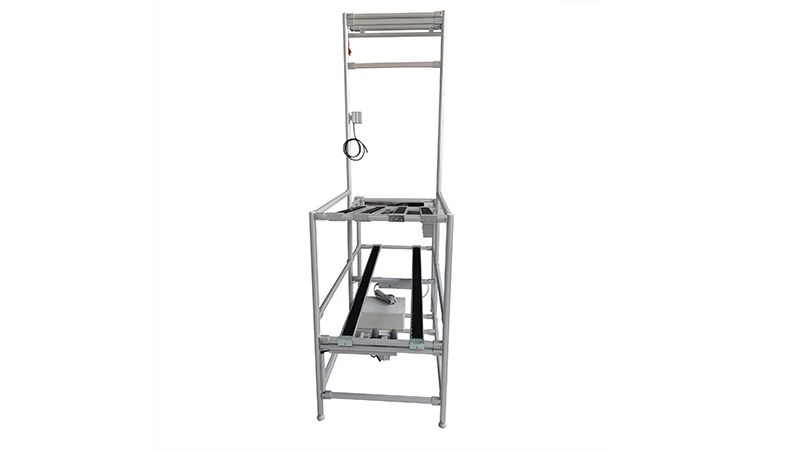
aluminum-tube-workbench-is-more-flexible-and-durable,-compared-with-traditional-pe/abs-coated-steel-tube.-it-is-easy-to-assemble,-anti-corrosion,-rust-protection,-and-recycle-use-after-disassemble.
Walk into any production floor, warehouse, or assembly plant, and you'll notice one thing right away: workbenches are the unsung heroes of the operation. They're where parts get assembled, tools are organized, and products take shape. But here's the thing—how those workbenches get installed matters just as much as how they perform. A clunky, time-consuming installation can throw a wrench into your workflow, leaving teams frustrated and production lines idling. On the flip side, a smooth, straightforward setup gets workers up and running faster, keeps morale high, and lets your business focus on what it does best: making things.
For decades, the go-to option has been bolt-together traditional workbenches. Sturdy, reliable, and familiar, they've been the backbone of factories everywhere. But as manufacturing evolves—faster, more flexible, and more focused on reducing downtime—those old bolt-heavy models are starting to show their age. Enter the new kid on the block: aluminum workbenches, and in particular, the Aluminum Workbench C. Designed with modern production needs in mind, this workbench isn't just about durability; it's about making installation feel less like a chore and more like a quick, satisfying task. Let's dive into how these two stack up, and why ease of installation might just be the game-changer your production floor has been waiting for.
The Old Guard: Bolt-Together Traditional Workbenches
Let's start with the familiar: bolt-together workbenches. If you've ever set up a piece of furniture at home—think a bookshelf or a desk—you get the idea, but on a much larger, industrial scale. These workbenches typically feature steel frames, thick wooden or metal tops, and a whole lot of bolts, nuts, and washers holding everything together. They're built to last, no doubt, but that durability comes with a cost when it's time to put them together.
How They Work (and Why They're a Headache)
Picture this: You've just received a shipment of traditional workbenches for your new assembly line. The boxes are heavy—really heavy. You and a coworker haul them to the production floor, slice open the packaging, and find a mountain of parts: steel beams, a solid wood top, a bag full of bolts (so many bolts), and an instruction manual that might as well be written in code. Your goal? Get this thing assembled and ready for use by the end of the day.
First, you lay out all the parts. The steel frame pieces are awkward to hold, so you prop them against a wall, only to have them slip and clatter to the floor. Then, you start aligning the pre-drilled holes. Sounds simple, right? But more often than not, the holes don't line up perfectly. Maybe the steel warped a little during shipping, or the drilling was off by a hair. Either way, you're now using a rubber mallet to bang the frame into place, hoping the bolt will thread through without stripping. By the time you get the first two bolts in, your hands are greasy, your forearms are sore, and you've already lost 45 minutes.
Next, the top. It's a thick slab of wood or metal, easily 50 pounds. You and your coworker lift it onto the frame, struggling to keep it level while you fumble for more bolts to secure it. One wrong move, and it shifts, scratching the floor or pinching a finger. Then there are the "extras": adding a shelf, attaching casters (if you're lucky enough to get a mobile model), or installing side panels. Each step requires more bolts, more tools, and more patience.
The Hidden Costs of "Sturdy"
The biggest issue with bolt-together workbenches isn't just the initial installation—it's the hidden costs that add up over time. Let's break them down:
- Time: A single traditional workbench can take 4–6 hours to install, even for experienced teams. Multiply that by 10 workbenches, and you're looking at days of downtime before your production line is fully operational.
- Tools: You'll need a full toolkit: wrenches, socket sets, drills (for when holes don't align), levels, and maybe even a torque wrench to ensure bolts are tight enough (but not too tight). Misplacing just one tool can bring the whole process to a halt.
- Skill: Installation isn't a one-person job, and it's not for beginners. You need someone who can read complex diagrams, align heavy parts, and avoid stripping bolts or cross-threading nuts. Inexperienced installers often end up with wobbly workbenches or stripped holes, which mean redoing the work later.
- Adjustability: Once those bolts are tightened, that workbench is fixed . Need to raise the height by a few inches? Good luck—you'll have to unbolt the entire frame, find new holes (if they exist), and start over. Want to add a shelf later? You'll be back to drilling and bolting, potentially damaging the frame in the process.
- Long-term hassle: Over time, bolts rust, especially in humid or industrial environments. When you need to move or reconfigure the workbench, those rusted bolts seize up, requiring WD-40, pliers, and a whole lot of frustration to remove. And don't even get me started on storing extra bolts—they always seem to disappear when you need them most.
Don't get me wrong—traditional workbenches have their place. They're rugged, and if you never need to move or adjust them, they'll serve you well. But in today's fast-paced production world, where lines reconfigure, products change, and downtime costs money, their "set-it-and-forget-it" design is starting to feel more like a limitation than a feature.
workbench-c-section">
The New Contender: Aluminum Workbench C
Now, let's shift gears to the Aluminum Workbench C. This isn't just a "new model"—it's a rethink of what a workbench can be, starting with how it's built. Instead of heavy steel and endless bolts, it leans on aluminum extrusion profile and clever design to make installation feel almost effortless. If traditional workbenches are like building a brick wall, Aluminum Workbench C is like putting together a high-quality Lego set—intuitive, quick, and surprisingly sturdy.
Design That Puts Ease First
At the heart of Aluminum Workbench C is its use of aluminum profile—specifically, aluminum extrusion profile. You've probably seen this stuff before: lightweight, strong, and featuring those distinctive T-shaped slots running along the length. These slots aren't just for show; they're the secret to the workbench's flexibility and easy installation. The aluminum itself is durable but much lighter than steel, so even the largest parts are manageable by one person.
But it's not just the material—it's the components. Aluminum Workbench C uses aluminum profile accessories designed to snap, slide, or twist into place, eliminating the need for most bolts. Think internal rotatary aluminum joints that lock into the T-slots with a simple turn, or brackets that slide into place and secure with a hex key (no drilling required). Even the workbench top—often a lightweight aluminum honeycomb panel—sits securely on the frame without a single bolt, thanks to clever clips that grip the aluminum profile.
Installing Aluminum Workbench C: A Day-and-Night Difference
Let's go back to that scenario: You've just received Aluminum Workbench C for your production line. The boxes are lighter—so light, you can carry one by yourself. You open them up, and instead of a jumble of parts, everything is neatly organized: frame pieces, the top, a small bag of accessories (fewer than 10 pieces, total), and a one-page instruction sheet with pictures. No confusing diagrams, no tiny print. Your goal? Have this workbench ready in under an hour.
First, you lay out the frame pieces. They're smooth, lightweight aluminum profile, so you can handle them with one hand. You pick up two vertical pieces and an internal rotatary aluminum joint—small, cylindrical, with a lever on top. You slide the joint into the end of one vertical profile, then insert the other vertical piece into the joint. A quick twist of the lever, and it locks into place with a satisfying "click." No bolts, no alignment issues—just a solid connection. You repeat this for the horizontal pieces, and in five minutes, you've got a square, stable frame standing on its own.
Next, the top. You lift the aluminum honeycomb panel (so light, you could carry it with one hand) and place it on the frame. Along the edges of the top are small clips that slide into the T-slots of the aluminum profile frame. A quick turn of a hex key on each clip, and the top is secure—no wobbly corners, no heavy lifting with a coworker. Want to add a shelf? You grab a pre-cut aluminum profile shelf, slide some brackets into the T-slots of the frame, and rest the shelf on top. Done. Need casters? They attach to the bottom of the frame with the same internal joints—no drilling, no bolts, just click and go.
By the time you're done, you've spent 30 minutes, used only a hex key (and maybe a level to double-check), and the workbench is rock-solid. You step back, and it hits you: That's it? No sore forearms, no frustration, no wasted time. You could probably install three more before lunch.
Beyond Installation: Flexibility That Grows With You
The beauty of Aluminum Workbench C isn't just that it's easy to install—it's that it stays easy to work with long after setup. Need to adjust the height? Loosen the internal joints, slide the frame up or down, and lock them again. Want to add a tool rail, a light, or a bin for parts? Just slide the appropriate aluminum profile accessories into the T-slots and secure with a hex key. Moving the workbench to a new location? Since it's lightweight, you can wheel it (if you added casters) or carry it with a coworker—no need for a forklift.
And if your production needs change entirely? Take the workbench apart. The aluminum profile and accessories are reusable, so you can reconfigure them into a different shape, add more sections, or even repurpose them as a material rack. With traditional workbenches, you'd be stuck with a heavy, bolted-together frame gathering dust in a corner. With Aluminum Workbench C, nothing goes to waste.

Side-by-Side: Installation Showdown
Words tell part of the story, but numbers (and a good table) tell the rest. Let's break down how Aluminum Workbench C and traditional bolt-together models stack up when it comes to installation. We'll focus on the factors that matter most to your team and your bottom line:
| Aspect | Traditional Bolt-Together Workbench | Aluminum Workbench C |
|---|---|---|
| Installation Time | 4–6 hours per workbench (for 2 people) | 30–60 minutes per workbench (for 1 person) |
| Tools Required | Wrenches, socket sets, drills, levels, rubber mallets, torque wrenches | Hex key (included), level (optional) |
| Skill Level Needed | Moderate to high (experience with industrial assembly, ability to align parts and avoid stripped bolts) | Basic (anyone can follow the visual instructions; no prior experience needed) |
| Weight (per frame section) | 25–50 lbs (requires 2+ people to maneuver) | 5–15 lbs (easily handled by 1 person) |
| Adjustability Post-Installation | Difficult (requires unbolting, drilling new holes, or replacing parts) | Easy (loosen joints, adjust, and relock; no disassembly needed) |
| Reusability of Parts | Low (Bolts may strip; frame parts warp or bend when disassembled) | High (Aluminum profile and accessories are reusable and reconfigurable) |
| Downtime During Installation | Significant (Production line may be idle for days for multiple workbenches) | Minimal (Workbenches can be installed during breaks or shifts with little disruption) |
The numbers speak for themselves: Aluminum Workbench C cuts installation time by up to 90%, reduces the need for specialized tools and skills, and eliminates the hassle of bolts. But don't just take our word for it—let's hear from real teams who've made the switch.

Real-World Results: When Ease of Installation Matters Most
Take Precision Electronics, a mid-sized manufacturer of circuit boards. Last year, they expanded their production line, needing 12 new workbenches. Their old setup? Traditional bolt-together models. "We budgeted two full days for installation," says Maria, their production manager. "But between aligning holes, stripping bolts, and wrangling the heavy tops, it took three days. Our line was delayed, and the team was burnt out before we even started production."
This year, they switched to Aluminum Workbench C. "We ordered 15 workbenches, thinking it might take a day," Maria recalls. "Our two newest hires—both fresh out of trade school—installed the first one in 45 minutes. By the end of the day, all 15 were up and running. They even had time to add tool rails and adjust the heights to fit each worker. The team was excited to use them, not dreading the setup. That's a game-changer for morale."
Another example: Rapid Assembly, a contract manufacturer that switches between projects weekly. For them, reconfiguring workbenches is a regular part of the job. "With traditional workbenches, changing a setup meant a morning of unbolting, wrestling with parts, and hoping we had enough extra bolts," says Jake, their lead technician. "Now, with Aluminum Workbench C, we can tear down a workbench, reconfigure it into a material rack, and have it ready for the next project in under an hour. We've cut changeover time by 70%, and the team no longer groans when I say we need to rearrange."

Why Ease of Installation Should Be Your Top Priority
At the end of the day, a workbench is more than just a table—it's the foundation of your production line. And like any foundation, how it's built affects everything that comes after. Traditional bolt-together workbenches have served us well, but they're a product of a slower, less flexible era. Today, when downtime costs money, worker morale drives productivity, and adaptability is key, Aluminum Workbench C stands out as the smarter choice.
It's not just about saving time on installation (though that's a huge win). It's about empowering your team to work faster, adjust on the fly, and focus on what they do best—making great products. It's about reducing frustration and increasing pride in the workspace. And it's about future-proofing your operation, knowing that your workbenches can grow and change with your business.
So the next time you're in the market for workbenches, don't just ask about durability or price. Ask about installation. Ask how long it will take, how many people it will require, and how easy it will be to adjust later. Chances are, you'll find that Aluminum Workbench C—with its aluminum profile, intuitive aluminum profile accessories, and bolt-free design—checks all the boxes. After all, in a world where every minute counts, why spend yours wrestling with bolts when you could be building something better?