- Company Articles
- Products and Technology
- Solution
- Integrating All Direction Roller Track into Flexible Production Lines

Integrating All Direction Roller Track into Flexible Production Lines
Related Product
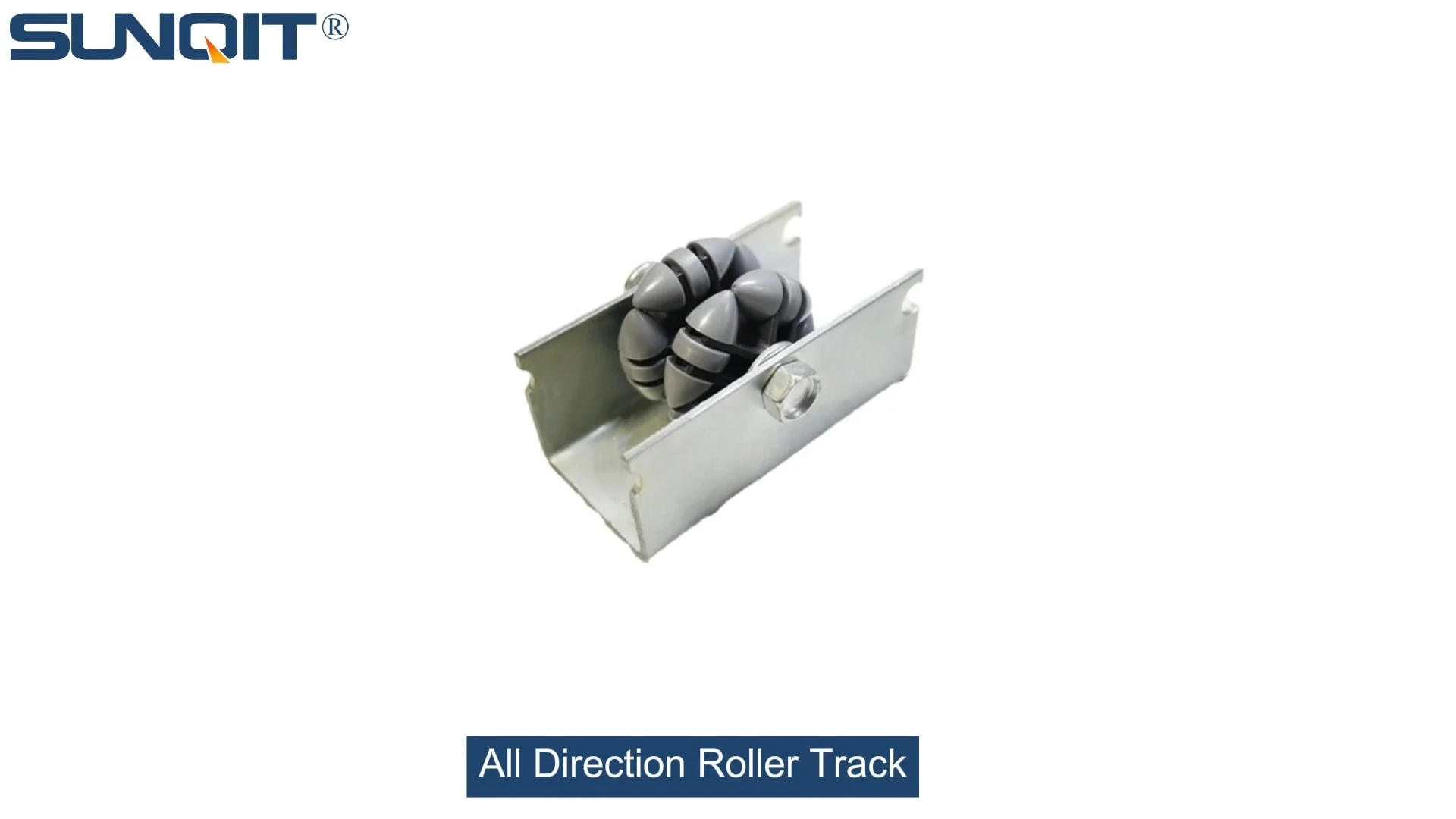
All Direction Roller Track
All direction roller track made of steel frame and multiple direction move wheel which will make boxes are always in contact with the rollers, reducing jams and enhancing flow reliability.
How a Small Component Transforms Manufacturing Agility and Efficiency
The Changing Face of Modern Manufacturing
Walk into any manufacturing facility today, and you'll notice a quiet revolution happening. Gone are the days of rigid, one-size-fits-all production lines that chug along at the same pace, month after month, regardless of market demands. Instead, floors are buzzing with setups that adapt, evolve, and even reconfigure overnight—all thanks to the rise of flexible production systems. But what's the secret behind this shift? It starts with rethinking the smallest parts that keep the line moving, like the unassuming yet powerful all direction roller track.
In an era where customers want personalized products, and competitors launch new models faster than ever, manufacturers can't afford downtime or inflexible processes. Whether you're building smartphones, medical devices, or automotive parts, the ability to switch between product lines quickly, reduce waste, and keep workers efficient isn't just an advantage—it's essential. That's where integrating all direction roller track into your lean system comes in. It's not just about moving materials from Point A to Point B; it's about creating a workflow that bends without breaking, adapts without slowing down, and grows with your business.
What Makes All Direction Roller Track a Game-Changer?
Let's start with the basics: what exactly is all direction roller track, and why is it different from the conveyor belts or fixed rollers you might already be using? Imagine a track where every roller can spin 360 degrees, allowing materials to glide forward, backward, side to side, or even diagonally with minimal effort. That's the magic of all direction roller track. Unlike traditional linear tracks that lock you into a single path, these rollers pivot and rotate, giving operators complete control over how parts move through the line.
But it's not just about flexibility. These tracks are built to last, with durable materials like aluminum and stainless steel that stand up to the daily grind of manufacturing. They're easy to clean (a must for industries like medical device production), simple to install, and—here's the kicker—completely reconfigurable. Need to shift a section of the line to accommodate a new machine? Just loosen a few bolts, adjust the track layout, and you're back up and running. No need for expensive custom parts or lengthy shutdowns.
Real-World Impact: A Day in the Life of an Assembly Line Worker
Maria, an assembler at a 3C electronics plant, used to spend hours each week wrestling with rigid tracks that only moved parts straight ahead. When her team switched to all direction roller track, she noticed the difference immediately. "Now, when I need to pass a circuit board to the next station, I just nudge it, and it glides right over—no more lifting heavy trays or reaching awkwardly," she says. "And when we switched from assembling Model X to Model Y last month? We reconfigured the track in 20 minutes instead of 2 hours. That's time I can spend building better products, not fighting the line."
The benefits add up fast: less physical strain on workers, fewer bottlenecks when materials need to change direction, and a significant reduction in changeover time. Plus, because the rollers distribute weight evenly, you can move heavier loads without worrying about jams or breakdowns. It's the kind of tool that doesn't just improve one process—it elevates your entire operation.

Building a Seamless Flow: Integrating with Lean Pipe Workbenches and Flow Racks
All direction roller track doesn't work in isolation—it's part of a bigger ecosystem: your lean system. To truly unlock its potential, you need to pair it with the right tools, starting with lean pipe workbenches and flow racks. Let's break down how these components work together to create a smooth, efficient workflow.
Step 1: The Foundation—Lean Pipe Workbenches
Your workbench is where the magic happens—the place where operators assemble, test, and inspect parts. A well-designed lean pipe workbench (like our Workbench E) isn't just a table; it's a hub tailored to your team's needs. Now, add all direction roller track to the equation: mount sections of track along the bench's edge, and suddenly, materials flow directly to where they're needed. No more walking to a distant shelf to grab components—parts slide right up to the operator, keeping hands on the product and eyes on the task.
For example, in a medical device assembly line, precision is everything. A lean pipe workbench with integrated all direction roller track ensures that small, delicate parts (like surgical tool components) glide gently to the operator, reducing the risk of drops or damage. And because the track is easy to sanitize, it meets strict industry cleanliness standards—no hidden crevices for dirt or bacteria to hide.
Step 2: Feeding the Line—Flow Racks and Roller Track
Flow racks (like our Material Rack B) are the unsung heroes of lean manufacturing, keeping inventory organized and accessible. But when you connect a flow rack to all direction roller track, you turn static storage into a dynamic supply chain. Here's how it works: parts are loaded onto the flow rack from the back, gravity pulling them forward as the front slots empty. Then, instead of an operator bending down to retrieve a bin, the track carries the bin directly to the lean pipe workbench. It's a seamless handoff that cuts down on walking time and keeps the line moving.
| Traditional Setup | All Direction Roller Track + Lean System |
|---|---|
| Operators walk 5-10 steps to retrieve parts from flow racks. | Parts glide directly from flow rack to workbench via roller track—0 steps wasted. |
| Fixed track paths require tools to reconfigure. | Rollers pivot 360°; adjust layouts in minutes, no tools needed. |
| Static workbenches limit how parts are accessed. | Track-integrated workbenches let parts approach from any angle, reducing strain. |
| Changeover for new products takes 4+ hours. | Reconfigurable track and lean pipe components cut changeover to under 1 hour. |
Step 3: Connecting the Dots—Roller Track and Conveyors
For larger facilities, all direction roller track doesn't replace conveyors—it complements them. Think of conveyors as the "highways" moving bulk materials across the plant, and roller track as the "side streets" that navigate parts to individual workstations. For example, a main conveyor might bring pallets of components into the facility, then all direction roller track branches off to feed smaller batches to each lean pipe workbench. This hybrid approach keeps the big-picture flow efficient while giving operators the flexibility to manage their immediate workspace.
In automotive parts manufacturing, where some components are heavy and bulky, this combination shines. A steel roller conveyor handles the heavy lifting, transporting engine parts across the floor, while all direction roller track at each workstation lets operators position parts exactly where they need them—no more struggling to maneuver awkwardly shaped items. It's the best of both worlds: power and precision.

From Concept to Reality: Industry-Specific Applications
All direction roller track isn't a one-size-fits-all solution—and that's a good thing. Its versatility means it thrives in almost every manufacturing sector, from 3C assembly to medical device production. Let's look at how it transforms workflows in two key industries:
Case Study 1: 3C Electronics—Speed and Flexibility for Fast-Changing Lines
In the world of smartphones and laptops, new models launch every few months, each with unique components and assembly steps. A manufacturer in Guangdong recently approached us with a problem: their old production line took 8 hours to reconfigure between phone models, eating into their ability to meet tight launch deadlines. We designed a lean system centered around all direction roller track, paired with modular lean pipe workbenches and flow racks.
The result? Changeover time dropped to 45 minutes. By mounting roller track sections on casters, the team can wheel entire track segments into place, adjusting the layout to match the new phone's assembly sequence. Operators now slide motherboards, screens, and batteries across the track with ease, and the system's aluminum frame keeps the line lightweight but sturdy. "We used to dread model changes," said the plant manager. "Now, we look forward to them—because we know we can adapt faster than our competitors."
Case Study 2: Medical Devices—Cleanliness and Precision for Life-Saving Products
Medical device manufacturing has zero room for error. Parts must be sterile, movements precise, and processes traceable. A client producing surgical instruments needed a system that could handle small, delicate parts without introducing contaminants. We recommended all direction roller track with stainless steel components (resistant to corrosion and easy to sanitize), paired with ESD workbenches to prevent static damage to sensitive electronics.
The track's smooth, sealed rollers eliminate crevices where bacteria could hide, and its gentle motion ensures parts like scalpel handles or implant components aren't scratched or dented during transport. "Regulators love it," the quality control lead noted. "We can show them exactly how parts move through the line, and the track's durability means we rarely have to stop production for maintenance. It's not just about efficiency—it's about reliability, which is everything in our industry."
These examples barely scratch the surface. In warehousing and logistics, all direction roller track turns static shelving into dynamic picking stations, letting workers sort packages in any direction. In automotive parts, it simplifies the movement of tools and subassemblies between work cells. The common thread? It adapts to your needs, not the other way around.

Beyond the Track: The Value of Custom Lean Solutions
At the end of the day, every manufacturing floor is unique. Your challenges, your products, and your team's workflow are one-of-a-kind—which is why off-the-shelf systems rarely cut it. That's where custom lean solutions come in. We don't just sell all direction roller track or lean pipe workbenches; we design entire ecosystems that fit how you work, with an eye on sustainability and continuous improvement.
Our approach starts with listening. We visit your facility, talk to your operators, and map out your current workflow to identify bottlenecks. Then, we design a system that integrates all direction roller track, flow racks, conveyors, and workbenches into a cohesive unit—one that's built to grow with you. Maybe you need a small track section today, but plan to expand next year? Our aluminum components are reusable, so you won't waste money replacing parts when you scale.
Take a warehouse client who needed to optimize their picking process. They had traditional static racks, and pickers were walking miles daily to retrieve items. We installed flow racks with all direction roller track, allowing bins to slide to the front automatically, and connected the racks to lean pipe workbenches where orders are packed. The result? Picking time dropped by 30%, and workers reported less fatigue. "It's not just about the track," the warehouse manager said. "It's about how everything works together—like a puzzle where every piece fits perfectly."
Ready to Transform Your Production Line?
Integrating all direction roller track into your flexible production line isn't just an upgrade—it's a mindset shift. It's about stopping to ask, "How can we make this easier, faster, and more adaptable?" instead of settling for "this is how we've always done it." Whether you're a small shop looking to improve a single workbench or a large manufacturer reimagining your entire facility, the right lean system—built around components like all direction roller track, lean pipe workbenches, and flow racks—can turn inefficiency into opportunity.
So, what's next? Start small. Identify one bottleneck in your line—a workstation where parts pile up, or a changeover that takes too long—and see how all direction roller track could fix it. Chances are, you'll be surprised by how much a simple shift in material flow can improve everything from productivity to worker morale. And when you're ready to scale, we'll be here to build a custom solution that grows with you.
In manufacturing, the future belongs to those who can adapt. With all direction roller track and a strong lean system, you're not just keeping up—you're leading the way.