- Company Articles
- Products and Technology
- Solution
- Integrating Flat Rigid Castor Wheels with Lean Pipe Systems for Custom Workstations

Integrating Flat Rigid Castor Wheels with Lean Pipe Systems for Custom Workstations
Related Product
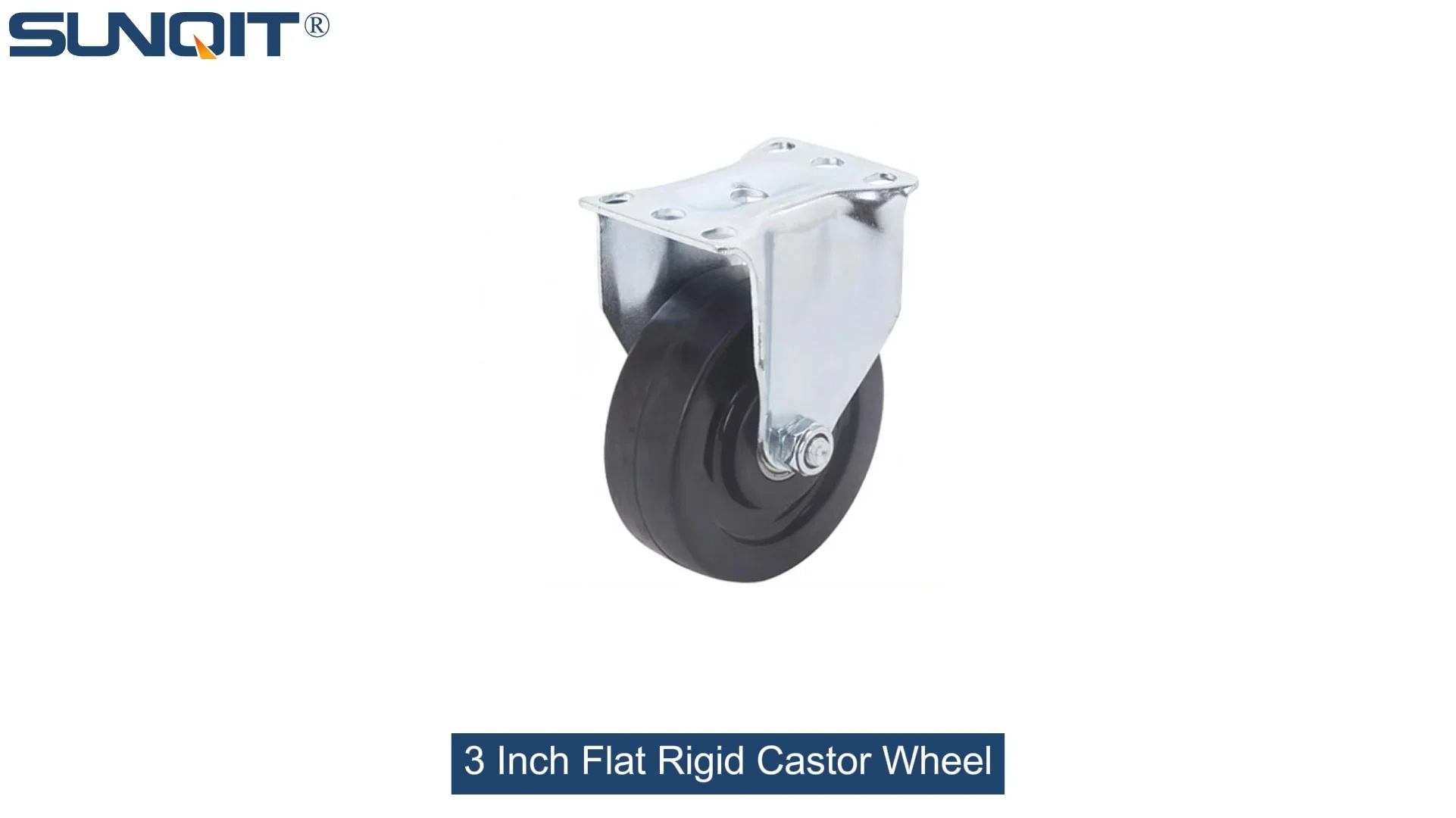
Flat Rigid Castor Wheel
Chair Casters Ball Bearing Wheels Rubber Base. Resistant to abrasion, impact and corrosion. Heavy payload can hold 70Kgs per pcs,which can make it works at a stable and smooth status.
How the right mobility solutions turn flexible workspaces into drivers of manufacturing efficiency
Walk into any modern manufacturing facility, and you'll notice a quiet revolution unfolding on the factory floor. Gone are the days of static, one-size-fits-all workbenches bolted to the ground—replaced instead by dynamic, adaptable setups that shift and evolve with production needs. At the heart of this transformation lies a simple yet powerful combination: lean pipe systems and carefully chosen mobility components, like flat rigid castor wheels. Together, they create workstations that don't just hold tools and materials, but actively contribute to lean principles—cutting waste, boosting productivity, and empowering teams to work smarter.
In this article, we'll dive deep into how integrating flat rigid castor wheels with lean pipe systems elevates custom workstations from functional to transformative. We'll explore the "why" behind this pairing, the design considerations that make or break success, real-world applications where it shines, and the tangible benefits manufacturers see when they get it right. Whether you're retooling an assembly line, optimizing a warehouse, or building a lab workspace from scratch, this guide will show you how to turn flexibility and mobility into your competitive edge.
The Foundation: Why Lean Pipe Systems Redefine Workspace Flexibility
Before we talk about wheels, let's start with the backbone: lean pipe systems. Also known as "flexible pipe" or "Kanban pipe," these systems emerged from the lean manufacturing movement—a philosophy centered on eliminating waste (muda) and maximizing value. Traditional workstations, often built from fixed materials like steel or wood, force teams into rigid workflows. If a production line needs to reconfigure for a new product, or a warehouse layout shifts to accommodate seasonal demand, those workstations become obstacles rather than assets.
Lean pipe systems solve this by prioritizing modularity. They typically consist of lightweight yet durable pipes (often steel with a plastic coating, or aluminum for specialized environments) and a variety of joints and connectors that allow for quick assembly and disassembly. Think of them as industrial-grade Erector Sets: with the right components, you can build a lean pipe workbench in the morning, reconfigure it into a material rack by afternoon, and break it down entirely by evening—no welding, no heavy tools, no permanent changes to your facility.
The Unseen Cost of Static Workstations
To understand the value of lean pipe systems, consider the hidden costs of static setups. A study by the Manufacturing Enterprise Solutions Association (MESA) found that factories with rigid workstations spend up to 20% more time on non-value-added activities—like walking to retrieve tools, adjusting to poorly positioned equipment, or waiting for space to free up. In contrast, facilities using modular lean systems report a 35% reduction in such waste, according to research from the Lean Enterprise Institute.
"We used to have workbenches that hadn't moved in 10 years," says Maria Gonzalez, a production manager at a mid-sized electronics manufacturer in Texas. "When we switched to lean pipe workbenches, we suddenly could rearrange the line in hours instead of days. A product changeover that once took two shifts now takes two hours—and that's just the start."
Flat Rigid Castor Wheels: The Unsung Heroes of Controlled Mobility
Mobility is a cornerstone of lean manufacturing, but not all movement is created equal. Swivel casters, with their 360-degree rotation, are great for maneuvering tight spaces—think hospital carts or delivery trolleys. But in manufacturing, where precision and stability often matter more than agility, flat rigid castor wheels step into the spotlight. These casters, as the name suggests, have a fixed orientation: they roll straight, no swiveling, providing a steady, predictable path for heavy loads.
What Makes Flat Rigid Castors Unique?
Unlike swivel casters, which use a pivot joint to change direction, flat rigid castor wheels are mounted directly to a fixed bracket. This design gives them two key advantages: stability and load capacity . Without the moving parts of a swivel mechanism, they can support heavier weights (often up to 1,500 lbs per caster, depending on size and material) and are less prone to wobbling or tipping when transporting bulky items like engine components or circuit board assemblies.
Another hidden benefit? Durability. Swivel casters rely on bearings and raceways that can wear down with constant use, especially in dusty or debris-filled factory environments. Flat rigid casters, with their simpler design, have fewer parts to fail—meaning less maintenance and longer lifespans. For facilities running 24/7 operations, that translates to less downtime and lower replacement costs over time.
When to Choose Flat Rigid Over Swivel Casters
Not every workstation needs flat rigid casters, of course. The decision comes down to your workflow. Ask yourself: Does this workstation move in a straight line most of the time? Is stability during transport more critical than tight turning? Will it carry heavy, fragile, or precision-sensitive items? If you answered "yes" to any of these, flat rigid casters are likely the better fit.
For example, in automotive assembly, where workbenches often glide along fixed paths between stations, flat rigid casters ensure parts like door panels or dashboards stay aligned and undamaged. In electronics manufacturing, where electrostatic discharge (ESD) protection is critical, rigid casters paired with conductive wheels prevent sudden movements that could generate static. And in warehouses, where workstations might need to shift between picking zones along straight aisles, they reduce the risk of collisions with racking or other equipment.

Designing the Perfect Pair: Lean Pipe Workbenches with Flat Rigid Casters
Combining lean pipe systems with flat rigid castor wheels isn't just about slapping wheels on a frame—it's about intentional design that balances flexibility, mobility, and functionality. The goal is a workstation that can adapt to new tasks, move where it's needed, and stay stable when it gets there. Let's break down the key considerations to make this integration successful.
1. Load Capacity: Matching Casters to Workbench Needs
The first rule of caster selection is simple: never undersize your casters . A lean pipe workbench's load capacity depends on both the pipe system (how much weight the frame can support) and the casters (how much weight each wheel can handle). Most lean pipe systems (especially those using aluminum or steel pipes with reinforced joints) can support 500–1,000 lbs per shelf, but the casters must carry the entire load—workbench, tools, materials, and all.
As a general guideline, calculate the total weight your workstation will carry (including dynamic loads, like someone leaning on it) and divide by the number of casters (typically 4–6). Aim for casters rated at 1.5x that per-wheel weight to account for uneven floors or sudden stops. For example, a workbench carrying 800 lbs with 4 casters needs wheels rated for at least 300 lbs each (800 ÷ 4 = 200; 200 x 1.5 = 300).
2. Mounting and Stability: The Role of Caster Accessories
Even the best casters won't perform if they're poorly mounted. This is where caster accessories —like mounting plates, brackets, and locking mechanisms—become critical. For lean pipe systems, which use modular joints, you'll need brackets that attach securely to the pipe frame without weakening it. Look for accessories designed specifically for lean pipe: they'll have pre-drilled holes that align with pipe joints, reducing assembly time and ensuring a tight fit.
Another stability trick? Wider wheel spacing . Mounting casters as far apart as possible (within the workbench's footprint) lowers the center of gravity, reducing tipping risk. For example, a 4-foot-wide workbench with casters mounted 3 feet apart (rather than 2 feet) will feel significantly more stable when moving. Some manufacturers even offer offset brackets to help achieve this without extending the workbench's overall size.
3. Floor Compatibility: Wheels That Play Nice with Your Surface
Your factory floor isn't just a surface—it's a partner in mobility. Rough concrete, polished epoxy, or even grated metal floors all demand different wheel materials. Flat rigid casters come in options like rubber (for grip on smooth floors), polyurethane (for durability on rough surfaces), and steel (for heavy loads on industrial floors). Choosing the wrong material can lead to premature wear, noisy operation, or even floor damage.
For example, rubber wheels are quiet and gentle on epoxy floors but can degrade quickly if exposed to oils or chemicals common in automotive shops. Polyurethane wheels, which combine rubber's grip with plastic's chemical resistance, are a safer bet there. Steel wheels, while tough, can scratch polished concrete—so reserve them for rough or outdoor surfaces.

Real-World Impact: Case Studies in Lean Integration
Theory is useful, but nothing beats seeing how these principles work in practice. Let's look at two manufacturers that transformed their workflows by integrating flat rigid castor wheels with lean pipe systems—and the results they achieved.
Case Study 1: Automotive Supplier Cuts Changeover Time by 65%
A Tier 1 automotive supplier in Michigan was struggling with a common problem: their assembly line for car door handles needed to switch between 12 different models daily, each requiring unique tools and fixtures. Their old setup used fixed steel workbenches, meaning workers spent 2–3 hours per changeover disassembling and rebuilding stations. Production often fell behind schedule, and overtime costs were spiraling.
The solution? They replaced the fixed benches with lean pipe workbenches mounted on flat rigid casters. Each workbench was pre-loaded with tools for a specific model, and tracks were installed in the floor to guide the benches between stations. Now, when a model change is needed, workers simply roll the old workbench out and the new one in—along a straight path, thanks to the rigid casters—cutting changeover time to 45 minutes. Overtime costs dropped by 40%, and on-time delivery rates rose from 85% to 98% in six months.
Case Study 2: Electronics Manufacturer Reduces ESD Incidents by 70%
A West Coast electronics firm producing circuit boards for medical devices faced frequent electrostatic discharge (ESD) incidents, which damaged sensitive components and led to costly rework. Their old workstations used swivel casters with plastic wheels, which generated static when moved. Even with ESD mats and wristbands, small shocks were common during line reconfigurations.
They switched to lean pipe workbenches with flat rigid casters fitted with conductive polyurethane wheels. The rigid casters reduced sudden movements (a major static generator), while the conductive wheels grounded the workstation, dissipating any charge. They also added caster accessories like brake locks to keep benches stationary during production. The result? ESD-related defects dropped from 12 per week to 3, saving an estimated $150,000 annually in rework and scrap.

Caster Comparison: Flat Rigid vs. Swivel vs. Locking Casters
Still unsure which caster type is right for your workstation? The table below breaks down the key differences to help you decide:
| Feature | Flat Rigid Casters | Swivel Casters | Locking Swivel Casters |
|---|---|---|---|
| Movement | Straight-line only; no swivel | 360° swivel; tight turning | Swivel movement with brake to lock wheel and swivel |
| Load Capacity | Highest (500–1,500 lbs per caster) | Medium (300–800 lbs per caster) | Medium (300–800 lbs per caster) |
| Stability | Excellent (low center of gravity) | Good (but can wobble with heavy loads) | Good (but swivel joint adds slight instability) |
| Best For | Straight-path transport, heavy loads, precision alignment | Tight spaces, frequent direction changes, light-to-medium loads | Workstations needing both mobility and secure positioning |
| Maintenance Needs | Low (fewer moving parts) | Medium (swivel joint requires lubrication) | Medium-High (brake mechanism adds complexity) |
| Cost | Moderate (simple design) | Moderate-High (swivel joint adds cost) | Highest (swivel + brake components) |
The Future of Lean Workstations: Beyond Mobility
As manufacturing continues to evolve—with trends like Industry 4.0, automation, and lights-out production—lean pipe systems and flat rigid casters are evolving too. Today's systems integrate with smart technologies: casters with built-in sensors can track workstation movement, alerting managers to bottlenecks or inefficient paths. Aluminum lean pipes, lighter and more durable than traditional steel, are making workstations easier to move without sacrificing strength. And 3D-printed caster accessories allow for custom brackets and mounts tailored to unique workflows.
But even with these advancements, the core principle remains the same: workstations should serve the people who use them. A lean pipe workbench on flat rigid casters isn't just a piece of equipment—it's a tool that empowers teams to adapt, innovate, and focus on what matters: creating value. In a world where manufacturing margins grow tighter and customer demands more unpredictable, that flexibility isn't just nice to have—it's essential.
Conclusion: Your Workstation, Reimagined
Integrating flat rigid castor wheels with lean pipe systems isn't about adding wheels to a bench. It's about reimagining what a workstation can be: a dynamic, adaptable asset that grows with your business, reduces waste, and puts control back in the hands of your team. It's about turning "we've always done it this way" into "what if we tried something better?"
So, whether you're building a new facility, upgrading an existing line, or just looking for small wins in efficiency, start with your workstations. Look at how they move (or don't move), how they support your workflows, and where friction slows your team down. Then ask: Could lean pipe and flat rigid casters turn this bottleneck into a breakthrough? Chances are, the answer is yes.
After all, lean manufacturing isn't just about tools and systems—it's about mindset. And there's no better mindset than one that says, "Our workspace should work as hard as we do."