- Company Articles
- Products and Technology
- Product knowledge
- Internal Rotating Aluminum Joints & Adjustable Leveling Feet: A Perfect Pair for Lean Pipe Systems

Internal Rotating Aluminum Joints & Adjustable Leveling Feet: A Perfect Pair for Lean Pipe Systems
Related Product
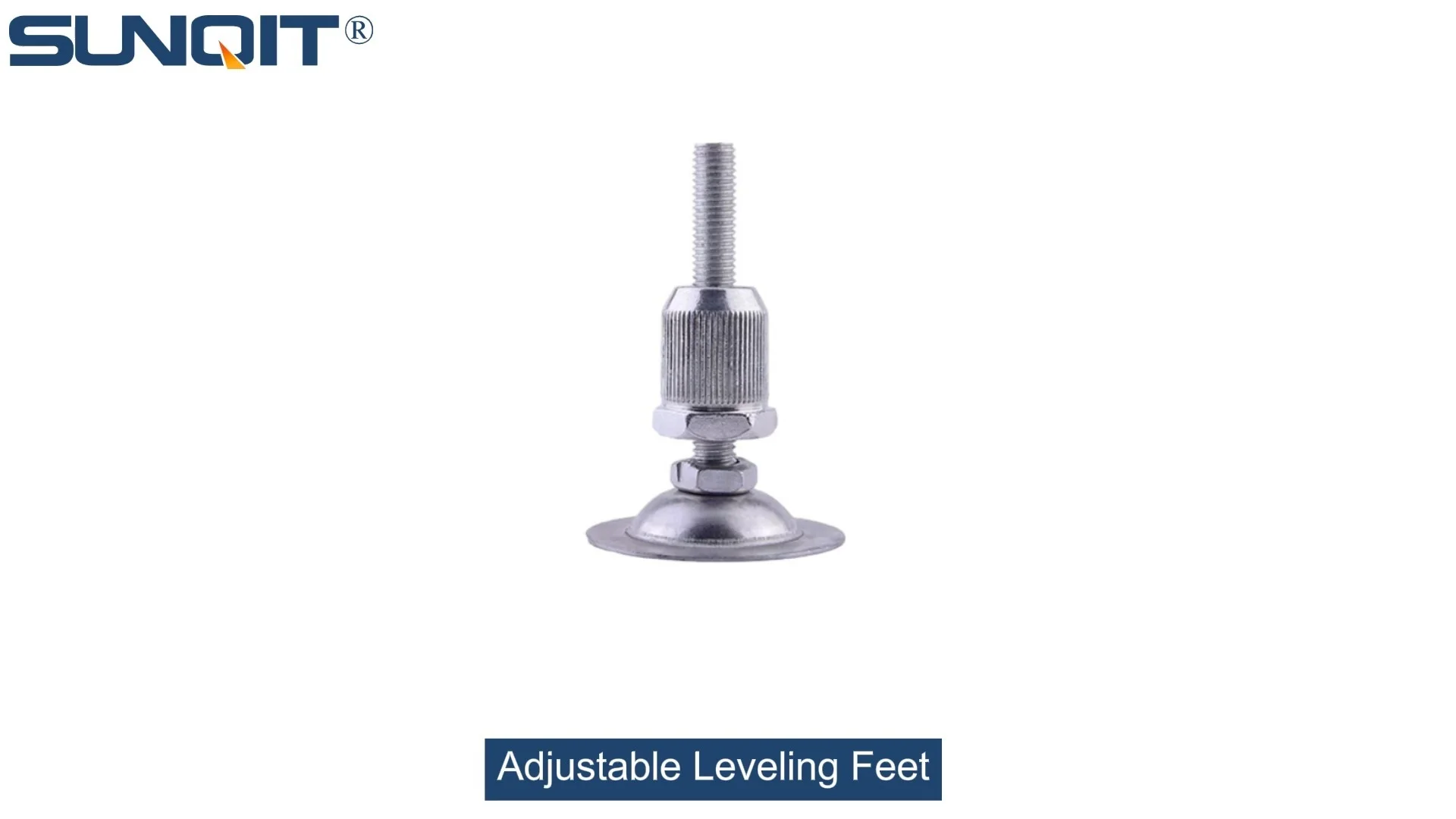
Adjustable Leveling Feet
Adjustable leveling feet are designed to keep machines level when placed on uneven or sloped ground. Otherwise known as adjustable equipment feet, they are available to order in a wide variety of size and load capacity combinations.
In the world of manufacturing, where every second and every square foot counts, lean principles have become the backbone of efficient operations. At its core, lean manufacturing is about eliminating waste—whether that's wasted time, space, or resources—and creating systems that adapt as quickly as your production needs do. And while big-picture strategies like process mapping and workflow optimization get a lot of attention, the unsung heroes of lean success often lie in the smaller, modular components that make up your workspace. Today, we're shining a spotlight on two such components: internal rotating aluminum joints and adjustable leveling feet . Together, they form a dynamic duo that transforms rigid, one-size-fits-all setups into flexible, stable, and future-ready lean pipe systems. Let's dive into why these two components matter, how they work, and why they're the perfect pair for any facility aiming to boost productivity.
First, Let's Talk About Lean Pipe Systems
Before we zoom in on our star components, let's ground ourselves in what a lean pipe system actually is. Think of it as the building blocks of your production floor: a versatile framework made from pipes (often aluminum or steel) and connectors that let you build everything from workbenches and material racks to conveyor systems and turnover trolleys. Unlike fixed, custom-built furniture, lean pipe systems are modular—meaning you can assemble, disassemble, and reconfigure them on the fly. Need to expand a workbench? Add a few more pipes. Rearrange a material rack to fit a new product size? Swap out the joints. This flexibility is why lean pipe systems are a staple in industries like automotive, electronics, and logistics—they grow and change with your business.
But here's the thing: not all lean pipe components are created equal. The strength of the system depends entirely on the quality of its parts. And when it comes to balancing flexibility and stability—two non-negotiables for lean operations—internal rotating aluminum joints and adjustable leveling feet stand out as game-changers.
Internal Rotating Aluminum Joints: The Flexibility Powerhouse
Let's start with the internal rotating aluminum joint —the component that brings "adaptability" to life in a lean pipe system. If traditional fixed joints are like rigid puzzle pieces that only fit one way, these rotating joints are more like a Swiss Army knife: they pivot, twist, and lock into place, giving you endless configuration options.
What Makes Them Special?
At first glance, an internal rotating aluminum joint looks like a simple connector, but its design is cleverly engineered. Inside the joint, there's a rotating mechanism (often a precision bearing or pin system) that allows the connected aluminum lean pipes to swivel up to 180 degrees. Once you've positioned the pipes at the angle you need—whether 30°, 45°, 90°, or something in between—a locking screw tightens the joint, holding everything securely in place. No welding, no drilling, no hassle.
And let's not overlook the material: aluminum. Unlike heavy steel joints that rust over time, aluminum is lightweight, corrosion-resistant, and strong enough to handle the demands of most manufacturing environments. This makes the joints easy to handle during assembly (no need for heavy lifting equipment) and durable enough to withstand daily wear and tear, even in humid or dusty settings.
Why Flexibility Matters in Lean Systems
Picture this: You run a small electronics assembly line, and your team has just landed a new client with a product that's slightly larger than your current models. Your existing workbench, built with fixed steel joints, is too narrow to accommodate the new components. With traditional joints, you'd either have to buy a whole new workbench (wasting money) or spend hours cutting and rewelding the frame (wasting time). But with internal rotating aluminum joints? You simply loosen the locks, adjust the pipes to widen the bench, and retighten. Done. The entire process takes 15 minutes, and you're back to production.
That's the power of flexibility. In lean manufacturing, change is constant—product sizes change, production volumes fluctuate, and new technologies require updated workflows. Rigid systems can't keep up, but joints that let you reconfigure on demand turn "change" from a headache into an opportunity to optimize.
Beyond Workbenches: Other Applications
Internal rotating aluminum joints aren't just for workbenches. They shine in any setup where custom angles or movable parts are needed:
- Material racks: Adjust shelf angles to prevent small parts from sliding off or to fit oddly shaped components.
- Turnover trolleys and racks: Design trolleys with foldable sides for easy storage when not in use, or racks that can tilt to feed parts directly into assembly stations.
- Assembly jigs: Create custom fixtures that pivot to hold products at the perfect angle for workers, reducing strain and improving accuracy.

Adjustable Leveling Feet: The Stability Foundation
Now, let's shift to the other half of our dynamic duo: adjustable leveling feet . If internal rotating joints are about "movement," leveling feet are about "stability." They might not look as flashy as a rotating joint, but without them, even the most flexible lean system would wobble, shake, and fail to deliver the precision your operations need.
What Do They Do?
At their core, adjustable leveling feet are the "feet" of your lean structures—think of them as the foundation under your workbench, material rack, or trolley. They consist of a threaded metal rod (usually steel or aluminum) with a base (often rubber or plastic) that screws into the bottom of the structure. By twisting the rod, you raise or lower the foot, adjusting the height of that corner of the structure. This might sound simple, but it solves a huge problem: factory floors are rarely perfectly flat.
Uneven floors are a silent productivity killer. A wobbly workbench makes it harder for workers to assemble precise parts, leading to errors and rework. A material rack that leans might cause boxes to slide off, risking damage or injury. Leveling feet eliminate this by letting you "fine-tune" each corner of the structure, ensuring it sits perfectly stable, even on the bumpiest concrete.
Key Features to Look For
Not all leveling feet are created equal, either. The best ones come with features that boost both functionality and safety:
- Anti-slip bases: Rubber or non-marking plastic bases prevent the structure from sliding, even on smooth floors. Some feet, like the suction cup anti-slip foot adjuster , use suction to grip the floor, adding extra stability.
- Heavy-duty construction: For larger structures (like heavy material racks), look for feet with thick, durable rods and reinforced bases that can handle high weight loads without bending.
- Easy adjustment: Feet with large, knurled adjustment knobs or hex sockets make it quick to level the structure—no need for special tools.
- Corrosion resistance: If your facility is damp (like a food processing plant) or uses cleaning chemicals, opt for feet with zinc-plated or stainless steel rods to prevent rust.
Stability = Safety + Efficiency
Stability isn't just about preventing wobbles—it's about creating a safer, more efficient workspace. When a workbench is level, tools and parts stay in place, reducing the risk of accidents. Workers can focus on their tasks instead of compensating for an unsteady surface, which speeds up production and reduces fatigue. And in quality control areas, stable workbenches ensure measurements are accurate, preventing costly mistakes.

Why They're a Perfect Pair: Flexibility + Stability
Individually, internal rotating aluminum joints and adjustable leveling feet are powerful tools. But together? They transform lean pipe systems from "good" to "game-changing." Here's how they complement each other:
Scenario 1: The Adaptable Workbench
Let's say you're setting up a multi-purpose workbench for a small batch production line. One week, you're assembling small circuit boards; the next, you're packaging larger components. With internal rotating aluminum joints, you can adjust the height of the bench's shelves, angle the tool holders for easier access, or even add a fold-down extension for extra space when needed. But once you've reconfigured the bench, you need it to stay stable. That's where adjustable leveling feet come in: no matter how you rearrange the pipes, you can level the bench in minutes, ensuring it's steady enough for precise work.
Scenario 2: The Mobile Material Rack
Imagine a turnover trolley and rack used to transport parts between assembly stations. When the trolley is moving, you want it to roll smoothly; when it's parked at a station, you want it to stay put. Internal rotating joints let you design the rack with custom shelves (angled to let parts slide forward, for example), while leveling feet with locking casters (yes, some leveling feet double as caster brakes!) keep the trolley stable during loading and unloading. No more chasing a rolling trolley across the factory floor!
Scenario 3: The High-Volume Assembly Line
In a busy automotive parts plant, assembly lines run 24/7, and downtime is costly. If a section of the line needs to be modified to accommodate a new part design, internal rotating joints let workers reconfigure the conveyor rails or workstations quickly. Adjustable leveling feet ensure the reconfigured line is perfectly aligned, so parts move smoothly from one station to the next without jamming. The result? Minimal downtime and maximum productivity.

How They Stack Up: A Quick Comparison
Still not convinced these components are worth the investment? Let's put them head-to-head with traditional alternatives in this handy table:
| Feature | Internal Rotating Aluminum Joints | Traditional Fixed Steel Joints | Adjustable Leveling Feet | Fixed Plastic/Metal Feet |
|---|---|---|---|---|
| Flexibility | 180° rotation; reconfigurable in minutes | Fixed angles; require welding to reconfigure | Adjustable height; adapts to uneven floors | Fixed height; wobbles on uneven surfaces |
| Material | Lightweight aluminum; corrosion-resistant | Heavy steel; prone to rust | Steel/aluminum rod; rubber/plastic base | Plastic or uncoated steel; may crack/rust |
| Assembly Time | 5-10 minutes per joint (no tools needed) | 30+ minutes per joint (requires welding/drilling) | 2-3 minutes per foot (hand-adjustable) | 1 minute per foot (but no adjustment later) |
| Long-Term Value | High (reusable for multiple configurations) | Low (fixed; must be replaced if needs change) | High (adapts to new floors/structures) | Low (may need replacement if floor warps) |
Choosing the Right Lean Pipe Supplier
Now that you're sold on the benefits of internal rotating aluminum joints and adjustable leveling feet, the next step is finding a lean pipe supplier who can deliver quality components. Here's what to look for:
- Material quality: Ask about the grade of aluminum used in joints and pipes—6063-T5 aluminum is a common industry standard for strength and durability.
- Accessory range: A good supplier should offer not just joints and feet, but a full lineup of aluminum profile accessories (like end caps, hinges, and clamps) to make your system complete.
- Technical support: Look for suppliers who provide assembly guides, design tools, or even on-site support to help you plan your lean system.
- Customization options: If you have unique needs (like extra-large leveling feet or custom joint angles), choose a supplier willing to work with you to create solutions.
Remember: investing in quality components now will save you time, money, and frustration down the line. A cheap joint that bends or a flimsy leveling foot that cracks will only lead to downtime and replacement costs.
Wrapping Up: Flexibility and Stability—The Lean Dream Team
In the end, lean manufacturing is about more than just cutting costs—it's about building systems that can grow, adapt, and thrive in an ever-changing market. Internal rotating aluminum joints and adjustable leveling feet might seem like small parts, but they play a huge role in making that possible. Together, they give you the best of both worlds: the flexibility to reconfigure your workspace on a whim and the stability to ensure every operation runs smoothly, accurately, and safely.
So, whether you're setting up a new production line, upgrading an existing workspace, or just looking to squeeze more efficiency out of your current setup, don't overlook these dynamic duo. Your team will thank you for the easier workflows, your bottom line will thank you for the reduced waste, and your business will thank you for the ability to pivot quickly when opportunity strikes. After all, in lean manufacturing, the right tools—and the right components—make all the difference.