- Company Articles
- Products and Technology
- Product knowledge
- Internal Straight Aluminum Joint Compatibility: Matching with Different Lean Pipe Sizes

Internal Straight Aluminum Joint Compatibility: Matching with Different Lean Pipe Sizes
Related Product
Internal straight aluminum joint
Aluminum pipe joint inside connection used for two pcs 28pcs aluminum pipe connection in straight angle,it connects two pcs pipe from inside.
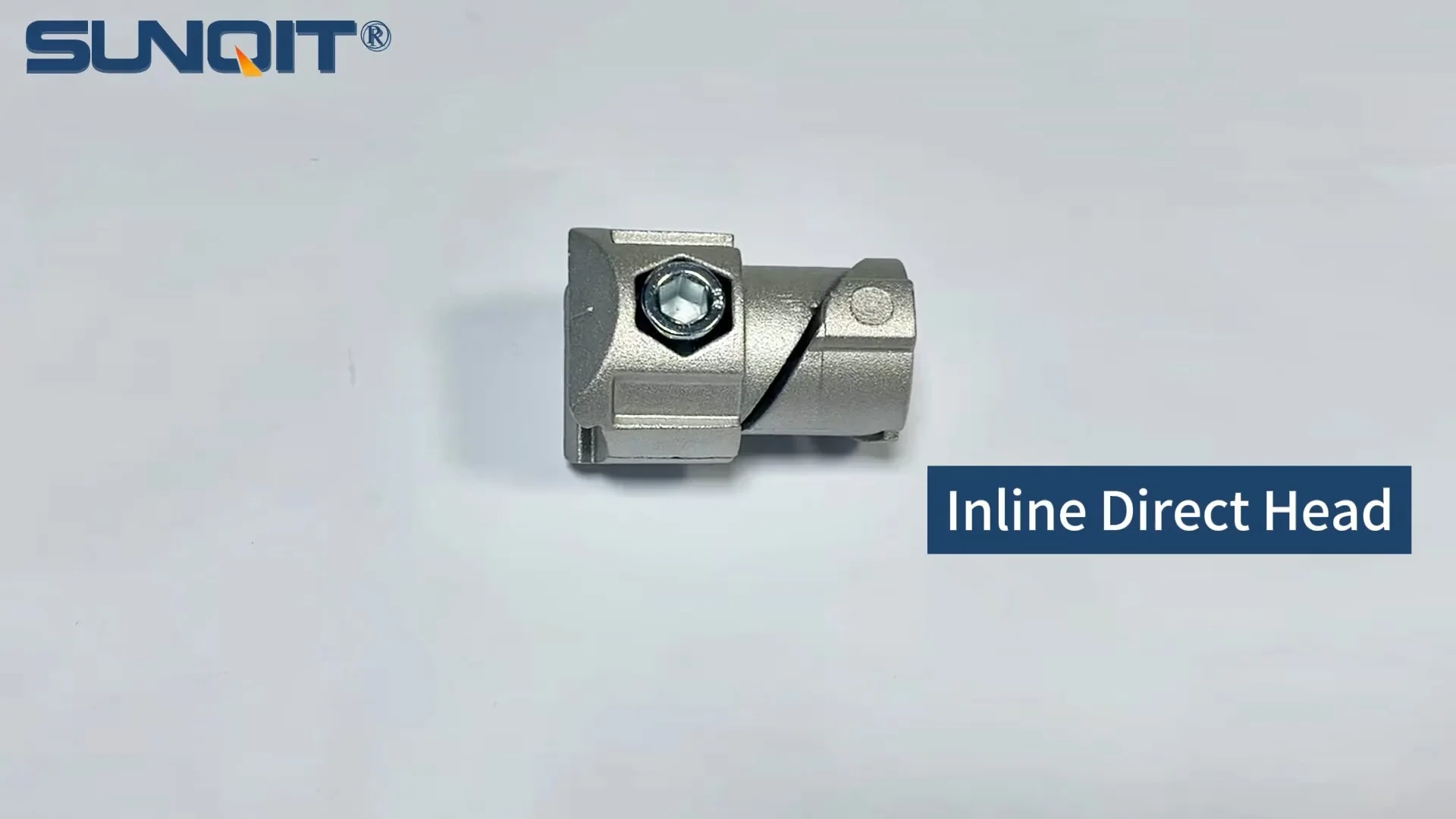
Walk into any efficient manufacturing facility, and you'll notice a common thread: systems that flow seamlessly, with tools and materials exactly where they need to be. Behind that efficiency often lies a critical, yet overlooked component: the internal straight aluminum joint. These unassuming connectors are the backbone of lean manufacturing setups, quietly holding together everything from workbenches to flow racks, conveyors to turnover trolleys. But here's the thing: not all joints work with all pipes. Get the compatibility wrong, and you're looking at wobbly structures, wasted time, and even safety hazards. Today, we're diving deep into how internal straight aluminum joints match with different lean pipe sizes, why it matters, and how to get it right every time.
What Are Internal Straight Aluminum Joints?
Let's start with the basics. Internal straight aluminum joints are specialized connectors designed to link lean pipes in a straight line, creating rigid, secure frameworks without the bulk of external hardware. Unlike traditional welded joints or bulky external clamps, these joints sit partially inside the pipe, maintaining a clean, streamlined profile. Made from high-grade aluminum alloys—often 6063 or 6061, known for their strength-to-weight ratio—they're lightweight, corrosion-resistant, and built to handle the daily wear of manufacturing environments.
Their design is deceptively simple: a hollow cylindrical body with internal threading or friction-fit mechanisms that grip the inner wall of the lean pipe. Many feature internal rotary components, allowing for minor adjustments during assembly to ensure alignment. This "internal" design is key—by sitting inside the pipe, they don't protrude, reducing the risk of snags with materials or worker clothing, and keeping the overall structure compact. Think of them as the invisible glue that turns individual pipes into functional, adaptable systems.
Why Compatibility Matters in Lean Systems
Lean manufacturing thrives on three principles: eliminating waste, maximizing flexibility, and continuous improvement. Internal straight aluminum joints play a starring role in all three— but only if they're compatible with the lean pipes they connect . A mismatched joint can turn a "lean" setup into a clunky, inefficient one faster than you can say "downtime."
Imagine this: A electronics plant invests in new aluminum lean pipes to build a material rack. They reuse old internal straight joints from a previous steel pipe system, assuming "a joint is a joint." But the steel pipes had a larger outer diameter, so the joints are loose on the aluminum pipes. Within weeks, the rack sags under the weight of components, causing workers to slow down to avoid spills. That's waste—of time, materials, and potential productivity—all because of a compatibility oversight.
On the flip side, a well-matched joint and pipe create a system that's easy to assemble, disassemble, and reconfigure. Need to adjust your workbench height? Swap out a pipe section, tighten the joint, and you're done. Scaling up production? Add more flow rack sections with the same joints and pipes. This flexibility is why lean systems rely so heavily on these connectors—they turn static structures into dynamic tools that grow with your business.

Key Factors in Internal Straight Aluminum Joint Compatibility
Compatibility isn't just about "does it fit?" It's about ensuring the joint and pipe work together to meet your system's needs—stability, load capacity, and longevity. Let's break down the critical factors:
1. Diameter: The Foundation of Fit
The most obvious factor is diameter: the inner diameter (ID) of the joint must match the outer diameter (OD) of the lean pipe. Aluminum lean pipes come in standard sizes—common options include 20mm, 28mm, 30mm, and 40mm OD—each requiring a corresponding joint. For example, a 28mm OD basic aluminum tube needs an internal straight aluminum joint with an ID of 28mm (plus a tiny tolerance for a snug fit). If the joint's ID is too small, you'll struggle to insert the pipe; too large, and the connection will be loose, leading to wobbling or failure under load.
Pro tip: Always measure both the pipe OD and joint ID with a caliper, not just relying on labeled sizes. Manufacturing tolerances can vary—even a 0.5mm difference can affect fit. A quality lean pipe supplier will provide detailed specs, but double-checking saves headaches later.
2. Wall Thickness: Balancing Strength and Grip
Wall thickness matters too. A lean pipe with a thin wall (e.g., 1.0mm) might not provide enough material for the joint's internal threads or friction mechanisms to grip. Conversely, an extra-thick wall (e.g., 3.0mm) could reduce the pipe's inner space, leaving less room for the joint to seat properly. Most internal straight aluminum joints are designed for pipes with wall thicknesses between 1.2mm and 2.0mm—ideal for balancing strength and grip. If your application requires thicker pipes (for heavy loads), look for joints with reinforced threading or extended grip lengths.
3. Material and Surface Finish
Aluminum joints and aluminum pipes are a natural pair—they expand and contract at similar rates with temperature changes, reducing stress on the connection. But if you're using stainless steel pipe series or pe-coated lean pipe, compatibility shifts. Stainless steel has a different hardness; some aluminum joints may wear faster against it. PE-coated pipes add a layer of plastic, which can reduce friction—look for joints with textured inner surfaces or rubber gaskets to enhance grip. Anodized aluminum joints (a common surface treatment) offer better corrosion resistance and a slightly rougher texture, improving grip compared to untreated aluminum.
4. Load Capacity: Matching Strength to Needs
Not all joints are created equal when it comes to load capacity. A joint designed for a 20mm pipe used in a lightweight workbench won't hold up in a material rack b (3 row and 3 floor) loaded with heavy components. Check the joint's load rating—usually specified in kilograms or pounds—and ensure it exceeds your expected maximum load. Factors like joint material thickness, thread design (if threaded), and internal reinforcement (like ribbing) all affect strength. For critical applications, ask your supplier for test data or case studies.

Matching Internal Straight Aluminum Joints to Common Lean Pipe Sizes
Now, let's put this into practice. Below's a breakdown of how internal straight aluminum joints pair with popular lean pipe sizes, along with use cases and tips:
| Lean Pipe Size (OD) | Recommended Internal Straight Aluminum Joint ID | Typical Wall Thickness | Common Applications | Key Accessories |
|---|---|---|---|---|
| 20mm | 20mm ± 0.2mm | 1.0–1.2mm | Light-duty workbenches, small turnover trolleys, mini flow racks | Plastic end caps, mini aluminum roller track |
| 28mm | 28mm ± 0.3mm | 1.5–2.0mm | Standard workbenches (e.g., Workbench E), medium-duty material racks | Aluminum pipe clamp, caster wheels for trolleys |
| 30mm | 30mm ± 0.3mm | 1.8–2.5mm | Heavy-duty material rack b, conveyor frames, assembly lines | Reinforced aluminum joint, roller track placon mount |
| 40mm | 40mm ± 0.4mm | 2.0–3.0mm | Industrial shelving, large turnover racks, automated conveyor systems | Stainless steel swivel roller balls, high-load caster accessories |
20mm Pipes: Compact and Lightweight
20mm OD aluminum pipes are the smallest common size, ideal for lightweight applications. Think small parts assembly workbenches, mobile carts for tools, or mini flow racks for electronics components. Their internal straight aluminum joints are correspondingly compact, often made with thinner walls (since load demands are lower). Pair them with plastic roller track guide rail (yellow or grey) for smooth material flow, and add small caster wheels for mobility. Just avoid overloading—these joints typically max out around 50kg per connection.
28mm Pipes: The Workhorse of Workbenches
28mm is the sweet spot for most general manufacturing setups. A 28mm basic aluminum tube with a 1.5mm wall thickness offers a great balance of strength and weight, making it perfect for standard workbenches (like Workbench E, single deck without caster) or material racks with 2–3 levels. The matching internal straight aluminum joint has a slightly thicker wall than 20mm versions, supporting loads up to 150kg per connection. Add aluminum pipe accessories like side guards or tool holders, and you've got a versatile, customizable workstation.
30mm and 40mm Pipes: Heavy-Duty Solutions
For heavier loads—think 3-row, 3-floor material racks (Material Rack B) or conveyor frames—30mm and 40mm pipes are the go-to. Their internal straight aluminum joints are beefed up with thicker walls, reinforced threading, and sometimes internal ribbing to handle 200kg+ per connection. 40mm pipes, in particular, are common in automated systems, paired with 40 steel roller track (yellow or black ESD wheels) for moving heavy components. When assembling these, use a torque wrench to tighten any threaded joints to the supplier's specs—over-tightening can strip threads, while under-tightening risks loosening.
Aluminum Pipe Accessories: Enhancing Compatibility and Functionality
Internal straight aluminum joints don't work alone—accessories play a big role in ensuring compatibility and boosting functionality. Here are key ones to consider:
Pipe Clamps and End Caps
Aluminum pipe clamps secure cross-braces or accessories (like tool hooks) to the main frame. They must match the pipe OD—e.g., a 28mm clamp for a 28mm pipe. End caps, usually plastic, protect pipe ends and prevent debris from entering, which could interfere with joint fit. Look for caps with a snug OD to the pipe, so they don't fall off during use.
Casters and Leveling Feet
For mobile setups, caster wheels attach to the base via caster installation bases, which bolt to the internal straight aluminum joints. Ensure the caster's mounting plate matches the joint's footprint—most suppliers offer bases designed for specific joint sizes. For fixed structures, anti-slip adjustable leveling feet keep the frame stable, even on uneven floors. These screw into the joint's base, so thread size (often M10) must align.
Roller Tracks and Connectors
Flow racks and conveyors rely on roller tracks, which connect to aluminum pipes via roller track placon mounts. These mounts come in various styles—flat, high, or center support brackets—each designed to attach to specific pipe sizes. For example, a roller track placon mount for aluminum profile flat works best with 30mm or 40mm square aluminum profiles, while a flat mount suits round 28mm pipes. Mismatched mounts lead to misaligned tracks, causing jams or uneven material flow.
Troubleshooting Common Compatibility Issues
Even with careful planning, issues can arise. Here's how to fix the most common problems:
Loose Connections
Cause: Joint ID too large for pipe OD, or pipe wall too thin. Solution: For minor looseness, wrap Teflon tape around the pipe end (3–4 layers) to increase diameter slightly. For larger gaps, use a rubber O-ring inside the joint (ensure it's heat-resistant if used near machinery). If the issue is chronic, switch to a joint with a smaller ID or a pipe with a thicker wall.
Difficulty Inserting Pipe
Cause: Joint ID too small, or pipe OD has burrs. Solution: Deburr the pipe end with a file or sandpaper. If the joint is still too tight, gently expand the ID using a tapered reamer (go slow—aluminum is soft and easy to overdo). Avoid forcing the pipe, as this can bend or crack the joint.
Corrosion at the Joint
Cause: Mixing dissimilar metals (e.g., aluminum joint with steel pipe) or exposure to moisture. Solution: Use only aluminum pipes with aluminum joints, or steel pipes with stainless steel joints. In humid environments, choose anodized joints and apply a thin layer of anti-corrosion grease to the connection. Regular cleaning also helps—wipe away dust and moisture with a dry cloth.
The Bottom Line: Compatibility Drives Lean Success
Internal straight aluminum joints might not be the most glamorous part of your lean system, but they're the unsung heroes that keep everything running smoothly. Getting compatibility right—matching joint ID to pipe OD, considering wall thickness and load capacity—ensures your workbenches, racks, and conveyors are stable, flexible, and built to last. And when your system is stable and flexible, waste disappears: less time fixing wobbling structures, more time focusing on production. Less money spent on replacements, more invested in growth.
So next time you're designing a lean setup, don't overlook these small but mighty connectors. Consult your lean pipe supplier for specs, measure twice, and choose accessories that complement your pipe and joint sizes. Your future self—and your bottom line—will thank you.