- Company Articles
- Products and Technology
- Product knowledge
- Internal Straight Aluminum Joint Dimensions: Standard Sizes & Custom Options

Internal Straight Aluminum Joint Dimensions: Standard Sizes & Custom Options
Related Product
Internal straight aluminum joint
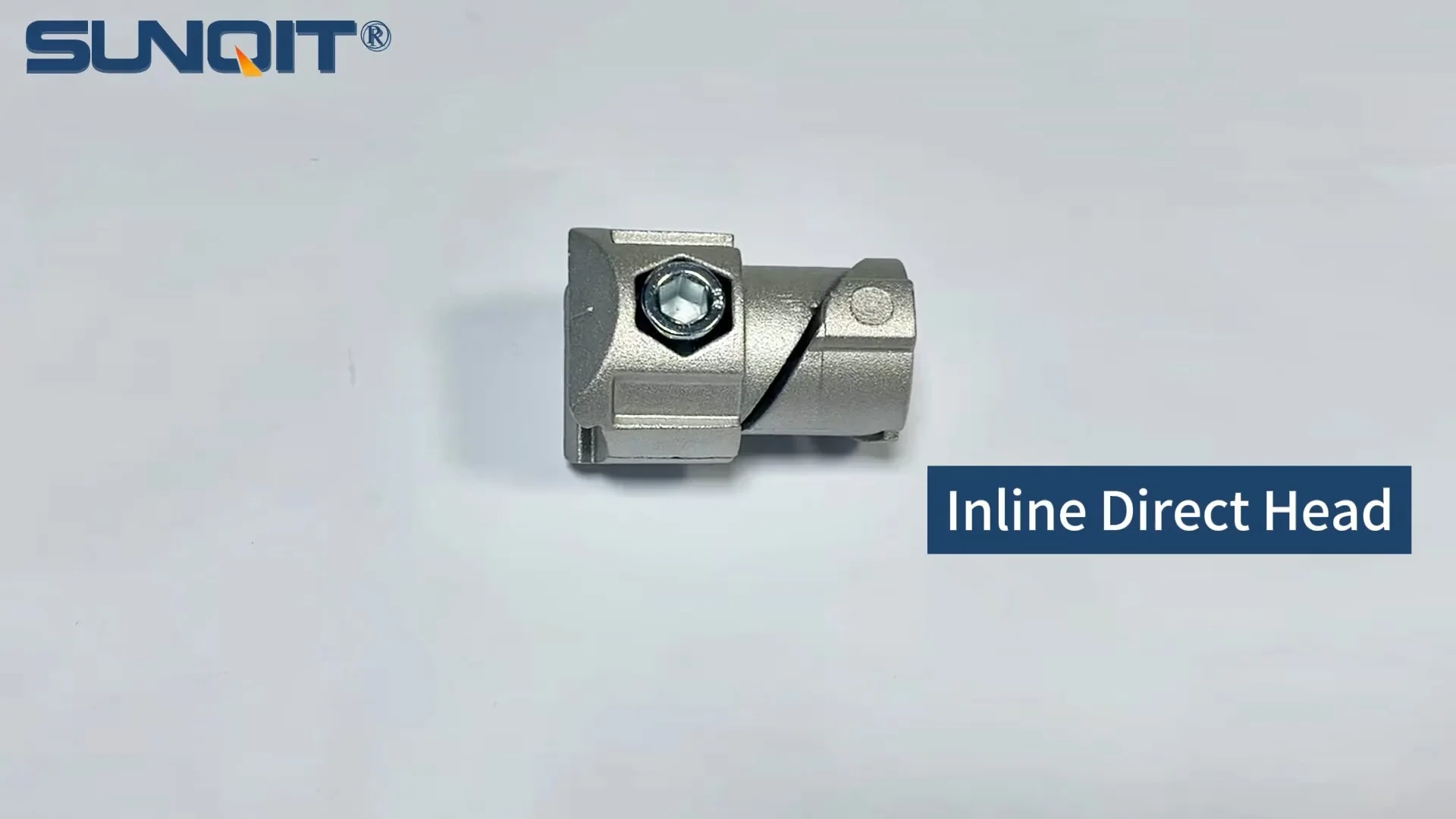
Aluminum pipe joint inside connection used for two pcs 28pcs aluminum pipe connection in straight angle,it connects two pcs pipe from inside.
Introduction: The Unsung Hero of Modular Lean Systems
If you've ever walked through a busy production floor, you've probably noticed the backbone of the operation: the workbenches, flow racks, and conveyor systems that keep materials moving smoothly. What you might not see, though, is the quiet force holding it all together—components like the
internal straight aluminum joint
. These small but mighty connectors are the glue of modern lean manufacturing, enabling the flexible, modular structures that define efficient production lines. Whether you're building a custom workbench, a dynamic flow rack, or a agile turnover trolley, the right joint can mean the difference between a rigid setup that resists change and a system that adapts as quickly as your business needs.
In this article, we're diving deep into internal straight aluminum joints—specifically their dimensions, standard sizes, and the custom options that make them indispensable for businesses invested in lean system optimization. We'll explore why these joints matter, how standardization simplifies your workflow, and when custom solutions might be the key to solving your unique challenges. By the end, you'll have a clear understanding of how to select, install, and leverage these joints to build lean systems that grow with you.
In this article, we're diving deep into internal straight aluminum joints—specifically their dimensions, standard sizes, and the custom options that make them indispensable for businesses invested in lean system optimization. We'll explore why these joints matter, how standardization simplifies your workflow, and when custom solutions might be the key to solving your unique challenges. By the end, you'll have a clear understanding of how to select, install, and leverage these joints to build lean systems that grow with you.
What Are Internal Straight Aluminum Joints?
Let's start with the basics: What exactly is an internal straight aluminum joint? Simply put, it's a connector designed to join two lengths of
aluminum lean pipe
in a straight line, with the joint itself fitting inside the pipes rather than clamping around the outside. This internal design offers several advantages: it creates a sleeker, more streamlined look, reduces snag points for materials or workers, and often provides a stronger, more stable connection since the joint is embedded within the pipe walls.
These joints are typically made from high-grade aluminum alloys, like 6061 or 6063, known for their winning combination of strength, lightweight, and corrosion resistance. They're often finished with anodizing—a process that adds a protective oxide layer—to enhance durability and prevent wear, even in high-traffic industrial environments. When paired with other aluminum profile accessories like end caps, clamps, or brackets, internal straight joints become part of a versatile toolkit for building everything from simple material racks to complex assembly stations.
Unlike external joints, which can add bulk and limit flexibility, internal straight joints let pipes connect seamlessly. Imagine a flow rack where products glide along roller tracks—bulky external joints might disrupt the flow, but internal joints keep the path smooth. Or a workbench that needs to be reconfigured for a new product line: internal joints make disassembly and reassembly quick, since there's no need to loosen external clamps or brackets. In short, they're designed with lean principles in mind: eliminating waste (like excess time spent on setup), optimizing flow, and enabling continuous improvement.
These joints are typically made from high-grade aluminum alloys, like 6061 or 6063, known for their winning combination of strength, lightweight, and corrosion resistance. They're often finished with anodizing—a process that adds a protective oxide layer—to enhance durability and prevent wear, even in high-traffic industrial environments. When paired with other aluminum profile accessories like end caps, clamps, or brackets, internal straight joints become part of a versatile toolkit for building everything from simple material racks to complex assembly stations.
Unlike external joints, which can add bulk and limit flexibility, internal straight joints let pipes connect seamlessly. Imagine a flow rack where products glide along roller tracks—bulky external joints might disrupt the flow, but internal joints keep the path smooth. Or a workbench that needs to be reconfigured for a new product line: internal joints make disassembly and reassembly quick, since there's no need to loosen external clamps or brackets. In short, they're designed with lean principles in mind: eliminating waste (like excess time spent on setup), optimizing flow, and enabling continuous improvement.

Standard Dimensions: Why Consistency Matters
In manufacturing, consistency is king. Standardized parts mean less guesswork, faster assembly, and easier replacement when components wear out. Internal straight aluminum joints are no exception—their standard dimensions are the result of decades of industry collaboration, designed to work with common aluminum pipe sizes and integrate with existing lean system components. Let's break down the key dimensions you'll encounter and why they matter.
The most critical dimension for any joint is its outer diameter, which must match the inner diameter of the aluminum pipes it connects. If the joint is too small, it will wobble inside the pipe, creating instability; too large, and it won't fit at all. Standard pipe sizes for lean systems typically range from 20mm to 40mm in outer diameter, so internal joints are engineered to pair with these. For example, a 28mm outer diameter joint is designed for 30mm outer diameter pipes (which have an inner diameter of approximately 28mm).
Length is another key factor. Standard internal straight joints usually range from 50mm to 150mm in length, with longer joints providing more surface area for bonding (if glued) or threading (if mechanically fastened). The length also affects how much of the pipe is reinforced—longer joints distribute stress more evenly across the connection, making them better for heavy-load applications like conveyor systems or material racks.
To give you a clearer picture, here's a table of common standard sizes for internal straight aluminum joints, along with their compatible pipe dimensions and typical use cases:
The most critical dimension for any joint is its outer diameter, which must match the inner diameter of the aluminum pipes it connects. If the joint is too small, it will wobble inside the pipe, creating instability; too large, and it won't fit at all. Standard pipe sizes for lean systems typically range from 20mm to 40mm in outer diameter, so internal joints are engineered to pair with these. For example, a 28mm outer diameter joint is designed for 30mm outer diameter pipes (which have an inner diameter of approximately 28mm).
Length is another key factor. Standard internal straight joints usually range from 50mm to 150mm in length, with longer joints providing more surface area for bonding (if glued) or threading (if mechanically fastened). The length also affects how much of the pipe is reinforced—longer joints distribute stress more evenly across the connection, making them better for heavy-load applications like conveyor systems or material racks.
To give you a clearer picture, here's a table of common standard sizes for internal straight aluminum joints, along with their compatible pipe dimensions and typical use cases:
| Joint Outer Diameter (mm) | Compatible Pipe Outer Diameter (mm) | Joint Length (mm) | Material Thickness (mm) | Weight Capacity (kg) | Common Applications |
|---|---|---|---|---|---|
| 18 | 20 | 50-80 | 1.5-2.0 | 50-80 | Light-duty workbenches, small turnover trolleys |
| 28 | 30 | 80-120 | 2.0-2.5 | 80-150 | Medium-load flow racks, assembly line workstations |
| 38 | 40 | 100-150 | 2.5-3.0 | 150-250 | Heavy-duty conveyor systems, material racks (3-row/3-floor) |
| 48 | 50 | 120-180 | 3.0-3.5 | 250-400 | Industrial-scale turnover racks, large workbenches |
These standard sizes aren't arbitrary—they align with the most common aluminum pipe dimensions used in lean manufacturing, ensuring that if you order a 30mm pipe and a 28mm internal joint from different suppliers, they'll still work together. This interoperability is a game-changer for businesses that need to source parts from multiple vendors or replace components quickly without worrying about compatibility issues.

The Benefits of Standardization
You might be wondering: Why stick to standard sizes when custom options exist? The answer lies in efficiency—a core principle of lean manufacturing. Standardized internal straight aluminum joints simplify nearly every aspect of your operation, from procurement to production to maintenance.
Reduced Lead Times: Standard parts are mass-produced, which means suppliers keep them in stock. Need to replace a broken joint on a critical workbench? A standard size can often be shipped the same day, minimizing downtime. Custom parts, by contrast, require design, prototyping, and manufacturing—processes that can take weeks or even months.
Lower Costs: Mass production drives down costs. Standard joints are cheaper to produce and purchase than custom ones, which can save your business significant money, especially if you're building multiple systems or need to scale up quickly.
Easier Training: When your team works with the same joint sizes across all systems, training new employees becomes simpler. There's no need to learn how to install 10 different custom joints—just a few standard ones. This consistency also reduces errors during assembly, like using the wrong joint for a pipe size.
Scalability: Standardized components make it easy to expand or modify existing systems. Want to add an extra section to your flow rack? Just grab a standard pipe and joint, and you're good to go. No need to redesign the entire structure around a custom part.
Of course, there are times when standard sizes fall short—and we'll get to custom options next—but for most businesses, starting with standard internal straight aluminum joints is the smart, cost-effective choice.
Reduced Lead Times: Standard parts are mass-produced, which means suppliers keep them in stock. Need to replace a broken joint on a critical workbench? A standard size can often be shipped the same day, minimizing downtime. Custom parts, by contrast, require design, prototyping, and manufacturing—processes that can take weeks or even months.
Lower Costs: Mass production drives down costs. Standard joints are cheaper to produce and purchase than custom ones, which can save your business significant money, especially if you're building multiple systems or need to scale up quickly.
Easier Training: When your team works with the same joint sizes across all systems, training new employees becomes simpler. There's no need to learn how to install 10 different custom joints—just a few standard ones. This consistency also reduces errors during assembly, like using the wrong joint for a pipe size.
Scalability: Standardized components make it easy to expand or modify existing systems. Want to add an extra section to your flow rack? Just grab a standard pipe and joint, and you're good to go. No need to redesign the entire structure around a custom part.
Of course, there are times when standard sizes fall short—and we'll get to custom options next—but for most businesses, starting with standard internal straight aluminum joints is the smart, cost-effective choice.
When to Consider Custom Internal Straight Aluminum Joints
While standardization is ideal for many scenarios, some challenges demand a tailored approach. Custom internal straight aluminum joints are designed to solve unique problems that off-the-shelf parts can't address. Here are a few situations where custom might be the right fit:
Non-Standard Pipe Sizes: Maybe your facility uses legacy equipment with pipes that don't match modern standards—say, 25mm outer diameter pipes instead of the more common 20mm or 30mm. In this case, a custom joint with a 23mm outer diameter (to fit the 25mm pipe's inner diameter) would be necessary to connect them.
Extreme Load Requirements: If your system needs to support unusually heavy loads—like large automotive parts or industrial machinery—standard joints might not be strong enough. Custom joints can be engineered with thicker walls, reinforced materials, or specialized threading to handle higher weights, ensuring safety and durability.
Environmental Challenges: Facilities with harsh conditions, such as high humidity, chemical exposure, or extreme temperatures, might require custom finishes. For example, a food processing plant might need joints with food-grade anodizing, while a coastal facility could benefit from marine-grade aluminum to resist saltwater corrosion.
Unique Design Constraints: Sometimes, space is at a premium. A custom joint with a shorter length might be needed to fit in a tight corner, or a tapered design could help connect pipes of slightly different diameters (though this is less common for straight joints). Custom joints can also integrate additional features, like built-in cable management channels or mounting points for accessories.
If you're considering custom joints, start by consulting with a reputable supplier who specializes in aluminum lean systems. They can help you assess whether a custom solution is truly necessary or if a standard joint with modifications (like a thicker wall or special finish) might work. Be prepared to share details about your application: pipe sizes, load requirements, environment, and any space constraints. The more information you provide, the better the supplier can tailor the joint to your needs.
Non-Standard Pipe Sizes: Maybe your facility uses legacy equipment with pipes that don't match modern standards—say, 25mm outer diameter pipes instead of the more common 20mm or 30mm. In this case, a custom joint with a 23mm outer diameter (to fit the 25mm pipe's inner diameter) would be necessary to connect them.
Extreme Load Requirements: If your system needs to support unusually heavy loads—like large automotive parts or industrial machinery—standard joints might not be strong enough. Custom joints can be engineered with thicker walls, reinforced materials, or specialized threading to handle higher weights, ensuring safety and durability.
Environmental Challenges: Facilities with harsh conditions, such as high humidity, chemical exposure, or extreme temperatures, might require custom finishes. For example, a food processing plant might need joints with food-grade anodizing, while a coastal facility could benefit from marine-grade aluminum to resist saltwater corrosion.
Unique Design Constraints: Sometimes, space is at a premium. A custom joint with a shorter length might be needed to fit in a tight corner, or a tapered design could help connect pipes of slightly different diameters (though this is less common for straight joints). Custom joints can also integrate additional features, like built-in cable management channels or mounting points for accessories.
If you're considering custom joints, start by consulting with a reputable supplier who specializes in aluminum lean systems. They can help you assess whether a custom solution is truly necessary or if a standard joint with modifications (like a thicker wall or special finish) might work. Be prepared to share details about your application: pipe sizes, load requirements, environment, and any space constraints. The more information you provide, the better the supplier can tailor the joint to your needs.
Materials and Manufacturing: What Makes a Quality Joint?
Dimensions and size are important, but they're only part of the equation. The quality of an internal straight aluminum joint depends heavily on the materials used and how it's manufactured. Let's break down what to look for when evaluating joints:
Aluminum Alloys: As mentioned earlier, 6061 and 6063 are the go-to alloys for most internal joints. 6061 is stronger and more heat-treatable, making it ideal for heavy-load applications. 6063, on the other hand, has better corrosion resistance and is easier to extrude, which is why it's often used for joints that need a smooth, precise finish. Avoid cheaper alloys like 1100, which are too soft for structural use and prone to bending or breaking under stress.
Anodizing: A good anodized finish isn't just about aesthetics—it's about protection. Look for joints with a thick anodized layer (at least 10 microns) to resist scratches, corrosion, and wear. The finish should be uniform, with no discoloration or bare spots, which can be weak points for rust.
Precision Machining: Internal straight joints need tight tolerances to fit snugly inside pipes. A well-machined joint will have consistent outer diameter and length, with smooth edges to avoid damaging pipes during installation. Rough or uneven surfaces can create gaps, leading to wobbly connections or leaks (if used in fluid systems, though this is rare for lean applications).
Testing: Reputable suppliers test their joints for strength, durability, and compatibility. Ask if they provide load-testing data or certifications—this can give you confidence that the joint will perform as expected in your facility.
Aluminum Alloys: As mentioned earlier, 6061 and 6063 are the go-to alloys for most internal joints. 6061 is stronger and more heat-treatable, making it ideal for heavy-load applications. 6063, on the other hand, has better corrosion resistance and is easier to extrude, which is why it's often used for joints that need a smooth, precise finish. Avoid cheaper alloys like 1100, which are too soft for structural use and prone to bending or breaking under stress.
Anodizing: A good anodized finish isn't just about aesthetics—it's about protection. Look for joints with a thick anodized layer (at least 10 microns) to resist scratches, corrosion, and wear. The finish should be uniform, with no discoloration or bare spots, which can be weak points for rust.
Precision Machining: Internal straight joints need tight tolerances to fit snugly inside pipes. A well-machined joint will have consistent outer diameter and length, with smooth edges to avoid damaging pipes during installation. Rough or uneven surfaces can create gaps, leading to wobbly connections or leaks (if used in fluid systems, though this is rare for lean applications).
Testing: Reputable suppliers test their joints for strength, durability, and compatibility. Ask if they provide load-testing data or certifications—this can give you confidence that the joint will perform as expected in your facility.
Installation Tips for Internal Straight Aluminum Joints
Even the best joint won't perform well if installed incorrectly. Here's a step-by-step guide to ensuring a strong, reliable connection:
1. Prepare the Pipes: Start by cutting the aluminum lean pipes to the desired length, using a pipe cutter or miter saw for clean, square edges. Deburr the cut ends with a file or sandpaper to remove sharp edges—this prevents injury and ensures the joint fits smoothly.
2. Clean the Surfaces: Wipe the inside of the pipes and the outside of the joint with a clean, dry cloth to remove dust, oil, or debris. For a stronger bond (if using adhesive), use a solvent like isopropyl alcohol to degrease the surfaces—this helps the adhesive adhere better.
3. Apply Adhesive (If Needed): Some internal joints rely on adhesive for a permanent connection. Apply a thin, even layer of industrial-grade epoxy or cyanoacrylate (super glue) to the joint's surface, then insert it into one pipe until it's halfway seated. Rotate the pipe slightly to spread the adhesive, then insert the other pipe onto the remaining half of the joint. Wipe away any excess adhesive immediately.
4. Mechanical Fastening (Alternative): For removable connections, some joints have pre-drilled holes for set screws. insert the joint into the pipes, align the holes, and tighten the set screws with a hex key until they bite into the pipe walls. Be careful not to overtighten—this can damage the pipe or strip the screws.
5. Allow to Cure: If using adhesive, let the joint cure for the recommended time (usually 24 hours) before applying load. Avoid moving or stressing the connection during this period, as it can weaken the bond.
Pro Tip: For high-load applications, combine adhesive with mechanical fastening (like set screws) for extra security. This "belt and suspenders" approach ensures the joint stays in place even if the adhesive weakens over time.
1. Prepare the Pipes: Start by cutting the aluminum lean pipes to the desired length, using a pipe cutter or miter saw for clean, square edges. Deburr the cut ends with a file or sandpaper to remove sharp edges—this prevents injury and ensures the joint fits smoothly.
2. Clean the Surfaces: Wipe the inside of the pipes and the outside of the joint with a clean, dry cloth to remove dust, oil, or debris. For a stronger bond (if using adhesive), use a solvent like isopropyl alcohol to degrease the surfaces—this helps the adhesive adhere better.
3. Apply Adhesive (If Needed): Some internal joints rely on adhesive for a permanent connection. Apply a thin, even layer of industrial-grade epoxy or cyanoacrylate (super glue) to the joint's surface, then insert it into one pipe until it's halfway seated. Rotate the pipe slightly to spread the adhesive, then insert the other pipe onto the remaining half of the joint. Wipe away any excess adhesive immediately.
4. Mechanical Fastening (Alternative): For removable connections, some joints have pre-drilled holes for set screws. insert the joint into the pipes, align the holes, and tighten the set screws with a hex key until they bite into the pipe walls. Be careful not to overtighten—this can damage the pipe or strip the screws.
5. Allow to Cure: If using adhesive, let the joint cure for the recommended time (usually 24 hours) before applying load. Avoid moving or stressing the connection during this period, as it can weaken the bond.
Pro Tip: For high-load applications, combine adhesive with mechanical fastening (like set screws) for extra security. This "belt and suspenders" approach ensures the joint stays in place even if the adhesive weakens over time.
Troubleshooting Common Issues
Even with careful installation, problems can arise. Here are some common issues and how to fix them:
Loose Connection: If the joint wobbles inside the pipe, it may be too small for the pipe's inner diameter. Check that you're using the correct standard size—if the pipe is non-standard, you may need a custom joint. For temporary fixes, wrap Teflon tape around the joint to increase its diameter slightly, but note that this is not a long-term solution.
Adhesive Failure: If the joint comes loose after curing, the surfaces may not have been clean enough, or the adhesive may not be suitable for aluminum. Try cleaning with alcohol and using a specialized aluminum adhesive, or switch to mechanical fastening.
Bent or Damaged Joint: Aluminum is strong but not indestructible. If a joint bends under load, it may be undersized for the application. replace it with a thicker-walled joint or one rated for higher weight capacity.
Loose Connection: If the joint wobbles inside the pipe, it may be too small for the pipe's inner diameter. Check that you're using the correct standard size—if the pipe is non-standard, you may need a custom joint. For temporary fixes, wrap Teflon tape around the joint to increase its diameter slightly, but note that this is not a long-term solution.
Adhesive Failure: If the joint comes loose after curing, the surfaces may not have been clean enough, or the adhesive may not be suitable for aluminum. Try cleaning with alcohol and using a specialized aluminum adhesive, or switch to mechanical fastening.
Bent or Damaged Joint: Aluminum is strong but not indestructible. If a joint bends under load, it may be undersized for the application. replace it with a thicker-walled joint or one rated for higher weight capacity.
Conclusion: Building Lean Systems That Last
Internal straight aluminum joints may be small, but their impact on your lean system is huge. By understanding their standard dimensions, benefits, and custom options, you're better equipped to build flexible, efficient structures that adapt to your business's changing needs. Whether you're working with standard sizes for cost-effective scalability or investing in custom joints for unique challenges, these connectors are the foundation of a lean operation that prioritizes waste reduction, productivity, and growth.
Remember, the key to success is choosing the right joint for the job—considering pipe size, load requirements, environment, and long-term goals. And when in doubt, partner with a trusted supplier who can guide you through the selection process, offer quality products, and provide support when you need it. With the right internal straight aluminum joints, your lean system won't just keep up with the competition—it will set the standard.
Remember, the key to success is choosing the right joint for the job—considering pipe size, load requirements, environment, and long-term goals. And when in doubt, partner with a trusted supplier who can guide you through the selection process, offer quality products, and provide support when you need it. With the right internal straight aluminum joints, your lean system won't just keep up with the competition—it will set the standard.