- Company Articles
- Products and Technology
- Product knowledge
- Internal Straight Aluminum Joint for Automated Production Lines: Integration Tips

Internal Straight Aluminum Joint for Automated Production Lines: Integration Tips
Related Product
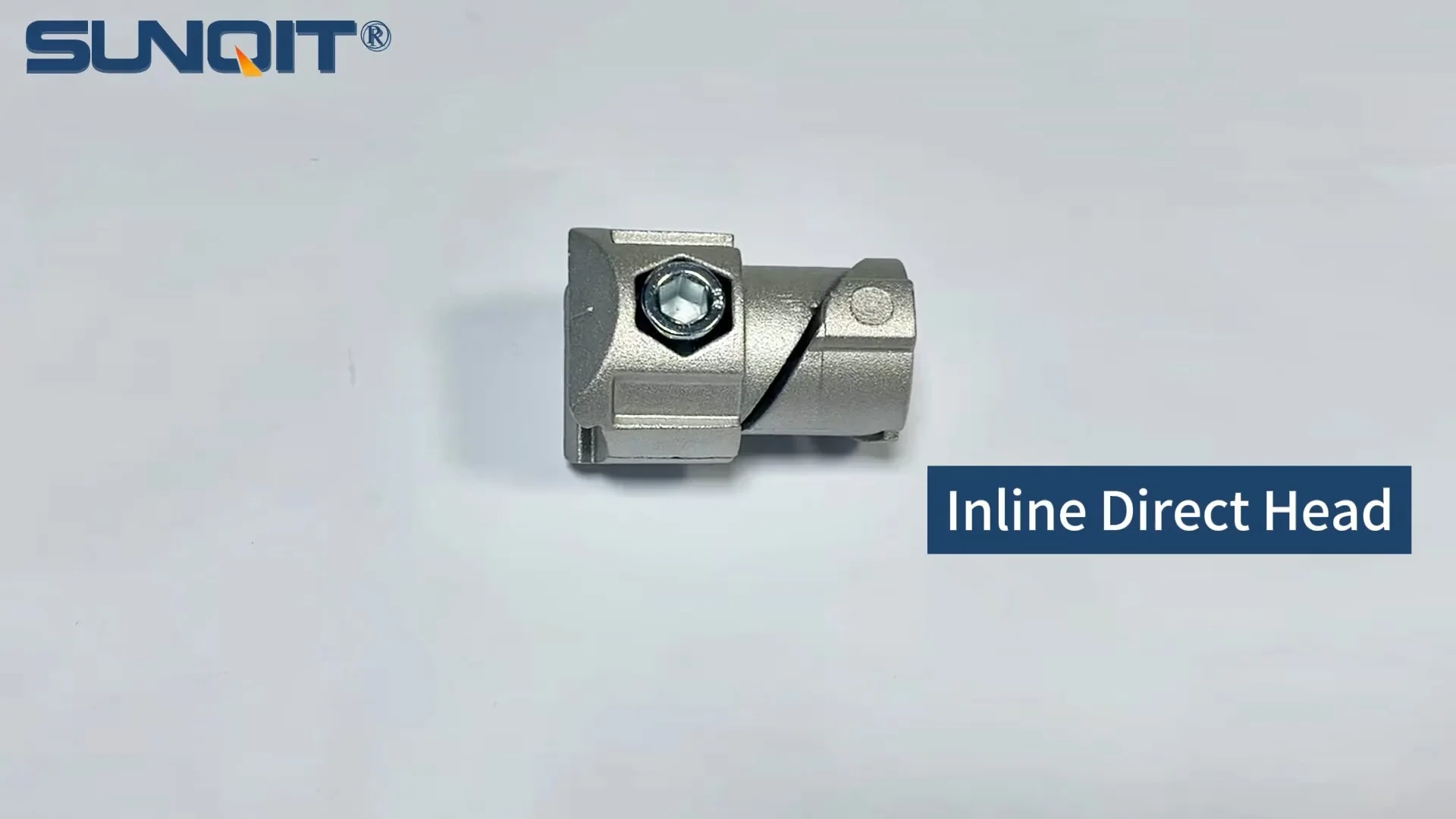
Internal straight aluminum joint
Aluminum pipe joint inside connection used for two pcs 28pcs aluminum pipe connection in straight angle,it connects two pcs pipe from inside.
In the fast-paced world of automated production, every component—no matter how small—plays a role in keeping operations running smoothly. While large machinery and advanced software often steal the spotlight, it's the unassuming parts that frequently determine a line's efficiency, flexibility, and long-term reliability. One such component is the internal straight aluminum joint—a quiet workhorse that connects aluminum pipes, profiles, and structures with precision, enabling the custom setups that modern manufacturing demands. Whether you're building a lean workbench, a material flow rack, or an entire production cell, understanding how to effectively integrate internal straight aluminum joints can transform your workflow from disjointed to seamless. In this article, we'll dive into the ins and outs of these critical connectors, exploring their design, benefits, compatibility with other aluminum components, and practical tips for integrating them into your automated production line.
Understanding the Internal Straight Aluminum Joint: More Than Just a Connector
At first glance, an internal straight aluminum joint might seem like a simple piece of hardware. But its design is a testament to engineering pragmatism: it's built to connect two aluminum pipes or profiles in a straight line, with the joint itself recessed inside the pipes to create a smooth, uninterrupted surface. Unlike external joints, which bulge outward and can disrupt material flow or create snag points, internal straight joints keep the structure's exterior clean—ideal for environments where precision and safety (e.g., preventing items from catching on protrusions) are priorities.
Most internal straight aluminum joints are crafted from high-grade aluminum alloys, chosen for their winning combination of strength, lightweight properties, and resistance to corrosion. This makes them suitable for both indoor factory settings and, in some cases, controlled outdoor environments. The joint typically features a hollow, cylindrical body with internal threading or a friction-fit design, allowing it to grip the inner walls of the aluminum pipes securely once installed. Some models also include rubber O-rings or gaskets to enhance stability and prevent loosening due to vibrations—common in automated lines where machinery is constantly in motion.
But what truly sets these joints apart is their versatility. They're not limited to just straight connections; many can be paired with aluminum pipe accessories like end caps, clamps, or brackets to adapt to different structural needs. For example, in a lean system where workbenches need to be reconfigured quickly for new product runs, an internal straight joint can serve as a stable base, allowing workers to add or remove pipe segments without compromising the entire structure. This flexibility is why they've become a staple in industries ranging from automotive assembly to electronics manufacturing, where changeover speed directly impacts profitability.
Key Features and Benefits: Why Internal Straight Aluminum Joints Stand Out
To appreciate why internal straight aluminum joints are a go-to choice for production line designers, let's break down their core features and the real-world benefits they deliver:
1. Streamlined Design for Uninterrupted Flow
In automated production, material flow is king. Any obstruction—a protruding joint, a rough edge—can slow down the movement of parts, cause jams, or even damage delicate components. Internal straight aluminum joints eliminate this risk by sitting flush inside the pipes. Imagine a roller track transporting circuit boards: with external joints, a board might catch on the bulge, leading to scratches or delays. With an internal joint, the track remains smooth, ensuring boards glide from station to station without hiccups. This is especially critical in industries like aerospace or medical device manufacturing, where even minor defects can have costly consequences.
2. High Load Capacity Without the Bulk
Aluminum alloys are renowned for their strength-to-weight ratio, and internal straight joints leverage this to the fullest. A well-designed joint can support significant weight—often up to 200 kg per connection—without adding excessive mass to the structure. This is a game-changer for workbenches or material racks that need to hold heavy tools or components. For instance, in an automotive plant, a workbench built with internal straight joints might support a 150 kg hydraulic lift tool, yet remain light enough for workers to reposition (with the help of casters, of course) when production needs shift. Compare this to bulkier steel joints, which would add unnecessary weight and make reconfiguration a Herculean task.
3. Corrosion Resistance for Longevity
Factory floors are harsh environments: spills, humidity, and chemical exposure are par for the course. Stainless steel joints might resist rust, but they're heavier and more expensive. Internal straight aluminum joints, treated with anodization or powder coating, offer impressive corrosion resistance at a lower cost. Anodized aluminum forms a protective oxide layer that shields the metal from moisture and chemicals, ensuring the joint remains functional for years—even in facilities where coolants or cleaning agents are regularly used. This longevity reduces maintenance costs and minimizes downtime spent replacing worn-out components.
4. Tool-Free Installation (in Many Cases)
Time is money in manufacturing, and nowhere is this truer than during setup or reconfiguration. Many internal straight aluminum joints feature a tool-free, friction-fit design: simply insert the joint into one pipe, then slide the second pipe over the exposed end and twist or press to lock it in place. This eliminates the need for wrenches, screwdrivers, or specialized tools, allowing workers to assemble or modify structures in minutes rather than hours. For example, a team tasked with building a temporary material rack for a rush order can have the structure up and running in under 30 minutes using these joints—no need to wait for a maintenance technician with a toolbox.

Compatibility with Aluminum Profiles and Accessories: Building a Cohesive System
An internal straight aluminum joint is only as effective as the system it's part of. To maximize its utility, it needs to play well with other aluminum components—most notably aluminum profiles, aluminum pipe accessories, and lean system elements like workbenches and roller tracks. Let's explore how these pieces fit together.
Pairing with Aluminum Profiles: The Backbone of Custom Structures
Aluminum profiles—extruded beams with T-slots along their length—are the building blocks of modern production line structures. They're used to create everything from workbench frames to machine guards, thanks to their modularity. Internal straight aluminum joints excel at connecting these profiles in straight runs, but they can also be combined with other joint types (e.g., 90° aluminum pipe joints, three-way aluminum pipe joints) to form corners, branches, or complex geometries. For example, a workbench frame might use internal straight joints for the long, horizontal rails, 90° internal joints for the corners, and three-way joints to add a shelf bracket. The key is ensuring the joint's diameter matches the inner diameter of the aluminum profile—most manufacturers standardize on sizes like 28mm or 40mm pipes, so checking compatibility charts is a must.
Working with Aluminum Pipe Accessories: Adding Functionality
Aluminum pipe accessories turn basic pipe-and-joint structures into functional tools. Internal straight joints serve as the foundation, while accessories like end caps, clamps, and brackets add the finishing touches. For instance, after assembling a roller track with internal straight joints, you might add plastic roller track guide rails (yellow or grey, depending on your color-coding system) to keep materials centered. Or, on a workbench, you could use aluminum pipe clamps to attach a tool holder to the frame—all without weakening the joint connection. The beauty here is that the internal joint's flush design doesn't interfere with accessory installation; there's no external bulge to block T-slots or clamp mounting points.
Integration into Lean Systems: Supporting the Principles of Efficiency
Lean manufacturing is all about eliminating waste—whether it's time, materials, or space. Internal straight aluminum joints align perfectly with this philosophy. Their modularity allows for "right-sized" structures: instead of buying a pre-built workbench that's too large or too small, you can assemble one exactly to your needs using joints and profiles, reducing wasted space. Their quick assembly and reconfiguration support the "flexible workforce" lean principle, enabling lines to adapt to changing production volumes or product designs. And their durability means less waste from frequent replacements. In short, they're not just connectors—they're enablers of lean thinking.

Practical Integration Tips: From Design to Installation
Even the best components can underperform if integrated incorrectly. Here are actionable tips to ensure your internal straight aluminum joints deliver maximum value in your automated production line:
1. Start with a Clear Layout Plan
Before picking up a single joint, map out your structure's design. Will it be a workbench, a flow rack, or a roller track? What's the maximum weight it needs to support? Where will the stress points be? Sketching a rough diagram or using 3D modeling software (many aluminum profile suppliers offer free design tools) can help you determine where internal straight joints are needed versus other joint types. For example, in a material rack with multiple shelves, you might use internal straight joints for the vertical support columns (to bear the weight) and 90° joints for the horizontal shelves. Skipping this step often leads to overusing joints or placing them in weak points, resulting in wobbly structures.
2. Match Joint Size to Pipe/Profile Thickness
Not all aluminum pipes are created equal. A joint designed for a 1.2mm wall-thickness pipe will not work with a 2.0mm pipe—the fit will be too loose or too tight. Check the manufacturer's specifications for both the joint and the pipe to ensure compatibility. Most suppliers list the inner diameter (ID) of pipes the joint is designed for (e.g., "fits 28mm ID aluminum pipe with 1.5mm wall thickness"). If you're unsure, request a sample kit to test the fit before ordering in bulk. A loose joint will lead to instability, while a joint forced into a pipe that's too small could crack the pipe or damage the joint's threading.
3. Use Thread Lockers for Vibration-Prone Areas
Automated lines are noisy places, with constant vibrations from machinery. Over time, these vibrations can loosen even friction-fit joints. For critical structures—like workbenches holding heavy equipment or roller tracks moving high-speed parts—apply a small amount of thread locker (e.g., Loctite) to the joint's threads before installation. This creates a secure bond that resists vibration without making the joint permanent; it can still be disassembled with moderate force if needed. Avoid over-applying, though—excess thread locker can seep into the pipe and make future adjustments messy.
4. Ensure Proper Alignment During Assembly
A slight misalignment during installation can lead to uneven weight distribution, causing the structure to lean or fail under load. When connecting two pipes with an internal straight joint, use a level to ensure they're perfectly straight before fully tightening. For longer runs (e.g., a 10-meter roller track), check alignment every few joints to prevent cumulative errors. Some manufacturers offer alignment tools or guide pins that fit into the joint to simplify this step—investing in these can save time and frustration.
5. Test Load Capacity Before Full Deployment
Never assume a structure can handle its intended load without testing. After assembly, gradually add weight to the structure, starting at 50% of the projected maximum and increasing incrementally. For example, if your workbench is designed to hold 100 kg, test it with 50 kg, then 75 kg, then 100 kg, leaving each load in place for 30 minutes to check for sagging or joint slippage. If a joint loosens or the pipe bends, reinforce the structure with additional joints or brackets. It's better to catch these issues in the workshop than during a production run when downtime is costly.
Comparing Joint Types: When to Choose Internal Straight vs. Other Options
Internal straight aluminum joints are versatile, but they're not the only game in town. Depending on your project's needs, other joint types might be more suitable. The table below compares internal straight joints with common alternatives to help you decide:
| Joint Type | Primary Use Case | Load Capacity (Typical) | Installation Complexity | Best For |
|---|---|---|---|---|
| Internal Straight Aluminum Joint | Straight-line connections; smooth, uninterrupted surfaces | 150–200 kg per joint | Low (tool-free or basic tools) | Roller tracks, workbench frames, long material racks |
| 90° Aluminum Pipe Joint (Internal) | Right-angle connections (e.g., corners of frames) | 100–150 kg per joint | Medium (requires precise alignment) | Workbench corners, shelf supports |
| Three-Way Aluminum Pipe Joint | Branching connections (e.g., adding a shelf to a vertical column) | 80–120 kg per joint | Medium-High (multiple pipes to align) | Multi-level racks, T-shaped structures |
| External Swivel Joint | Adjustable angles (e.g., tilting workbenches) | 50–100 kg per joint | Low (friction-fit with swivel mechanism) | Ergonomic workstations, adjustable material guides |
As the table shows, internal straight joints shine in applications where straight-line strength and smooth surfaces are critical. For corners or branches, other joints take the lead—but they often rely on internal straight joints for the main structural runs. Think of it as a team: internal straight joints are the foundation, while other joints add the flexibility to build complex structures.
Case Study: How Internal Straight Aluminum Joints Transformed a Electronics Assembly Line
To put these concepts into context, let's look at a real-world example: a mid-sized electronics manufacturer producing smart home devices. The company was struggling with two key issues: their existing workbenches were fixed in place, making it hard to reconfigure the line for new product models, and their roller tracks—fitted with external joints—were causing frequent jams with small circuit boards, leading to a 5% defect rate.
The solution? A complete overhaul using aluminum profiles, internal straight aluminum joints, and compatible accessories. Here's how it played out:
Step 1: Workbench Reconfiguration – The old wooden workbenches were replaced with modular frames built from 40mm aluminum profiles and internal straight joints. This allowed the team to add or remove shelves, tool holders, and ESD (electrostatic discharge) mats as needed. Since the joints were tool-free, workers could adjust the height of the work surfaces in minutes to accommodate different operators, reducing ergonomic injuries by 30%.
Step 2: Roller Track Upgrade – The external-joint roller tracks were swapped for new ones using internal straight joints and plastic roller track guide rails (grey, to match the line's color scheme). The smooth, joint-free surface eliminated jams, cutting the defect rate from 5% to under 1%. Additionally, the aluminum structure was lighter than the old steel track, so the team could add casters and reposition the track in 15 minutes when switching between product models—down from 2 hours with the previous system.
Step 3: Material Rack Optimization – The company's material storage area was reorganized with racks built from aluminum profiles and internal straight joints. The racks were designed to hold exactly the number of components needed for a 2-hour production run (a lean principle called "kanban"), reducing excess inventory by 40%. The joints' corrosion resistance also meant the racks held up well to the cleaning solvents used in the electronics, extending their lifespan by an estimated 5 years.
In the end, the investment in internal straight aluminum joints andaluminum components paid for itself in 8 months through reduced defects, faster changeovers, and lower maintenance costs. It's a testament to how the right small components can drive big improvements.
Troubleshooting Common Integration Issues
Even with careful planning, issues can arise when integrating internal straight aluminum joints. Here's how to diagnose and fix the most common problems:
Problem: Joint Loosens Over Time
Cause: Vibrations from machinery or repeated loading/unloading can weaken friction-fit connections. Solution: Disassemble the joint, clean any debris from the threads or friction surfaces, and reapply thread locker (if threaded) or add a thin layer of rubber adhesive (for friction-fit joints) to enhance grip. For high-vibration areas, consider upgrading to a joint with a set screw that can be tightened into the pipe for extra security.
Problem: Pipe Bends or Warps at the Joint
Cause: The joint is underrated for the load, or the pipe wall thickness is too thin. Solution: Check the joint's load capacity rating against the actual weight it's supporting. If the load is too high, add additional support joints (e.g., a three-way joint to create a brace) or switch to a thicker-walled aluminum pipe. For example, upgrading from a 1.2mm to a 1.5mm wall pipe can significantly increase bending resistance.
Problem: Corrosion on the Joint Surface
Cause: Exposure to moisture, chemicals, or salt (in coastal areas). Solution: For minor corrosion, clean the joint with a mild abrasive pad and apply a corrosion-inhibiting spray. For severe cases, replace the joint with an anodized or powder-coated model, which offers better protection. In extremely harsh environments, consider stainless steel internal joints (though they're heavier and costlier).
Future Trends: What's Next for Internal Straight Aluminum Joints?
As manufacturing evolves, so too will the components that power it. Here are two emerging trends to watch for in internal straight aluminum joint technology:
1. Smart Joints with Embedded Sensors
The rise of Industry 4.0 is bringing connectivity to even the smallest components. Future internal straight joints could include tiny sensors that monitor temperature, vibration, or strain, sending real-time data to a central system. For example, a joint in a roller track might detect unusual vibration patterns, alerting maintenance teams to a loose connection before it causes a jam. This predictive maintenance could reduce downtime by up to 25%, according to industry estimates.
2. Lightweight, High-Strength Alloys
Material science is constantly pushing the boundaries of aluminum alloys. Researchers are developing new blends that offer the same strength as current alloys but with 10–15% less weight. This would make structures built with internal straight joints even easier to reconfigure, opening up new possibilities for mobile production cells or temporary workstations that can be moved by hand (no forklift needed).
Conclusion: Elevating Production Efficiency, One Joint at a Time
In the grand scheme of automated production lines, internal straight aluminum joints may not command the same attention as robotic arms or AI-driven control systems. But their impact is undeniable. They're the quiet architects of flexibility, enabling the custom structures that let manufacturers adapt to changing demands. They're the guardians of efficiency, ensuring material flows smoothly and workbenches stay sturdy. And they're the champions of lean thinking, reducing waste through modularity and durability.
Whether you're building a new production line from scratch or upgrading an existing one, don't overlook the power of these small but mighty connectors. By choosing the right internal straight aluminum joint, pairing it with compatible aluminum profiles and accessories, and following best practices for integration, you can transform your operation from rigid and inefficient to agile and resilient. After all, in manufacturing, success often lies in the details—and few details are as critical as the joints that hold everything together.