- Company Articles
- Products and Technology
- Product knowledge
- Internal Straight Aluminum Joint for Material Handling Carts: Load Distribution Tips

Internal Straight Aluminum Joint for Material Handling Carts: Load Distribution Tips
Related Product
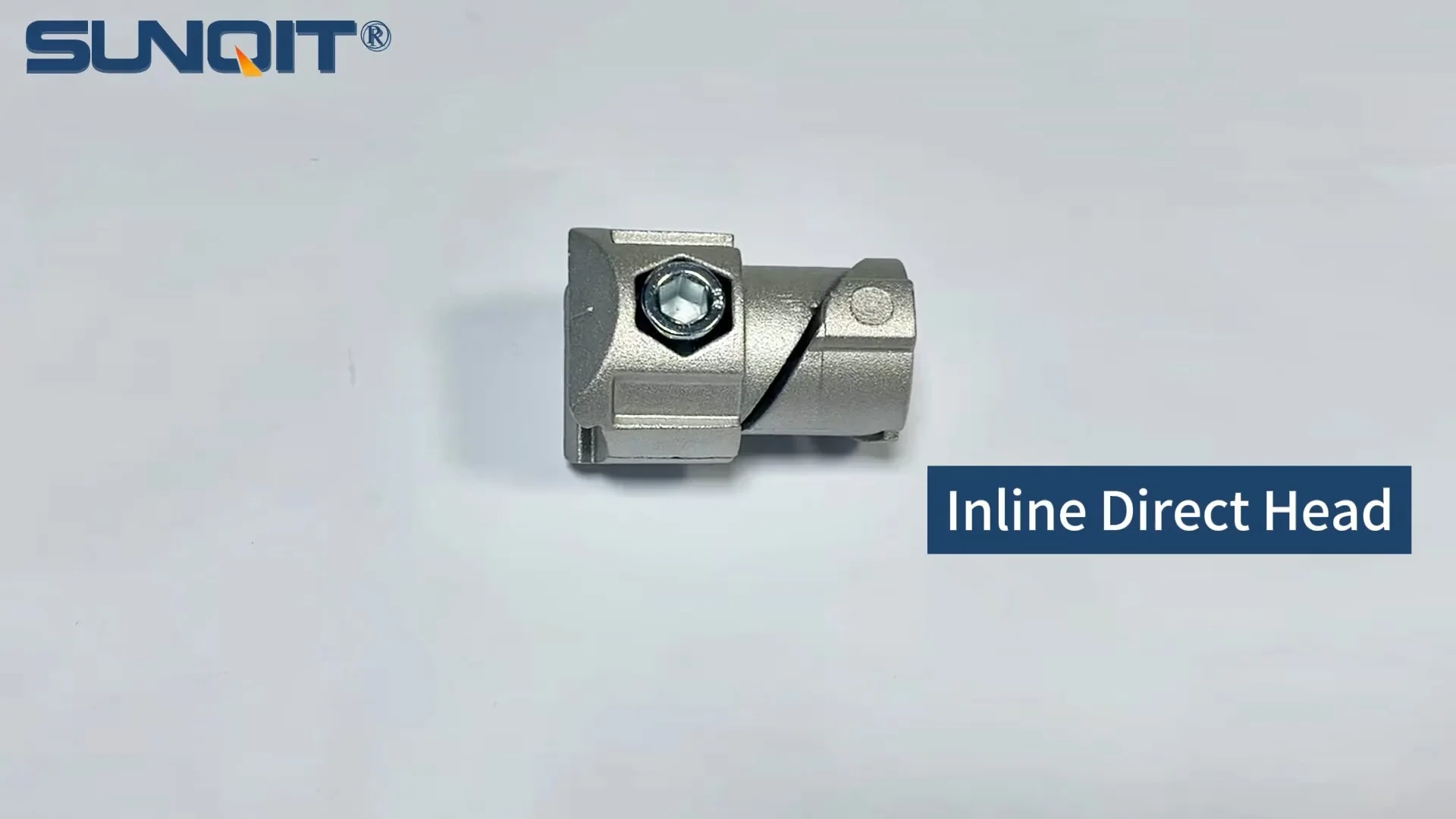
Internal straight aluminum joint
Aluminum pipe joint inside connection used for two pcs 28pcs aluminum pipe connection in straight angle,it connects two pcs pipe from inside.
Walk into any busy factory, warehouse, or distribution center, and you'll likely hear the hum of activity: workers moving parts, machines churning out products, and material handling carts gliding across the floor, ferrying everything from small components to heavy assemblies. These carts are the unsung workhorses of daily operations—they keep production lines flowing, reduce manual labor strain, and ensure materials reach their destinations on time. But what makes a material handling cart reliable? Is it the size of its wheels? The sturdiness of its frame? While those matter, there's a smaller, often overlooked component that plays a critical role in its performance: the internal straight aluminum joint. This unassuming piece, which connects lengths of aluminum pipe to form the cart's frame, is the backbone of load distribution. Get it right, and your cart glides smoothly, carries weight evenly, and avoids dangerous tipping. Get it wrong, and you risk damaged goods, workplace accidents, or costly downtime. In this article, we'll dive deep into how internal straight aluminum joints impact load distribution, why they matter, and share practical tips to ensure your material handling carts perform at their best.
Understanding Material Handling Carts: More Than Just Wheels and a Frame
Before we zoom in on the internal straight aluminum joint, let's take a step back and look at what makes a material handling cart tick. At first glance, it might seem simple: a frame, some wheels (usually caster wheels), and maybe a flat surface or shelves. But each component works in harmony to handle specific loads, navigate tight spaces, and withstand the wear and tear of daily use. The frame, often built from aluminum pipe for its lightweight yet durable properties, forms the cart's skeleton. Caster wheels, attached to the frame's base, determine maneuverability—swivel casters for tight turns, fixed casters for straight paths. And then there are the joints: the pieces that hold the aluminum pipes together. Among these, the internal straight aluminum joint is a standout for applications where straight, rigid connections are needed—like the sides of a cart or the supports for a workbench top. Unlike external joints, which clamp around the outside of pipes, internal straight aluminum joints fit inside the aluminum pipe, creating a flush, low-profile connection that minimizes snags and maximizes structural integrity. But why aluminum? Aluminum is corrosion-resistant, lighter than steel, and easy to work with—ideal for environments where carts are washed down or need to be moved frequently by hand. When paired with aluminum profile accessories like end caps or clamps, these joints create a system that's both strong and adaptable.
Consider a typical scenario: a cart used to transport electronic components on an assembly line. It needs to carry 300 pounds of parts, move through narrow aisles, and stop precisely at workstations. The frame, made of 20mm aluminum pipe, is connected by internal straight aluminum joints at each corner and along the crossbars. If those joints are weak or poorly installed, the frame could flex under the load, causing the caster wheels to wobble or the cart to tip when turning. On the flip side, a well-designed joint distributes the 300 pounds evenly across the frame, so no single pipe or wheel bears too much weight. That's the power of good load distribution—and it all starts with the joint.
The Role of Internal Straight Aluminum Joints in Load Distribution
Load distribution is the art of spreading weight across a structure so that no single part bears more stress than it can handle. For material handling carts, this means ensuring the weight of the load is evenly distributed from the top surface down to the caster wheels. When a cart is loaded unevenly—say, all the weight is stacked on one side—the frame bends, joints loosen, and the cart becomes unstable. In extreme cases, it might tip over, risking injury to workers or damage to materials. Internal straight aluminum joints play a starring role here because they are the "hinges" of the frame. A well-made internal joint creates a rigid connection between two aluminum pipes, ensuring that weight is transferred smoothly along the length of the frame rather than (concentrating on one spot). Think of it like a bridge: the joints are the piers that support the structure, and the pipes are the beams. If a pier is weak, the beam sags; if the pier is strong and properly placed, the beam distributes weight evenly.
So, what makes internal straight aluminum joints so effective for load distribution? First, their design: by fitting inside the aluminum pipe, they create a larger contact area between the joint and the pipe. This means when weight is applied, the stress is spread over more of the pipe's inner surface, reducing the chance of cracking or bending. Second, aluminum's inherent strength-to-weight ratio means the joint itself can handle significant loads without adding unnecessary bulk to the cart. And third, internal joints eliminate the "bulge" of external clamps, which can create uneven surfaces that disrupt load placement. For example, if you're using a cart with an external joint that sticks out, placing a box on top might cause it to rock or slide off-center—throwing off load distribution. Internal straight joints keep the frame smooth, so loads sit flat and stable.

Key Factors Influencing Load Distribution with Internal Straight Aluminum Joints
Not all internal straight aluminum joints are created equal. Several factors determine how well they distribute load, and understanding these will help you choose the right joint for your cart. Let's break them down:
- Material Quality: The joint's aluminum alloy matters. High-grade aluminum (like 6061-T6) is stronger and more resistant to fatigue than lower-grade alloys. When shopping for joints, check for certifications or ask your supplier about the material—reputable aluminum pipe suppliers will have this information readily available.
- Design Precision: Internal straight aluminum joints must fit snugly inside the aluminum pipe. A loose fit means the joint can shift under load, creating weak points. Look for joints with precise machining—consistent diameter, smooth edges, and a tight tolerance (usually ±0.1mm) to ensure a secure connection.
- Installation Technique: Even the best joint will fail if installed poorly. Over-tightening can crack the aluminum pipe; under-tightening leaves the joint loose. Most internal straight aluminum joints use set screws or bolts to lock into place—follow the manufacturer's torque specifications, and use a torque wrench for accuracy.
- Compatibility with Aluminum Pipe: Joints are designed for specific pipe diameters. A 20mm joint won't work with 25mm pipe, and forcing it will lead to a weak connection. Always match the joint size to the pipe size—your aluminum pipe supplier can help you confirm compatibility.
| Factor | Impact on Load Distribution | What to Look For |
|---|---|---|
| Material Quality | High-grade aluminum resists bending under heavy loads, ensuring consistent weight transfer. | Alloy 6061-T6 or equivalent; supplier certifications for material strength. |
| Design Precision | Snug fit prevents joint shifting, reducing stress on individual pipes. | Machined tolerances of ±0.1mm; smooth internal surface to avoid pipe damage. |
| Installation | Proper torque ensures the joint stays secure, even during repeated use. | Follow manufacturer torque specs (typically 8-10 Nm for M5 screws); use thread locker for added security. |
| Pipe Compatibility | Mismatched sizes cause uneven load transfer and weak connections. | Joints labeled for your pipe diameter (e.g., "20mm internal straight joint for 20mm aluminum pipe"). |

Top 5 Load Distribution Tips for Carts Using Internal Straight Aluminum Joints
Now that we understand the "why" behind internal straight aluminum joints and load distribution, let's get to the "how." Here are five actionable tips to ensure your carts carry weight safely and efficiently:
Tip 1: Match Joint Capacity to Cart Load Requirements
Every internal straight aluminum joint has a maximum load rating—the amount of weight it can safely support before bending or failing. This rating is determined by the joint's material, design, and size. Before building or upgrading your cart, calculate the maximum load it will carry (including the cart's own weight). For example, if your cart needs to hold 400 pounds, choose joints with a load rating of at least 500 pounds (adding a 25% safety margin). Don't guess—check the manufacturer's datasheet or ask your supplier. Using underrated joints is a recipe for failure. A warehouse in Ohio once learned this the hard way: they used 200-pound-rated joints on a cart carrying 350 pounds of tools. After two weeks, the joints began to deform, causing the cart to lean and eventually tip, damaging $1,500 worth of equipment. Invest in the right joints upfront, and you'll avoid these costly mistakes.
Tip 2: Ensure Proper Installation—Tighten, But Don't Over-Tighten
Installing internal straight aluminum joints is a balancing act. Too loose, and the joint shifts; too tight, and you risk cracking the aluminum pipe or stripping the threads. Start by cleaning the inside of the aluminum pipe—dust, oil, or debris can prevent the joint from seating properly. Then, insert the joint into the pipe until it's flush with the end. If the joint uses set screws, align the screw with the pipe's wall and tighten gradually using a torque wrench. Most manufacturers recommend a torque of 8-10 Nm for M5 screws (common in 20mm pipes). After tightening, give the joint a gentle tug to ensure it doesn't move. If it shifts, check for debris or misalignment. For carts that will see heavy use, apply a small amount of thread locker (like Loctite) to the set screws to prevent loosening over time. Proper installation isn't a one-time step, either—inspect joints monthly and retighten if needed, especially in high-vibration environments.
Tip 3: Distribute Weight Evenly Across the Frame
Even the strongest joints can't compensate for unevenly loaded carts. When loading your cart, aim to spread the weight as evenly as possible across the frame. Heavier items should go in the center, over the cart's axle (the imaginary line between the front and rear wheels). Lighter items can go on the edges, but avoid stacking all heavy items on one side. For example, if you're transporting boxes of parts, place the heaviest boxes in the middle and lighter ones on the ends. If your cart has shelves, distribute weight across all shelves, not just the bottom one—this reduces stress on the lower joints. A quick visual check helps: stand back and look at the cart from the side. It should sit level, with no tilting. If one side is lower, readjust the load. Remember: the internal straight aluminum joint's job is to transfer weight along the frame, but it can't fix a lopsided load.
Tip 4: Pair Joints with Quality Caster Wheels for Stability
Load distribution isn't just about the frame—it's also about how the cart interacts with the floor. Caster wheels play a big role here. If your cart has small, flimsy caster wheels, even perfectly distributed weight can feel unstable. For carts using internal straight aluminum joints, opt for caster wheels with a diameter of at least 5 inches (for loads under 500 pounds) and a wide tread to distribute weight over the floor. Swivel casters should have brake locks to keep the cart stationary when loading/unloading, preventing sudden shifts that strain the joints. Also, ensure the caster mounting plate is securely attached to the cart's frame using bolts (not just screws) and reinforced with gussets if needed. A cart with wobbly wheels will put extra stress on the internal straight aluminum joints as the cart rocks back and forth. By pairing strong joints with quality casters, you create a system that works in harmony.
Tip 5: Inspect and Maintain Regularly
Internal straight aluminum joints are durable, but they're not indestructible. Over time, vibration, temperature changes, and repeated loading can loosen connections or cause metal fatigue. Make it a habit to inspect your carts weekly. Check for signs of wear: bent aluminum pipes, cracks around joints, loose set screws, or discoloration (a sign of stress). If a joint is loose, retighten it. If it's bent or cracked, replace it immediately—don't try to "jury-rig" a fix with tape or zip ties. A food processing plant in California did this when they noticed a cracked joint on a cart used to transport ingredients. They wrapped it with duct tape and kept using it. A week later, the joint failed, spilling 50 gallons of tomato sauce and shutting down production for two hours. Regular maintenance takes minutes but saves hours of downtime. Keep a stock of spare joints and aluminum pipe on hand so you can replace worn parts quickly.
Case Study: How a Small Manufacturer Improved Cart Safety with Internal Straight Aluminum Joints
The Challenge: A family-owned electronics manufacturer in Oregon was struggling with material handling cart issues. Their old carts, built with steel frames and external clamp joints, were heavy, prone to rust, and frequently tipped when loaded with circuit boards (which, while lightweight, were often stacked unevenly). Workers complained about back strain from pushing the heavy carts, and the company had two minor accidents in six months due to tipping. The safety manager knew something needed to change.
The Solution: After researching options, the manufacturer decided to switch to aluminum pipe frames with internal straight aluminum joints. They chose 20mm aluminum pipe (lighter than steel) and joints rated for 300 pounds (well above their typical load of 200 pounds). They also upgraded to 5-inch caster wheels with brakes for better stability. The new carts were assembled in-house, with workers trained on proper joint installation using torque wrenches.
The Results: The improvements were immediate. The new carts were 30% lighter, reducing worker fatigue. The internal straight aluminum joints created a rigid frame that distributed weight evenly, even when loads were slightly off-center. Tipping incidents dropped to zero, and the carts' smooth, rust-resistant surfaces made cleaning easier (important in their ISO-certified facility). After six months, the company estimated they'd saved $5,000 in reduced downtime and workers' compensation claims. "We should have made the switch years ago," said the safety manager. "The internal joints are the quiet heroes here—they just work, day in and day out."
Conclusion: Invest in the Joint, Invest in Safety and Efficiency
Material handling carts are the backbone of many operations, and their performance hinges on small, critical components like the internal straight aluminum joint. By understanding how these joints influence load distribution, choosing the right ones for your needs, and following proper installation and maintenance practices, you can create carts that are safer, more efficient, and longer-lasting. Remember: load distribution isn't just about avoiding accidents—it's about reducing downtime, improving worker morale, and protecting your bottom line. Whether you're building a new cart or upgrading an old one, don't overlook the internal straight aluminum joint. It may be small, but its impact is huge. And when you're ready to source joints, aluminum pipe, or caster wheels, partner with a reputable supplier who understands your needs—one that can provide quality parts, technical support, and guidance to ensure your material handling system is built to last.