- Company Articles
- Products and Technology
- Product knowledge
- Internal Straight Aluminum Joint for Material Racks: Enhancing Storage Stability

Internal Straight Aluminum Joint for Material Racks: Enhancing Storage Stability
Related Product
Internal straight aluminum joint
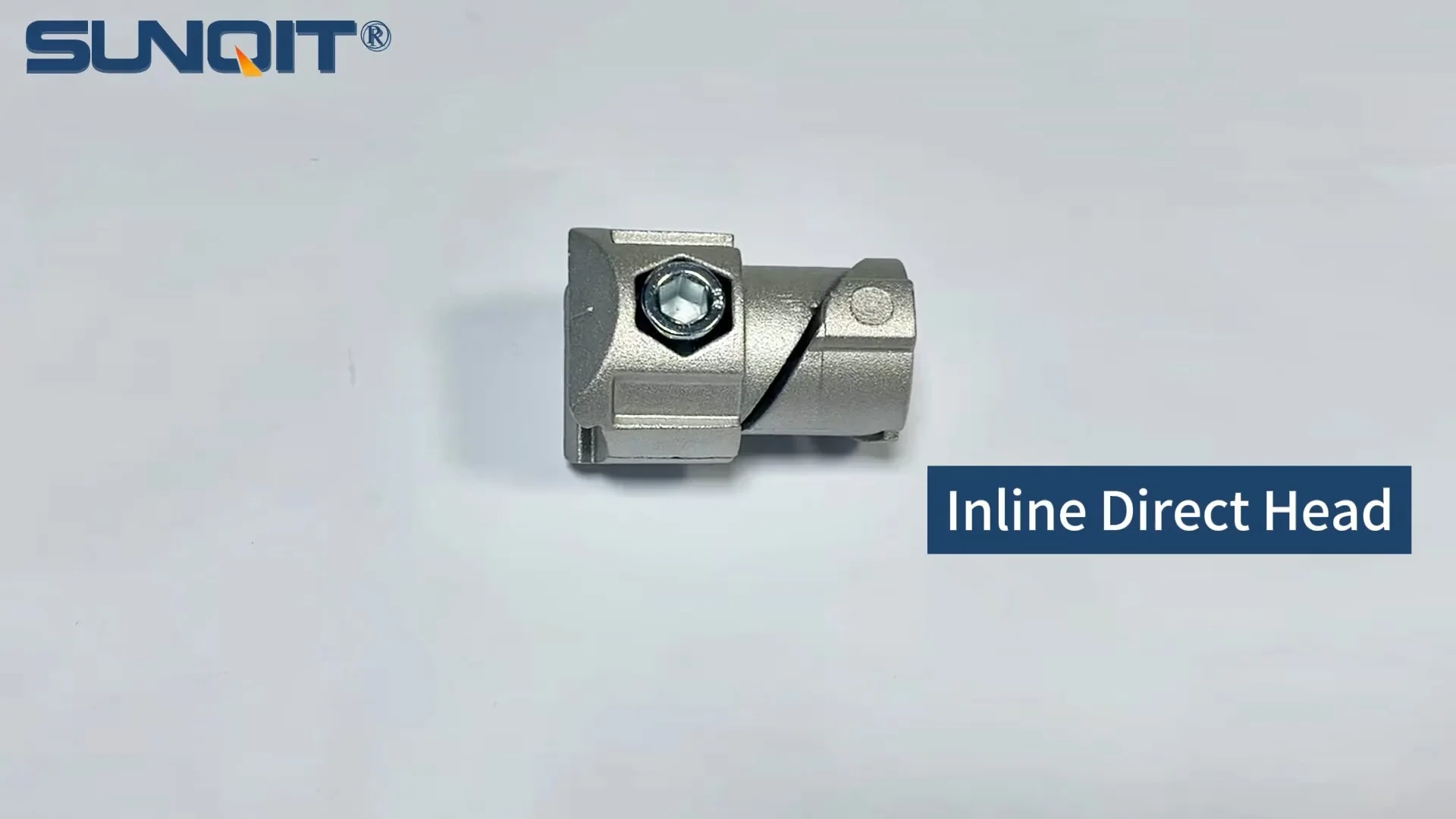
Aluminum pipe joint inside connection used for two pcs 28pcs aluminum pipe connection in straight angle,it connects two pcs pipe from inside.
The quiet force behind smoother workflows and safer warehouses
Introduction: The Hidden Cost of Wobbly Racks
Walk into any busy warehouse or manufacturing floor, and you'll notice the rhythm of productivity: workers moving swiftly, products flowing from station to station, and material racks standing tall, holding the lifeblood of operations. But what if those racks weren't as steady as they seemed? What if a loose joint here, a bent pipe there, was silently eroding efficiency, risking damage to goods, and even putting team members in harm's way?
For years, many businesses overlooked the critical role that rack stability plays in their success. They focused on flashier tools or bigger machinery, while the humble joints connecting pipes and profiles quietly determined whether their storage systems thrived or failed. Today, we're shining a light on one component that's changing the game: the internal straight aluminum joint . This unassuming piece of engineering isn't just a part of a rack—it's the backbone of storage stability, and it's time we gave it the attention it deserves.
The Unsung Hero: Material Racks in Modern Workflows
Before we dive into the specifics of the internal straight aluminum joint, let's take a step back and appreciate the role of material racks themselves. In the world of lean systems , where waste reduction and efficiency are king, material racks are the unsung heroes. They keep parts organized, ensure tools are within arm's reach, and maintain a steady flow of materials to production lines. Without reliable racks, workflows grind to a halt: workers waste time searching for items, products get damaged when stacked haphazardly, and the entire operation feels like trying to build a house on shifting sand.
Consider a typical electronics assembly line. Tiny components—resistors, capacitors, circuit boards—need to be stored safely yet accessibly. A wobbly rack might cause a bin of capacitors to tip, scattering parts across the floor. That's minutes (or hours) of cleanup, not to mention the risk of lost or damaged inventory. Multiply that by dozens of racks across a facility, and the cost of instability becomes clear: it's not just about broken parts, but broken trust in the system itself.

When Racks Fail: The Silent Threat of Instability
So, why do racks fail? More often than not, the culprit is the joints that hold them together. Traditional joints—whether plastic, basic steel, or ill-fitting aluminum—often fall short in three key areas: load capacity, durability, and compatibility with aluminum profile accessories .
Load Capacity: Many joints are designed as "one-size-fits-all," but in reality, a joint that works for a lightweight tool rack might buckle under the weight of heavy automotive parts. Over time, this leads to sagging shelves or, worse, complete rack collapse.
Durability: Constant vibration from nearby machinery, temperature fluctuations, or even the simple wear of daily use can loosen joints. Plastic joints may crack in cold environments; basic steel joints rust, weakening their grip. Once a joint starts to fail, the entire rack becomes a domino effect waiting to happen.
Compatibility: As facilities upgrade to more flexible systems—like aluminum profiles for their lightweight strength—old joints often don't play well with new accessories. A rack built with mismatched parts is like a puzzle with pieces from different boxes: it might look put-together, but it won't hold.

Enter the Internal Straight Aluminum Joint: A Game-Changer in Stability
This is where the internal straight aluminum joint steps in. Designed with precision and built for performance, this joint isn't just an upgrade—it's a reimagining of what a rack joint can be. Let's break down what makes it special:
Material Matters: Aluminum isn't just lightweight; it's inherently resistant to rust and corrosion, making it ideal for both indoor and outdoor use (or environments with humidity, like food processing facilities). Unlike plastic, it doesn't warp under heat or crack in cold. Unlike basic steel, it won't add unnecessary weight to the rack, making installation and reconfiguration easier.
Internal Rotation, External Strength: The "internal straight" design is key here. Unlike joints that clamp from the outside (which can loosen over time), this joint connects from the inside of the aluminum pipe, creating a tighter, more secure bond. The internal rotation mechanism allows for (fine adjustments) during installation, ensuring pipes align perfectly—no more forced angles that strain the joint.
Precision Engineering: These joints are machined to tight tolerances, meaning they fit aluminum pipes and profiles like a glove. No gaps, no wiggle room. This precision translates to racks that stay square, even under heavy loads. Think of it as the difference between a loose screw and a bolt tightened to spec—one holds, the other gives way.
How It Works: Integrating with Aluminum Profiles and Accessories
A great joint is only as good as its ability to work with the rest of the system. The internal straight aluminum joint shines here, too, thanks to its compatibility with a wide range of aluminum profile accessories. Let's walk through a typical assembly:
Start with a basic aluminum tube—lightweight, strong, and ready to be shaped. Slide the internal straight aluminum joint into one end of the tube. The joint's internal teeth grip the tube from the inside, creating a friction fit that won't loosen over time. Then, attach another aluminum pipe or profile to the other end of the joint. The joint's straight design ensures the two pipes align perfectly, forming a rigid, stable connection.
Need to add a shelf? Use aluminum profile accessories like brackets or clamps, which attach seamlessly to the aluminum pipes. Want to add casters for mobility? The joint's stability ensures the rack won't wobble when moved, even with a full load. This flexibility is a cornerstone of lean systems—being able to adapt racks to changing needs without sacrificing stability.
Installers love it, too. Traditional joints often require tools, adhesives, or complicated tightening sequences. The internal straight aluminum joint? It's often tool-free, or requires just a simple hex key to lock into place. This speeds up assembly time, reduces errors, and makes reconfiguring racks a breeze—no more wrestling with stuck bolts or misaligned parts.
Real-World Impact: Material Rack B (3 Row and 3 Floor) in Action
Let's put this into context with a real example: Material Rack B (3 row and 3 floor) . This popular rack design is used in factories worldwide to store everything from small components to heavy tooling. Traditionally, it relied on basic steel joints, which often led to sagging middle shelves and wobbly side panels—especially when fully loaded.
A manufacturing plant in Ohio recently switched to using internal straight aluminum joints for their Material Rack B units. The results were striking: load capacity increased by 30% (they could now store heavier parts without fear of collapse), assembly time dropped by 40% (no more struggling with rusted steel bolts), and employee feedback was overwhelmingly positive. "I used to avoid the top shelf because the rack shook so much when I reached for items," said one production worker. "Now, it's rock solid. I don't think twice about it."
The plant also noticed a reduction in damaged goods. Previously, wobbly racks caused bins to slide, leading to broken parts. With the new joints, bins stayed put, and inventory loss decreased by nearly 25%. For a facility handling thousands of parts daily, that's a significant cost savings—and a boost to morale, as workers no longer had to clean up messes or explain lost inventory.
Comparing the Options: Why Aluminum Joints Outshine the Rest
Still not convinced? Let's stack the internal straight aluminum joint against two common alternatives: traditional plastic joints and basic steel joints. The difference is clear:
| Feature | Traditional Plastic Joints | Basic Steel Joints | Internal Straight Aluminum Joints |
|---|---|---|---|
| Max Load Capacity | Low (up to 50 lbs per joint) | Medium (up to 150 lbs per joint) | High (up to 300 lbs per joint) |
| Durability | Prone to cracking/warping (1-2 year lifespan) | Rusts easily (3-5 year lifespan) | Corrosion-resistant (10+ year lifespan) |
| Installation Ease | Easy, but loosens over time | Requires tools; tightens with effort | Tool-free or simple hex key; stays tight |
| Compatibility with Aluminum Profiles | Limited; often requires adapters | Mismatched sizing; gaps common | Seamless; designed for aluminum pipes/profiles |
| Cost Over Time | Low upfront, high replacement cost | Moderate upfront, high maintenance cost | Higher upfront, minimal replacement/maintenance |
The internal straight aluminum joint isn't just better—it's a long-term investment. While it might cost a bit more upfront than plastic or basic steel, its durability, load capacity, and compatibility mean you'll spend less on replacements, repairs, and downtime. For businesses serious about efficiency, it's a no-brainer.
Beyond Stability: Contributing to Lean Systems
At this point, you might be thinking, "Okay, it's stable—but how does that tie into lean systems?" Great question. Lean is all about eliminating waste: waste of time, waste of materials, waste of effort. Unstable racks create all three.
Time waste: Workers spend minutes searching for scattered parts, cleaning up spills, or adjusting wobbly racks. Material waste: Damaged goods that can't be used. Effort waste: Straining to lift items from unstable shelves, or avoiding certain racks altogether, leading to inefficient workflow paths.
The internal straight aluminum joint eliminates these wastes by creating a storage system you can trust. When racks are stable, workers can focus on their tasks, not on fixing the tools they use to do them. When parts stay in place, inventory counts are accurate, and production schedules stay on track. When reconfiguration is easy, you can adapt to changing needs—adding a shelf here, moving a rack there—without disrupting operations. That's lean in action.
Plus, aluminum's lightweight nature makes racks easier to move and reconfigure, supporting the "5S" methodology (Sort, Set in Order, Shine, Standardize, Sustain). A rack that can be quickly rearranged to fit a new production line? That's "Set in Order" at its best. A rack that resists rust and is easy to clean? That's "Shine" made simple. It all adds up to a workplace that runs smoother, safer, and more sustainably.
Conclusion: Investing in Stability for Long-Term Success
The internal straight aluminum joint might not be the flashiest innovation in manufacturing or warehousing, but it's one of the most impactful. It's a reminder that success often lies in the details—the small, often overlooked components that hold everything together. In a world where efficiency and safety are non-negotiable, stable storage isn't a luxury; it's a necessity.
Whether you're setting up a new facility, upgrading existing racks, or simply looking to reduce waste in your operations, consider the internal straight aluminum joint. Pair it with quality aluminum pipes, compatible aluminum profile accessories, and a commitment to lean principles, and you'll transform your storage from a potential liability into a competitive advantage.
At the end of the day, it's not just about racks. It's about building a workplace where your team feels confident, your processes flow smoothly, and your business thrives. And it all starts with a joint that doesn't just connect pipes—it connects your goals to reality.