- Company Articles
- Products and Technology
- Product knowledge
- Internal Straight Aluminum Joint for Medical Device Assembly: Cleanroom Compatibility

Internal Straight Aluminum Joint for Medical Device Assembly: Cleanroom Compatibility
Related Product
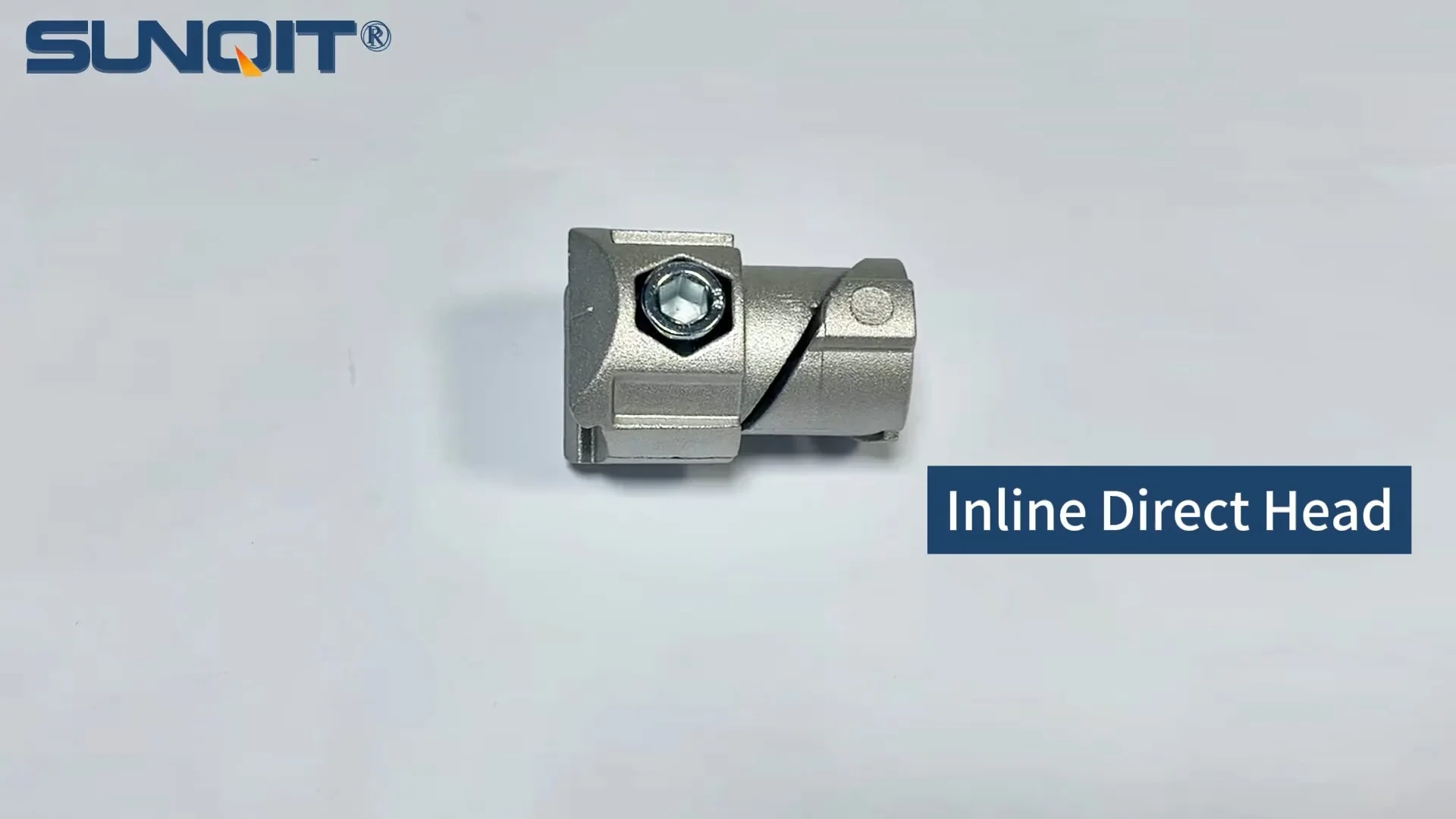
Internal straight aluminum joint
Aluminum pipe joint inside connection used for two pcs 28pcs aluminum pipe connection in straight angle,it connects two pcs pipe from inside.
The Hidden Backbone of Medical Device Cleanrooms
Step into a medical device assembly cleanroom, and your senses are immediately attuned to precision. The air feels crisp, filtered to remove 99.97% of particles larger than 0.3 microns. Surfaces shine under, free of dust or fingerprints. Every tool, every workstation, every material rack has a purpose—no space is wasted, no movement is unnecessary. This level of control isn't just about aesthetics; it's about protecting patients. A single stray particle in a pacemaker or a contaminated surface on a surgical instrument could have life-altering consequences.
Behind this seamless operation lies a network of components working in harmony. Engineers and facility managers spend countless hours designing these spaces, balancing sterility requirements with operational efficiency. Among the most critical yet often overlooked components are the modular systems that form workbenches, material racks, and assembly lines. And at the heart of these systems? The internal straight aluminum joint.
This unassuming connector might not grab headlines, but it's the quiet force that holds cleanroom setups together. It's the reason workbenches can be reconfigured in hours instead of days when production needs shift. It's why material racks maintain their structural integrity even when loaded with delicate surgical tools. And it's how cleanroom managers ensure every surface meets the strict required for ISO 14644 Class 7 or Class 8 environments.
In this article, we'll explore why the internal straight aluminum joint has become indispensable in medical device assembly. We'll dive into its design, its compatibility with aluminum profiles and accessories, and how it addresses the unique challenges of cleanroom environments. Whether you're a facility manager upgrading your assembly line, a procurement specialist sourcing components, or an engineer designing the next generation of medical workstations, understanding this small but mighty joint could transform how you approach cleanroom efficiency and compliance.
Behind this seamless operation lies a network of components working in harmony. Engineers and facility managers spend countless hours designing these spaces, balancing sterility requirements with operational efficiency. Among the most critical yet often overlooked components are the modular systems that form workbenches, material racks, and assembly lines. And at the heart of these systems? The internal straight aluminum joint.
This unassuming connector might not grab headlines, but it's the quiet force that holds cleanroom setups together. It's the reason workbenches can be reconfigured in hours instead of days when production needs shift. It's why material racks maintain their structural integrity even when loaded with delicate surgical tools. And it's how cleanroom managers ensure every surface meets the strict required for ISO 14644 Class 7 or Class 8 environments.
In this article, we'll explore why the internal straight aluminum joint has become indispensable in medical device assembly. We'll dive into its design, its compatibility with aluminum profiles and accessories, and how it addresses the unique challenges of cleanroom environments. Whether you're a facility manager upgrading your assembly line, a procurement specialist sourcing components, or an engineer designing the next generation of medical workstations, understanding this small but mighty joint could transform how you approach cleanroom efficiency and compliance.
What Makes the Internal Straight Aluminum Joint Unique?
Let's start with the basics: What is an internal straight aluminum joint, and how does it differ from other connectors? At its core, this joint is a precision-engineered component designed to connect two aluminum pipes or profiles in a straight line. Unlike bulky external clamps or threaded connectors that protrude and create crevices, the internal straight joint sits flush inside the aluminum tube, creating a smooth, uninterrupted surface.
Imagine a standard 3030 aluminum profile—the kind commonly used in cleanroom workbenches. Its hollow interior is perfectly sized to accept the internal straight joint. When inserted, the joint's outer diameter mates precisely with the profile's inner diameter, creating a connection that's both strong and seamless. No gaps, no sharp edges, no places for dust, bacteria, or lubricants to hide. That's a game-changer in cleanrooms, where even a tiny crevice can become a contamination hot spot.
But it's not just about cleanliness. The internal straight joint is also a study in mechanical efficiency. Made from high-grade 6063-T5 aluminum alloy—known for its strength-to-weight ratio and corrosion resistance—it can support loads up to 150 kg per joint, depending on the profile thickness. This means a workstation built with these joints can safely hold heavy equipment like microscopes, torque tools, or automated assembly arms without flexing or sagging.
Another key advantage is modularity. Medical device manufacturers rarely stick to a single product line. One month, they might be assembling insulin pumps; the next, switching to ventilator components. Traditional fixed workstations require expensive and time-consuming overhauls to adapt. With internal straight aluminum joints, reconfiguration is as simple as disassembling the old setup and reusing the same components. Loosen a few set screws, slide the joint out of one profile, and slide it into another. No welding, no drilling, no specialized tools. This flexibility reduces downtime from weeks to days—or even hours—keeping production on track.
Imagine a standard 3030 aluminum profile—the kind commonly used in cleanroom workbenches. Its hollow interior is perfectly sized to accept the internal straight joint. When inserted, the joint's outer diameter mates precisely with the profile's inner diameter, creating a connection that's both strong and seamless. No gaps, no sharp edges, no places for dust, bacteria, or lubricants to hide. That's a game-changer in cleanrooms, where even a tiny crevice can become a contamination hot spot.
But it's not just about cleanliness. The internal straight joint is also a study in mechanical efficiency. Made from high-grade 6063-T5 aluminum alloy—known for its strength-to-weight ratio and corrosion resistance—it can support loads up to 150 kg per joint, depending on the profile thickness. This means a workstation built with these joints can safely hold heavy equipment like microscopes, torque tools, or automated assembly arms without flexing or sagging.
Another key advantage is modularity. Medical device manufacturers rarely stick to a single product line. One month, they might be assembling insulin pumps; the next, switching to ventilator components. Traditional fixed workstations require expensive and time-consuming overhauls to adapt. With internal straight aluminum joints, reconfiguration is as simple as disassembling the old setup and reusing the same components. Loosen a few set screws, slide the joint out of one profile, and slide it into another. No welding, no drilling, no specialized tools. This flexibility reduces downtime from weeks to days—or even hours—keeping production on track.

Designing for Cleanrooms: The Engineering Behind the Joint
Cleanroom compatibility isn't an afterthought for the internal straight aluminum joint—it's baked into its design. Let's break down the features that make it ideal for these demanding environments:
Smooth, Crevice-Free Surface: The joint's cylindrical shape and precision machining eliminate gaps where particles could accumulate. Unlike external joints with bolts or brackets that create ledges, the internal design ensures the connection point is flush with the aluminum profile. Run a gloved hand along the surface, and you'll feel no interruptions—just a continuous, easy-to-clean expanse. This is critical for meeting ISO 14644 standards, which mandate regular surface cleaning to maintain particle counts.
Anodized Finish: Most internal straight aluminum joints undergo an anodization process, where the surface is electrochemically treated to form a protective oxide layer. This layer isn't just for aesthetics (though it does give the joint a sleek, uniform appearance). It's 30% harder than untreated aluminum, making it resistant to scratches and wear. More importantly, it's non-porous, so cleaning agents like isopropyl alcohol or hydrogen peroxide won't seep into the material. Wipe it down, and contaminants lift off easily—no residue left behind.
Chemical Resistance: Medical cleanrooms use aggressive disinfectants to kill pathogens. Bleach, quaternary ammonium compounds, and peracetic acid are common staples. The internal straight aluminum joint's anodized surface and aluminum alloy composition stand up to these chemicals without corroding, pitting, or degrading. Compare that to plastic joints, which can crack or discolor over time, or steel joints, which might rust if cleaning protocols are less than perfect.
Minimal Particulate Generation: Even the best cleanroom components can shed particles during use. Think about metal-on-metal friction when adjusting a workstation or vibrations from nearby machinery. The internal straight joint minimizes this risk. Its tight tolerance fit with aluminum profiles reduces movement and friction, while the anodized finish resists chipping. In third-party testing, joints like these have been shown to generate less than 0.1 particles (≥0.5 μm) per minute during assembly—well below the 10 particles/minute limit for ISO Class 7 environments.
Smooth, Crevice-Free Surface: The joint's cylindrical shape and precision machining eliminate gaps where particles could accumulate. Unlike external joints with bolts or brackets that create ledges, the internal design ensures the connection point is flush with the aluminum profile. Run a gloved hand along the surface, and you'll feel no interruptions—just a continuous, easy-to-clean expanse. This is critical for meeting ISO 14644 standards, which mandate regular surface cleaning to maintain particle counts.
Anodized Finish: Most internal straight aluminum joints undergo an anodization process, where the surface is electrochemically treated to form a protective oxide layer. This layer isn't just for aesthetics (though it does give the joint a sleek, uniform appearance). It's 30% harder than untreated aluminum, making it resistant to scratches and wear. More importantly, it's non-porous, so cleaning agents like isopropyl alcohol or hydrogen peroxide won't seep into the material. Wipe it down, and contaminants lift off easily—no residue left behind.
Chemical Resistance: Medical cleanrooms use aggressive disinfectants to kill pathogens. Bleach, quaternary ammonium compounds, and peracetic acid are common staples. The internal straight aluminum joint's anodized surface and aluminum alloy composition stand up to these chemicals without corroding, pitting, or degrading. Compare that to plastic joints, which can crack or discolor over time, or steel joints, which might rust if cleaning protocols are less than perfect.
Minimal Particulate Generation: Even the best cleanroom components can shed particles during use. Think about metal-on-metal friction when adjusting a workstation or vibrations from nearby machinery. The internal straight joint minimizes this risk. Its tight tolerance fit with aluminum profiles reduces movement and friction, while the anodized finish resists chipping. In third-party testing, joints like these have been shown to generate less than 0.1 particles (≥0.5 μm) per minute during assembly—well below the 10 particles/minute limit for ISO Class 7 environments.
Fun Fact:
A single internal straight aluminum joint weighs just 45 grams—about the same as a AA battery. Yet, when paired with 4040 aluminum profiles, it can support the weight of a small adult (around 70 kg) without failing. That's the power of engineered aluminum alloys!

Compatibility with Aluminum Profiles and Accessories
A joint is only as good as the system it connects. The internal straight aluminum joint truly shines when paired with the right aluminum profiles and accessories—creating a modular ecosystem that adapts to any cleanroom need. Let's explore how these components work together:
Aluminum Profiles: The Foundation
The most common partners for internal straight joints are EU standard aluminum profiles, like the 2020, 3030, and 4040 series. These profiles feature T-slots along their length, which allow for easy attachment of accessories without drilling or welding. For example, a 4040 profile (40mm x 40mm) with a 2mm wall thickness is a workhorse in cleanrooms, offering the perfect balance of strength and weight. When connected with internal straight joints, it forms the frame for workbenches, material racks, and even mobile carts.
What makes this pairing so effective? The profiles' hollow cores are precisely sized to match the joint's outer diameter. A 3030 profile, for instance, has an inner diameter of 26mm, while the corresponding internal straight joint has an outer diameter of 25.8mm—close enough for a snug fit, but not so tight that assembly requires brute force. This precision ensures the joint stays securely in place once tightened, even under vibration.
Accessories: Completing the System
Aluminum profile accessories turn a basic frame into a fully functional cleanroom station. Here are a few key accessories that work seamlessly with internal straight joints:
- Aluminum Profile End Caps: These plastic or aluminum caps snap onto the ends of profiles, sealing off the hollow interior to prevent dust from accumulating inside. When used with internal straight joints, they create a fully enclosed system, leaving no exposed surfaces.
- T-Slot Rubber Seal Covers: These flexible strips press into the T-slots of aluminum profiles, filling the grooves to eliminate particle traps. They're especially useful on workbench surfaces, where tools might otherwise catch on the slot edges.
- Aluminum Pipe Clamps: For attaching secondary components like shelves or tool holders, these clamps slide into the T-slots and tighten with a hex key. Since they don't require drilling, they preserve the profile's integrity and keep surfaces smooth.
Real-World Example: A Cleanroom Workstation
Let's visualize a typical setup: A workbench for assembling surgical tools. The frame is built from 4040 aluminum profiles connected by internal straight joints at the corners and midpoints. Aluminum honeycomb panels (lightweight, non-porous) are attached to the frame using T-slot bolts, forming the work surface. Aluminum profile end caps seal all exposed profile ends, and T-slot rubber covers fill the slots. A material rack—also built with 3030 profiles and internal straight joints—sits nearby, holding sterile instrument trays. Every component works together to create a surface that's easy to clean, resistant to chemicals, and adaptable to changing tasks.
Aluminum Profiles: The Foundation
The most common partners for internal straight joints are EU standard aluminum profiles, like the 2020, 3030, and 4040 series. These profiles feature T-slots along their length, which allow for easy attachment of accessories without drilling or welding. For example, a 4040 profile (40mm x 40mm) with a 2mm wall thickness is a workhorse in cleanrooms, offering the perfect balance of strength and weight. When connected with internal straight joints, it forms the frame for workbenches, material racks, and even mobile carts.
What makes this pairing so effective? The profiles' hollow cores are precisely sized to match the joint's outer diameter. A 3030 profile, for instance, has an inner diameter of 26mm, while the corresponding internal straight joint has an outer diameter of 25.8mm—close enough for a snug fit, but not so tight that assembly requires brute force. This precision ensures the joint stays securely in place once tightened, even under vibration.
Accessories: Completing the System
Aluminum profile accessories turn a basic frame into a fully functional cleanroom station. Here are a few key accessories that work seamlessly with internal straight joints:
- Aluminum Profile End Caps: These plastic or aluminum caps snap onto the ends of profiles, sealing off the hollow interior to prevent dust from accumulating inside. When used with internal straight joints, they create a fully enclosed system, leaving no exposed surfaces.
- T-Slot Rubber Seal Covers: These flexible strips press into the T-slots of aluminum profiles, filling the grooves to eliminate particle traps. They're especially useful on workbench surfaces, where tools might otherwise catch on the slot edges.
- Aluminum Pipe Clamps: For attaching secondary components like shelves or tool holders, these clamps slide into the T-slots and tighten with a hex key. Since they don't require drilling, they preserve the profile's integrity and keep surfaces smooth.
Real-World Example: A Cleanroom Workstation
Let's visualize a typical setup: A workbench for assembling surgical tools. The frame is built from 4040 aluminum profiles connected by internal straight joints at the corners and midpoints. Aluminum honeycomb panels (lightweight, non-porous) are attached to the frame using T-slot bolts, forming the work surface. Aluminum profile end caps seal all exposed profile ends, and T-slot rubber covers fill the slots. A material rack—also built with 3030 profiles and internal straight joints—sits nearby, holding sterile instrument trays. Every component works together to create a surface that's easy to clean, resistant to chemicals, and adaptable to changing tasks.
Comparing Joint Options: Why Internal Straight Aluminum Stands Out
The internal straight aluminum joint isn't the only connector on the market. So why is it the top choice for cleanrooms? Let's compare it to three common alternatives: 90° aluminum profile connectors, external clamp joints, and plastic snap-fit joints.
As the table shows, internal straight aluminum joints excel in cleanability—a critical factor in medical device assembly. While 90° connectors or external clamps might offer higher load capacities, they introduce unnecessary risks in sterile environments. Plastic joints, meanwhile, lack the durability needed for long-term use, especially with repeated cleaning.
Another key advantage is cost-effectiveness over time. Yes, plastic joints are cheaper upfront, but they need replacement every 1–2 years due to wear from cleaning chemicals. Internal straight aluminum joints, by contrast, can last 5–7 years with proper care, making them a smarter investment for facilities looking to reduce maintenance costs.
| Joint Type | Cleanability | Load Capacity (per joint) | Reconfigurability | Cost (per unit) | Ideal Use Case |
|---|---|---|---|---|---|
| Internal Straight Aluminum Joint | ★★★★★ (Smooth, crevice-free) | Up to 150 kg | High (Tool-free disassembly) | Moderate ($8–$12) | Straight-line connections in cleanrooms |
| 90° Aluminum Profile Connector | ★★★☆☆ (External brackets create crevices) | Up to 200 kg | Medium (Requires hex key for adjustment) | Moderate ($10–$15) | Right-angle corners in non-critical areas |
| External Clamp Joint (Steel) | ★★☆☆☆ (Bolt heads and gaps trap particles) | Up to 300 kg | Low (Requires tools; may damage profiles) | Low ($5–$8) | Heavy-duty industrial applications |
| Plastic Snap-Fit Joint | ★★★★☆ (Smooth, but prone to scratching) | Up to 50 kg | High (Easy to snap on/off) | Low ($3–$6) | Light-duty, temporary setups |
Another key advantage is cost-effectiveness over time. Yes, plastic joints are cheaper upfront, but they need replacement every 1–2 years due to wear from cleaning chemicals. Internal straight aluminum joints, by contrast, can last 5–7 years with proper care, making them a smarter investment for facilities looking to reduce maintenance costs.
Cleanroom Standards: How the Joint Meets Regulatory Requirements
Medical device manufacturers don't just follow guidelines—they live and breathe regulations. From the FDA's Current Good Manufacturing Practices (cGMP) to ISO 14644 for cleanroom classification, every component in the assembly line must meet strict criteria. The internal straight aluminum joint checks multiple boxes:
ISO 14644-1: Airborne Particle Cleanliness
ISO 14644-1 sets limits on airborne particles in cleanrooms. For Class 7 (common in medical device assembly), the limit is 352,000 particles (≥0.5 μm) per cubic meter. To maintain this, all surfaces must be easy to clean and non-shedding. The internal straight joint's smooth, anodized surface and tight tolerances ensure it doesn't contribute to particle counts during cleaning or operation. Unlike painted steel joints, which can chip and release flakes, anodized aluminum is inert and stable.
ISO 10993-5: Biocompatibility
While the joint itself doesn't come into direct contact with patients, it's part of the environment where medical devices are made. ISO 10993-5 requires that materials used in manufacturing environments don't leach toxic substances. Aluminum 6063-T5 and its anodized finish are non-toxic and pass these tests, ensuring no harmful chemicals migrate from the joint to the devices being assembled.
FDA 21 CFR Part 820: Quality System Regulation
FDA 21 CFR Part 820 mandates that manufacturers maintain control over their production processes, including equipment and facilities. The internal straight joint's modular design supports this by allowing for easy validation and documentation. When a workstation is reconfigured, the same joints and profiles are reused, reducing the need for new validation studies. This traceability is invaluable during audits.
ESD Protection (Optional)
For devices sensitive to electrostatic discharge (ESD)—like pacemakers or implantable sensors—some manufacturers offer internal straight joints with conductive anodized finishes. These joints dissipate static electricity, preventing it from building up on work surfaces and damaging delicate electronics. While not required for all cleanrooms, this option adds another layer of safety for high-risk products.
ISO 14644-1: Airborne Particle Cleanliness
ISO 14644-1 sets limits on airborne particles in cleanrooms. For Class 7 (common in medical device assembly), the limit is 352,000 particles (≥0.5 μm) per cubic meter. To maintain this, all surfaces must be easy to clean and non-shedding. The internal straight joint's smooth, anodized surface and tight tolerances ensure it doesn't contribute to particle counts during cleaning or operation. Unlike painted steel joints, which can chip and release flakes, anodized aluminum is inert and stable.
ISO 10993-5: Biocompatibility
While the joint itself doesn't come into direct contact with patients, it's part of the environment where medical devices are made. ISO 10993-5 requires that materials used in manufacturing environments don't leach toxic substances. Aluminum 6063-T5 and its anodized finish are non-toxic and pass these tests, ensuring no harmful chemicals migrate from the joint to the devices being assembled.
FDA 21 CFR Part 820: Quality System Regulation
FDA 21 CFR Part 820 mandates that manufacturers maintain control over their production processes, including equipment and facilities. The internal straight joint's modular design supports this by allowing for easy validation and documentation. When a workstation is reconfigured, the same joints and profiles are reused, reducing the need for new validation studies. This traceability is invaluable during audits.
ESD Protection (Optional)
For devices sensitive to electrostatic discharge (ESD)—like pacemakers or implantable sensors—some manufacturers offer internal straight joints with conductive anodized finishes. These joints dissipate static electricity, preventing it from building up on work surfaces and damaging delicate electronics. While not required for all cleanrooms, this option adds another layer of safety for high-risk products.
Choosing the Right Supplier: What to Look For
Not all internal straight aluminum joints are created equal. The market is flooded with low-cost options from overseas suppliers, but in cleanroom applications, quality can't be compromised. Here's what to look for when selecting a supplier:
Material Certification
Reputable suppliers will provide material certificates (like mill test reports) for their aluminum alloys. Look for 6063-T5 aluminum, which is standardized for structural applications and offers consistent mechanical properties. Avoid generic "aluminum alloy" joints, as they may contain impurities that affect strength or corrosion resistance.
Machining Tolerances
Precision is critical. The best joints have machining tolerances of ±0.05mm on diameter, ensuring a tight fit with aluminum profiles. Ask suppliers for dimensional drawings and check that the inner diameter of their profiles matches the outer diameter of their joints. A mismatch can lead to loose connections or assembly difficulties.
Anodization Quality
The anodized layer should be uniform, with a thickness of at least 10 μm (Class 1 according to MIL-A-8625). This ensures durability and corrosion resistance. Suppliers should be able to provide test reports showing adherence to ISO 10209 (anodizing standards).
Traceability
In regulated industries like medical devices, traceability is non-negotiable. Choose suppliers who assign batch numbers to their products and can provide documentation linking each joint to its production date, material lot, and quality control tests. This makes it easier to track down issues if a component fails.
Technical Support
Even the best components need expert guidance. Look for suppliers with a technical team that can help with system design, load calculations, and compatibility questions. For example, if you're building a custom material rack, they should be able to recommend the right combination of joints, profiles, and accessories to meet your load requirements and cleanroom standards.
Material Certification
Reputable suppliers will provide material certificates (like mill test reports) for their aluminum alloys. Look for 6063-T5 aluminum, which is standardized for structural applications and offers consistent mechanical properties. Avoid generic "aluminum alloy" joints, as they may contain impurities that affect strength or corrosion resistance.
Machining Tolerances
Precision is critical. The best joints have machining tolerances of ±0.05mm on diameter, ensuring a tight fit with aluminum profiles. Ask suppliers for dimensional drawings and check that the inner diameter of their profiles matches the outer diameter of their joints. A mismatch can lead to loose connections or assembly difficulties.
Anodization Quality
The anodized layer should be uniform, with a thickness of at least 10 μm (Class 1 according to MIL-A-8625). This ensures durability and corrosion resistance. Suppliers should be able to provide test reports showing adherence to ISO 10209 (anodizing standards).
Traceability
In regulated industries like medical devices, traceability is non-negotiable. Choose suppliers who assign batch numbers to their products and can provide documentation linking each joint to its production date, material lot, and quality control tests. This makes it easier to track down issues if a component fails.
Technical Support
Even the best components need expert guidance. Look for suppliers with a technical team that can help with system design, load calculations, and compatibility questions. For example, if you're building a custom material rack, they should be able to recommend the right combination of joints, profiles, and accessories to meet your load requirements and cleanroom standards.
Conclusion: Small Component, Big Impact
In the high-stakes world of medical device assembly, every detail matters. The internal straight aluminum joint may be small, but its impact is enormous. It's the reason cleanrooms can adapt to changing production needs without sacrificing sterility. It's why engineers can design workstations that are both functional and compliant. And it's why manufacturers can sleep easier knowing their assembly lines are built on a foundation of quality and reliability.
As medical device technology advances—with smaller, more complex devices and stricter regulatory requirements—the demand for modular, cleanroom-compatible systems will only grow. The internal straight aluminum joint, with its focus on precision, cleanliness, and flexibility, is poised to remain a cornerstone of these systems for years to come.
So the next time you walk through a cleanroom, take a moment to look beyond the shiny surfaces and advanced machinery. Look at the frames of the workbenches, the structure of the material racks, the joints that hold it all together. Chances are, you'll be looking at an internal straight aluminum joint—quietly doing its job, ensuring that every medical device that leaves that room is safe, reliable, and ready to save lives.
As medical device technology advances—with smaller, more complex devices and stricter regulatory requirements—the demand for modular, cleanroom-compatible systems will only grow. The internal straight aluminum joint, with its focus on precision, cleanliness, and flexibility, is poised to remain a cornerstone of these systems for years to come.
So the next time you walk through a cleanroom, take a moment to look beyond the shiny surfaces and advanced machinery. Look at the frames of the workbenches, the structure of the material racks, the joints that hold it all together. Chances are, you'll be looking at an internal straight aluminum joint—quietly doing its job, ensuring that every medical device that leaves that room is safe, reliable, and ready to save lives.