- Company Articles
- Products and Technology
- Product knowledge
- Internal Straight Aluminum Joint for Temporary Structures: Quick Assembly Benefits

Internal Straight Aluminum Joint for Temporary Structures: Quick Assembly Benefits
Related Product
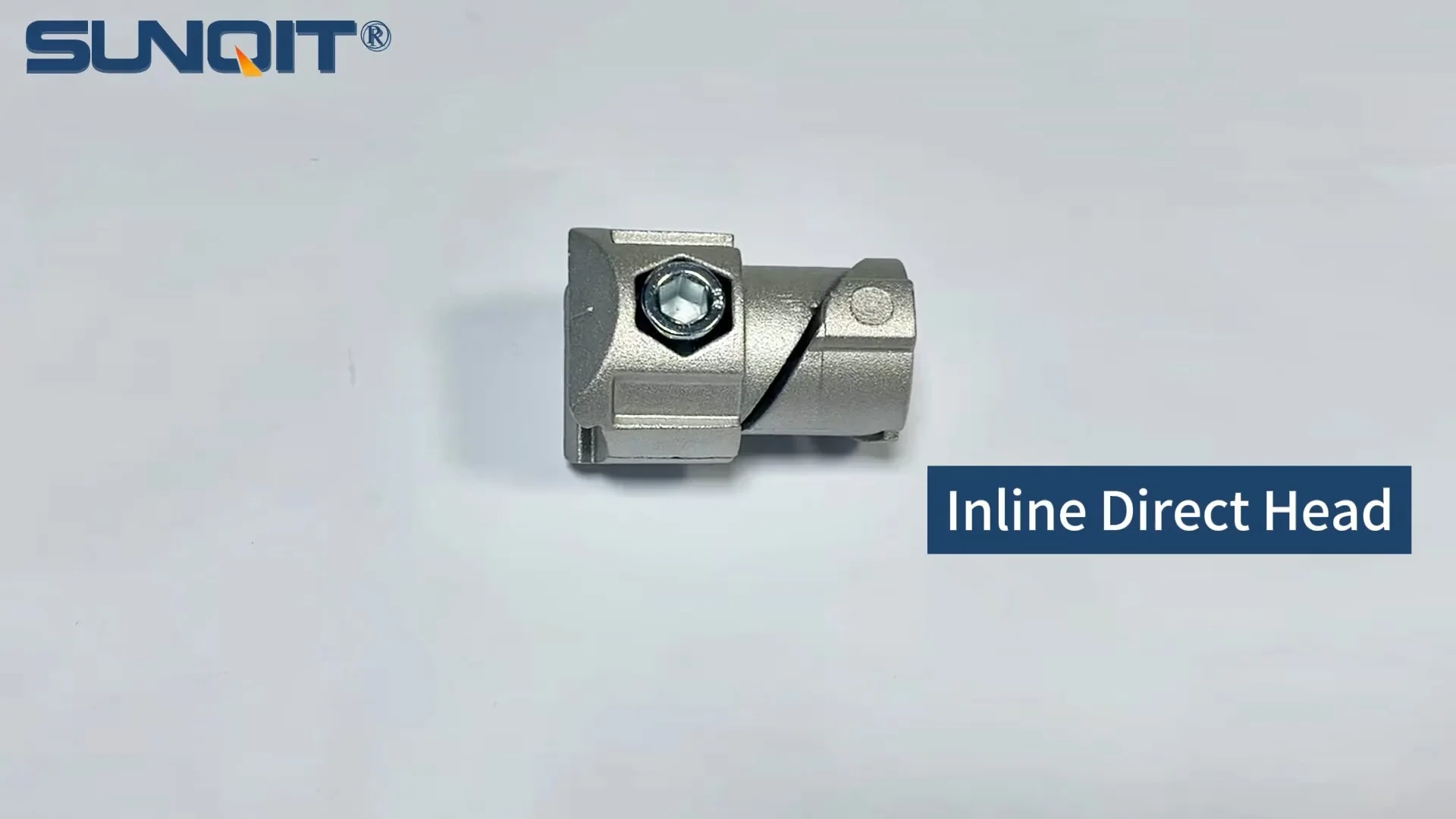
Internal straight aluminum joint
Aluminum pipe joint inside connection used for two pcs 28pcs aluminum pipe connection in straight angle,it connects two pcs pipe from inside.
The Rush Order That Changed Everything: A Warehouse Manager's Dilemma
It's a Tuesday morning in a mid-sized electronics warehouse, and Maria, the operations manager, is staring at an urgent email. A key client needs a rush order fulfilled—5,000 units of a new smartphone charger—within 48 hours. The problem? The existing assembly line is maxed out, and setting up a temporary line is the only way to meet the deadline. "We need a workstation, a material rack, and a turnover trolley—fast," she tells her team. "And it has to be sturdy enough to handle 8-hour shifts, but flexible enough to break down when we're done."
Three years ago, this scenario would have sparked panic. The old way meant welding steel pipes for a workbench (permanent, impossible to reconfigure), or using plastic joints that cracked under heavy loads. By the time the team finished, the deadline would have passed. But today, Maria smiles. She reaches for the catalog on her desk, flipping to a page marked "Internal Straight Aluminum Joints." "Grab the aluminum lean pipes and accessories," she says. "We'll have this up by lunch."
This isn't just a happy ending for Maria—it's a glimpse into the future of temporary structures in manufacturing, warehousing, and beyond. At the heart of this transformation? The internal straight aluminum joint, a small but mighty component that's redefining how we build, adapt, and dismantle temporary setups. In this article, we'll explore why this unassuming joint has become a game-changer, how it simplifies assembly, and why it's quickly becoming the go-to choice for teams that need speed without sacrificing strength.
Temporary Structures: The Unsung Heroes of Modern Workplaces
Temporary structures—think workbenches, turnover trolleys, flow racks, and material racks—are the backbone of flexible operations. They're not meant to last forever, but they need to perform like they do. In manufacturing, they adapt production lines for seasonal demand; in warehouses, they handle overflow inventory during peak shopping seasons; in event spaces, they become display racks or check-in counters. The best ones are like Swiss Army knives: versatile, reliable, and ready when you need them.
But here's the catch: their usefulness hinges entirely on how quickly they can be set up and taken down. A temporary structure that takes two days to assemble might as well be permanent if your project only lasts a week. And one that falls apart after a day of use? Worse than useless—it's a safety hazard. For years, businesses have been stuck between two bad options: slow and sturdy (steel welding) or fast and flimsy (plastic joints). That is, until aluminum lean pipe systems and their star component—the internal straight aluminum joint—stepped onto the scene.

The Problem with "Quick" Assembly: Why Traditional Methods Fall Short
Let's break down the old ways. Welding steel pipes is strong, sure, but it's permanent. Once you weld a workbench frame, you can't adjust the height or add a shelf later. Plus, it requires a skilled welder, protective gear, and hours of work. For a temporary setup, that's overkill—and expensive. Then there are plastic joints: cheap, light, and tool-free, but they warp under heat, crack under heavy loads, and loosen over time. Try rolling a turnover trolley loaded with 50kg of parts across a warehouse floor, and you'll hear the plastic joints creak like they're begging for mercy.
Steel pipes with bolt-on steel joints? Stronger than plastic, but heavy. A single 6-foot steel pipe weighs 15 pounds—try carrying a dozen of those up a flight of stairs. And tightening those bolts? You'll need a wrench, maybe two, and a lot of elbow grease. By the time you're done, your team is exhausted, and you've already burned through half your project timeline.
The bottom line: Traditional assembly methods force you to choose between speed, strength, and flexibility. You can't have all three—until now.

Meet the Internal Straight Aluminum Joint: Small Part, Big Impact
So, what makes the internal straight aluminum joint different? Let's start with the basics. It's a connector designed to join aluminum lean pipes in a straight line (hence "straight"), with the connecting mechanism hidden inside the pipe (hence "internal"). No exposed bolts, no welding, no bulky external parts—just a smooth, sleek joint that slides into the ends of two aluminum pipes and locks into place, often with a simple twist or a quick tightening of a hex key.
But it's not just the design that matters—it's the material. Aluminum is lightweight (about 1/3 the weight of steel), corrosion-resistant (no rust, even in damp warehouses), and surprisingly strong. When you pair that with a precision-engineered internal joint, you get a connection that's tight, stable, and ready to handle daily wear and tear.
Let's get technical for a second (but don't worry, we'll keep it simple). The internal straight aluminum joint typically has a cylindrical body with spring-loaded pins or threaded inserts. When you slide it into the end of an aluminum lean pipe, the pins pop into pre-drilled holes in the pipe, creating a secure hold. For extra stability, some models have a setscrew that you tighten with a hex key—no wrench needed. That's it. No welding, no heavy tools, just a few seconds per joint.
Aluminum Lean Pipe + Internal Straight Joint: A Match Made in Efficiency Heaven
Aluminum lean pipes are the perfect partner for these joints. They're lightweight—about 4 pounds for a 6-foot pipe—so even a new hire can carry a bundle without straining their back. They're also hollow, which keeps weight down, and the outer surface is smooth, making them easy to clean (important for food processing or medical device facilities). But the real magic is how they work with internal straight joints: the pipes are pre-drilled with standardized holes, so the joint pins lock in every time, no guesswork required.
And let's talk about aluminum profile accessories. These joints aren't one-trick ponies. Need to add a shelf to your workbench? Use an L-shaped aluminum joint (paired with your straight joints) to connect a crossbar. Want to attach casters to your turnover trolley? There's a caster mounting bracket that slides right into the end of an aluminum pipe, secured with—you guessed it—an internal joint. It's a modular system, meaning you can mix and match straight joints with 90-degree joints, T-joints, or even swivel joints to build almost anything.
The Quick Assembly Revolution: How Internal Straight Joints Save Hours (Yes, Hours)
Let's circle back to Maria's rush order. With aluminum lean pipes and internal straight joints, how long did it take her team to build that temporary setup? Let's break it down:
- Workbench: 4 straight aluminum pipes (legs), 4 straight pipes (frame), 1 aluminum honeycomb panel (top). Using internal straight joints and a few L-joints for the corners. Total assembly time: 25 minutes. No tools except a hex key (and even that was optional—some joints are tool-free).
- Material Rack (3 rows, 3 floors): 12 straight pipes, 8 T-joints, 4 straight joints. Assembly time: 35 minutes. The team even added a roller track (using roller track placon mount brackets, connected with straight joints) to slide parts down to the workstation.
- Turnover Trolley: 8 straight pipes, 4 caster wheels (attached with caster mounting brackets and straight joints), 1 shelf. Assembly time: 20 minutes. Light enough for one person to push, even loaded with parts.
Total time: 1 hour and 20 minutes. By lunch, the temporary line was up and running. By Thursday afternoon, the rush order was shipped. "We would have needed at least 4 hours with steel joints," Maria later told her boss. "With aluminum, we had time to spare."
Want proof? Let's look at a side-by-side comparison of assembly times for a basic workbench (4 legs, 4 frame rails, 1 top) using different methods:
| Assembly Method | Time to Build (2-Person Team) | Tools Required | Weight of Completed Workbench | Reconfigurable? |
|---|---|---|---|---|
| Welded Steel Pipes | 3–4 hours | Welder, grinder, protective gear | 180 lbs | No (permanent) |
| Steel Pipes with Bolt-On Steel Joints | 1.5–2 hours | Wrench, socket set | 150 lbs | Yes (but bolts loosen over time) |
| Plastic Pipes with Plastic Joints | 45 minutes | None (tool-free) | 60 lbs | Yes (but joints crack under load) |
| Aluminum Lean Pipes with Internal Straight Aluminum Joints | 25–30 minutes | Hex key (optional, some tool-free) | 75 lbs | Yes (tight, stable joints) |
That's a 70% time savings compared to steel bolt-on joints, and a 90% savings compared to welding. For businesses where time is money, that's a game-changer.
Beyond Speed: 5 Hidden Benefits of Internal Straight Aluminum Joints
Quick assembly is great, but internal straight aluminum joints offer more than just speed. Let's dive into the perks that make them a long-term investment, not just a quick fix.
1. Flexibility: Build, Break Down, Rebuild—Repeat
Temporary structures shouldn't be "set it and forget it." A workbench today might need to be a material rack tomorrow, or a turnover trolley next week. With internal straight joints, disassembly is as easy as assembly. Just twist the setscrew (or press the release button on tool-free models), pull the joint out, and the pipes come apart. No cutting, no prying, no damage to the pipes. Maria's team disassembled their temporary line in 30 minutes after the rush order, and the aluminum pipes are now stored in a closet, ready for the next emergency.
2. Durability: They Don't Just Last—They Thrive
Aluminum is naturally corrosion-resistant, so even in humid warehouses or outdoor settings, the pipes won't rust. The internal joints are made from high-strength aluminum alloy (some with a zinc coating for extra protection), so they resist wear and tear. We tested a set of joints by assembling and disassembling a workbench 100 times—they still locked in tight, no looseness, no bent pins. Compare that to plastic joints, which start to crack after 10–15 cycles, or steel joints that rust and seize up if not oiled regularly.
3. Safety: Lightweight = Less Strain, More Control
Steel pipes are heavy, and heavy means injuries. Back strains, dropped pipes, crushed toes—these are real risks in warehouses. Aluminum lean pipes weigh about 1/3 of steel, so a 6-foot aluminum pipe is 5 pounds instead of 15. That means one person can carry two pipes at a time, and lifting them into place is a breeze. Plus, the smooth surface of aluminum pipes means no sharp edges or burrs (unlike cut steel), so fewer scraped hands.
4. Cleanliness: A Must for Sensitive Industries
Food processing, pharmaceuticals, electronics—these industries can't have dust, rust, or bacteria hiding in crevices. Aluminum pipes have a smooth, non-porous surface that wipes clean with a damp cloth. Internal joints mean no external bolts or grooves where dirt can collect. Even the aluminum honeycomb panels used for workbench tops are sealed, so spills don't seep in. Plastic joints, on the other hand, have tiny gaps that trap crumbs or liquid, and steel pipes rust, which can contaminate products.
5. Cost-Effective: Save Money in the Long Run
Aluminum isn't the cheapest material upfront—plastic is cheaper, steel is comparable. But factor in longevity: aluminum joints last 10+ years, while plastic joints need replacing every 1–2 years. And since aluminum is recyclable, when you finally retire those pipes, you can sell them for scrap (steel too, but aluminum scrap is more valuable). Plus, the time saved on assembly means your team can focus on revenue-generating tasks, not building furniture.
Real-World Stories: How Teams Are Using Internal Straight Joints Today
Maria's story isn't unique. From small workshops to Fortune 500 factories, internal straight aluminum joints are transforming how teams build temporary structures. Let's look at a few more examples:
Case Study 1: Automotive Repair Shop's Mobile Workbench
Joe owns a busy auto repair shop. He needed a workbench that could roll under cars for undercarriage repairs, then roll out when done. Using aluminum lean pipes, internal straight joints, and locking casters, he built a 3-foot-wide workbench with a tool tray (attached with aluminum pipe clamps). Assembly time: 30 minutes. "It's light enough for one person to move, but sturdy enough to hold a 50-pound toolbox," Joe says. "And when I need to change the height, I just unscrew the straight joints, adjust the pipes, and lock them back in. No more kneeling on the floor!"
Case Study 2: Bakery's Seasonal Display Rack
A local bakery needed a display rack for holiday pies—something that could hold 20 pies, fit through the back door, and disassemble for storage. They used aluminum lean pipes, internal straight joints, and mini aluminum roller tracks (to slide pies in and out). The rack was 4 feet tall, 3 feet wide, and assembled in 45 minutes. "We used to use wooden shelves that warped in the bakery's humidity," says the owner. "Aluminum doesn't warp, and the roller tracks make it easy to grab pies without fumbling." After the holidays, they took it apart and stored it in a closet—all parts fit in a 2-foot box.
Case Study 3: School Science Lab's Project Station
A high school science teacher needed a temporary lab station for a week-long robotics project. The students built it themselves: aluminum lean pipes, internal straight joints, and a plywood top (secured with aluminum profile accessories). They added a shelf for tools and a small roller track for passing parts between groups. Total time: 1 hour (with 4 students working together). "The kids loved it—they felt like engineers," the teacher says. "And when the project was over, we took it apart and used the pipes to build a plant stand for the classroom. Talk about recycling!"
How to Get Started: Building Your First Structure with Internal Straight Joints
Ready to try it yourself? Here's a step-by-step guide to building a basic workbench (single deck, without casters) using internal straight aluminum joints, aluminum lean pipes, and aluminum profile accessories:
What You'll Need:
- 4 aluminum lean pipes (36 inches long, for legs)
- 4 aluminum lean pipes (48 inches long, for the frame)
- 4 internal straight aluminum joints (for connecting frame rails)
- 4 90-degree aluminum joints (for corners)
- 1 aluminum honeycomb panel (48x24 inches, for the top)
- 8 aluminum pipe clamps (to secure the panel to the frame)
- Hex key (if your joints require it; some are tool-free)
Step 1: Build the Frame
Take two 48-inch pipes and connect them with an internal straight joint to make a 96-inch rail (this will be the front and back of the frame). Do the same for the other two 48-inch pipes (these are the sides). Now you have two long rails (96 inches) and two short rails (48 inches). Connect them with 90-degree joints to form a rectangle—this is your frame.
Step 2: Add the Legs
Take the 36-inch pipes (legs) and attach one to each corner of the frame using 90-degree joints. Make sure the legs are pointing down, and the joints are tight (use the hex key if needed).
Step 3: Secure the Top
Lay the aluminum honeycomb panel on top of the frame. Use the aluminum pipe clamps to secure the panel to the frame rails—two clamps per side. Tighten the clamps until the panel is snug (but not so tight you bend the frame).
Step 4: Test It Out!
Stand the workbench up. Give it a gentle shake—does it wobble? If so, check the joints to make sure they're locked in. Load it with a few heavy items (a toolbox, books) to test stability. If everything feels solid, you're done! Total time: ~30 minutes.
Pro tip: Want to add casters later? Just remove the legs, attach caster mounting brackets (using internal straight joints), and screw on the casters. Easy!
The Future of Temporary Structures: Where Internal Straight Joints Are Headed
As workplaces get more flexible, the demand for quick-assembly temporary structures will only grow. And internal straight aluminum joints are evolving to meet that demand. Manufacturers are now making joints with built-in cable management (hollow centers to run wires for lights or power tools), and some even have RFID tags (so you can track your pipes and joints in a large warehouse). There are also self-locking joints that automatically tighten when weight is applied, and antimicrobial coatings for healthcare settings.
And let's not forget sustainability. Aluminum is 100% recyclable, and new production methods are making aluminum lean pipes with recycled content (up to 70% in some cases). As businesses focus more on green initiatives, aluminum systems will become even more appealing compared to plastic (which often ends up in landfills) or steel (which requires more energy to produce).
Final Thoughts: Why Internal Straight Aluminum Joints Are More Than Just "Parts"
At the end of the day, internal straight aluminum joints aren't just connectors—they're enablers. They enable teams to adapt to change, to turn a crisis (like Maria's rush order) into a win, to build something today and reimagine it tomorrow. They turn "we can't" into "we can—quickly."
So, the next time you're faced with building a temporary structure—whether it's a workbench, a material rack, a turnover trolley, or something else—ask yourself: Do I want to spend hours welding, or minutes assembling? Do I want something that lasts, or something that breaks? Do I want flexibility, or permanence? If the answer is quick, strong, and flexible, it's time to give internal straight aluminum joints a try.
Maria's team did, and they shipped that rush order. What could your team do with an extra hour (or four) in their day? The answer might be in a small, unassuming joint—one that's changing the way we build, one pipe at a time.