- Company Articles
- Products and Technology
- Product knowledge
- Internal Straight Aluminum Joint in Computer Peripheral Production Lines

Internal Straight Aluminum Joint in Computer Peripheral Production Lines
Related Product
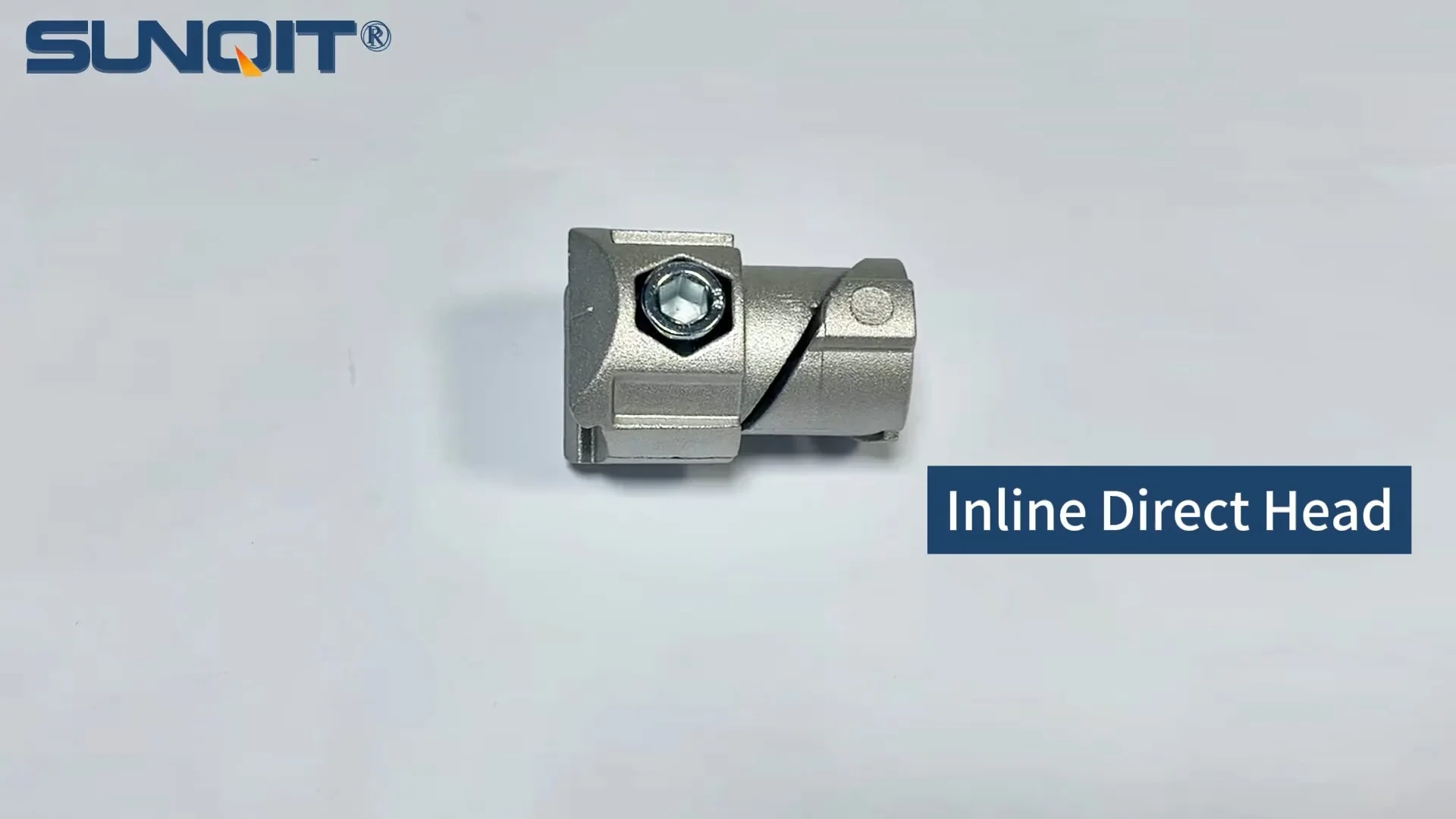
Internal straight aluminum joint
Aluminum pipe joint inside connection used for two pcs 28pcs aluminum pipe connection in straight angle,it connects two pcs pipe from inside.
The Hidden Backbone of Modern Manufacturing: Why Computer Peripheral Lines Need Smart Solutions
Walk into any computer peripheral factory, and you'll likely be met with a symphony of precision: robotic arms assembling keyboard switches, conveyor belts gliding with mouse casings, and workers carefully testing monitors for dead pixels. From wireless keyboards to ergonomic mice and ultra-slim displays, these devices have become indispensable in our digital lives. Yet, behind their sleek exteriors lies a production challenge that often goes unnoticed: flexibility . As consumer demands shift—think mechanical keyboards one year, foldable monitors the next—manufacturers must adapt quickly, or risk falling behind. This is where the but mighty internal straight aluminum joint enters the fray, quietly revolutionizing how production lines are built, reconfigured, and optimized.
Computer peripheral production lines are a study in contrasts. On one hand, they require pinpoint accuracy—even a misaligned keycap can render a keyboard useless. On the other, they need to be agile enough to switch between product models in days, not weeks. Traditional setups, reliant on welded steel frames and fixed workstations, struggle here. A single change in product design might mean dismantling entire sections of the line, causing costly downtime. This is where lean manufacturing principles step in, emphasizing waste reduction, continuous improvement, and modularity. And at the heart of this modular revolution? Aluminum profiles and the joints that hold them together.
From Rigidity to Flexibility: How Lean Systems Transform Production
Lean manufacturing isn't just a buzzword—it's a lifeline for factories drowning in inefficiency. At its core, lean is about creating more value with less waste, and nowhere is this more critical than in computer peripheral production. Consider a typical line producing wireless mice: components like PCBs, sensors, and plastic shells must flow seamlessly from assembly to testing to packaging. Any bottleneck—say, a workbench that's too low for ergonomic assembly or a material rack that can't adjust to new shell sizes—grinds progress to a halt.
Modular systems, built around aluminum profiles , solve this by turning production lines into "building blocks." Unlike rigid steel, aluminum profiles are lightweight, strong, and—most importantly—easily reconfigurable. But profiles alone aren't enough; their true power lies in the joints that connect them. This is where the internal straight aluminum joint shines. Designed to lock profiles together with precision, it allows workers to assemble, disassemble, and reassemble structures in minutes, not hours. Whether it's adjusting the height of a workbench or extending a roller track to accommodate longer monitor casings, the joint turns once-static lines into dynamic, adaptable ecosystems.

Inside the Joint: What Makes the Internal Straight Aluminum Joint a Game-Changer
To appreciate the internal straight aluminum joint, let's start with its design. Unlike external joints that bulge awkwardly and add unnecessary bulk, this joint sits inside the aluminum profile's T-slot—a groove running along the profile's length. This internal fit creates a cleaner, stronger connection, eliminating gaps that can weaken structures over time. Made from high-grade 6063-T5 aluminum alloy, the joint is both lightweight and durable, capable of withstanding the daily wear and tear of a busy production line—from vibrations to occasional impacts from tools or components.
Installation is where the joint truly stands out. Traditional steel joints often require welding or heavy bolts, demanding specialized tools and skilled labor. The internal straight aluminum joint? It can be secured with a simple hex key. insert the joint into the T-slot, align the profiles, tighten the set screw, and you're done. This simplicity cuts assembly time by up to 60% compared to welded systems, a boon for factories racing to meet tight deadlines. And because there's no welding, there's no risk of warping the profile or weakening the material—critical for maintaining precision in sensitive assembly tasks, like soldering tiny PCB components.
| Feature | Traditional Steel Joints | Internal Straight Aluminum Joints | Key Advantage |
|---|---|---|---|
| Installation Time | 2–3 hours (welding/bolting) | 10–15 minutes (hex key) | Reduces downtime during line reconfigurations |
| Weight | Heavy (3–5 lbs per joint) | Lightweight (0.5–1 lb per joint) | Easier to handle; reduces strain on workers |
| Reusability | Low (welded joints are permanent) | High (can be disassembled and reused) | Reduces material waste and replacement costs |
| Precision Alignment | Prone to gaps (due to welding errors) | Zero gaps (internal T-slot fit) | Ensures stability for precision tasks (e.g., PCB assembly) |

Beyond the Joint: Building Workbenches That Adapt to Every Task
A production line is only as good as its workbenches—the workhorses where assembly, testing, and inspection happen. In computer peripheral manufacturing, workbenches must juggle multiple roles: one minute, they're holding a keyboard for switch soldering; the next, they're supporting a monitor for screen calibration. This versatility demands a bench that can evolve, and that's where aluminum profiles and internal straight aluminum joints come together.
Take the workbench E (single deck-without caster) , a common setup in peripheral lines. Built with 40x40mm aluminum profiles, its frame uses internal straight joints to connect the legs, rails, and deck. Need to raise the deck by 10cm to accommodate taller workers? Loosen the joints, adjust the legs, retighten, and the bench is ready. Adding a shelf for tools? Slide a profile into the T-slot, secure it with a joint, and you've got extra storage—no drilling or cutting required. This adaptability isn't just about convenience; it's about ergonomics. Workers of different heights can customize their benches, reducing strain and lowering the risk of repetitive motion injuries—a win for both productivity and employee well-being.
But workbenches are just the start. Material racks, turnover trolleys, and even testing stations rely on the same modular logic. A material rack holding mouse casings can quickly be reconfigured with the internal straight joint to hold larger keyboard shells, simply by adjusting the shelf spacing. This flexibility ensures that no matter how product designs change, the factory's infrastructure can keep up.
Smoothing the Flow: How the Joint Powers Roller Tracks
Material flow is the lifeblood of any production line, and in computer peripheral manufacturing, even small delays can cascade into missed deadlines. Enter roller tracks —conveyor-like systems that glide components from one station to the next. But roller tracks are only as effective as the joints that keep them aligned. Misaligned tracks cause jams, damaging delicate components like monitor screens or sensor modules. The internal straight aluminum joint eliminates this risk by ensuring track sections connect perfectly, with zero lateral movement.
Imagine a roller track carrying wireless mouse casings from assembly to testing. Each track section is mounted on aluminum profiles, connected by internal straight joints. As casings slide along the rollers, the joints keep the track level and stable, preventing wobbles that could tip casings off course. If the line switches to a longer mouse model, workers can extend the track by adding another section—simply aligning the new profile with the existing one, securing it with a joint, and attaching the rollers. No need for custom-cut tracks or expensive modifications; the joint turns expansion into a 15-minute task.
The joint's compatibility with roller track accessories—like side guides and end stops—adds another layer of utility. Need to prevent casings from sliding off the track? Attach a plastic guide rail (yellow or grey, depending on the line's color-coding) using the joint. Want to slow casings down before they reach the testing station? Add a brake roller, secured to the track with the same joint. This modularity ensures roller tracks can adapt to any component, from tiny sensor PCBs to large monitor back panels.
Case Study: How XYZ Peripherals Cut Downtime by 40% with Internal Straight Aluminum Joints
To put the joint's impact into perspective, let's look at XYZ Peripherals, a mid-sized factory producing wireless keyboards and mice. Before adopting modular systems, XYZ's production line was a patchwork of welded steel workbenches and fixed roller tracks. When the company launched a new ergonomic keyboard with a wider design, the existing workbenches were too narrow, and the roller tracks too short. Reconfiguring the line took 3 days of downtime, costing $20,000 in lost production.
In 2024, XYZ switched to aluminum profiles and internal straight aluminum joints. When the next product launch—a compact gaming mouse with a unique curved shell—arrived, the team was ready. Workers reconfigured the workbenches in 2 hours, extended the roller tracks in 45 minutes, and added custom material racks in under an hour. Total downtime? Just 3.5 hours, saving over $18,000. "We used to dread product launches," said Maria, XYZ's production manager. "Now, we see them as opportunities to test how quickly we can adapt. The internal straight joint turned our line from a liability into an asset."
Technical Deep Dive: The Numbers Behind the Joint
For skeptics wondering if the internal straight aluminum joint can handle the rigors of industrial use, the numbers speak for themselves. Let's break down its key specifications:
- Material: 6063-T5 aluminum alloy, known for its excellent strength-to-weight ratio and corrosion resistance. Ideal for humid factory environments where steel might rust.
- Load Capacity: Each joint can support up to 200kg of static load, and 150kg of dynamic load (e.g., components moving along a roller track). This exceeds the needs of most computer peripheral components, which typically weigh less than 5kg each.
- Operating Temperature Range: -40°C to 80°C, making it suitable for factories with temperature-controlled assembly areas (common for sensitive electronics like PCB soldering).
- Reusability: The joint can be disassembled and reused over 50 times without losing structural integrity—far more than traditional bolted joints, which strip threads after repeated use.
- Compatibility: Works with all standard 20x20mm, 30x30mm, and 40x40mm aluminum profiles, as well as T-slot accessories like brackets, casters, and sensor mounts.
These specs make the joint not just a tool for flexibility, but a reliable, long-term investment. Factories report the joint lasting 5–7 years with minimal maintenance—far longer than plastic joints (prone to cracking) or low-grade steel joints (prone to rust).
Looking Ahead: The Joint's Role in the Future of Peripheral Manufacturing
As computer peripherals evolve—think AI-powered keyboards that adapt to typing styles or monitors with foldable OLED screens—production lines will face even greater demands for agility. The internal straight aluminum joint is poised to meet these challenges head-on, thanks to its compatibility with emerging technologies. For example, as factories adopt IoT sensors to monitor line performance, the joint's T-slot design makes it easy to mount sensors—tracking everything from roller track speed to workbench vibration. This data helps identify inefficiencies before they become problems, keeping lines running smoothly.
Sustainability is another growing trend, and aluminum's recyclability aligns perfectly with eco-conscious manufacturing. Unlike steel, which requires energy-intensive recycling, aluminum can be melted down and reused with minimal loss of quality. When a production line is retired, the internal straight aluminum joints and profiles can be recycled, reducing waste and lowering the factory's carbon footprint.
Perhaps most importantly, the joint empowers workers. In an industry where skill shortages are common, a tool that requires minimal training to use is invaluable. New employees can learn to assemble and reconfigure workbenches or roller tracks in a day, freeing up experienced staff to focus on more complex tasks. This democratization of line design fosters a culture of continuous improvement, where every worker has a stake in optimizing the production process.
Conclusion: The Quiet Revolution in Your Keyboard's Backstory
The next time you type on your keyboard or glide your mouse across the desk, take a moment to appreciate the invisible forces that brought them to life. Behind every smooth key press or precise cursor movement lies a production line optimized for speed, flexibility, and precision. And at the heart of that line? The internal straight aluminum joint—small, unassuming, but utterly transformative.
In a world where consumer demands shift overnight and competition grows fiercer by the day, modular systems built around aluminum profiles and smart joints aren't just nice to have—they're essential. They turn rigid factories into adaptable hubs, capable of turning ideas into products faster than ever before. For computer peripheral manufacturers, this means not just meeting deadlines, but exceeding them. It means turning challenges into opportunities. And it means building a future where production lines evolve as quickly as the technology they create.
So here's to the internal straight aluminum joint: the unsung hero of the factory floor, quietly powering the devices that power our digital lives.