- Company Articles
- Products and Technology
- Product knowledge
- Internal Straight Aluminum Joint in Electronics Manufacturing: Static Control Considerations

Internal Straight Aluminum Joint in Electronics Manufacturing: Static Control Considerations
Related Product
Internal straight aluminum joint
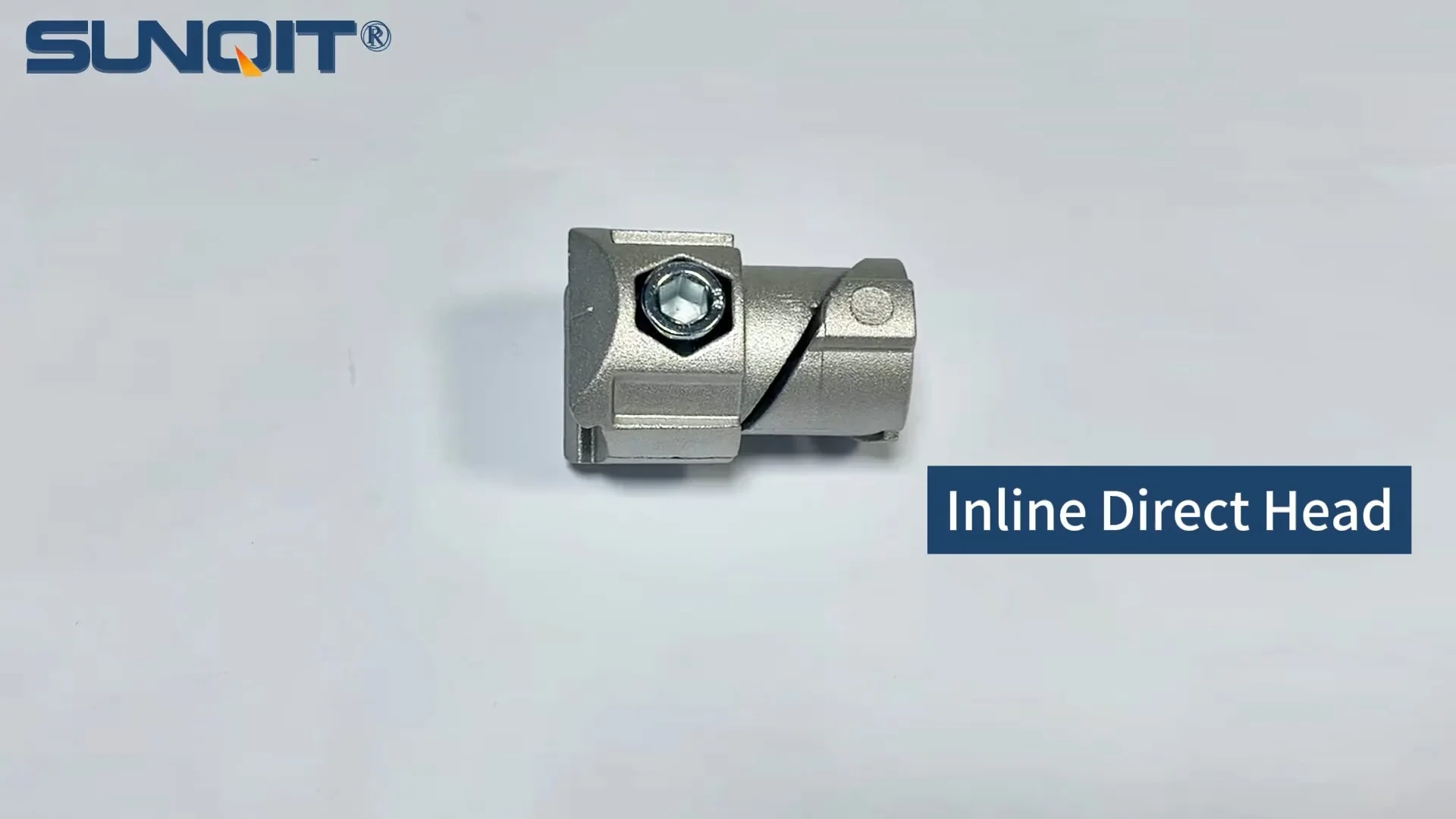
Aluminum pipe joint inside connection used for two pcs 28pcs aluminum pipe connection in straight angle,it connects two pcs pipe from inside.
In the high-stakes world of electronics manufacturing, where the difference between a functional microchip and a costly failure can be measured in microns, every component of the production line matters. From the precision of robotic arms to the clarity of blueprints, attention to detail is non-negotiable. Yet, some of the most critical elements in this ecosystem are the ones we rarely notice—until they fail. Take, for example, the humble joints that hold together workstations, material racks, and conveyor systems. Among these, internal straight aluminum joints stand out as unsung heroes, quietly ensuring stability, flexibility, and modularity. But in an industry where static electricity can cripple sensitive electronics, their role extends far beyond structural support. This article dives into the critical relationship between internal straight aluminum joints and static control, exploring how these small but mighty components help protect against one of manufacturing's most invisible threats.
Understanding Internal Straight Aluminum Joints: More Than Just a Connection
Before delving into static control, it's essential to grasp what internal straight aluminum joints are and why they've become a staple in modern electronics manufacturing. At their core, these joints are engineered connectors designed to link aluminum profiles—long, extruded pieces of aluminum with T-slot channels—into rigid, customizable structures. Unlike traditional welding or bolting, which are permanent and time-consuming, internal straight aluminum joints enable quick assembly, disassembly, and reconfiguration. This modularity is a cornerstone of lean manufacturing, allowing factories to adapt workstations, roller tracks , and material handling systems to evolving production needs without major overhauls.
What sets internal straight aluminum joints apart is their design. As the name suggests, they are "straight," meaning they connect profiles in a linear, end-to-end fashion, creating seamless runs of aluminum framework. The "internal" aspect refers to how they fit within the T-slot channels of the profiles, minimizing protrusions and creating a clean, flush surface. This design not only enhances aesthetics but also reduces snag points where materials or tools might catch—a critical feature in fast-paced assembly lines.
Constructed from high-grade aluminum alloys, these joints balance strength and lightness. Aluminum's natural resistance to corrosion is another advantage, ensuring longevity even in environments where moisture or chemicals are present. But it's their compatibility with aluminum profiles that truly makes them indispensable. When paired with these profiles, internal straight joints form the backbone of everything from ESD workstations to turnover trolleys, providing the structural integrity needed to support circuit boards, sensitive components, and heavy equipment alike.
The Hidden Danger: Why Static Control Matters in Electronics Manufacturing
To appreciate the role of internal straight aluminum joints in static control, we first need to understand the enemy: electrostatic discharge (ESD). Static electricity is a familiar phenomenon—think of the spark when you touch a doorknob after shuffling across a carpet. In everyday life, it's little more than a nuisance. In electronics manufacturing, however, it's a silent assassin.
ESD occurs when two objects with different electrical charges come into contact, causing a sudden transfer of electrons. For sensitive electronic components like microprocessors, capacitors, or semiconductors, this transfer can be catastrophic. Even a charge as small as 250 volts—undetectable to humans—can damage a modern integrated circuit. Larger discharges (in the thousands of volts) can vaporize tiny wires within chips, rendering them completely nonfunctional. Worse, some damage is "latent," meaning components appear to work initially but fail prematurely due to internal stress from ESD. The result? Costly recalls, reduced product lifespan, and shattered customer trust.
The numbers tell a grim story. According to the Electrostatic Discharge Association (ESDA), ESD costs the electronics industry an estimated $50 billion annually in lost revenue, including damaged components, production delays, and warranty claims. In a single factory, a single ESD event can ruin a batch of 500 circuit boards, wiping out hours of labor and materials in an instant. For companies producing high-end devices like smartphones or medical equipment, where components can cost hundreds of dollars each, the stakes are even higher.
Static buildup is particularly problematic in manufacturing environments due to the constant movement of materials. When plastic trays slide across conveyor belts, when operators handle packaging, or when components are transferred between workstations, friction generates static charge. Without proper controls, these charges can accumulate on surfaces—including the aluminum profiles and joints that form workstations—waiting to discharge into the next sensitive component that comes into contact.
To mitigate this risk, the industry relies on strict standards, such as ANSI/ESD S20.20, which outlines best practices for ESD control. These standards mandate everything from humidity control (dry air increases static buildup) to grounding systems and ESD-safe materials. Which brings us back to internal straight aluminum joints: their material and design play a pivotal role in whether a workstation acts as a conductor of static (safely dissipating it) or an insulator (trapping it until discharge).

Aluminum, Conductivity, and Static Dissipation: How Joints Shape ESD Safety
Aluminum is not just lightweight and corrosion-resistant—it's also an excellent conductor of electricity. This property is the key to understanding why internal straight aluminum joints are critical for static control. In an ESD-safe workstation, the goal is to create a continuous path to ground, allowing any static charge that accumulates to flow harmlessly away. If even one component in this path is non-conductive, the entire system fails.
Consider a typical ESD workstation: an aluminum profile frame, connected by internal straight joints, topped with an ESD mat, and equipped with grounding wrist straps for operators. When a static charge builds up on the workstation—say, from a operator sliding a plastic bin across the surface—the aluminum frame and joints should conduct that charge through the structure, down to the floor, and into the ground. But if the joints were made of plastic or another insulator, the charge would remain trapped in the frame, waiting to discharge into a passing circuit board.
Internal straight aluminum joints excel here because they maintain conductivity across the entire framework. Unlike some plastic joints, which act as insulators, aluminum joints create a seamless electrical path between connected profiles. This continuity is essential. Even a tiny gap or a loose joint can break the grounding chain, turning a "safe" workstation into a static hazard. Manufacturers of these joints often test their conductivity, ensuring that resistance levels stay below 1 x 10^9 ohms—a threshold set by ESD standards to ensure charges dissipate slowly enough to avoid damaging components (a process called "static decay").
But conductivity isn't the only factor. The design of the joint itself matters, too. Internal straight joints, which fit snugly within the T-slot channels of aluminum profiles, maximize contact area between the joint and the profile. This tight fit reduces resistance at the connection point, ensuring charges flow freely. In contrast, poorly designed joints with loose fits or minimal contact can create "hot spots" of high resistance, impeding static dissipation. For electronics manufacturers, this means choosing joints from reputable suppliers who prioritize both material quality and precision engineering.

Material Showdown: How Aluminum Joints Compare to Alternatives
To truly appreciate the static control benefits of internal straight aluminum joints, it helps to compare them to other common joint materials. Below is a breakdown of how aluminum stacks up against plastic and stainless steel in key areas relevant to ESD safety and manufacturing efficiency:
| Material | Conductivity (Typical Range) | Static Control Performance | Durability | Weight | Cost | Best For |
|---|---|---|---|---|---|---|
| Internal Straight Aluminum Joint | 2.7–3.77 x 10^7 S/m (high conductivity) | Excellent: Creates continuous grounding paths; dissipates static quickly | High: Resists corrosion; withstands repeated assembly/disassembly | Lightweight (2.7 g/cm³) | Moderate: More expensive than plastic, but cost-effective for ESD-critical areas | ESD workstations, cleanrooms, material racks with sensitive components |
| Plastic Joint (e.g., Nylon) | 10^14–10^18 S/m (insulator) | Poor: Traps static charge; no grounding path | Medium: Prone to wear over time; can crack under heavy loads | Very lightweight (1.1–1.4 g/cm³) | Low: Inexpensive upfront | Non-ESD applications (e.g., packaging, non-sensitive material handling) |
| Stainless Steel Joint | 1.45–1.67 x 10^6 S/m (moderate conductivity) | Good: Conductive but lower than aluminum; may require additional grounding | Very High: Extremely resistant to corrosion and wear | Heavy (7.93 g/cm³) | High: More expensive than aluminum; adds weight to structures | Wet environments, heavy-load applications (less ideal for ESD unless grounded) |
The table highlights a clear trend: aluminum joints outperform plastic in static control by virtue of their conductivity, while offering a better balance of weight and cost compared to stainless steel. For electronics manufacturers prioritizing ESD safety, this makes internal straight aluminum joints the gold standard for critical areas like assembly lines and testing stations.
Designing an ESD-Safe Workstation: Integrating Internal Straight Aluminum Joints
Choosing the right joints is just the first step. To fully leverage internal straight aluminum joints for static control, manufacturers must design workstations with ESD safety in mind from the ground up. Here's how these joints fit into a holistic ESD protection strategy:
1. Start with a Grounded Framework
The foundation of any ESD-safe workstation is a grounded aluminum frame. Using internal straight aluminum joints to connect aluminum profiles ensures the entire structure is electrically continuous. This frame should be bonded to a dedicated earth ground via a copper strap or grounding cable, with resistance measured regularly (per ANSI/ESD S20.20 standards) to ensure it stays below 35 megohms. Even the most conductive joints are useless if the frame itself isn't grounded.
2. Pair with ESD-Safe Surfaces
Joints and profiles handle the structural grounding, but work surfaces need their own protection. ESD mats, which are conductive or dissipative, should be placed on workstation tops and connected to the aluminum frame via a grounding cord. Since the frame is already grounded through its joints, this creates a unified system where charges from components on the mat flow through the mat, into the frame, and safely to ground. Internal straight joints ensure there are no breaks in this path, even if the workstation is reconfigured.
3. Mind the Details: Casters, Roller Tracks, and Accessories
Static control doesn't stop at the workstation frame. Mobile workstations often use caster wheels, which can insulate the frame from the ground if not properly selected. For ESD safety, choose conductive casters with rubber tires that maintain contact with the floor, and ensure they're mounted to the aluminum frame using—you guessed it—internal straight aluminum joints. Similarly, roller tracks, which transport components between workstations, should be made of conductive materials and connected to the frame via grounded joints. Even small gaps here can create static "islands," where charges build up on components as they move.
4. Regular Maintenance: Keeping Joints in Check
Over time, even the best joints can loosen due to vibration or repeated use. A loose joint may still hold the frame together structurally but create a break in the grounding path. To prevent this, maintenance teams should inspect joints monthly, tightening any that are loose and replacing those with signs of wear (e.g., stripped threads or bent prongs). Conductivity testing should also be part of routine checks—using a multimeter to measure resistance between different points on the frame ensures the grounding path remains intact.
Real-World Impact: Case Study on ESD Reduction with Aluminum Joints
To illustrate the practical benefits of internal straight aluminum joints, consider the case of a mid-sized electronics manufacturer specializing in printed circuit boards (PCBs) for automotive sensors. In 2023, the company was struggling with a 5% failure rate in final testing, with root-cause analysis pointing to ESD damage. Despite having ESD mats and wrist straps, static charges were still reaching components during assembly.
A closer inspection revealed the issue: the factory's workstations were built using plastic joints to connect aluminum profiles. While the profiles themselves were grounded, the plastic joints acted as insulators, trapping static charge in sections of the frame. When operators placed PCBs on the workstation, charges would discharge from the frame into the boards, causing latent damage. The solution? Replacing all plastic joints with internal straight aluminum joints from a reputable supplier.
Within three months of the switch, the failure rate dropped to 0.8%. The aluminum joints created a continuous grounding path throughout the workstation frame, allowing static to dissipate to ground before it could damage components. The company also reported smoother material flow, as the flush design of the internal joints reduced snags on roller tracks, cutting down on production delays. "We'd never considered the joints as part of the ESD problem before," said the plant manager. "It was a small change, but the impact on our bottom line was huge."
Choosing the Right Supplier: What to Look For
Not all internal straight aluminum joints are created equal. To ensure optimal static control, manufacturers should partner with suppliers who prioritize the following:
- Material Certification: Suppliers should provide documentation confirming the aluminum alloy used (e.g., 6063-T5, a common choice for its conductivity and strength) and its compliance with ESD standards.
- Precision Manufacturing: Joints should have tight tolerances to ensure a snug fit with aluminum profiles, maximizing contact area and conductivity.
- Testing Data: Look for suppliers who test joints for conductivity and static decay, providing reports that demonstrate compliance with ANSI/ESD S20.20 or IEC 61340 standards.
- Modular Compatibility: Joints should work seamlessly with standard aluminum profiles (e.g., 2020, 3030, 4040 series) to avoid compatibility issues with existing systems.
Conclusion: The Unseen Guardian of Electronics Manufacturing
In the fast-paced world of electronics manufacturing, where innovation and efficiency reign supreme, it's easy to overlook the small components that keep the industry running. Internal straight aluminum joints may not grab headlines, but their role in static control is indispensable. By providing continuous grounding paths, ensuring conductivity, and enabling modular, ESD-safe workstations, these joints help protect sensitive components from the invisible threat of static electricity. They are a testament to the idea that in manufacturing, even the smallest details can have the biggest impact.
As technology advances and components grow smaller and more sensitive, the need for robust static control will only increase. For manufacturers looking to stay ahead, investing in high-quality internal straight aluminum joints isn't just a matter of compliance—it's a strategic choice that safeguards products, reduces waste, and builds trust with customers. After all, in an industry where precision is everything, the right joint can make all the difference.