- Company Articles
- Products and Technology
- Product knowledge
- Internal Straight Aluminum Joint in Home Appliance Production: Streamlining Assembly

Internal Straight Aluminum Joint in Home Appliance Production: Streamlining Assembly
Related Product
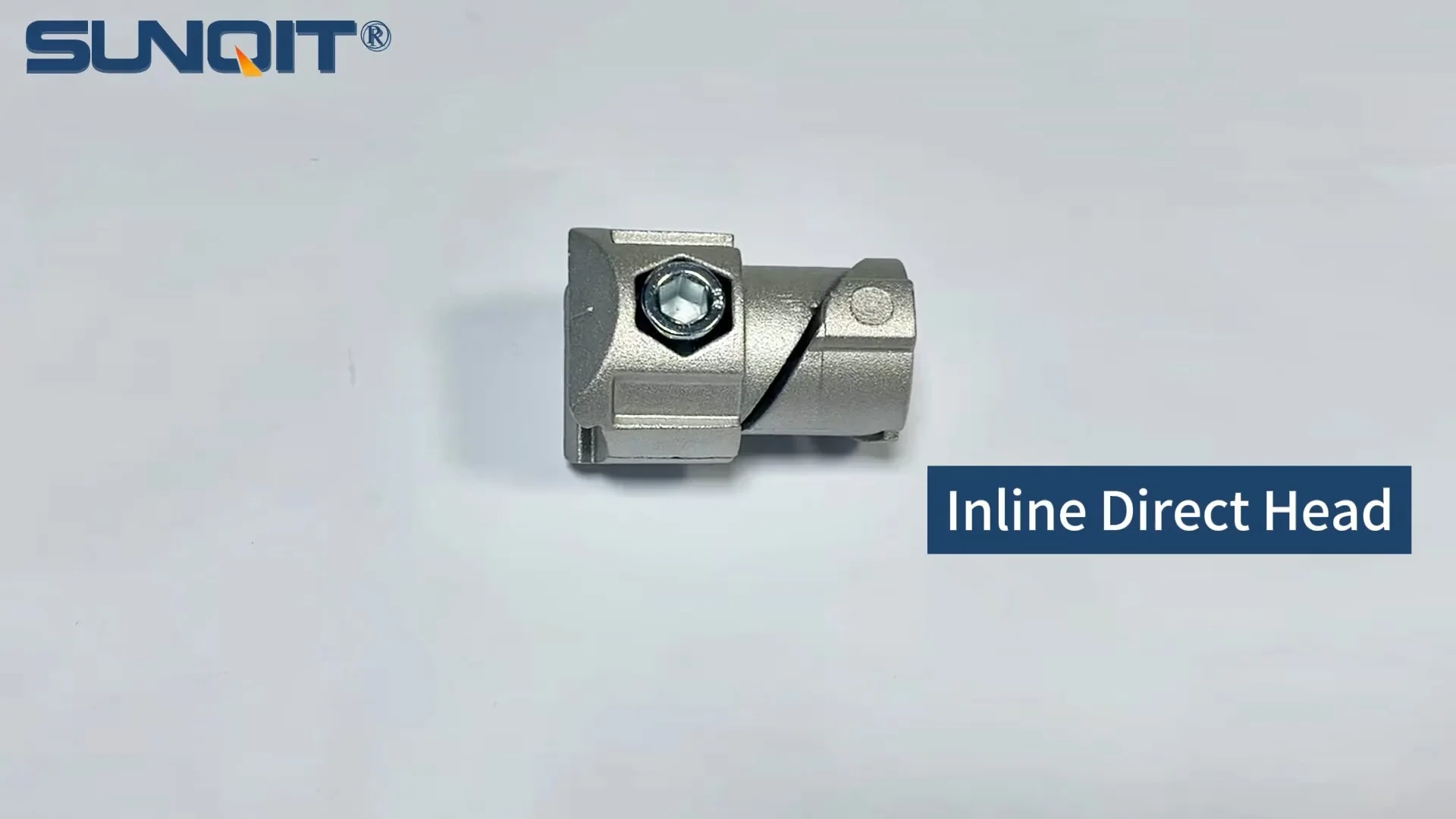
Internal straight aluminum joint
Aluminum pipe joint inside connection used for two pcs 28pcs aluminum pipe connection in straight angle,it connects two pcs pipe from inside.
Walk into any modern home appliance factory, and you'll likely be struck by the rhythm of precision: conveyor belts gliding, robotic arms placing components, and workers seamlessly piecing together refrigerators, washing machines, or ovens. Behind this orchestration of efficiency lies a hidden hero: the humble but mighty components that hold the production line together. Among these, the internal straight aluminum joint has emerged as a quiet revolutionary, transforming how assembly lines are built, adjusted, and optimized. In an industry where every second counts and adaptability is key, this unassuming part plays a pivotal role in streamlining operations—turning rigid, fixed workspaces into flexible, modular systems that keep pace with evolving consumer demands.
What Are Internal Straight Aluminum Joints?
At first glance, an internal straight aluminum joint might seem simple: a small, cylindrical piece of aluminum designed to connect two aluminum pipes or profiles in a straight line. But its simplicity is deceptive. Crafted from high-grade aluminum alloy, these joints are engineered for strength, lightweight durability, and precision. Unlike traditional connectors that rely on welding, screws, or adhesives, internal straight aluminum joints use a friction-based or lock-in mechanism, allowing for quick assembly and disassembly without damaging the pipes themselves.
The "internal" aspect is key here. These joints fit inside the hollow core of aluminum pipes, creating a clean, flush connection that minimizes protrusions—critical in tight assembly spaces where even a small bump could disrupt component alignment. The "straight" design ensures that pipes align perfectly along a linear axis, which is essential for building stable structures like workbenches, material racks, or flow racks. And because they're made of aluminum, they resist corrosion, withstand repeated use, and add minimal weight to the overall system—an advantage in environments where mobility (like adjustable workstations) is important.
But their true value lies in versatility. Internal straight aluminum joints are part of a broader ecosystem of aluminum pipe accessories , including elbows, T-joints, and clamps, that let manufacturers build custom structures on demand. Need a new workbench for a smaller appliance model? Swap out a few joints, adjust the pipe lengths, and you're ready. Have to reconfigure a flow rack to accommodate a bulkier component? Simply disconnect the joints, rearrange, and lock them back in place. This flexibility is why they've become a cornerstone of lean manufacturing principles—reducing waste, cutting setup time, and keeping production lines agile.
Traditional Assembly vs. Modular Aluminum Systems: A Game of Waste vs. Efficiency
To appreciate the impact of internal straight aluminum joints, it helps to look at how assembly lines used to operate. Decades ago, production floors relied heavily on fixed, welded steel structures. Workbenches were built to specific dimensions, material racks were bolted to the floor, and reconfiguring a line for a new product meant days (or weeks) of cutting, welding, and repainting. This rigidity led to two major issues: wasted time and wasted resources. If a new refrigerator model required a wider workspace, the old bench was either scrapped or modified at great cost. If a material rack couldn't accommodate a taller component, workers would jury-rig solutions, risking safety and efficiency.
Modular aluminum systems, anchored by components like internal straight aluminum joints, flip this script. Let's break down the differences:
| Aspect | Traditional Welded Steel Systems | Modular Aluminum Systems with Internal Straight Aluminum Joints |
|---|---|---|
| Setup Time | Weeks to build; requires skilled welders and tools. | Hours to assemble; no special tools needed—just hand-tightening or basic Allen keys. |
| Reconfigurability | Nearly impossible without destroying the structure. | Easy: Disassemble joints, adjust pipe lengths, and rebuild in hours. |
| Weight | Heavy; difficult to move, even with casters. | Lightweight (aluminum is 1/3 the weight of steel); easy to reposition workbenches or racks. |
| Cost Over Time | High upfront and long-term costs (scrapping old structures, rework). | Lower long-term costs (reusable components, minimal rework). |
| Adaptability to New Products | Limited; requires major overhauls for new dimensions or workflows. | High; adjust heights, widths, or layouts to fit new appliance models quickly. |
For home appliance manufacturers, this shift is transformative. Consider a factory producing both top-loading and front-loading washing machines. With traditional setups, each model might need its own dedicated line. With modular aluminum systems, a single line can be reconfigured in a morning: adjust the height of the workbench using internal straight aluminum joints, swap out a shorter aluminum profile for a longer one, and reposition material racks to feed components from a new angle. The result? Less downtime, more product variety, and a production line that bends—not breaks—when market trends shift.

The Benefits of Internal Straight Aluminum Joints in Home Appliance Production
In the fast-paced world of home appliances, where product cycles grow shorter and consumer preferences change rapidly, internal straight aluminum joints deliver a host of benefits that directly impact the bottom line. Let's dive into the most critical ones:
1. Speed: From Blueprint to Production in Hours
Time is money, and nowhere is that truer than on the factory floor. When a new appliance model is greenlit, manufacturers need to get it into production as quickly as possible to capture market share. Internal straight aluminum joints cut through the red tape of traditional construction. Since they require no welding or specialized labor, a team can assemble a basic workbench or material rack in under an hour. For example, a workbench E (single deck-without caster) —a common fixture in appliance assembly—can be built by two workers in 45 minutes using pre-cut aluminum pipes, internal straight joints, and a few basic tools. Compare that to a welded steel version, which might take a day and a half to fabricate, and the savings add up fast.
This speed also matters when lines need to be adjusted mid-production. If a quality check reveals that a component isn't aligning correctly on a conveyor, workers can quickly disassemble the section using internal joints, tweak the angle, and have the line running again in minutes—no need to shut down the entire line for hours of rework.
2. Flexibility: The Key to Lean Manufacturing
Lean manufacturing—a philosophy centered on minimizing waste and maximizing value—has become the gold standard in the industry. At its core is the idea of "just-in-time" production, where resources are used only when needed. Internal straight aluminum joints embody this principle by making it easy to scale up or down. For instance, during peak seasons (like the holidays), a factory might need extra material racks to store components. With modular systems, they can quickly add racks using spare aluminum pipes and joints, then disassemble and store them when demand drops. No more overbuilding permanent structures that sit idle for half the year.
This flexibility also supports continuous improvement. Workers on the line are often the best source of ideas for efficiency, and modular systems let them test those ideas without risk. If a technician suggests raising a conveyor by 6 inches to reduce bending, internal joints make it possible to adjust the height, test the change, and revert if needed—all in a shift. This culture of experimentation drives constant progress, keeping the factory ahead of competitors stuck with rigid setups.
3. Durability: Lightweight, but Built to Last
Critics sometimes assume that because aluminum is lighter than steel, it's less durable. But modern aluminum alloys, combined with precision-engineered joints, are more than up to the task of appliance production. Internal straight aluminum joints are designed to withstand the daily wear and tear of a busy factory: the constant loading and unloading of parts, the vibrations from nearby machinery, and the occasional bump from a forklift. Aluminum's natural resistance to corrosion is another plus, especially in environments where cleaning agents or moisture are present (like in dishwasher assembly lines).
What's more, these joints are reusable. Unlike welded steel, which weakens when cut and rewelded, aluminum pipes and joints can be taken apart and reassembled dozens of times without losing structural integrity. This reusability reduces waste and makes modular systems a sustainable choice—aligning with the growing focus on eco-friendly manufacturing practices.
4. Compatibility: A System That Plays Well with Others
No component exists in a vacuum, and internal straight aluminum joints shine because they integrate seamlessly with other modular accessories. Home appliance production relies on a ecosystem of parts: aluminum profiles for workbench frames, roller tracks for sliding components, casters for mobility, and panel holders for tool storage. Internal straight joints act as the glue that holds these elements together. For example, a material rack might use internal straight joints to connect vertical aluminum pipes, then attach aluminum pipe accessories like shelf brackets or guide rails. If the rack needs to hold heavier parts, workers can swap out standard joints for reinforced versions or add cross-bracing using T-joints—all without changing the core structure.
This compatibility also extends to customization. Every appliance factory has unique needs: a washing machine line might require wider workbenches, while a microwave line needs compact, mobile stations. Internal straight aluminum joints adapt to these needs by working with pipes of different diameters (common sizes include 28mm or 30mm) and profiles of varying thicknesses. Suppliers often offer pre-cut pipes and a range of joint types (elbows, crosses, swivels), making it easy to mix and match for a perfect fit.

Integration with Key Components: Building the Assembly Line of the Future
To truly see how internal straight aluminum joints streamline assembly, let's walk through a typical home appliance production scenario: building a side-by-side refrigerator. This process involves dozens of steps—from attaching door hinges to installing compressors—and relies on several key components, all tied together by modular aluminum systems.
First, the workbench : A workbench E (single deck-without caster) serves as the main assembly station. Its frame is built using 30mm aluminum pipes connected by internal straight joints, creating a stable, lightweight structure. The deck, often made of aluminum honeycomb panel for durability, is attached to the frame using bracket accessories. Since the workbench doesn't have casters (as specified in its design), internal straight joints ensure the legs are securely fastened, preventing wobbling during precision tasks like wiring the control panel.
Next, the material rack: A material rack B (3 row and 3 floor) sits nearby, holding components like door gaskets, shelves, and light bulbs. The rack's vertical supports use internal straight joints to connect aluminum pipes, while horizontal beams are attached with 90-degree joints. Each shelf is lined with swivel roller balls 1 inch —small, omnidirectional rollers that let workers slide heavy components (like glass shelves) onto the workbench with minimal effort. The rollers are mounted using roller track placon mount for aluminum profile flat accessories, which attach to the rack's aluminum profiles via, you guessed it, internal straight joints. If the factory switches to a larger refrigerator model with taller shelves, the rack can be reconfigured by adjusting the pipe lengths between the internal joints—no need for a new rack.
Then, the conveyor system: Between workstations, a roller track moves partially assembled refrigerators along the line. The track's frame is built with aluminum profiles and internal straight joints, ensuring it stays level even under the weight of the appliances. Plastic roller track guide rail yellow strips are attached to the track using brackets, keeping the refrigerators centered as they glide. If the line needs to be extended to add a new quality-check station, workers can simply add another section of track using internal straight joints and connect it to the existing system—all in under an hour.
Finally, the tool storage: Above the workbench, a hanging rack holds screwdrivers, wrenches, and power tools. This rack is suspended from the ceiling using aluminum pipes and internal straight joints, with hooks attached via clamp accessories. If a worker needs the rack lower for easier access, the joints can be loosened, the pipes adjusted, and the rack resecured—no ladder or complicated adjustments required.
In each of these steps, internal straight aluminum joints act as the silent coordinators, ensuring that every component works together seamlessly. They turn individual parts into a cohesive, adaptable system that can evolve with the needs of the production line.
Real-World Impact: How One Factory Cut Setup Time by 70%
To put this in tangible terms, let's look at a hypothetical but realistic example: a mid-sized appliance manufacturer producing 500 washing machines per day. A few years ago, their assembly line relied on welded steel workbenches and fixed material racks. When they decided to launch a new high-efficiency model with a larger drum, they faced a problem: the existing workbenches were too narrow to accommodate the drum during installation. The solution? Hire a welding crew to cut and extend the benches, which took 3 days and cost $15,000 in labor and materials. During that time, production slowed by 30%, leading to lost revenue.
Two years later, the same factory had switched to modular aluminum systems with internal straight aluminum joints. When they introduced a compact washing machine model for small apartments, they needed narrower workbenches. Instead of welding, the team disassembled the existing workbenches, cut the aluminum pipes to the new length, and reassembled them using internal straight joints. The entire process took 4 hours and cost $200 in materials (mostly new pipe cutoffs). Production continued without interruption, and the old pipe sections were stored for future use. The result? Setup time dropped by 70%, and the factory avoided $10,000 in lost revenue.
This isn't an isolated case. According to industry surveys, manufacturers using modular aluminum systems report an average 40% reduction in setup time for new lines and a 35% decrease in material waste. For home appliance brands, which often release 2-3 new models per year, these savings add up to millions of dollars annually.
Overcoming Challenges: Why Some Factories Hesitate (and How to Convince Them)
Despite the clear benefits, some manufacturers are slow to adopt modular aluminum systems. The most common concern is upfront cost: aluminum joints and pipes can be pricier than steel in the short term. A welded steel workbench might cost $500, while a modular aluminum version could run $700. But this sticker shock fades when you factor in reusability. The steel bench is a one-time use; the aluminum bench can be rebuilt 10 times over, making its long-term cost far lower. Suppliers often help by offering bulk discounts or leasing options for larger orders.
Another hesitation is worker training. Older employees who've spent decades working with welded systems may be wary of "newfangled" joints. But training is minimal: most workers can learn to assemble a basic structure in under an hour. Suppliers often provide free tutorials or on-site demos, and many factories find that younger workers—familiar with modular furniture or DIY projects—quickly become advocates for the system.
Finally, there's the myth of "insufficient strength." Skeptics worry that aluminum joints can't handle the weight of heavy appliances. But modern aluminum alloys (like 6063-T5, commonly used in manufacturing) have a tensile strength of 210 MPa—strong enough to support a 500-pound load per joint. In tests, modular aluminum workbenches with internal straight joints have been shown to withstand repeated impacts and heavy use for 10+ years, matching the lifespan of welded steel.
Future of Assembly: Where Aluminum Joints Fit in the Smart Factory
As factories grow smarter—with IoT sensors, AI-driven analytics, and collaborative robots—modular aluminum systems will only become more critical. Internal straight aluminum joints are already evolving to meet these needs. Some suppliers now offer joints with built-in QR codes, allowing workers to scan them with a smartphone to access assembly instructions or order replacement parts. Others are developing "smart joints" with embedded sensors that monitor vibration or weight, alerting managers if a workbench is overloaded or a joint is loosening.
Another trend is the rise of "digital twins"—virtual replicas of production lines that let managers test changes before implementing them. Modular aluminum systems, with their standardized components (pipes, joints, accessories), are easy to model in 3D software. Engineers can drag-and-drop internal straight joints, adjust pipe lengths, and simulate how a reconfigured line will perform—all without touching a single physical part. This reduces trial-and-error and speeds up innovation.
Perhaps most exciting is the potential for aluminum joints to enable "lights-out" factories—fully automated facilities that run 24/7 with minimal human intervention. Lightweight, modular structures are easier for robots to reposition, and internal straight joints allow for quick changes to accommodate new tasks. For example, a robot could disassemble a workbench using a specialized tool, then rebuild it in a new configuration overnight, ready for the next day's production run.
Conclusion: The Quiet Revolution Continues
In the grand scheme of home appliance production, internal straight aluminum joints may not grab headlines like cutting-edge robots or AI systems. But their impact is undeniable. By turning rigid assembly lines into flexible, modular ecosystems, they've made factories faster, more adaptable, and more efficient. They've reduced waste, cut costs, and empowered workers to shape their own environments. And as the industry moves toward smarter, more connected manufacturing, these unassuming joints will continue to play a starring role—proving that sometimes, the smallest components make the biggest difference.
So the next time you unbox a new refrigerator or start a load of laundry, take a moment to appreciate the invisible network of aluminum pipes and joints that helped build it. Behind every appliance is a story of precision—and behind that precision, a quiet revolution led by the internal straight aluminum joint.