- Company Articles
- Products and Technology
- Product knowledge
- Internal Straight Aluminum Joint in Mechanical Manufacturing: Heavy-Duty Applications

Internal Straight Aluminum Joint in Mechanical Manufacturing: Heavy-Duty Applications
Related Product
Internal straight aluminum joint
Aluminum pipe joint inside connection used for two pcs 28pcs aluminum pipe connection in straight angle,it connects two pcs pipe from inside.
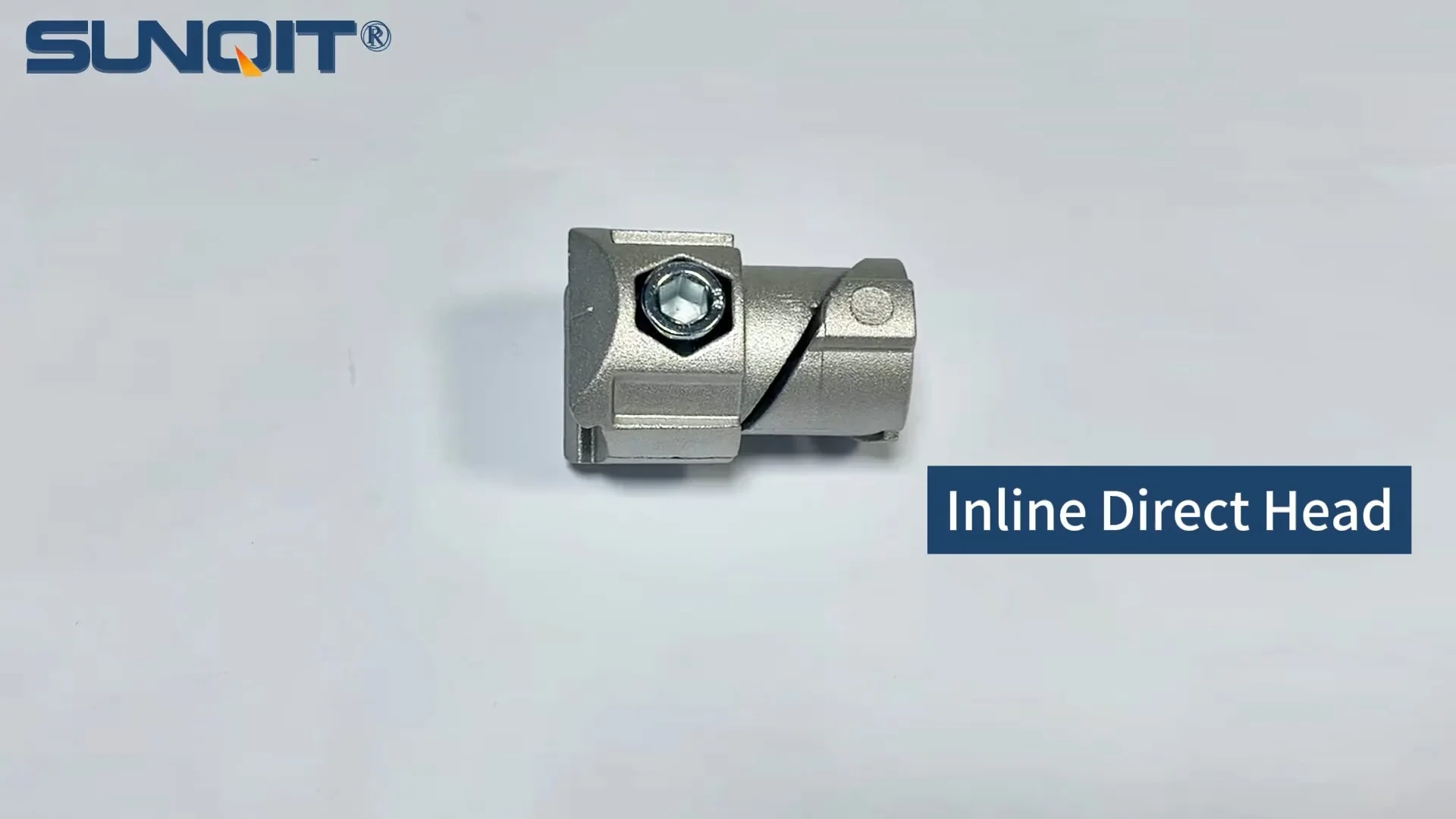
In the fast-paced world of mechanical manufacturing, where precision, durability, and efficiency are non-negotiable, the choice of components can make or break a production line. Every nut, bolt, pipe, and joint plays a role in ensuring that assembly lines run smoothly, workbenches withstand daily wear, and material handling systems move heavy loads without faltering. Among these unsung heroes are internal straight aluminum joints—small but mighty connectors that form the backbone of countless industrial structures. From robust workbenches to streamlined roller tracks, these joints are quietly revolutionizing how manufacturers build, adapt, and maintain their workspaces. Let's dive into the world of internal straight aluminum joints, exploring their design, benefits, and the heavy-duty applications that make them indispensable in modern manufacturing.
What is an Internal Straight Aluminum Joint?
At first glance, an internal straight aluminum joint might seem like a simple piece of hardware, but its design is a testament to engineering efficiency. Unlike external joints that clamp around pipes or profiles, internal straight aluminum joints are designed to fit inside aluminum pipes, creating a seamless, secure connection that maximizes structural integrity. Think of it as the "invisible glue" that holds aluminum frameworks together—strong enough to bear heavy loads yet unobtrusive enough to keep designs clean and functional.
These joints are typically crafted from high-grade aluminum alloys, such as 6061 or 6063, known for their exceptional strength-to-weight ratio, corrosion resistance, and malleability. This material choice is no accident: aluminum alloys can withstand the rigors of manufacturing environments—including exposure to oils, coolants, and frequent temperature changes—without rusting or degrading. The internal design often features threads or locking mechanisms that allow it to screw or snap into place inside aluminum pipes, creating a tight bond that resists twisting, bending, or loosening under pressure.
But what truly sets internal straight aluminum joints apart is their focus on straight-line connections . While other joints (like 90° or 45° joints) handle corners and angles, internal straight joints excel at linking pipes in a straight line, making them ideal for constructing long, stable frameworks such as roller tracks, material racks, or the legs of heavy-duty workbenches. Their simplicity belies their versatility: by providing a solid, linear connection, they become the building blocks for larger, more complex systems.
The Perfect Pair: Internal Straight Aluminum Joints and Aluminum Pipes
To understand the value of internal straight aluminum joints, we must first appreciate their partners in crime: aluminum pipes. Aluminum pipes are a staple in manufacturing for good reason. They're lightweight yet strong, easy to cut and shape, and resistant to corrosion—qualities that make them far more practical than steel pipes for many applications. But even the strongest pipe is only as reliable as the joint that connects it. This is where internal straight aluminum joints shine: they're engineered to work with aluminum pipes, not against them.
Most internal straight aluminum joints are designed to fit standard aluminum pipe sizes, ranging from 20mm to 40mm in diameter—common dimensions in industrial settings. When inserted into the end of an aluminum pipe, the joint's outer surface grips the pipe's inner wall, often via friction, threads, or small protrusions that dig into the aluminum (without damaging it). This creates a connection that's both rigid and shock-absorbent, able to handle the vibrations of machinery or the impact of heavy tools being placed on a workbench.
But their compatibility doesn't stop at pipes. Internal straight aluminum joints also play well with aluminum profile accessories , such as brackets, clamps, and end caps. For example, a joint might connect two aluminum pipes to form the base of a workbench, while aluminum profile accessories like gusset plates or leveling feet attach to the pipes (via the joint) to add stability. This synergy between joints, pipes, and accessories is what allows manufacturers to build custom solutions tailored to their specific needs—whether that's a 6-foot workbench for assembling electronics or a 20-foot roller track for moving automotive parts.
Consider this scenario: a manufacturer needs to build a material rack to store heavy metal components. Using 30mm aluminum pipes and internal straight aluminum joints, they can create vertical supports connected by horizontal beams. The joints ensure that each horizontal beam is perfectly aligned and securely attached to the vertical pipes, preventing sagging even when loaded with 50kg+ components. Add aluminum profile accessories like shelf brackets and anti-slip mats, and you've got a durable, customizable storage solution—all thanks to the reliable connection provided by internal straight joints.

Heavy-Duty Applications in Mechanical Manufacturing
Internal straight aluminum joints aren't just theoretical—they're hard at work in factories, warehouses, and production facilities around the world. Let's explore some of their most critical heavy-duty applications, where their strength, reliability, and flexibility make them irreplaceable.
Workbenches: The Heart of Production Floors
Walk into any manufacturing plant, and you'll find workbenches everywhere. They're where assembly happens, tools are stored, and quality checks are performed. But not all workbenches are created equal. A flimsy workbench can wobble under the weight of power tools, vibrate during use, or even collapse under heavy components—leading to delays, damaged products, or worse, injuries. This is why heavy-duty workbenches rely on internal straight aluminum joints.
Take, for example, a workbench E (single deck-without caster) —a common design in electronics manufacturing, where precision is key. The frame of this workbench is typically built from aluminum pipes connected by internal straight joints. The legs, often made of 40mm aluminum pipe, use these joints to connect to horizontal support beams, creating a square or rectangular base that distributes weight evenly. The joints ensure that the legs stay perfectly aligned, preventing the workbench from rocking or tipping, even when an operator leans on it or places a 100kg assembly on top.
What makes this setup so effective? Internal straight joints eliminate "play" between pipes. Unlike external clamps, which can loosen over time, these joints create a tight, (integrated) connection that resists movement. This stability is crucial for tasks like soldering circuit boards or assembling small parts, where even a tiny wobble can ruin a product. Additionally, because aluminum is lightweight, the workbench remains easy to reposition (if needed) despite its heavy-duty capacity—a win-win for manufacturers who value both strength and flexibility.
Roller Tracks: Streamlining Material Flow
In manufacturing, time is money—and nothing wastes time like inefficient material handling. Roller tracks solve this problem by allowing parts, bins, and assemblies to glide from one workstation to the next, reducing manual lifting and speeding up production. But for roller tracks to work reliably, especially with heavy loads, their frames must be rock-solid. Enter internal straight aluminum joints.
Roller tracks consist of a series of rollers mounted on a frame, which is typically built from aluminum pipes or profiles. The frame's length can range from a few feet (for small assembly lines) to dozens of feet (for warehouse distribution). To keep this long, horizontal structure from sagging or warping under the weight of moving materials, internal straight aluminum joints are used to connect the frame's support pipes. These joints ensure that each section of the roller track aligns perfectly with the next, creating a smooth, continuous path for rollers.
Consider a roller track used in automotive manufacturing, where it might carry engine blocks weighing 200kg or more. The track's frame, made of 38mm aluminum pipe, uses internal straight joints to connect 6-foot sections. Each joint is inserted into the end of a pipe, then secured with a setscrew or threaded connection. This creates a rigid backbone that can support the weight of the engine blocks without bending. Even when the track is in use—with rollers spinning and parts sliding—the joints keep the frame stable, preventing jams or misalignment that could halt production.
Internal straight joints also make roller tracks easier to customize. If a manufacturer needs to extend a track by 10 feet, they can simply cut a new aluminum pipe, insert an internal straight joint, and connect it to the existing frame. No welding, no heavy tools—just a few minutes of work. This flexibility is a game-changer for lean manufacturing, where production lines are constantly being adjusted to meet new demands.
Lean Systems: Building Efficient Workspaces
Lean manufacturing is all about eliminating waste—whether it's time, space, or materials. To achieve this, manufacturers need workspaces that are modular, adaptable, and tailored to their specific processes. Lean systems —which include everything from workstations to storage racks—are designed with this in mind, and internal straight aluminum joints are their secret weapon.
A typical lean system might include a U-shaped assembly line with workbenches, overhead racks, and material feeders—all connected by aluminum pipe frameworks. Internal straight joints allow manufacturers to build these systems piece by piece, adding or removing components as needed. For example, if a production line starts making a new product that requires more storage, workers can use internal straight joints to add extra horizontal beams to a rack, no redesign required.
What's more, internal straight joints help keep lean systems lightweight. Traditional steel frames are strong but heavy, making them hard to reconfigure. Aluminum pipes and joints, by contrast, are light enough to be moved by two people, yet strong enough to support heavy tools and materials. This means a lean system can evolve with the business—expanding, shrinking, or changing shape—without the need for expensive renovations or new equipment.
Turnover Trolleys and Racks: Moving Heavy Loads Safely
Not all heavy-duty applications are stationary. Turnover trolleys and racks—used to transport materials between workstations or warehouses—must be both strong and mobile. Their frames, often made of aluminum pipes, rely on internal straight joints to handle the stress of movement, including bumps, turns, and sudden stops.
A turnover trolley carrying 300kg of raw materials, for example, needs a frame that won't bend when pushed or pulled. The trolley's vertical handles and horizontal shelves are connected using internal straight joints, which distribute the weight of the materials evenly across the frame. The joints also ensure that the trolley's wheels (typically casters) stay aligned, preventing it from veering off course or tipping over. This safety is critical in busy factories, where a tipping trolley could injure workers or damage expensive equipment.

A Comparative Look: Traditional Joints vs. Internal Straight Aluminum Joints
| Feature | Traditional Steel External Joints | Internal Straight Aluminum Joints |
|---|---|---|
| Material | Mild steel or cast iron | Aluminum alloy (6061/6063) |
| Weight | Heavy (adds significant weight to frameworks) | Lightweight (30-50% lighter than steel joints) |
| Load Capacity (per joint) | High (up to 500kg for large joints) | High (up to 800kg for 40mm pipe joints) |
| Corrosion Resistance | Poor (prone to rust; requires painting/coating) | Excellent (resists rust and chemical damage) |
| Installation Time | Long (often requires welding or specialized tools) | Short (screws or snaps into place; no welding) |
| Flexibility | Low (difficult to modify; permanent connections) | High (easily disassembled and reconfigured) |
| Cost (Long-Term) | Higher (due to maintenance, replacement, and weight-related shipping costs) | Lower (minimal maintenance, longer lifespan, and lightweight shipping) |
| Structural Integrity | Good (but prone to loosening at welds or clamps) | Excellent (tight internal grip reduces "play" between pipes) |
Why Choose Internal Straight Aluminum Joints for Heavy-Duty Tasks?
By now, it's clear that internal straight aluminum joints are more than just connectors—they're enablers of better, more efficient manufacturing. But what specific advantages do they offer over other joint types for heavy-duty applications? Let's break it down:
Durability Under Pressure
Heavy-duty manufacturing environments are tough on equipment. Workbenches get banged with tools, roller tracks bear constant weight, and trolleys are pushed over uneven floors. Internal straight aluminum joints are built to withstand this abuse. Their aluminum alloy composition resists fatigue, meaning they won't crack or weaken even after years of stress. Additionally, their internal design protects the joint itself from damage—unlike external joints, which can get bent or dented by collisions.
Flexibility in Design
Manufacturing needs change—often overnight. A factory might switch from making small parts to large assemblies, or from low-volume to high-volume production. Internal straight aluminum joints make it easy to adapt. Because they're modular, they allow manufacturers to modify frameworks on the fly: adding a shelf here, extending a roller track there, or even completely rebuilding a workbench. This flexibility reduces downtime and ensures that the production line can keep up with demand.
Cost-Effectiveness Over Time
While internal straight aluminum joints might cost slightly more upfront than basic steel clamps, they save money in the long run. Aluminum's corrosion resistance means less maintenance—no need to repaint or replace rusted joints. Their lightweight design reduces shipping costs for pre-built frameworks. And their ease of modification means manufacturers don't have to buy new equipment when processes change. Over a 5-year lifespan, the total cost of ownership for a system using internal straight aluminum joints is often 30-40% lower than one using traditional steel joints.
Ease of Assembly and Modification
In a busy factory, time is too valuable to waste on complicated assembly. Internal straight aluminum joints are designed for speed: most can be installed with just a hex key or screwdriver. There's no welding, no drilling, and no need for specialized training. This means a team of workers can build a heavy-duty workbench or roller track in hours, not days. And if a modification is needed later, disassembly is just as quick—simply unscrew the joint and reconfigure the pipes.
Installation and Maintenance: Keeping Your Joints Strong
To get the most out of internal straight aluminum joints, proper installation and maintenance are key. Here's a quick guide to ensuring your joints perform at their best:
Installation Tips
- Measure Twice, Cut Once: Ensure aluminum pipes are cut to the correct length before inserting joints. A pipe that's too short or too long can stress the joint, reducing its lifespan.
- Clean the Pipes: Remove any debris, oil, or burrs from the inside of the pipe before inserting the joint. Dirt can prevent a tight seal, leading to loosening over time.
- Use the Right Tools: Most internal straight joints are secured with set screws or threaded connections. Use a torque wrench to tighten them to the manufacturer's specifications—over-tightening can strip threads, while under-tightening can cause the joint to loosen.
- Check Alignment: After installing a joint, ensure the connected pipes are straight. Misalignment can create uneven stress, leading to bending or failure.
Maintenance Best Practices
- Inspect Regularly: Check joints monthly for signs of wear, such as cracks, corrosion, or looseness. Pay extra attention to joints in high-stress areas, like workbench corners or roller track supports.
- Tighten as Needed: If a joint feels loose, tighten it with a hex key. Avoid using lubricants, as they can attract dirt.
- replace When Worn: If a joint is cracked or stripped, replace it immediately. A single faulty joint can compromise an entire framework.
- Clean Annually: Wipe down joints and pipes with a mild detergent to remove grease and grime. This helps prevent corrosion and keeps the framework looking new.
The Future of Internal Straight Aluminum Joints in Manufacturing
As manufacturing continues to evolve—with trends like automation, Industry 4.0, and sustainability taking center stage—internal straight aluminum joints are poised to play an even bigger role. Here's why:
Sustainability: Aluminum is 100% recyclable, and using aluminum joints and pipes reduces a factory's carbon footprint compared to steel. As more manufacturers aim for net-zero goals, lightweight, recyclable components like internal straight aluminum joints will become increasingly popular.
Automation Integration: Automated systems, such as robotic assembly arms, require precise, stable frameworks. Internal straight aluminum joints provide the rigidity needed for these systems, ensuring robots can operate with accuracy.
Customization on Demand: With consumer demands shifting faster than ever, manufacturers need to produce smaller batches of specialized products. Internal straight aluminum joints allow for quick reconfiguration of production lines, making "mass customization" a reality.
Conclusion: Small Joints, Big Impact
In the grand scheme of mechanical manufacturing, internal straight aluminum joints may seem. But their impact is undeniable. They're the reason heavy workbenches stay stable, roller tracks glide smoothly, and lean systems adapt to change. They're a testament to the power of smart design—taking a simple concept (a joint that fits inside a pipe) and turning it into a solution that solves some of manufacturing's biggest challenges: strength, flexibility, and cost-effectiveness.
As we look to the future, one thing is clear: internal straight aluminum joints will continue to be a cornerstone of modern manufacturing. Whether you're building a small electronics workbench or a sprawling automotive assembly line, these joints offer the reliability and versatility needed to keep production moving—today, tomorrow, and for years to come. So the next time you walk through a factory, take a closer look at the frameworks around you. Chances are, you'll find internal straight aluminum joints hard at work—quietly, steadily, and indispensably.