- Company Articles
- Products and Technology
- Product knowledge
- Internal Straight Aluminum Joint: Key Component in Lean Pipe Systems Explained

Internal Straight Aluminum Joint: Key Component in Lean Pipe Systems Explained
Related Product
Internal straight aluminum joint
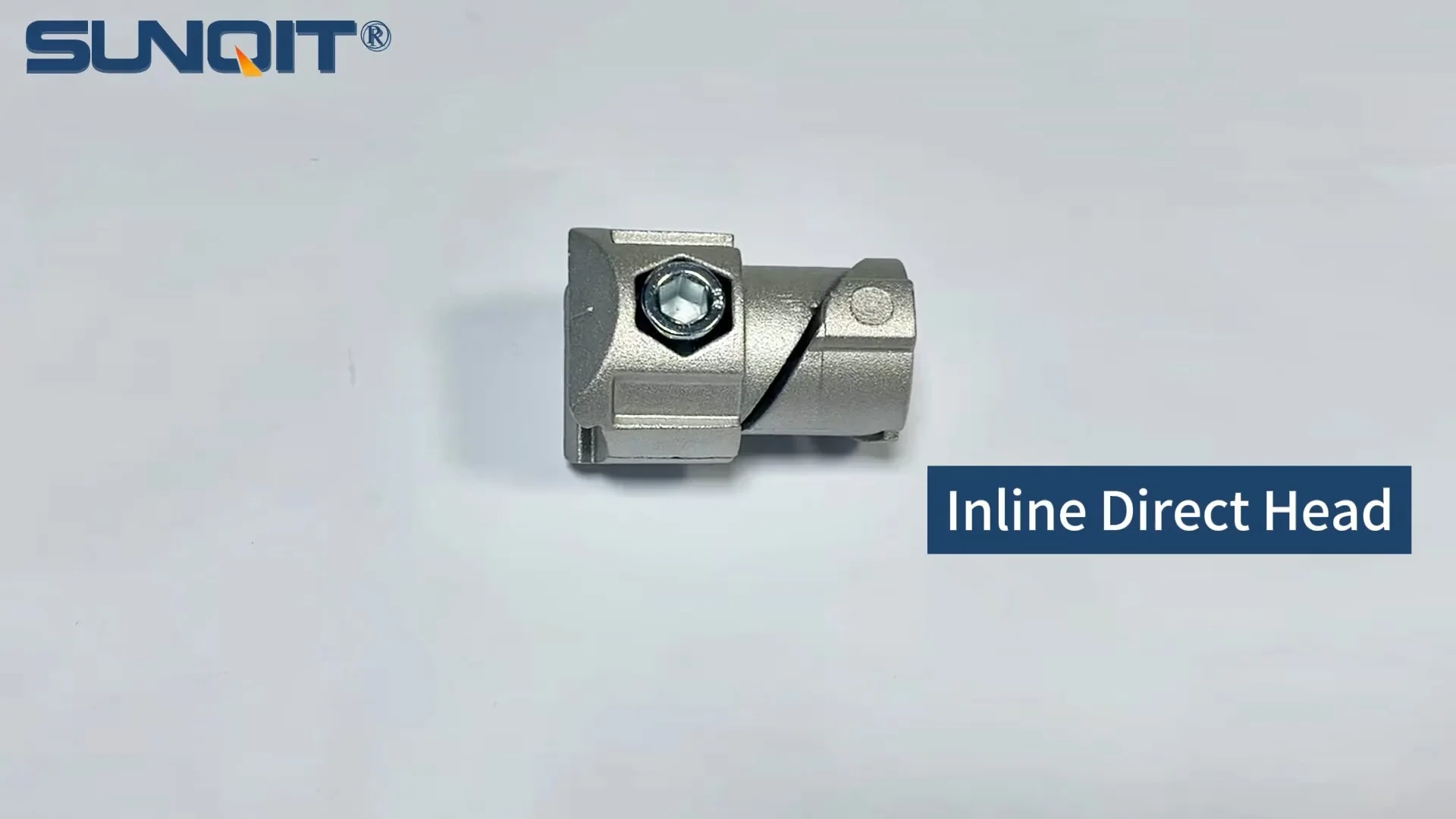
Aluminum pipe joint inside connection used for two pcs 28pcs aluminum pipe connection in straight angle,it connects two pcs pipe from inside.
In the fast-paced world of manufacturing and production, efficiency isn't just a buzzword—it's the backbone of success. Every second saved, every workflow streamlined, and every resource optimized translates to better productivity, lower costs, and a stronger bottom line. At the heart of this efficiency revolution lies the lean pipe system, a modular solution that has transformed how factories, warehouses, and assembly lines operate. And within these systems, one component stands out as a quiet workhorse: the internal straight aluminum joint. Often overlooked but critical to the system's flexibility and durability, this small but mighty part plays a pivotal role in holding everything together—literally and figuratively. In this article, we'll take a deep dive into the world of lean pipe systems, explore why aluminum has become the material of choice, and unpack exactly how the internal straight aluminum joint elevates these systems to new heights of performance.
Understanding Lean Pipe Systems: The Backbone of Modern Manufacturing
Before we zoom in on the internal straight aluminum joint, let's first ground ourselves in what lean pipe systems are and why they matter. Lean pipe systems—also known as "flexible pipe systems"—are modular frameworks built from pipes, joints, and accessories that can be configured into workbenches, material racks, conveyors, turnover trolleys, and more. Born from the principles of lean manufacturing, their core purpose is to eliminate waste, improve workflow, and adapt quickly to changing production needs. Unlike rigid, fixed structures (think traditional steel workbenches or welded racks), lean pipe systems are designed to be reconfigured, extended, or repurposed with minimal effort—no welding, no heavy tools, just simple assembly and disassembly.
Historically, lean pipe systems relied on steel pipes coated in plastic (often called "lean tubes" or "PE coated lean pipes") and plastic or metal joints. While effective, these systems had limitations: steel is heavy, making reconfiguration labor-intensive; plastic coatings can wear over time; and corrosion was a concern in humid or harsh environments. Enter aluminum lean pipe systems. By swapping steel for aluminum, manufacturers unlocked a new level of performance: aluminum is lightweight (about 1/3 the weight of steel), naturally corrosion-resistant, and just as strong when paired with the right joints. This shift not only made lean systems easier to handle but also extended their lifespan, making them a favorite in industries ranging from automotive and electronics to pharmaceuticals and logistics.
Meet the Unsung Hero: The Internal Straight Aluminum Joint
If aluminum lean pipes are the bones of the system, then joints are the ligaments—connecting components, distributing weight, and enabling flexibility. Among the many types of joints available (90° joints, 45° joints, parallel joints, crossing joints), the internal straight aluminum joint holds a special place. As the name suggests, it's designed to create straight, rigid connections between two aluminum pipes, but its "internal" design sets it apart from external joints. Unlike external joints, which clamp around the outside of the pipes, internal straight aluminum joints fit inside the hollow aluminum pipes, creating a seamless, low-profile connection that's both stronger and more aesthetically pleasing.
Let's break down its design. Typically made from high-strength aluminum alloy (often 6063-T5, a material prized for its balance of strength, corrosion resistance, and machinability), the internal straight aluminum joint features a cylindrical body with grooves or threads that lock into the inner walls of the aluminum pipe. Some designs include a setscrew or bolt that tightens against the pipe's inner surface, ensuring a secure, rattle-free connection. Others use a friction-fit design, where the joint's diameter is slightly larger than the pipe's inner diameter, creating a snug hold when inserted and twisted. This internal connection not only distributes stress more evenly across the pipe (reducing the risk of bending or cracking) but also eliminates the bulges caused by external joints, making the system sleeker and easier to integrate with accessories like roller tracks, caster wheels, or workbench panels.
But what truly makes the internal straight aluminum joint indispensable is its versatility. While its primary job is to create straight runs (e.g., the legs of a workbench, the uprights of a material rack, or the rails of a conveyor), it also serves as a foundation for more complex configurations. Pair it with a 90° aluminum crossing joint, and you can build a sturdy shelf; combine it with a caster wheel, and you've got a mobile trolley. Its simplicity belies its importance: without a reliable straight joint, even the most well-designed lean system would lack the stability to support daily operations.

Why Aluminum? The Material Science Behind the Joint
To appreciate the internal straight aluminum joint, we need to understand why aluminum is the material of choice. Let's start with the basics: aluminum is a lightweight metal with a density of just 2.7 g/cm³, compared to steel's 7.8 g/cm³. This means that an aluminum lean pipe system is significantly easier to move, reconfigure, or transport than a steel one—critical for factories where layouts change frequently. Imagine needing to shift a workbench across the shop floor: with steel, you might need two people and a dolly; with aluminum, one person can often manage it alone.
But lightweight doesn't mean weak. Aluminum alloys like 6063-T5 are heat-treated to enhance their strength, making them more than capable of supporting the loads typical in manufacturing environments—think tools, components, or finished products weighing up to 50 kg per linear meter (depending on the pipe diameter and joint spacing). What's more, aluminum naturally forms a thin oxide layer on its surface, which acts as a barrier against corrosion. This makes aluminum lean pipe systems ideal for use in damp environments (like food processing plants), cleanrooms (electronics manufacturing), or even outdoor settings, where steel would rust and plastic would degrade.
The internal straight aluminum joint leverages these material benefits perfectly. By using the same aluminum alloy as the pipes, it ensures compatibility and uniform stress distribution—no mismatched expansion or contraction due to temperature changes, which can weaken connections over time. The precision machining of the joint (often CNC-machined for tight tolerances) ensures a snug fit with the pipe, eliminating play or wobble. And because aluminum is malleable, the joint can be designed with intricate features—like internal threads, locking tabs, or rotation stops—that enhance functionality without adding bulk.

Applications: Where the Internal Straight Aluminum Joint Shines
Now that we understand its design and material, let's explore where the internal straight aluminum joint is put to work. Its most common application is in workbenches —the workhorses of any production line. A typical aluminum workbench (like "Workbench E (single deck-without caster)" from many suppliers) relies on internal straight aluminum joints to connect the vertical legs to the horizontal rails, creating a stable frame that supports the work surface (often an aluminum honeycomb panel or plywood). The joints ensure the bench doesn't wobble during use, even when workers are applying force (e.g., assembling parts, using power tools).
Another key application is material racks . Take "Material Rack B (3 row and 3 floor)", a common design for storing components or finished goods. Here, internal straight aluminum joints connect the vertical uprights to the horizontal support beams, which in turn hold the shelves or roller tracks. The joints' strength is crucial here: a fully loaded rack might hold hundreds of kilograms, and any weakness in the connections could lead to collapse. The internal design also keeps the rack's profile clean, preventing items from catching on external joint bulges as they're loaded or unloaded.
Conveyors and roller tracks are another area where the internal straight aluminum joint excels. Roller tracks (like "38 aluminum roller track yellow" or "40 steel roller track black ESD wheel") use aluminum pipes as side rails, with the joints connecting these rails to support brackets or the main frame. The joints' precision ensures the rails are perfectly aligned, so products glide smoothly along the rollers without jamming. In dynamic environments where conveyors are reconfigured to handle different product sizes, the joint's quick-disconnect design (often just a setscrew to loosen) makes adjustments fast and easy.
Even mobile equipment like turnover trolleys benefits from the internal straight aluminum joint. Trolleys need to be lightweight for maneuverability but strong enough to carry heavy loads. By using aluminum pipes connected with internal joints, manufacturers create a frame that's both light and rigid, paired with caster wheels for mobility. The joints also allow for easy customization: adding a shelf, a tool holder, or a side guard is as simple as cutting a pipe to length and inserting a joint.
Comparing Joints: Why Internal Straight Aluminum Beats the Alternatives
To truly appreciate the internal straight aluminum joint, let's compare it to other common joint types. Below is a table contrasting it with external aluminum joints, plastic lean pipe joints, and traditional steel welded joints across key metrics:
| Feature | Internal Straight Aluminum Joint | External Aluminum Joint | Plastic Lean Pipe Joint | Steel Welded Joint |
|---|---|---|---|---|
| Material | Aluminum alloy (6063-T5) | Aluminum alloy (6063-T5) | Nylon or PP | Mild steel |
| Load Capacity (per joint) | Up to 150 kg | Up to 120 kg | Up to 80 kg | Unlimited (weld strength) |
| Installation Time | 5-10 minutes (setscrew) | 5-10 minutes (clamp-on) | 3-5 minutes (snap-fit) | 30+ minutes (welding, grinding) |
| Reconfigurability | High (reusable, no damage) | High (reusable, no damage) | Medium (plastic can wear with reuse) | Low (permanent, must cut/weld new) |
| Corrosion Resistance | Excellent (aluminum oxide layer) | Excellent | Good (plastic resists corrosion) | Poor (requires painting/coating) |
| Aesthetic Appeal | High (sleek, flush design) | Medium (bulges from external clamp) | Medium (visible plastic joints) | Low (rough welds, requires finishing) |
As the table shows, the internal straight aluminum joint strikes an unbeatable balance of strength, speed, and flexibility. While steel welded joints offer unlimited load capacity, they're permanent and time-consuming to install—making them impractical for lean environments that value adaptability. Plastic joints are cheap and quick to install but lack the load capacity and durability needed for heavy use. External aluminum joints are strong and reconfigurable, but their bulky design can interfere with workflow and aesthetics. The internal straight aluminum joint, by contrast, offers high load capacity, easy installation, excellent corrosion resistance, and a clean look—making it the top choice for modern lean pipe systems.
Installation Tips: Getting the Most Out of Your Internal Straight Aluminum Joints
Even the best components perform poorly if installed incorrectly. Here are some tips to ensure your internal straight aluminum joints deliver maximum performance:
- Measure Twice, Cut Once: Aluminum pipes are easy to cut with a hacksaw or pipe cutter, but accurate measurements are critical. A misaligned pipe will put stress on the joint, reducing its load capacity and lifespan. Use a square to ensure cuts are perpendicular to the pipe's axis.
- Deburr the Pipes: After cutting, use a deburring tool to remove sharp edges from the pipe's inner and outer diameters. Sharp edges can damage the joint's surface or prevent a snug fit, leading to loosening over time.
- Clean Before Assembly: Aluminum pipes and joints can accumulate dust, oil, or fingerprints during storage. Wipe them with a clean, dry cloth before assembly to ensure the joint's setscrew or friction fit makes solid contact.
- Torque Setscrews Properly: If your joint uses setscrews (common in many designs), use a torque wrench to tighten them to the manufacturer's specification (typically 3-5 Nm for M6 screws). Over-tightening can strip the threads or deform the pipe; under-tightening can lead to loosening.
- Check Alignment: After assembling a section, use a level to ensure pipes are straight and square. Misalignment can cause the system to wobble or put uneven stress on joints, leading to premature failure.
- Inspect Regularly: Like any mechanical component, internal straight aluminum joints need periodic checks. Tighten any loose setscrews, replace joints that show signs of wear (e.g., stripped threads, bent bodies), and clean joints if they're exposed to debris or chemicals.
The Future of Lean Manufacturing: Why the Internal Straight Aluminum Joint Will Remain Essential
As manufacturing continues to evolve—with trends like automation, customization, and sustainability driving change—lean pipe systems will only grow in importance. And at the heart of these systems, the internal straight aluminum joint will remain a critical component. Here's why:
Sustainability: Aluminum is 100% recyclable, with recycled aluminum using just 5% of the energy required to produce new aluminum. As companies strive to reduce their carbon footprints, aluminum lean pipe systems (with joints that can be reused indefinitely) will replace disposable or hard-to-recycle alternatives.
Customization: Modern manufacturing demands flexibility to produce small batches or personalized products. Internal straight aluminum joints enable quick reconfiguration of workbenches, racks, and conveyors, allowing factories to adapt to new orders or product designs in hours rather than days.
Integration with Automation: As cobots (collaborative robots) and automated guided vehicles (AGVs) become more common, factories need lightweight, reconfigurable infrastructure that works alongside these machines. Aluminum systems with internal joints are easy to move out of the way of AGVs or reposition to optimize cobot access.
Cost Efficiency: While aluminum lean pipe systems may have a higher upfront cost than plastic or steel, their durability and reusability make them cheaper in the long run. A well-maintained aluminum system can last 10+ years, compared to 3-5 years for plastic or steel (which may need replacement due to corrosion or wear).
Conclusion: The Small Joint That Powers Big Efficiency
In the grand scheme of manufacturing, the internal straight aluminum joint may seem like a small detail. But as we've explored, it's a detail that makes a big difference. By connecting aluminum lean pipes with strength, precision, and flexibility, it enables the lean pipe systems that keep modern factories efficient, adaptable, and productive. From workbenches to material racks, conveyors to trolleys, this unassuming component is the glue that holds it all together—quietly ensuring that production lines run smoothly, workers stay safe, and businesses stay competitive.
So the next time you walk through a factory, take a moment to look at the workbenches and racks around you. Chances are, you'll see aluminum pipes connected by internal straight joints—working tirelessly to support the manufacturing processes that shape our world. And now, you'll know just how much thought, design, and engineering went into that simple, yet essential, component.