- Company Articles
- Products and Technology
- Product knowledge
- Internal Straight Aluminum Joint Load Capacity: What You Need to Know

Internal Straight Aluminum Joint Load Capacity: What You Need to Know
Related Product
Internal straight aluminum joint
Aluminum pipe joint inside connection used for two pcs 28pcs aluminum pipe connection in straight angle,it connects two pcs pipe from inside.
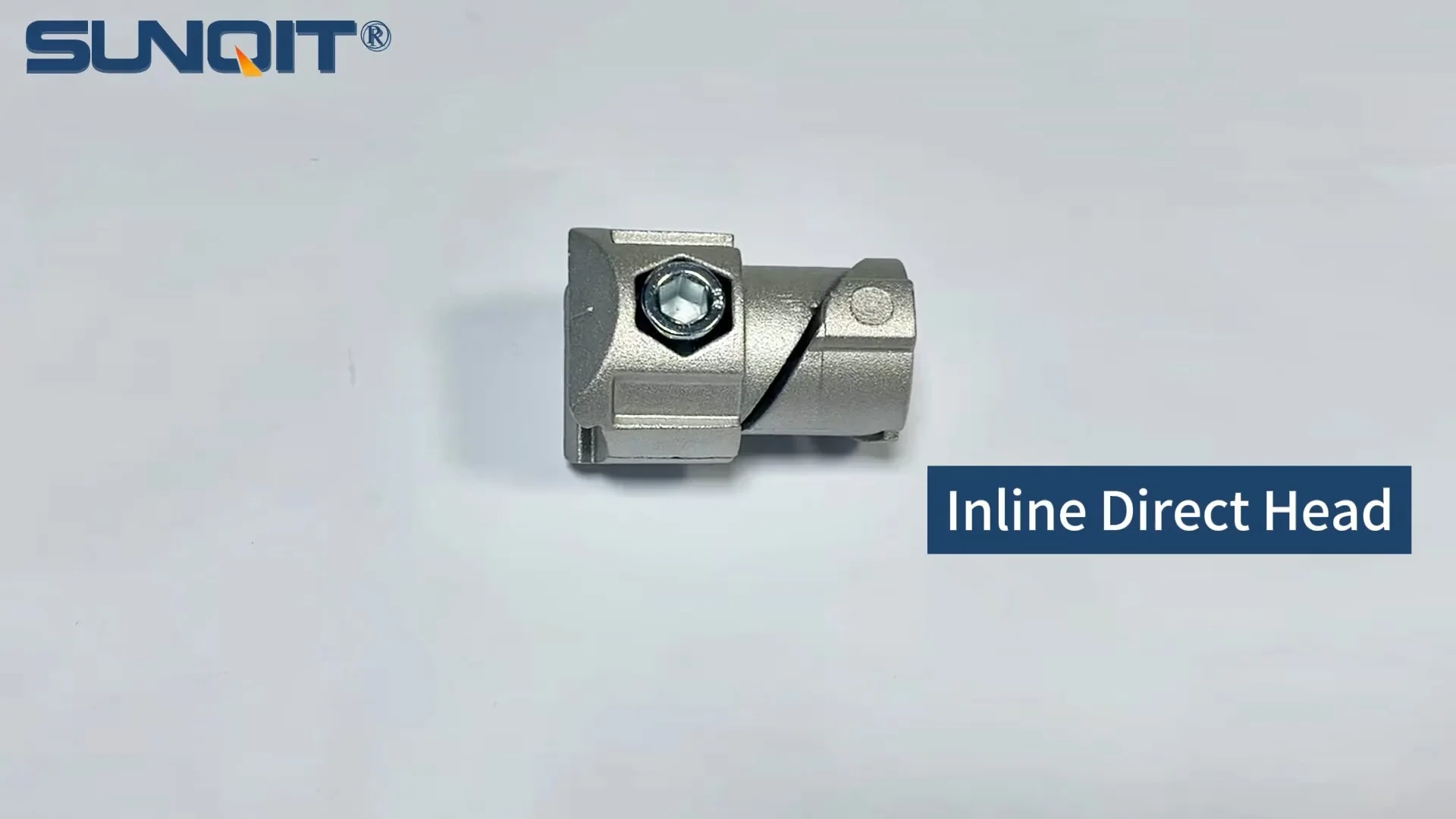
Walk into any modern manufacturing facility, and you'll likely spot a symphony of aluminum structures: workbenches humming with activity, material racks stacked with components, and conveyor systems gliding products from one station to the next. Behind this seamless operation lies an unsung hero—the internal straight aluminum joint. These small, unassuming components are the glue that holds aluminum profiles together, ensuring stability, safety, and efficiency in everything from lean production lines to custom workbenches. But here's the thing: not all joints are created equal, and their load capacity—the maximum weight they can safely support—can make or break your setup. In this guide, we'll dive deep into what internal straight aluminum joints are, how their load capacity is determined, and why getting it right matters for your operations.
What Are Internal Straight Aluminum Joints?
Before we get into load capacity, let's clarify what an internal straight aluminum joint is. If you're familiar with aluminum profiles—those T-slot extrusions used to build everything from machine guards to assembly workbenches—you know they rely on connectors to form rigid structures. Internal straight aluminum joints, as the name suggests, are designed to fit inside the T-slot of aluminum profiles, creating a straight, inline connection between two or more profiles. Unlike external joints, which clamp onto the outside of profiles, internal joints sit flush, offering a cleaner look and often a more streamlined connection.
These joints are typically made from high-grade aluminum alloys, chosen for their strength-to-weight ratio and resistance to corrosion. They feature threaded holes or channels that accept bolts, which tighten against the profile's inner walls to secure the joint in place. Think of them as the backbone of your aluminum structure: when you build a workbench or a material rack, the internal straight joint ensures that vertical posts don't wobble, horizontal beams don't sag, and the entire setup can handle the daily grind of production.
Commonly paired with aluminum profiles like the 2020, 3030, or 4040 series (think 20mmx20mm, 30mmx30mm, etc.), these joints are versatile enough to work with both light-duty setups (like small workbenches) and heavy-duty applications (like industrial material racks). But their true value lies in their precision: a well-designed internal joint creates a connection so tight that the structure behaves as a single, unified piece—until the load capacity is pushed too far.
Key Factors That Influence Load Capacity
Load capacity isn't just a number on a spec sheet; it's a result of several interconnected factors. Let's break down the most critical ones that determine how much weight an internal straight aluminum joint can handle.
1. Material Quality: The Alloy Makes a Difference
Not all aluminum is the same. Internal straight joints are typically crafted from aluminum alloys like 6061 or 6063, known for their strength and machinability. 6061, for example, contains magnesium and silicon, giving it excellent tensile strength (around 310 MPa) and hardness—ideal for joints that need to withstand heavy loads. 6063, while slightly less strong, offers better corrosion resistance, making it a go-to for humid or outdoor environments. The key here is purity: low-quality alloys with impurities or inconsistent composition can weaken the joint, leading to premature failure even under moderate loads.
Another material factor is the joint's wall thickness. Thicker walls mean more material to distribute stress, but there's a balance: too thick, and the joint might not fit into the profile's T-slot; too thin, and it can't handle torque from tightening bolts. Reputable suppliers often specify the wall thickness (e.g., 1.5mm, 2.0mm) in their product details—keep an eye on this when comparing options.
2. Design: Threads, Fit, and Stress Distribution
An internal straight joint's design is a masterclass in engineering. Let's start with the threads: most joints use metric threads (like M5 or M6) to secure bolts, and the quality of these threads directly impacts load capacity. Threads that are shallow, uneven, or poorly cut can strip under torque, reducing the joint's ability to grip the profile. High-quality joints feature precision-machined threads with consistent depth and pitch, ensuring a tight, secure fit.
Then there's the fit with the aluminum profile. The joint must slide smoothly into the profile's T-slot but not have gaps—otherwise, stress (stress concentration) occurs at the contact points. A snug fit ensures that weight is distributed evenly across the joint and profile, rather than pooling at weak spots. Some joints even have knurled or textured surfaces to friction, preventing slippage under load.
3. Installation: Torque, Alignment, and Human Error
You could have the strongest joint on the market, but if it's installed incorrectly, its load capacity plummets. The biggest culprit? Torque. Bolts securing the joint need to be tightened to a specific torque (usually specified by the manufacturer, e.g., 8-10 Nm for M6 bolts). Too loose, and the joint shifts under load; too tight, and you risk stripping the threads or warping the joint itself. Invest in a torque wrench—this small tool can save you from costly failures down the line.
Alignment is another installation factor. If two profiles are misaligned when joined—say, one is slightly tilted relative to the other—the joint will bear uneven stress. Over time, this can bend the joint or crack the profile's T-slot. Always use a level or straightedge to ensure profiles are perfectly straight before tightening the joint.
4. Environmental and Operational Conditions
Load capacity isn't static; it changes based on where and how the joint is used. For example, joints in cold environments (below 0°C) may become brittle, while those in high heat (above 60°C) can lose tensile strength. Corrosive environments—think factories with chemical exposure or coastal areas with salt air—can eat away at uncoated aluminum, weakening the joint over time. That's why some joints come with anodized finishes (a protective oxide layer) or are made from corrosion-resistant alloys like 5052.
Dynamic loads—weight that moves or vibrates, like parts sliding on a conveyor—also take a toll. A joint rated for 200kg static load (where weight is stationary) might only handle 150kg dynamically, as vibrations cause repeated stress that fatigues the material. If your setup involves movement (e.g., roller conveyors or turnover trolleys), factor this into your load capacity calculations.
5. Profile Compatibility: It Takes Two to Tango
An internal straight joint is only as strong as the aluminum profile it's paired with. A heavy-duty joint won't perform well with a flimsy profile, and vice versa. Profile size matters: a 4040 aluminum profile (40mmx40mm) with a 2.0mm wall thickness can support more weight than a 2020 profile (20mmx20mm) with a 1.0mm wall. The profile's T-slot size also plays a role—wider slots can accommodate larger joints with more contact area, distributing load more effectively.
Some suppliers offer compatibility charts (e.g., "Internal Straight Joint X works with 3030 and 4040 profiles")—always cross-check this before purchasing. Mixing incompatible joints and profiles is a recipe for failure.

How Load Capacity Is Tested (And What the Numbers Mean)
When a supplier lists a joint's load capacity as "300kg," what does that actually mean? Is it the maximum weight it can hold before breaking? Or the weight it can hold safely for years? Let's demystify the testing process and the terminology.
Industry Standards: ISO, ASTM, and Beyond
Most manufacturers follow international standards like ISO 10248 (for aluminum structural components) or ASTM B221 (for aluminum alloy extrusions) when testing joints. These standards outline strict protocols for static load testing, dynamic load testing, and fatigue testing to ensure consistency across the industry.
Static Load Testing: The Basics
Static load testing is the most common method. Here's how it works: the joint is installed in a test rig with two aluminum profiles (matching real-world dimensions). A gradually increasing weight is applied to the end of one profile (simulating a load on a workbench or rack), and sensors measure deflection (how much the structure bends) and stress. The test stops when the joint deforms permanently (yield point) or breaks (ultimate failure). The "safe working load" (SWL) is typically 25-50% of the ultimate failure load, providing a safety margin.
For example, if a joint fails at 600kg, its SWL might be listed as 300kg (50% margin). This margin accounts for variables like installation errors, environmental stress, and wear over time. Never exceed the SWL—even if the joint "feels" strong, you're gambling with structural integrity.
Dynamic and Fatigue Testing: For Moving Loads
Static testing covers stationary loads, but many setups involve movement. Dynamic load testing applies sudden, short-term loads (e.g., dropping a box onto a workbench) to simulate impact. Fatigue testing, on the other hand, applies repeated, cyclic loads (e.g., 10,000 cycles of 200kg up and down) to check for wear over time. Joints used in conveyor systems or material handling trolleys often undergo these tests, as vibrations and movement can weaken the material over thousands of cycles.
Understanding the Specs: SWL vs. Ultimate Load
When shopping for joints, you'll see terms like "safe working load (SWL): 200kg" and "ultimate load: 400kg." SWL is the maximum weight the joint can support safely and repeatedly without damage. Ultimate load is the point at which the joint fails (breaks or deforms permanently). Always use SWL as your guide—ultimate load is a worst-case scenario, not a target.
Some suppliers also list "dynamic load capacity" (for moving loads) or "fatigue load capacity" (for repeated use). If your application involves movement, prioritize these specs over static load alone.

Real-World Applications: Where Load Capacity Matters Most
To put this in perspective, let's look at three common setups where internal straight aluminum joint load capacity is critical. These examples show how the right (or wrong) joint choice impacts daily operations.
1. Aluminum Workbenches: Stability for Precision Work
Aluminum workbenches are a staple in electronics assembly, lab environments, and small-part manufacturing. A typical setup might use a 4040 aluminum profile frame with an internal straight joint at each corner, supporting a plywood or aluminum honeycomb panel top. Let's say the workbench is 1.5m long and 0.8m wide—what load capacity do the joints need?
Daily use might involve tools (5-10kg), components (20-30kg), and a worker leaning on the edge (70-80kg). Total static load could hit 120kg, but factor in dynamic loads (e.g., placing a heavy toolbox down quickly) and you're looking at 150kg+. A joint with a SWL of 200kg would handle this comfortably, but a 100kg SWL joint? Over time, the corners might start to sag, wobble, or even fail, leading to misaligned work surfaces and frustrated employees.
Take the "Workbench E (Single Deck-Without Caster)" from many suppliers—a simple, no-frills bench often used in light assembly. Its frame relies on internal straight joints to connect vertical and horizontal profiles. Choose a joint with insufficient load capacity here, and you risk the bench toppling when loaded, endangering both workers and products.
2. Material Racks: Stacking Safety
Material racks like "Material Rack B (3 Row and 3 Floor)" are designed to hold boxes, bins, or components in warehouses and production areas. Each shelf can hold 50-100kg, and with three floors, the total load on the frame can exceed 300kg. The internal straight joints at the rack's corners and shelf supports must distribute this weight evenly—if one joint fails, the entire shelf could collapse, spilling contents and causing downtime.
Consider a scenario where a rack uses underrated joints. Over time, as boxes are loaded and unloaded, the joints loosen, leading to shelf sag. Eventually, a shelf might tilt, causing boxes to slide off. Not only is this a safety hazard, but it disrupts workflow as teams stop to clean up and repair the rack. Investing in joints with a SWL of 150kg per corner (well above the shelf's 100kg load) prevents this, ensuring the rack stays stable for years.
3. Conveyor Systems: Smooth Movement Under Stress
Roller conveyors are the arteries of production lines, moving products from assembly to packaging. Many use aluminum guide rails (like Aluminum Guide Rail A or B) supported by internal straight joints. These joints must handle not just the weight of the conveyor itself but also the dynamic load of products sliding over rollers (e.g., 20kg boxes moving at 0.5m/s). A weak joint here could cause the guide rail to bend, jamming products and halting the line.
Dynamic load is key here: even if the static load (conveyor + products at rest) is within the joint's SWL, the repeated impact of products hitting the rollers can fatigue the joint. For example, a conveyor running 8 hours a day might see 1,000+ product passes—each jolt weakening the joint slightly. A joint with high fatigue resistance (tested to 10,000+ cycles) ensures the conveyor stays aligned, keeping production on track.
Choosing the Right Joint: A Step-by-Step Guide
Now that you understand load capacity, how do you pick the right internal straight aluminum joint for your project? Follow these steps to avoid guesswork.
Step 1: Calculate Your Total Load
Start by estimating the maximum weight your structure will support. For a workbench, add up the weight of the top panel, tools, materials, and any dynamic loads (e.g., dropping items). For a material rack, multiply the weight per shelf by the number of shelves, plus the weight of the rack itself. Be generous—overestimating is better than underestimating.
Step 2: Determine the Number of Joints
Next, figure out how many internal straight joints will bear the load. In a rectangular frame (like a workbench), each corner joint shares the load. For example, a 4-legged workbench has 4 vertical joints—divide the total load by 4 to get the load per joint. If total load is 200kg, each joint needs to handle 50kg. But remember: joints in the middle (e.g., shelf supports) might bear additional weight, so calculate those separately.
Step 3: Match Joint SWL to Load Per Joint
Once you have the load per joint, choose a joint with a SWL at least 50% higher than this number (to account for safety margins and dynamic loads). Using the workbench example: 50kg per joint x 1.5 = 75kg SWL per joint. A joint with a 100kg SWL would be ideal here.
Step 4: Check Profile Compatibility
Don't forget to ensure the joint fits your aluminum profile. A joint designed for 3030 profiles won't work with 4040 profiles, and vice versa. Check the supplier's specs for compatible profile sizes (e.g., "Fits 3030, 4040, and 4545 profiles") and T-slot dimensions (e.g., 8mm slot width). If you're unsure, ask for a sample to test fit before ordering in bulk.
Step 5: Consider the Environment
Finally, factor in your workspace conditions. If you're in a humid area, opt for anodized joints to resist corrosion. For high-temperature environments, choose a heat-resistant alloy. For dynamic setups (conveyors, trolleys), prioritize joints with high fatigue load ratings.
Common Misconceptions About Load Capacity
Even seasoned engineers can fall prey to myths about joint load capacity. Let's debunk three of the most common ones.
Myth 1: "Higher Load Capacity Is Always Better"
Not necessarily. A joint with a 500kg SWL might be overkill for a workbench that only needs 100kg. Over-specifying adds unnecessary cost (heavier joints = higher price) and weight, making the structure bulkier than needed. Focus on matching the joint's SWL to your actual load—plus a 50% safety margin—and you'll save money without sacrificing safety.
Myth 2: "Tighter Bolts Mean Higher Load Capacity"
It's tempting to crank bolts as tight as possible, but this can backfire. Over-tightening strips threads, warps the joint, or even cracks the aluminum profile. Always follow the manufacturer's torque specs (e.g., "M6 bolt: 8 Nm"). A torque wrench ensures you hit the sweet spot—tight enough to secure the joint, but not so tight that you damage it.
Myth 3: "All Internal Straight Joints Are the Same"
Walk into a hardware store, and you might see generic "aluminum joints" for $5 apiece. But these often use low-grade alloys, poor threading, and inconsistent dimensions. A $15 joint from a reputable supplier (like a lean system supplier specializing in aluminum profiles) will have better material, precision machining, and tested load capacity. Don't skimp—cheap joints cost more in the long run when they fail.
Maintenance Tips to Preserve Load Capacity
Even the best internal straight aluminum joints need care to maintain their load capacity. Here are four simple maintenance habits to extend their lifespan:
- Inspect Regularly: Check joints monthly for loose bolts, cracks, or corrosion. Tighten bolts to spec if they're loose; replace joints with cracks or stripped threads immediately.
- Lubricate Threads: Apply a small amount of anti-seize lubricant to bolts before installation. This prevents corrosion and makes future adjustments easier without damaging threads.
- Clean Corrosion: If you spot rust or oxidation, gently scrub the joint with a soft brush and mild detergent. For anodized joints, avoid abrasive cleaners that can wear away the protective layer.
- Reinforce High-Stress Areas: For joints under constant heavy load (e.g., shelf supports), add gussets or extra bolts to distribute stress. This simple upgrade can boost effective load capacity by 30-50%.
The Bottom Line: Invest in the Right Joint, Avoid the Headache
Internal straight aluminum joints may be small, but their role in your aluminum structures is enormous. Getting their load capacity right ensures safety, efficiency, and longevity—while getting it wrong can lead to downtime, injuries, and costly repairs. By understanding the factors that influence load capacity, how it's tested, and how to choose the right joint for your setup, you'll build structures that stand the test of time.
Remember: when in doubt, consult a supplier who specializes in aluminum profiles and lean system components. Reputable suppliers (like those listed as "lean pipe supplier" or "aluminum profile supplier") can provide load capacity charts, compatibility guidance, and even custom solutions for unique setups. After all, the goal isn't just to build a structure—it's to build one that works as hard as your team does.
| Joint Model | Compatible Profile Size | Material | Safe Working Load (SWL) | Ultimate Load | Ideal Application |
|---|---|---|---|---|---|
| Basic Internal Straight Joint | 2020, 3030 | 6063 Aluminum | 100kg | 200kg | Small workbenches, light shelving |
| Heavy-Duty Internal Straight Joint | 4040, 4545 | 6061 Aluminum | 250kg | 500kg | Material racks, conveyor frames |
| Corrosion-Resistant Internal Straight Joint | 3030, 4040 | 5052 Aluminum (Anodized) | 200kg | 400kg | Outdoor setups, humid environments |
| Dynamic Load Internal Straight Joint | 4040, 6060 | 6061-T6 Aluminum | 180kg (dynamic) | 360kg | Roller conveyors, turnover trolleys |