- Company Articles
- Products and Technology
- Installation And Maintenance
- Internal Straight Aluminum Joint Maintenance Schedule: How Often to Inspect?

Internal Straight Aluminum Joint Maintenance Schedule: How Often to Inspect?
Related Product
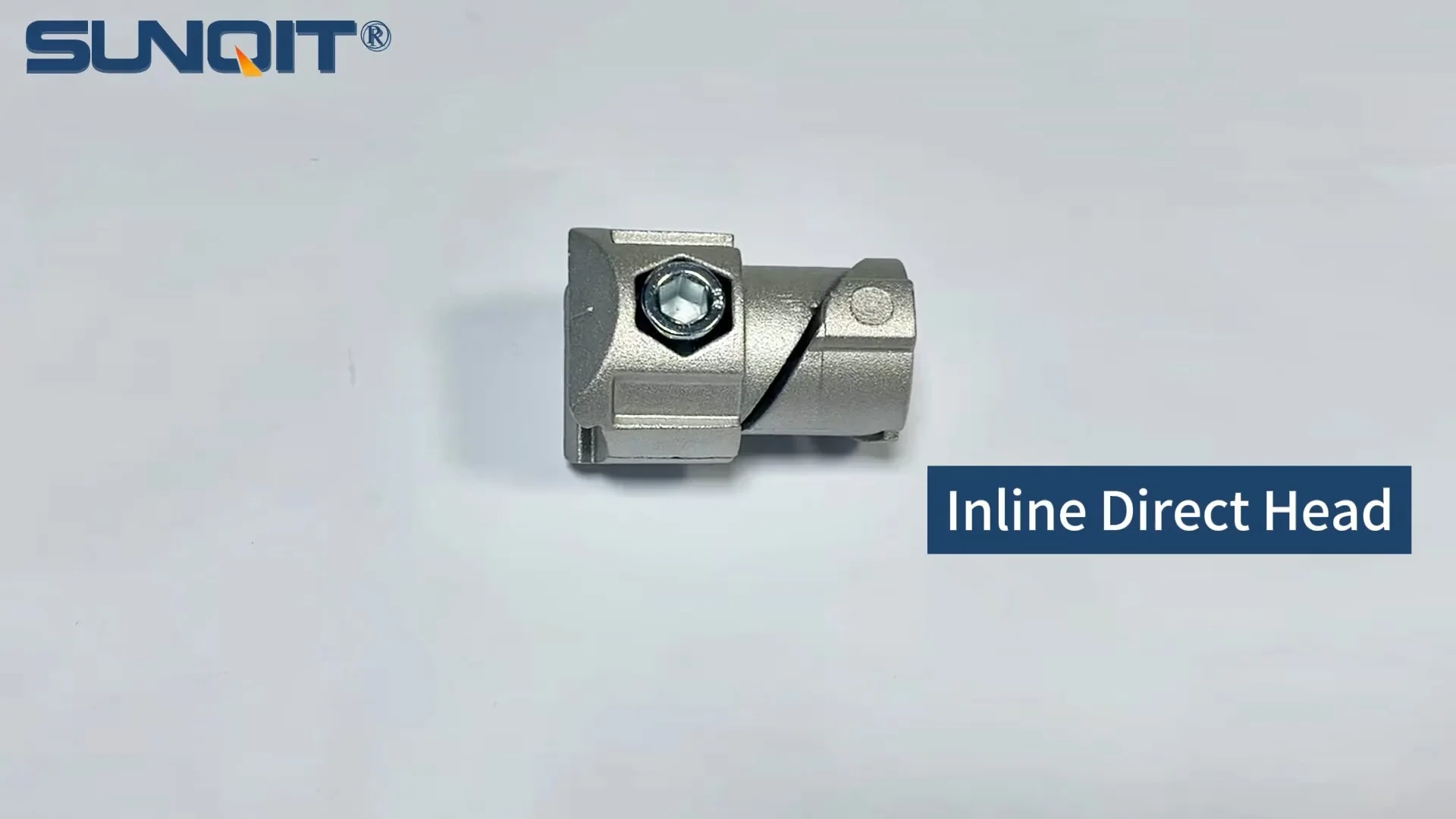
Internal straight aluminum joint
Aluminum pipe joint inside connection used for two pcs 28pcs aluminum pipe connection in straight angle,it connects two pcs pipe from inside.
Walk into any modern factory, warehouse, or workshop, and you'll likely spot a maze of workbenches, material racks, and assembly lines humming with activity. Behind that seamless workflow lies a hidden hero: the internal straight aluminum joint. These unassuming components are the glue that holds together aluminum profiles, workbenches, and even entire lean systems, ensuring stability, precision, and safety. But like any hardworking part of your operation, they need care. Ignore them, and you could be looking at wobbly workstations, delayed production, or worse—safety hazards. So, how often should you inspect these critical joints? Let's dive in.
What Are Internal Straight Aluminum Joints, Anyway?
Before we talk maintenance, let's get clear on what we're dealing with. Internal straight aluminum joints are specialized connectors designed to link aluminum profiles or pipes in a straight line, creating rigid, load-bearing structures. Unlike external joints that clamp around pipes, these fit inside the hollow aluminum profile, offering a cleaner look and often stability—think of them as the backbone of your workbench or material rack.
Crafted from durable aluminum alloys, they're lightweight yet strong, resistant to corrosion, and compatible with a range of aluminum pipe accessories. You'll find them in everything from simple workbenches (like the "Workbench E (Single Deck-Without Caster)" you might use for electronics assembly) to complex lean system setups that streamline production flow. Their job? To keep parts aligned, absorb vibrations, and maintain the structural integrity of whatever they're building.
Why Maintenance Matters: The Cost of Letting Joints Slip
Imagine this: It's a Tuesday morning at your facility. The assembly line is running full tilt, and a technician is rushing to finish a batch of circuit boards on a workbench. Suddenly, the tabletop shifts—just a little—and a sensitive component slides off, hitting the floor. The technician freezes. Production stalls. An hour later, your team traces the issue: a loose internal straight aluminum joint that had been slowly working its way undone for weeks. Sound familiar? It's a scenario that plays out in workshops worldwide, and it's entirely preventable.
Neglecting joint maintenance isn't just about occasional slips. Over time, loose or damaged joints can:
- Compromise safety : A wobbly workbench or rack could collapse under load, risking injury to staff.
- Reduce efficiency : Misaligned structures slow down workflows—imagine trying to slide parts along a roller track that's tilted due to a faulty joint.
- Shorten equipment lifespan : When joints fail, surrounding aluminum profiles take extra stress, leading to premature wear or bending.
- Raise costs : Emergency repairs, replacement parts, and downtime add up fast. One study by the Manufacturing Institute found that unplanned downtime costs U.S. factories an average of $50 billion annually—much of it tied to neglected maintenance.
"We used to treat joint checks as an afterthought," says Maria Gonzalez, maintenance supervisor at a California-based electronics manufacturer. "Then we had a material rack collapse because a corroded internal joint gave way. It took two days to clean up, replace the rack, and resume production. Now, we inspect every joint on a strict schedule. The peace of mind—and the savings—are worth it."

Factors That Shape Your Inspection Schedule
There's no one-size-fits-all answer to "how often to inspect." The right schedule depends on how, where, and how much you use your aluminum structures. Let's break down the key factors:
1. Usage Intensity: How Hard Are Your Joints Working?
A workbench in a quiet R&D lab gets far less abuse than one on a busy automotive assembly line. Joints in high-traffic areas—think workstations where operators stand for 8+ hours, or material racks loaded and unloaded multiple times daily—need more frequent checks. As a rule of thumb:
High-intensity use (e.g., assembly line workbenches, roller tracks for heavy parts): Inspect joints weekly.
Moderate use (e.g., storage racks, office workstations): Biweekly inspections should suffice.
Low-intensity use (e.g., rarely accessed tool racks): Monthly checks may be enough.
2. Environmental Conditions: Rust, Moisture, and More
Aluminum is naturally corrosion-resistant, but that doesn't make it invincible. If your facility is humid (like a food processing plant), exposed to chemicals (such as a pharmaceutical lab), or located in a coastal area with salt air, joints are more likely to degrade. Even indoor spaces with poor ventilation can trap moisture, leading to hidden rust on joint threads or weakening of aluminum pipe accessories like washers.
In harsh environments, add an extra inspection per month. For example, a seafood processing facility might need weekly checks, while a dry, climate-controlled electronics cleanroom could stick to biweekly.
3. Load: How Much Weight Are They Carrying?
Joints holding heavy loads (think 500+ lbs on a material rack) experience constant stress. Over time, this can stretch or warp joint components, even if they're rated for the weight. If your structure regularly carries near its maximum load capacity, bump up inspections by 25%. A good test: If staff hesitate to place items on a rack because it "feels wobbly," that's a red flag—inspect immediately.
4. Age: New vs. Seasoned Joints
New installations (less than 6 months old) often need more frequent checks as joints "settle." Materials shift slightly as they're broken in, and bolts may loosen during the first few weeks. After the initial break-in period, you can ease off—but never stop entirely. Older joints (5+ years) may show signs of wear, like stripped threads or cracked aluminum, so plan quarterly deep dives even if they seem fine.

Crafting Your Maintenance Schedule: A Practical Table
Putting this all together, here's a sample maintenance schedule tailored to common scenarios. Adjust based on your facility's unique needs, but use this as a starting point:
| Structure Type | Usage Intensity | Inspection Frequency | Key Checkpoints | Maintenance Actions |
|---|---|---|---|---|
| Assembly Line Workbench (e.g., Workbench E) | High (daily use, heavy loads) | Weekly visual checks; Monthly deep inspection | Joint tightness, corrosion, cracks in aluminum profile | Tighten loose joints with hex key; Clean with wire brush; Apply anti-corrosion spray if needed |
| Material Rack (e.g., Material Rack B) | Moderate (3-5 loads/day) | Biweekly visual checks; Quarterly deep inspection | Alignment of shelves, joint movement when shaken | replace worn aluminum pipe accessories; Adjust leveling feet if rack is uneven |
| Lean System Roller Track | High (constant part flow) | Weekly visual checks; Biweekly torque testing | Joint stability, roller alignment, noise during operation | Lubricate joints; Tighten connectors (e.g., Roller Track Placon Mount); replace bent tracks |
| Storage Rack (Low-Traffic) | Low (1-2 loads/week) | Monthly visual checks; Biannual deep inspection | Surface rust, loose bolts, sagging shelves | Clean joints; Tighten if needed; replace severely corroded parts |
Step-by-Step Inspection: What to Actually Do
Inspecting internal straight aluminum joints isn't rocket science, but it does require attention to detail. Train your team to follow these steps, and make it part of their daily or weekly routine:
1. Gather Tools
You'll need:
- A hex key set (matches the size of your joint bolts)
- A wire brush (for cleaning dirt or rust)
- A torque wrench (for deep inspections to ensure proper tightness)
- A flashlight (to check hard-to-see joints under shelves)
- A digital camera (to document issues for later review)
- Spare aluminum pipe accessories (e.g., replacement joints, washers) for quick fixes
2. Visual Inspection: The First Line of Defense
Start with a quick walk-around. Look for:
- Visible gaps : If there's space between the joint and aluminum profile, it's loose.
- Corrosion : White or greenish buildup (aluminum oxide) or rust on metal components.
- Cracks : Check the joint body and surrounding aluminum profile for hairline fractures.
- Misalignment : Are shelves or tracks tilted? Do parts slide unevenly? This often traces back to joint issues.
3. Physical Testing: Shake, Rattle, and Roll
Don't just look—touch. Gently shake the structure (e.g., push a workbench corner) to test for movement. A stable joint should feel solid; any wobbling means it's time to tighten. For critical joints, use a torque wrench to ensure bolts are tightened to the manufacturer's specs (typically 15-20 Nm for aluminum joints).
4. Clean and Protect
Even if joints look tight, dirt and moisture can cause long-term damage. Use a wire brush to scrub away grime, then wipe with a dry cloth. For outdoor or high-moisture areas, apply a thin coat of anti-corrosion spray (avoid oil-based products, which attract dust). If you spot worn aluminum pipe accessories—like cracked washers or stripped bolts—replace them immediately. It's better to spend $5 on a new joint than $500 on a collapsed rack.
Common Issues and How to Fix Them
Even with regular inspections, joints can develop problems. Here's how to troubleshoot the most common ones:
Loose Joints: The #1 Culprit
Why it happens: Vibration from machinery, thermal expansion (aluminum heats up and cools, shifting joints), or overloading. Fix: Tighten with a hex key. If it loosens again within a week, the threads may be stripped—replace the joint.
Corrosion: Silent but Deadly
Why it happens: Exposure to moisture, chemicals, or salt. Fix: For minor corrosion, scrub with a vinegar-water solution (50/50 mix) and dry thoroughly. For severe cases (pitting or deep rust), replace the joint and apply anti-corrosion tape to the aluminum profile before reinstalling.
Misalignment: When Straight Isn't Straight
Why it happens: Uneven flooring, overloading one side of a rack, or a bent aluminum profile. Fix: Adjust leveling feet to balance the structure. If the profile is bent, gently straighten it (use a rubber mallet to avoid damaging the aluminum) or replace it if warped beyond repair.
Stripped Threads: A Bolt's Worst Nightmare
Why it happens: Over-tightening with a power tool or repeated loosening/tightening. Fix: replace the joint—stripped threads can't be repaired. Pro tip: Always hand-tighten aluminum joints; power tools are too easy to overdo.
Integrating Joint Care into Your Lean System
If your facility uses a lean system to eliminate waste and boost efficiency, joint maintenance should be part of the plan. Lean isn't just about streamlining production—it's about preventing wasteful downtime. By scheduling regular inspections, you're "jidoka" (autonomation)—stopping problems before they escalate. Plus, a well-maintained workspace sends a message to your team: "We care about your safety and efficiency." That mindset alone can boost morale and productivity.
Consider this case study: A mid-sized automotive parts manufacturer was struggling with frequent line stoppages due to equipment failures. After implementing a joint maintenance schedule, they reduced unplanned downtime by 35% in six months. How? By catching loose joints early, they avoided costly repairs and kept their lean system running smoothly. As their plant manager put it: "Joints are the smallest part of our line, but they're the biggest contributors to our success."
Conclusion: Small Efforts, Big Rewards
Internal straight aluminum joints may not grab headlines, but they're the unsung heroes of your workspace. By investing a few minutes each week in inspections, you'll keep your workbenches stable, your lean systems flowing, and your team safe. Remember: Maintenance isn't an expense—it's an investment in reliability. So grab your hex key, start checking those joints, and watch as small efforts lead to big rewards.
And if you're ever tempted to skip a check? Think back to that Tuesday morning in the workshop. Don't let a loose joint be the reason your production line stalls. Your team, your bottom line, and your peace of mind will thank you.