- Company Articles
- Products and Technology
- Product knowledge
- Internal Straight Aluminum Joint Surface Treatment: Preventing Corrosion

Internal Straight Aluminum Joint Surface Treatment: Preventing Corrosion
Related Product
Internal straight aluminum joint
Aluminum pipe joint inside connection used for two pcs 28pcs aluminum pipe connection in straight angle,it connects two pcs pipe from inside.
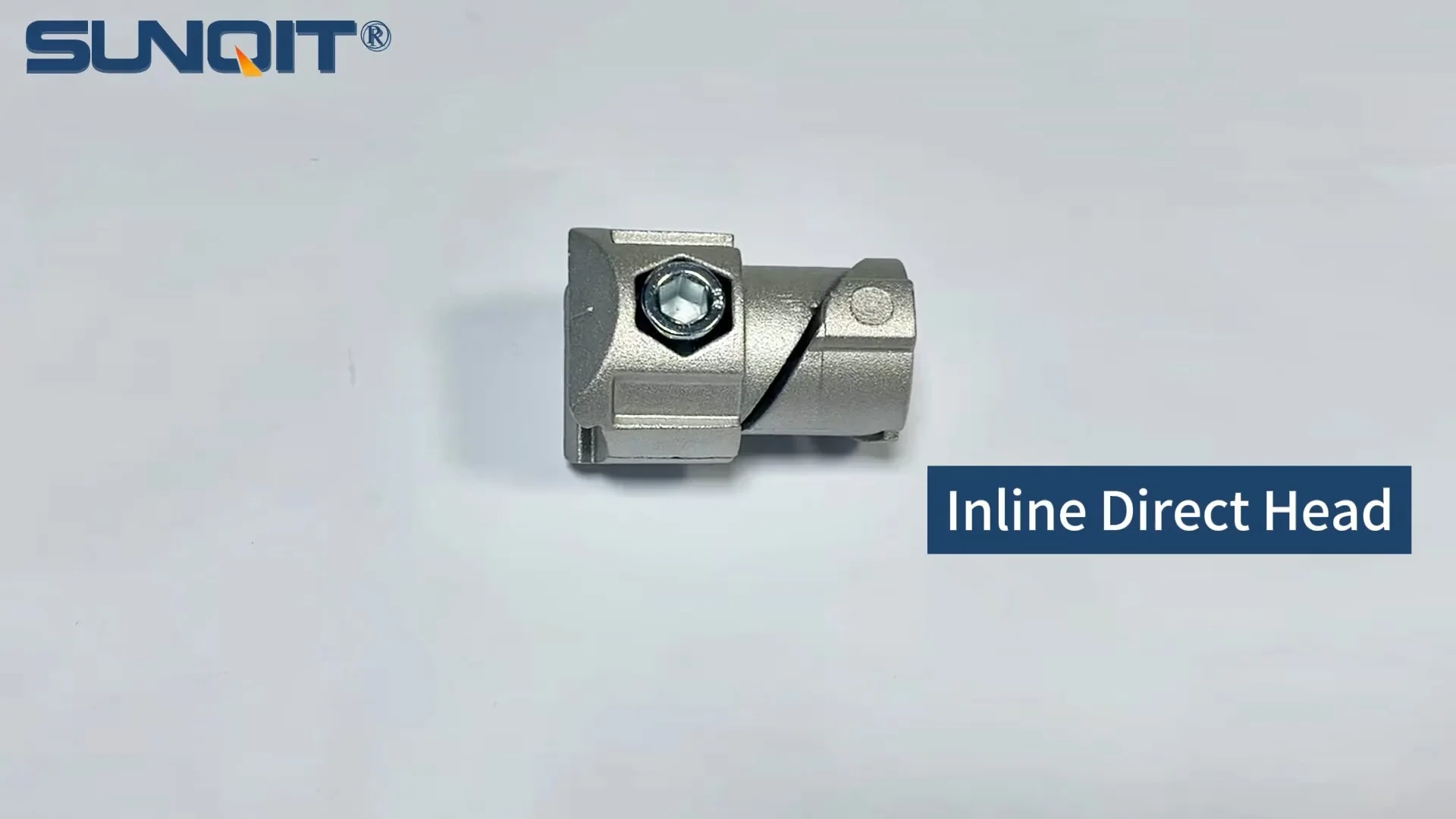
In the bustling world of manufacturing and industrial setups, there's a quiet workhorse that often goes unnoticed but keeps everything running smoothly: the internal straight aluminum joint. These unassuming components are the backbone of countless systems, holding together aluminum lean pipe structures, material racks, and workbenches that form the lifeline of production floors. Whether you're walking through a car assembly plant, a electronics manufacturing facility, or a logistics warehouse, chances are you're surrounded by structures built with these joints—even if you've never stopped to look at them closely.
But here's the thing: while internal straight aluminum joints might seem simple, their role is critical. They're the connectors that ensure stability in dynamic environments, where vibrations, heavy loads, and constant use put immense pressure on every part of the system. And like any hardworking component, they face a persistent enemy: corrosion. Left unchecked, corrosion can turn these reliable joints into weak links, compromising safety, efficiency, and the lifespan of entire workspaces. That's where surface treatment comes in—not as an afterthought, but as a vital step in ensuring these joints can stand the test of time.
Why Corrosion Matters for Internal Straight Aluminum Joints
Aluminum is often praised for its natural resistance to corrosion, and for good reason. When exposed to air, aluminum forms a thin, protective oxide layer on its surface, which acts as a barrier against further deterioration. But here's the catch: this natural layer is incredibly thin—only a few nanometers thick—and while it works well in mild environments, it's no match for the harsh conditions of many industrial settings. Think about it: production floors are often humid, with spills of oils, coolants, or cleaning agents. Warehouses might be near coastal areas, where salt air creeps in. Even indoor spaces with temperature fluctuations can create condensation, leaving metal surfaces vulnerable.
Internal straight aluminum joints are especially at risk. Unlike external components that might be visible and easy to inspect, these joints are often tucked away, connecting sections of aluminum lean pipe or supporting material racks. They're frequently in contact with other metals (like steel fasteners or aluminum profile accessories), creating the perfect conditions for galvanic corrosion—a process where two dissimilar metals react in the presence of moisture, accelerating deterioration. Add in the stress of holding heavy loads or enduring daily vibrations, and you've got a recipe for premature failure.
The consequences of corroded joints aren't just about aesthetics. A corroded joint loses its structural integrity, making the entire system wobbly or unstable. In a worst-case scenario, this could lead to collapsed material racks, damaged equipment, or even workplace accidents. Beyond safety, there's the cost factor: replacing corroded joints means downtime, lost productivity, and the expense of new parts. For businesses that rely on lean manufacturing principles—where efficiency and minimal waste are priorities—unplanned maintenance due to corrosion is a direct hit to the bottom line.
The Role of Surface Treatment: More Than Just Protection
Surface treatment for internal straight aluminum joints isn't just about preventing rust; it's about enhancing performance, reliability, and longevity. Think of it as giving these joints a suit of armor—one that's tailored to the specific challenges they'll face in their environment. A well-treated joint doesn't just resist corrosion; it also maintains its mechanical properties, ensuring a tight fit with aluminum pipe accessories and other components. This is crucial because loose or ill-fitting joints can lead to misalignments, which in turn cause excessive wear on adjacent parts.
But surface treatment is also about adaptability. Different work environments demand different levels of protection. A joint used in a dry, indoor electronics workshop will have different needs than one in a humid food processing plant or a coastal warehouse with salt exposure. Surface treatments allow manufacturers and facility managers to customize joints to their specific conditions, ensuring optimal performance without overspending on unnecessary features. For example, a joint in a cleanroom might prioritize a smooth, easy-to-clean surface, while one in a chemical plant needs maximum resistance to acids and solvents.
Perhaps most importantly, surface treatment supports the "lean" philosophy that many modern facilities adopt. Lean manufacturing is all about eliminating waste—whether it's time, materials, or energy. By investing in corrosion-resistant joints, businesses reduce waste from frequent replacements, minimize downtime for repairs, and extend the lifespan of their aluminum lean pipe systems. In this way, surface treatment isn't an extra cost; it's an investment in long-term efficiency.

Common Surface Treatment Methods for Internal Straight Aluminum Joints
Now that we understand why surface treatment matters, let's dive into the methods used to protect internal straight aluminum joints. There's no one-size-fits-all solution here—each method has its strengths, weaknesses, and ideal applications. Below, we'll break down the most popular options, how they work, and when to use them.
1. Anodization: The Gold Standard for Durability
Anodization is often called the "gold standard" of aluminum surface treatment, and for good reason. It's a process that enhances the natural oxide layer on aluminum, making it thicker, harder, and more resistant to corrosion. Here's how it works: the aluminum joint is submerged in an electrolyte bath (usually sulfuric acid), and an electric current is passed through the solution. This causes oxygen ions to bond with the aluminum surface, forming a porous oxide layer that's about 5 to 30 microns thick—orders of magnitude thicker than the natural oxide layer.
But the process doesn't stop there. After anodization, the joint is "sealed" to close the pores in the oxide layer. Sealing is typically done by immersing the joint in hot water, steam, or a chemical solution (like nickel acetate), which causes the oxide to expand and plug the pores. The result is a smooth, non-porous surface that's highly resistant to moisture, chemicals, and abrasion. What's more, anodized surfaces can be dyed in a range of colors before sealing, making them a popular choice for applications where aesthetics matter—though in industrial settings, function usually takes precedence over color.
So, what makes anodization a top pick for internal straight aluminum joints? For starters, it's incredibly durable. The anodized layer is integral to the aluminum itself, meaning it won't chip, peel, or flake off like paint. It also offers excellent adhesion, so if additional coatings (like lubricants or anti-slip treatments) are needed, they'll stick well to the surface. In terms of corrosion resistance, anodization excels in most environments, including humid, salty, and moderately chemical-exposed areas. It's no wonder that many manufacturers of aluminum lean pipe systems and lean pipe joints consider anodization a go-to treatment for critical components.
Of course, no treatment is perfect. Anodization is more expensive than some other methods, especially for large volumes, because it requires specialized equipment and longer processing times. The anodized layer is also slightly thicker than the natural oxide layer, which can affect tight tolerances. For example, if a joint needs to fit precisely with aluminum pipe accessories like clamps or brackets, the added thickness might require adjustments to ensure a snug connection. But for most industrial applications, the benefits of durability and corrosion resistance far outweigh these minor drawbacks.
2. Powder Coating: Color, Versatility, and Impact Resistance
If anodization is the "durable workhorse" of surface treatments, powder coating is the "versatile artist." Unlike anodization, which modifies the aluminum's surface, powder coating adds a protective layer on top. The process starts with cleaning the aluminum joint to remove any oils, dirt, or oxides—critical for ensuring the powder adheres properly. Then, a dry powder (typically made of polyester, epoxy, or a blend of both) is applied electrostatically: the joint is grounded, and the powder is charged with electricity, causing it to stick to the surface like a magnet. Finally, the joint is baked in an oven at around 180–200°C (350–400°F), where the powder melts, flows, and cures into a hard, continuous coating.
One of the biggest advantages of powder coating is its versatility. It comes in an almost endless range of colors, textures, and finishes—from matte to high-gloss, smooth to textured. This makes it ideal for applications where appearance matters, such as customer-facing areas or branded workspaces. But beyond looks, powder coating offers impressive performance. The cured coating is thick (usually 50–150 microns), providing excellent resistance to scratches, chips, and impacts—something that's especially valuable in high-traffic areas where joints might bump against equipment or materials.
In terms of corrosion resistance, powder coating is no slouch, either. The thick, non-porous layer acts as a physical barrier, preventing moisture and chemicals from reaching the aluminum surface. It's particularly effective in dry to moderately humid environments, making it a popular choice for indoor applications like office furniture, retail displays, and light-duty material racks. Some powder formulations even include additives like UV stabilizers (for outdoor use) or anti-microbial agents (for healthcare or food processing), further expanding its versatility.
But how does powder coating stack up for internal straight aluminum joints? For joints that are visible or subject to frequent impacts, it's an excellent choice. The impact resistance helps prevent dents and scratches that could expose the aluminum to corrosion, and the wide color range allows for easy identification of different system components (e.g., red joints for high-temperature zones, blue for cold storage). However, powder coating does have limitations in extreme environments. In highly humid or coastal areas, the coating can develop pinholes or blisters over time, especially if it's damaged. Unlike anodization, which is integral to the aluminum, a chipped powder coating can leave the underlying metal exposed, requiring touch-ups to prevent corrosion from spreading.
Another consideration is thickness. Powder coating adds more bulk than anodization, which can be a problem for joints with tight tolerances. For example, a joint that needs to slide into a sleeve or connect to a narrow aluminum profile accessory might not fit properly with a thick powder coating. Additionally, the baking process can cause slight warping in thin or delicate joints, though this is rare with modern equipment. For most internal joints, however—especially those in low-to-moderate stress environments—powder coating offers a cost-effective, attractive, and protective solution.
3. Chemical Conversion Coating: The "Primer" for Corrosion Protection
For applications where cost, speed, and thin coatings are priorities, chemical conversion coating (also known as chemical film or chromate coating) is a practical choice. Unlike anodization or powder coating, which create thick layers, conversion coating forms a thin, adherent film on the aluminum surface through a chemical reaction. The process is simple: the cleaned aluminum joint is immersed in a bath of chemicals (traditionally chromates, though modern formulations use non-chromate alternatives like zirconium or titanium for environmental safety). The chemicals react with the aluminum, converting the surface into a thin (0.1–1 micron) layer of insoluble compounds (like chromates, phosphates, or zirconates) that act as a barrier to corrosion.
One of the key benefits of conversion coating is its thinness. Since it doesn't add significant thickness to the joint, it's ideal for components with tight tolerances, such as those that need to mate precisely with aluminum pipe accessories or lean pipe joints. It also dries quickly and requires no baking or curing, making it a fast, low-cost option for high-volume production. In fact, many manufacturers use conversion coating as a "primer" before applying other treatments like paint or powder coating, as it improves adhesion and enhances overall corrosion resistance.
But conversion coating isn't just a primer—it can also serve as a standalone treatment in mild environments. For example, joints used in dry, indoor settings with minimal exposure to moisture or chemicals may only need a conversion coating to provide adequate protection. It's also commonly used in the aerospace and automotive industries, where lightweight components with tight tolerances are critical, and adding thick coatings would be impractical.
However, conversion coating has its limitations. The thin film offers only moderate corrosion resistance compared to anodization or powder coating. In humid or corrosive environments, it can wear off over time, especially with frequent handling or friction. Traditional chromate-based conversion coatings also raise environmental concerns, as hexavalent chromium is a toxic substance. While non-chromate alternatives are now widely available, they may not offer the same level of protection as their chromate predecessors. For these reasons, conversion coating is often used as a base layer rather than a standalone solution for internal straight aluminum joints in demanding industrial settings.
4. Comparing the Options: Which Treatment is Right for You?
With so many surface treatment methods available, choosing the right one for your internal straight aluminum joints can feel overwhelming. To simplify the decision, let's compare the key features of the three most common treatments: anodization, powder coating, and chemical conversion coating. The table below breaks down their corrosion resistance, cost, thickness, and ideal applications to help you make an informed choice.
| Treatment Method | Corrosion Resistance | Cost (Relative) | Coating Thickness | Impact on Tolerances | Ideal Environments |
|---|---|---|---|---|---|
| Anodization | Excellent (resists humidity, salt, mild chemicals) | High (specialized equipment, longer processing) | 5–30 microns (sealed oxide layer) | Minor (may require tolerance adjustments for tight fits) | Heavy industrial use, coastal areas, high-moisture environments |
| Powder Coating | Very Good (resists scratches, impacts, moderate humidity) | Medium (lower than anodization, higher than conversion coating) | 50–150 microns (added top layer) | Significant (thick coating may affect tight tolerances) | Indoor settings, high-traffic areas, applications needing color customization |
| Chemical Conversion Coating | Moderate (best in dry, low-corrosion environments) | Low (simple process, fast turnaround) | 0.1–1 micron (thin chemical film) | Minimal (no impact on tolerances) | Light-duty indoor use, as a primer for additional coatings |
As the table shows, there's no "one-size-fits-all" solution. For most industrial applications—especially those involving aluminum lean pipe systems, material racks, or heavy loads—anodization is the top choice, thanks to its unbeatable combination of durability and corrosion resistance. If cost or color customization is a priority, powder coating works well in indoor or moderately harsh environments. Chemical conversion coating, on the other hand, is best reserved for light-duty use or as a base layer under paint or powder.

Real-World Applications: How Surface Treatment Makes a Difference
To truly understand the impact of surface treatment, let's look at a few real-world examples of how the right (or wrong) treatment can affect internal straight aluminum joints in industrial settings.
Case Study 1: Automotive Manufacturing Plant
A large automotive plant in the Midwest was experiencing frequent failures in the material racks used to store heavy engine components. The racks were built with aluminum lean pipe and internal straight joints that had been powder coated. While the powder coating initially held up well, the plant's high humidity (from washing stations and coolant spills) caused the coating to blister and peel after about six months. This exposed the aluminum to moisture, leading to corrosion and loose joints. After consulting with their lean pipe joint supplier, the plant switched to anodized joints. Within a year, joint failures dropped by 75%, and the racks' lifespan extended from 2–3 years to over 5 years. The initial higher cost of anodization was offset by reduced downtime and replacement costs.
Case Study 2: Coastal Distribution Warehouse
A logistics company operating a warehouse near the coast faced a unique challenge: salt air was corroding the aluminum lean pipe structures used for order picking stations. The internal straight joints, which connected the workbenches to the overhead racks, were particularly affected. Initially, the company used chemical conversion coating to save costs, but within months, the joints showed signs of pitting corrosion. After switching to anodized joints with a sealed oxide layer, the corrosion stopped. The anodized layer acted as a barrier against salt ions, and the joints remained stable even after three years of exposure to coastal conditions.
Case Study 3: Electronics Cleanroom
An electronics manufacturer needed clean, dust-free workbenches for assembling sensitive components. The workbenches were built with aluminum lean pipe and internal straight joints, and the company wanted a smooth, easy-to-clean surface. Powder coating was chosen for its ability to provide a seamless, non-porous finish in a light gray color (matching the cleanroom's aesthetic). The powder coating also resisted scratches from tools and equipment, ensuring the workbenches maintained their sterile appearance. Over five years of use, the joints showed no signs of corrosion, and the smooth surface made daily cleaning a breeze—proving that powder coating can be an excellent choice in controlled, indoor environments.
Maintaining Treated Joints: Extending Lifespan Beyond Treatment
Even the best surface treatment can't protect joints forever if they're not properly maintained. Think of surface treatment as a shield—it needs regular inspection and care to stay effective. Here are some practical tips for maintaining internal straight aluminum joints and ensuring their corrosion resistance lasts:
Regular Cleaning
Dirt, oils, and chemicals can accumulate on joint surfaces, acting as abrasives or traps for moisture. Wipe joints down regularly with a soft cloth and mild soap (avoid harsh detergents or abrasive cleaners, which can damage the treatment). For joints in dusty environments, a quick rinse with clean water (followed by drying) can prevent buildup. In food processing or pharmaceutical settings, use disinfectants that are compatible with the surface treatment—check with your lean pipe joint supplier for recommendations.
Inspect for Damage
Make it a habit to inspect joints during routine maintenance checks. Look for signs of wear, such as scratches, chips, or peeling in powder coatings, or discoloration in anodized layers. Even small damage can expose the aluminum to corrosion, so address it promptly. For powder-coated joints, touch-up kits are available to cover small chips. For anodized joints, a thin layer of clear sealant (like a silicone-based spray) can help protect exposed areas until the joint can be replaced.
Lubricate Moving Parts
If your internal straight joints are part of a system with moving components (like adjustable workbenches or sliding racks), keep the contact points lubricated. A thin layer of dry lubricant (like graphite or PTFE spray) reduces friction, preventing wear on the surface treatment. Avoid oil-based lubricants, which can attract dirt and degrade some coatings over time.
Control the Environment
Where possible, minimize exposure to corrosive elements. Use dehumidifiers in damp areas, install barriers to protect against salt air in coastal locations, and clean up spills (especially chemicals or oils) immediately. Even small changes, like moving a material rack away from a leaky pipe or improving ventilation, can extend the life of your treated joints.
Innovations in Surface Treatment: The Future of Corrosion Protection
As technology advances, so too do the options for protecting internal straight aluminum joints. Researchers and manufacturers are constantly developing new treatments that offer better performance, lower costs, or improved environmental sustainability. Here are a few emerging innovations to watch:
Plasma Electrolytic Oxidation (PEO)
PEO, also known as micro-arc oxidation, is a newer process that produces oxide layers much thicker and harder than traditional anodization. By using a high-voltage electrolyte bath, PEO creates a ceramic-like layer on the aluminum surface, offering exceptional resistance to corrosion, wear, and high temperatures. While still more expensive than anodization, PEO is gaining traction in industries like aerospace and heavy machinery, where extreme durability is needed.
Eco-Friendly Conversion Coatings
As regulations around toxic chemicals tighten, manufacturers are developing non-chromate conversion coatings that are both effective and environmentally safe. These coatings use zirconium, titanium, or silane compounds to form a protective layer, offering corrosion resistance comparable to traditional chromate coatings without the environmental risks. They're also compatible with aluminum pipe accessories and can be used as a primer under powder coating or paint.
Smart Coatings with Self-Healing Properties
Imagine a coating that can repair itself when scratched. Self-healing coatings, currently in development, contain microcapsules of healing agents (like polymers or corrosion inhibitors) that rupture when the coating is damaged. The agents then flow into the scratch, forming a new barrier against corrosion. While still in the experimental stage, these coatings could revolutionize how we maintain aluminum joints in the future.
Conclusion: Investing in Corrosion Protection for Long-Term Success
Internal straight aluminum joints may be small components, but their role in industrial systems is enormous. They're the glue that holds together aluminum lean pipe structures, material racks, workbenches, and more—making them essential for efficiency, safety, and productivity. Corrosion, however, threatens to undermine this role, turning reliable joints into liabilities.
Surface treatment is the solution. Whether through anodization, powder coating, or conversion coating, the right treatment can protect joints from moisture, chemicals, and wear, extending their lifespan and ensuring optimal performance. While there's no one "best" treatment, choosing based on your environment, budget, and performance needs is key. And remember: surface treatment isn't a one-and-done solution—regular maintenance is critical to maximizing its effectiveness.
In the end, investing in corrosion protection for internal straight aluminum joints is an investment in your facility's future. It reduces downtime, lowers costs, and creates a safer, more efficient workspace. So the next time you walk through your production floor or warehouse, take a moment to appreciate those unassuming joints—and remember that their quiet reliability is thanks, in no small part, to the surface treatment that protects them.