- Company Articles
- Products and Technology
- Product knowledge
- Internal Straight Aluminum Joint vs. Plastic Joints: Durability Comparison

Internal Straight Aluminum Joint vs. Plastic Joints: Durability Comparison
Related Product
Internal straight aluminum joint
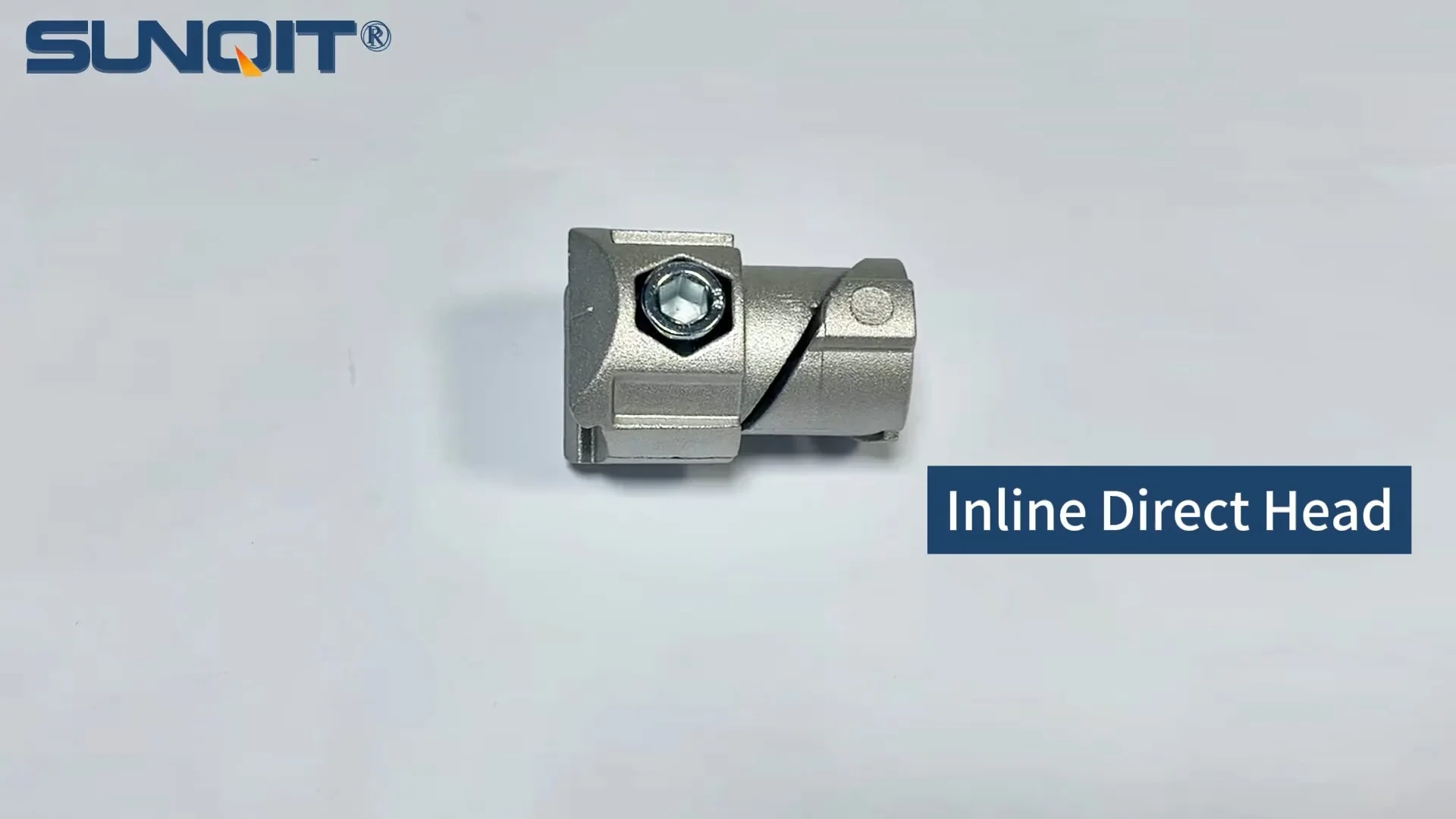
Aluminum pipe joint inside connection used for two pcs 28pcs aluminum pipe connection in straight angle,it connects two pcs pipe from inside.
For a production supervisor at a mid-sized electronics plant, the morning shift report isn't just numbers—it's a litany of small crises. Yesterday, a workbench in the assembly line wobbled so badly that operators had to pause production. Last week, a flow rack loaded with circuit boards collapsed, sending components crashing to the floor. The culprit? A cracked plastic joint that couldn't handle the daily wear and tear. In manufacturing, where efficiency hinges on every detail, the choice between components like internal straight aluminum joints and plastic joints isn't just about cost—it's about reliability, longevity, and keeping operations running smoothly. Let's dive into what makes these two joint types different, and why durability matters more than you might think.
Understanding the Basics: What Are Internal Straight Aluminum Joints and Plastic Joints?
Before we compare durability, let's clarify what we're talking about. Both internal straight aluminum joints and plastic joints are critical components in modular systems—think workbenches, flow racks, conveyors, and material handling setups—often used in lean manufacturing environments. They're the "glue" that holds together structures built with aluminum lean pipe, aluminum profiles, or other lightweight framing materials.
Internal Straight Aluminum Joints : As the name suggests, these joints are made from aluminum, a metal prized for its strength-to-weight ratio and resistance to corrosion. The "internal straight" design means they're engineered to fit snugly inside the ends of aluminum pipes or tubes, creating a rigid, straight connection. They're often used in applications where stability and load-bearing capacity are priorities, like heavy-duty workbenches or multi-tiered material racks. Aluminum joints are typically machined with precision, ensuring a tight fit that minimizes wobble or movement over time.
Plastic Joints : Plastic joints, on the other hand, are usually made from polymers like nylon, polypropylene, or PVC. They're lighter and often cheaper upfront than aluminum alternatives. Their design varies—some clip onto the outside of pipes, others snap into place with friction or locking mechanisms. Plastic joints are common in lighter-duty setups, such as temporary workstations, small flow racks, or environments where weight is a primary concern (e.g., manual material handling trolleys). They're also popular for their flexibility; many plastic joints can be adjusted or repositioned without tools, which sounds convenient until you factor in long-term wear.
Internal Straight Aluminum Joints : As the name suggests, these joints are made from aluminum, a metal prized for its strength-to-weight ratio and resistance to corrosion. The "internal straight" design means they're engineered to fit snugly inside the ends of aluminum pipes or tubes, creating a rigid, straight connection. They're often used in applications where stability and load-bearing capacity are priorities, like heavy-duty workbenches or multi-tiered material racks. Aluminum joints are typically machined with precision, ensuring a tight fit that minimizes wobble or movement over time.
Plastic Joints : Plastic joints, on the other hand, are usually made from polymers like nylon, polypropylene, or PVC. They're lighter and often cheaper upfront than aluminum alternatives. Their design varies—some clip onto the outside of pipes, others snap into place with friction or locking mechanisms. Plastic joints are common in lighter-duty setups, such as temporary workstations, small flow racks, or environments where weight is a primary concern (e.g., manual material handling trolleys). They're also popular for their flexibility; many plastic joints can be adjusted or repositioned without tools, which sounds convenient until you factor in long-term wear.
Material Matters: The Inherent Strength of Aluminum vs. Plastic
Durability starts with the material itself. Aluminum and plastic have vastly different properties that directly impact how well a joint will hold up over time.
Aluminum is a metal with a tensile strength of around 60-120 MPa (megapascals), depending on the alloy. For context, that means it can withstand significant pulling or stretching forces before deforming. It's also naturally resistant to rust and corrosion, thanks to a thin oxide layer that forms on its surface when exposed to air. This makes aluminum joints ideal for use in environments with moisture, like warehouses near loading docks or production areas where spills are common.
Plastic, by contrast, has a much lower tensile strength—nylon, for example, ranges from 40-90 MPa, while PVC is even lower at 40-50 MPa. While some reinforced plastics (like glass-filled nylon) can approach aluminum's strength, they're still prone to fatigue over time. Plastic also lacks aluminum's resistance to environmental stressors. It can warp under high temperatures, become brittle in cold conditions, or degrade when exposed to chemicals like oils, solvents, or even UV light. Anyone who's left a plastic chair in the sun for a summer knows how quickly it can become brittle and crack—now imagine that same effect, but on a joint holding up a rack of expensive components.
Another key difference is stiffness . Aluminum is a rigid material, meaning it doesn't bend or flex easily under load. This rigidity translates to stable structures that maintain their shape, even when jostled or vibrated (common in manufacturing settings with machinery). Plastic, especially unreinforced plastic, is more flexible. While flexibility can be an advantage in some cases (e.g., absorbing minor impacts), it's a liability in joints, where movement can lead to loosening over time. A plastic joint that flexes slightly every time a workbench is used will eventually develop micro-cracks, weakening the connection until it fails.
Aluminum is a metal with a tensile strength of around 60-120 MPa (megapascals), depending on the alloy. For context, that means it can withstand significant pulling or stretching forces before deforming. It's also naturally resistant to rust and corrosion, thanks to a thin oxide layer that forms on its surface when exposed to air. This makes aluminum joints ideal for use in environments with moisture, like warehouses near loading docks or production areas where spills are common.
Plastic, by contrast, has a much lower tensile strength—nylon, for example, ranges from 40-90 MPa, while PVC is even lower at 40-50 MPa. While some reinforced plastics (like glass-filled nylon) can approach aluminum's strength, they're still prone to fatigue over time. Plastic also lacks aluminum's resistance to environmental stressors. It can warp under high temperatures, become brittle in cold conditions, or degrade when exposed to chemicals like oils, solvents, or even UV light. Anyone who's left a plastic chair in the sun for a summer knows how quickly it can become brittle and crack—now imagine that same effect, but on a joint holding up a rack of expensive components.
Another key difference is stiffness . Aluminum is a rigid material, meaning it doesn't bend or flex easily under load. This rigidity translates to stable structures that maintain their shape, even when jostled or vibrated (common in manufacturing settings with machinery). Plastic, especially unreinforced plastic, is more flexible. While flexibility can be an advantage in some cases (e.g., absorbing minor impacts), it's a liability in joints, where movement can lead to loosening over time. A plastic joint that flexes slightly every time a workbench is used will eventually develop micro-cracks, weakening the connection until it fails.

Load-Bearing Capacity: How Much Weight Can They Really Handle?
For most manufacturers, load capacity is non-negotiable. A joint that can't support the weight of tools, materials, or products is worse than useless—it's dangerous. Let's break down how internal straight aluminum joints and plastic joints perform under pressure.
Internal straight aluminum joints are designed for heavy loads. Thanks to their metal construction and precise fit, they can typically support anywhere from 50kg to 200kg per joint, depending on the size and design. In practical terms, that means a workbench built with aluminum joints can easily hold heavy equipment like soldering stations, testing machines, or stacks of metal parts without sagging or wobbling. Even in dynamic situations—like a conveyor system where parts are constantly moving and shifting weight—aluminum joints maintain their grip.
Plastic joints, by comparison, have lower load limits. A typical plastic joint might handle 10kg to 50kg, with reinforced versions reaching up to 80kg in ideal conditions. But here's the catch: plastic's load capacity drops significantly under stressors like temperature changes or repeated use. For example, a plastic joint rated for 50kg at room temperature might only support 30kg in a hot factory or 20kg after six months of daily use. This variability makes plastic joints risky for applications where load consistency is critical.
To put this in perspective, let's look at a common scenario: a three-tier material rack used to store boxes of components. Each tier might hold 150kg of weight, distributed across four joints. With aluminum joints, each joint would bear ~37.5kg—well within their capacity. With plastic joints, even if each could handle 50kg initially, over time, as the plastic weakens, that 37.5kg load could become too much, leading to sagging shelves or a collapse.
The table below summarizes typical load capacities for both joint types under static (stationary) and dynamic (moving) conditions:
As the table shows, aluminum joints not only start with higher load capacities but also retain more of that capacity over time. Plastic joints, even reinforced ones, degrade faster—meaning you're not just buying a joint; you're buying a ticking clock until replacement.
Internal straight aluminum joints are designed for heavy loads. Thanks to their metal construction and precise fit, they can typically support anywhere from 50kg to 200kg per joint, depending on the size and design. In practical terms, that means a workbench built with aluminum joints can easily hold heavy equipment like soldering stations, testing machines, or stacks of metal parts without sagging or wobbling. Even in dynamic situations—like a conveyor system where parts are constantly moving and shifting weight—aluminum joints maintain their grip.
Plastic joints, by comparison, have lower load limits. A typical plastic joint might handle 10kg to 50kg, with reinforced versions reaching up to 80kg in ideal conditions. But here's the catch: plastic's load capacity drops significantly under stressors like temperature changes or repeated use. For example, a plastic joint rated for 50kg at room temperature might only support 30kg in a hot factory or 20kg after six months of daily use. This variability makes plastic joints risky for applications where load consistency is critical.
To put this in perspective, let's look at a common scenario: a three-tier material rack used to store boxes of components. Each tier might hold 150kg of weight, distributed across four joints. With aluminum joints, each joint would bear ~37.5kg—well within their capacity. With plastic joints, even if each could handle 50kg initially, over time, as the plastic weakens, that 37.5kg load could become too much, leading to sagging shelves or a collapse.
The table below summarizes typical load capacities for both joint types under static (stationary) and dynamic (moving) conditions:
| Joint Type | Static Load Capacity (per joint) | Dynamic Load Capacity (per joint) | Performance After 1 Year of Daily Use |
|---|---|---|---|
| Internal Straight Aluminum Joint | 50kg – 200kg | 40kg – 180kg (slight reduction due to vibration) | 90-95% of original capacity (minimal wear) |
| Standard Plastic Joint | 10kg – 50kg | 5kg – 30kg (significant reduction due to flexing) | 50-70% of original capacity (cracking, weakening) |
| Reinforced Plastic Joint | 30kg – 80kg | 20kg – 50kg | 60-80% of original capacity (better than standard, but still reduced) |
As the table shows, aluminum joints not only start with higher load capacities but also retain more of that capacity over time. Plastic joints, even reinforced ones, degrade faster—meaning you're not just buying a joint; you're buying a ticking clock until replacement.

Environmental Resistance: Surviving the Factory Floor
Manufacturing environments are tough on equipment. There's dust, moisture, chemicals, temperature swings, and even occasional spills. How do aluminum and plastic joints hold up?
Temperature Extremes : Factories can get hot—really hot—especially near ovens, furnaces, or machinery that generates heat. Aluminum handles high temperatures well; it melts at 660°C, so even in a 40°C factory, it remains stable. Cold temperatures aren't a problem either; aluminum doesn't become brittle in the cold like some metals (e.g., steel). Plastic, however, is temperature-sensitive. Most plastics start to soften at 60-80°C, which can cause joints to deform or lose grip. In cold environments, plastic becomes brittle, making it prone to cracking if bumped or stressed. A plastic joint in a warehouse that drops to 5°C overnight and rises to 35°C during the day will expand and contract repeatedly, weakening the material over time.
Moisture and Corrosion : Warehouses near coasts, or facilities with high humidity (e.g., food processing, pharmaceutical manufacturing), need components that resist rust and corrosion. Aluminum is naturally corrosion-resistant, thanks to its oxide layer. Even if it gets wet, it won't rust—making it ideal for damp environments. Plastic is also moisture-resistant, but it's not immune to other issues. Some plastics absorb water over time, leading to swelling and warping. For example, nylon, a common plastic for joints, can absorb up to 8% of its weight in water, causing it to expand and loosen in a joint. This swelling can make disassembly difficult (if you need to reconfigure a structure) or, worse, create uneven stress that cracks the joint when it dries out.
Chemicals and Oils : Manufacturing often involves lubricants, cleaning solvents, or coolants—substances that can eat away at plastic. Gasoline, mineral oil, and even some industrial cleaners can cause plastic to degrade, leading to softening, discoloration, or brittleness. Aluminum, on the other hand, is resistant to most common industrial chemicals. While strong acids or bases can damage it, everyday spills of oil or solvent won't harm an aluminum joint. This resistance is a big reason aluminum is preferred in automotive or machinery manufacturing, where oil leaks are common.
Dust and Abrasion : Factory floors are dusty places, and dust particles can act like sandpaper, wearing down joints over time. Aluminum's hard surface is more resistant to abrasion than plastic. A plastic joint with a rough surface (common in injection-molded parts) will trap dust, which grinds against the joint every time the structure moves. Over months, this abrasion can wear down the locking mechanisms or friction points, causing the joint to loosen. Aluminum joints, with their smooth, machined surfaces, are less likely to trap dust and more able to withstand abrasion without degradation.
Temperature Extremes : Factories can get hot—really hot—especially near ovens, furnaces, or machinery that generates heat. Aluminum handles high temperatures well; it melts at 660°C, so even in a 40°C factory, it remains stable. Cold temperatures aren't a problem either; aluminum doesn't become brittle in the cold like some metals (e.g., steel). Plastic, however, is temperature-sensitive. Most plastics start to soften at 60-80°C, which can cause joints to deform or lose grip. In cold environments, plastic becomes brittle, making it prone to cracking if bumped or stressed. A plastic joint in a warehouse that drops to 5°C overnight and rises to 35°C during the day will expand and contract repeatedly, weakening the material over time.
Moisture and Corrosion : Warehouses near coasts, or facilities with high humidity (e.g., food processing, pharmaceutical manufacturing), need components that resist rust and corrosion. Aluminum is naturally corrosion-resistant, thanks to its oxide layer. Even if it gets wet, it won't rust—making it ideal for damp environments. Plastic is also moisture-resistant, but it's not immune to other issues. Some plastics absorb water over time, leading to swelling and warping. For example, nylon, a common plastic for joints, can absorb up to 8% of its weight in water, causing it to expand and loosen in a joint. This swelling can make disassembly difficult (if you need to reconfigure a structure) or, worse, create uneven stress that cracks the joint when it dries out.
Chemicals and Oils : Manufacturing often involves lubricants, cleaning solvents, or coolants—substances that can eat away at plastic. Gasoline, mineral oil, and even some industrial cleaners can cause plastic to degrade, leading to softening, discoloration, or brittleness. Aluminum, on the other hand, is resistant to most common industrial chemicals. While strong acids or bases can damage it, everyday spills of oil or solvent won't harm an aluminum joint. This resistance is a big reason aluminum is preferred in automotive or machinery manufacturing, where oil leaks are common.
Dust and Abrasion : Factory floors are dusty places, and dust particles can act like sandpaper, wearing down joints over time. Aluminum's hard surface is more resistant to abrasion than plastic. A plastic joint with a rough surface (common in injection-molded parts) will trap dust, which grinds against the joint every time the structure moves. Over months, this abrasion can wear down the locking mechanisms or friction points, causing the joint to loosen. Aluminum joints, with their smooth, machined surfaces, are less likely to trap dust and more able to withstand abrasion without degradation.
Wear and Tear: The Hidden Cost of Daily Use
Durability isn't just about handling big loads or harsh environments—it's about surviving the mundane: the daily bumps, vibrations, and repetitive use that take a toll on even the sturdiest components. Let's talk about wear and tear.
Internal straight aluminum joints excel here. Metal-on-metal connections (or metal-on-aluminum pipe connections) are inherently wear-resistant. The tight fit of an internal straight joint means there's minimal movement between the joint and the pipe, reducing friction. Even with repeated assembly and disassembly (common in lean systems that are reconfigured as production needs change), aluminum joints hold up. The threads or locking mechanisms (if present) are less likely to strip than plastic ones, and the metal itself doesn't degrade with use. A well-maintained aluminum joint can last for years—even decades—in a typical factory setting.
Plastic joints, by contrast, are prone to wear from daily use. Let's take a common scenario: a workbench used by three operators per shift, each placing tools, leaning on the surface, or adjusting equipment. Every time the bench is used, the plastic joints flex slightly. Over weeks and months, this flexing causes fatigue in the plastic, leading to micro-cracks. These cracks start small, but they grow with each use, eventually weakening the joint to the point where it can't hold.
Vibration is another enemy of plastic joints. Manufacturing facilities are full of vibrating machinery—compressors, conveyors, drills—and that vibration travels through floors and into workbenches and racks. Aluminum joints, being rigid, transmit vibration but don't absorb it, which might sound bad, but it means the joint itself isn't taking the brunt of the movement. Plastic joints, being flexible, absorb vibration, which causes internal stress. Over time, this stress leads to cracking. A study by a leading material science lab found that plastic joints exposed to constant low-level vibration (similar to a factory floor) failed 30-50% faster than joints in static environments.
Even something as simple as temperature cycling (warm days, cool nights) can wear down plastic joints. Plastic expands and contracts more than aluminum with temperature changes. This expansion and contraction loosens the joint over time, as the plastic doesn't always return to its original shape. An aluminum joint, with minimal thermal expansion, stays tight, maintaining the integrity of the structure.
Internal straight aluminum joints excel here. Metal-on-metal connections (or metal-on-aluminum pipe connections) are inherently wear-resistant. The tight fit of an internal straight joint means there's minimal movement between the joint and the pipe, reducing friction. Even with repeated assembly and disassembly (common in lean systems that are reconfigured as production needs change), aluminum joints hold up. The threads or locking mechanisms (if present) are less likely to strip than plastic ones, and the metal itself doesn't degrade with use. A well-maintained aluminum joint can last for years—even decades—in a typical factory setting.
Plastic joints, by contrast, are prone to wear from daily use. Let's take a common scenario: a workbench used by three operators per shift, each placing tools, leaning on the surface, or adjusting equipment. Every time the bench is used, the plastic joints flex slightly. Over weeks and months, this flexing causes fatigue in the plastic, leading to micro-cracks. These cracks start small, but they grow with each use, eventually weakening the joint to the point where it can't hold.
Vibration is another enemy of plastic joints. Manufacturing facilities are full of vibrating machinery—compressors, conveyors, drills—and that vibration travels through floors and into workbenches and racks. Aluminum joints, being rigid, transmit vibration but don't absorb it, which might sound bad, but it means the joint itself isn't taking the brunt of the movement. Plastic joints, being flexible, absorb vibration, which causes internal stress. Over time, this stress leads to cracking. A study by a leading material science lab found that plastic joints exposed to constant low-level vibration (similar to a factory floor) failed 30-50% faster than joints in static environments.
Even something as simple as temperature cycling (warm days, cool nights) can wear down plastic joints. Plastic expands and contracts more than aluminum with temperature changes. This expansion and contraction loosens the joint over time, as the plastic doesn't always return to its original shape. An aluminum joint, with minimal thermal expansion, stays tight, maintaining the integrity of the structure.
Cost: The Upfront Savings vs. Long-Term Investment
It's impossible to talk about durability without addressing cost. Plastic joints are almost always cheaper upfront—sometimes by 50% or more compared to internal straight aluminum joints. For budget-conscious operations, this can be tempting. But here's the problem: durability isn't just about how long a joint lasts; it's about the total cost of ownership (TCO). Let's crunch the numbers.
Suppose you're building 10 workbenches, each requiring 8 joints. A plastic joint costs $2, while an internal straight aluminum joint costs $5. Upfront, plastic saves you $240 ($3 per joint x 8 joints x 10 workbenches). But if the plastic joints last 1 year before needing replacement, and the aluminum joints last 5 years, the math changes. Over 5 years, you'd buy plastic joints 5 times: 10 workbenches x 8 joints x $2 x 5 replacements = $800. For aluminum joints: 10 workbenches x 8 joints x $5 x 1 replacement = $400. Suddenly, aluminum is cheaper—by $400 over 5 years.
But the real cost isn't just the joints themselves. It's the downtime when a plastic joint fails. If a workbench collapses and halts production for 2 hours, and your factory runs at $100 per hour in labor and lost output, that's $200 in lost revenue—for a single joint failure. Multiply that by multiple failures over 5 years, and the "cheap" plastic joints become a financial disaster. Aluminum joints, with their lower failure rate, mean less downtime, fewer replacements, and lower overall costs.
There's also the cost of labor for replacements. Swapping out a failed plastic joint takes time—time an operator or maintenance worker could spend on more productive tasks. If each replacement takes 30 minutes and labor costs $30 per hour, replacing 80 plastic joints (10 workbenches x 8 joints) five times over 5 years costs 80 x 5 x 0.5 hours x $30 = $6,000. For aluminum joints, replacing 80 joints once costs 80 x 1 x 0.5 hours x $30 = $1,200. The labor savings alone make aluminum the smarter choice.
Suppose you're building 10 workbenches, each requiring 8 joints. A plastic joint costs $2, while an internal straight aluminum joint costs $5. Upfront, plastic saves you $240 ($3 per joint x 8 joints x 10 workbenches). But if the plastic joints last 1 year before needing replacement, and the aluminum joints last 5 years, the math changes. Over 5 years, you'd buy plastic joints 5 times: 10 workbenches x 8 joints x $2 x 5 replacements = $800. For aluminum joints: 10 workbenches x 8 joints x $5 x 1 replacement = $400. Suddenly, aluminum is cheaper—by $400 over 5 years.
But the real cost isn't just the joints themselves. It's the downtime when a plastic joint fails. If a workbench collapses and halts production for 2 hours, and your factory runs at $100 per hour in labor and lost output, that's $200 in lost revenue—for a single joint failure. Multiply that by multiple failures over 5 years, and the "cheap" plastic joints become a financial disaster. Aluminum joints, with their lower failure rate, mean less downtime, fewer replacements, and lower overall costs.
There's also the cost of labor for replacements. Swapping out a failed plastic joint takes time—time an operator or maintenance worker could spend on more productive tasks. If each replacement takes 30 minutes and labor costs $30 per hour, replacing 80 plastic joints (10 workbenches x 8 joints) five times over 5 years costs 80 x 5 x 0.5 hours x $30 = $6,000. For aluminum joints, replacing 80 joints once costs 80 x 1 x 0.5 hours x $30 = $1,200. The labor savings alone make aluminum the smarter choice.
Real-World Case Studies: When Durability Mattered Most
Numbers and specs tell part of the story, but real-world examples show how durability plays out in factories. Here are two case studies from manufacturers who switched from plastic to aluminum joints.
After switching to internal straight aluminum joints, the manufacturer saw immediate results. In the first year, only 2 out of 50 workbenches needed joint adjustments (no replacements). Downtime related to joint failures dropped by 70%, and the maintenance team was able to focus on more critical tasks. The plant manager noted, "We thought plastic joints were saving us money, but the hidden costs—downtime, labor, replacement parts—were killing our bottom line. Aluminum was a no-brainer once we ran the numbers."
They switched to aluminum joints and reinforced their flow racks. Over the next two years, there were zero incidents related to joint failure. The safety manager reported, "Plastic joints gave us a false sense of security. We thought they were 'good enough,' but good enough isn't acceptable when people's safety is on the line. Aluminum joints are stronger, more reliable, and worth every penny."
Case Study 1: Electronics Manufacturer Reduces Downtime by 70%
A mid-sized electronics manufacturer in the Midwest was struggling with plastic joint failures on their assembly line workbenches. The workbenches held circuit board testing equipment, and the plastic joints would crack every 3-4 months, causing the benches to wobble and disrupt testing. The maintenance team was replacing joints constantly, and production would pause for 30-60 minutes each time.
After switching to internal straight aluminum joints, the manufacturer saw immediate results. In the first year, only 2 out of 50 workbenches needed joint adjustments (no replacements). Downtime related to joint failures dropped by 70%, and the maintenance team was able to focus on more critical tasks. The plant manager noted, "We thought plastic joints were saving us money, but the hidden costs—downtime, labor, replacement parts—were killing our bottom line. Aluminum was a no-brainer once we ran the numbers."
Case Study 2: Automotive Supplier Eliminates Safety Incidents
An automotive parts supplier was using plastic-jointed flow racks to transport heavy metal components between workstations. In one incident, a plastic joint failed, causing a rack to tip and spill parts onto the floor—fortunately, no one was injured, but the incident prompted a safety review. The supplier discovered that over 40% of their plastic joints showed signs of cracking or wear, even though they were only 6 months old.
They switched to aluminum joints and reinforced their flow racks. Over the next two years, there were zero incidents related to joint failure. The safety manager reported, "Plastic joints gave us a false sense of security. We thought they were 'good enough,' but good enough isn't acceptable when people's safety is on the line. Aluminum joints are stronger, more reliable, and worth every penny."
Maintenance and Longevity: Keeping Joints in Top Shape
No component lasts forever without maintenance, but some are easier to care for than others. Internal straight aluminum joints require minimal upkeep. Occasional cleaning to remove dust or debris, and checking for tightness (especially after heavy use) is usually enough. If a joint does loosen, it can often be tightened with a wrench or hex key—no special tools needed. Aluminum's resistance to corrosion means it doesn't need coatings or treatments, even in damp environments.
Plastic joints, by contrast, are harder to maintain. Once they start to crack or wear, there's no fixing them—they must be replaced. Cleaning plastic joints can be tricky, as harsh chemicals can damage the plastic. And because plastic is prone to loosening over time, maintenance teams have to check them more frequently, adding to labor costs. In short, plastic joints demand more attention and still have a shorter lifespan.
Plastic joints, by contrast, are harder to maintain. Once they start to crack or wear, there's no fixing them—they must be replaced. Cleaning plastic joints can be tricky, as harsh chemicals can damage the plastic. And because plastic is prone to loosening over time, maintenance teams have to check them more frequently, adding to labor costs. In short, plastic joints demand more attention and still have a shorter lifespan.
Choosing the Right Joint: When to Use Aluminum vs. Plastic
Does this mean plastic joints are never a good choice? Not necessarily. Plastic has its place—in lightweight, temporary structures, or applications with very low loads (e.g., a small parts bin rack). If you're building a display stand for a trade show that will be used once and then disassembled, plastic joints might make sense. But for permanent or semi-permanent manufacturing setups, where durability, safety, and cost-efficiency matter, internal straight aluminum joints are the clear winner.
When choosing, ask yourself:
When choosing, ask yourself:
- What's the maximum load the structure will bear?
- Will the structure be exposed to moisture, chemicals, or temperature extremes?
- How often will it be used or moved?
- What's the cost of downtime if a joint fails?
Conclusion: Durability Isn't a Luxury—It's a Necessity
At the end of the day, the choice between internal straight aluminum joints and plastic joints comes down to priorities. If you prioritize upfront cost over everything else, plastic might seem appealing. But if you value reliability, safety, and long-term savings, aluminum is the only sensible option.
Manufacturing is tough enough without worrying about whether your workbenches or racks will hold up. Internal straight aluminum joints don't just offer durability—they offer peace of mind. They're the kind of component you install and forget about, knowing they'll keep your operations running smoothly for years to come. So the next time you're building a modular structure, remember: the joint that costs a little more today will save you a lot tomorrow.
Manufacturing is tough enough without worrying about whether your workbenches or racks will hold up. Internal straight aluminum joints don't just offer durability—they offer peace of mind. They're the kind of component you install and forget about, knowing they'll keep your operations running smoothly for years to come. So the next time you're building a modular structure, remember: the joint that costs a little more today will save you a lot tomorrow.