- Company Articles
- Products and Technology
- Product knowledge
- Internal Straight Aluminum Joint vs. Steel Joint: Which is More Cost-Effective?

Internal Straight Aluminum Joint vs. Steel Joint: Which is More Cost-Effective?
Related Product
Internal straight aluminum joint
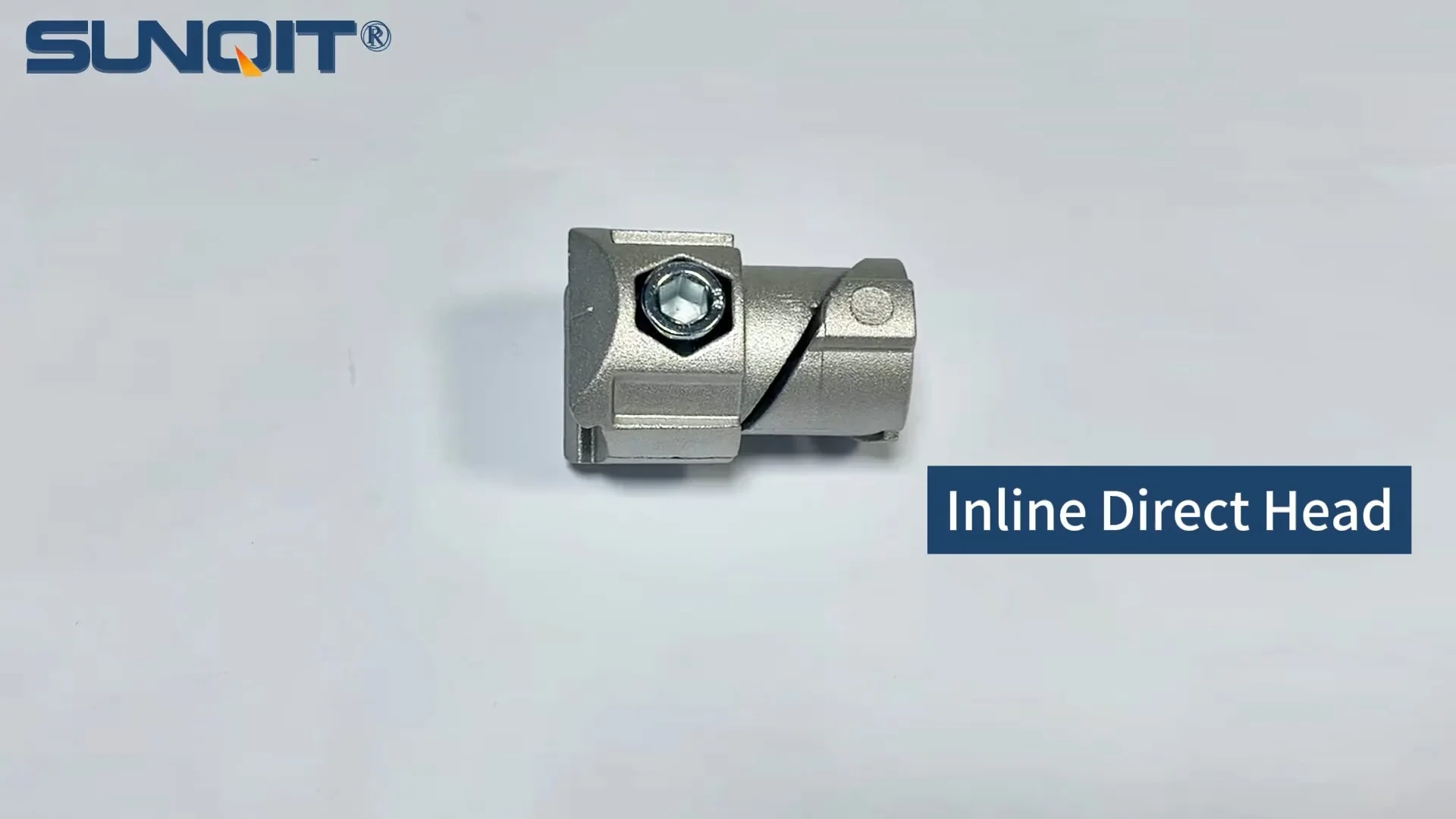
Aluminum pipe joint inside connection used for two pcs 28pcs aluminum pipe connection in straight angle,it connects two pcs pipe from inside.
Every production floor tells a story of trade-offs. Managers juggle budgets, workers adapt to tools, and systems hum (or sputter) based on the parts that hold them together. When it comes to building lean workbenches, material racks, or conveyor systems, one question consistently bubbles to the surface: Which joints should we use? For years, the debate has centered on two heavyweights: the internal straight aluminum joint —a sleek component of modern aluminum profile systems—and traditional steel joints from the steel pipe series . Both promise durability, but only one delivers true long-term cost-effectiveness. Let's dive into the details, beyond the price tag, to uncover which joint deserves a spot in your production line.
The Dilemma: Short-Term Savings vs. Long-Term Gains
Walk into any manufacturing facility, and you'll likely spot both aluminum and steel in action. Steel joints, with their industrial heft, have been the go-to for decades. They're familiar, easy to source, and upfront, they often cost less. But here's the catch: production costs don't stop at the purchase order. Think about installation time, maintenance headaches, and the day you need to reconfigure your entire line to meet a new order. Suddenly, that "cheap" steel joint starts to look expensive. On the flip side, internal straight aluminum joints—paired with lightweight aluminum profile—come with a higher initial price tag. But could their hidden benefits (like faster setup, minimal upkeep, and adaptability) make them the smarter investment? Let's break it down.
Meet the Contenders: What Are We Actually Comparing?
Internal Straight Aluminum Joint: The New Kid on the Block (But Not Really)
Don't let the "internal straight" label intimidate you. This joint is exactly what it sounds like: a connector designed to fit inside aluminum pipes, creating a clean, tight bond without the need for welding or heavy tools. It's part of a broader ecosystem of aluminum profile systems, which include everything from workbench frames to material racks. Unlike bulky external clamps, the internal design keeps surfaces smooth—no snags, no rust traps, and a sleek look that reduces dust buildup. These joints are engineered for precision: slide them into an aluminum pipe, tighten a set screw, and you've got a connection that's both strong and easy to adjust. They're lightweight, corrosion-resistant, and built for flexibility—perfect for lean manufacturing environments where lines change as often as customer demands.
Steel Joints (Steel Pipe Series): The Tried-and-True Workhorse
Steel joints, often part of the steel pipe series, are the veterans here. Made from carbon steel (and sometimes coated in zinc for basic rust protection), they're the backbone of traditional production setups. Think heavy-duty clamps, T-joints, and corner brackets that bolt or weld onto steel pipes. They're praised for raw strength—if you need to hold hundreds of pounds of machinery, steel delivers. But that strength comes with a price: weight. A single steel joint can weigh three times as much as its aluminum counterpart, making installation a two-person job. Welding or drilling is often required to secure them, adding time and labor costs. And while zinc coating helps, steel still succumbs to rust in humid or damp environments—think food processing plants, coastal factories, or even warehouses with poor ventilation.

Material Showdown: Why Aluminum Profile Beats Steel Pipe Series in the Long Run
To understand cost-effectiveness, we first need to compare the materials themselves. Aluminum and steel are both metals, but their properties couldn't be more different—and those differences directly impact your bottom line.
Weight: Lighter = Faster = Cheaper (Labor-wise)
Let's start with the obvious: aluminum is light. An internal straight aluminum joint paired with aluminum profile weighs roughly 1/3 of a steel joint and steel pipe of the same length. Why does this matter? Because lighter materials mean faster installation. A single worker can carry, position, and secure aluminum components—no need for a forklift or extra hands. On a recent project at a automotive parts plant, switching from steel to aluminum cut installation time for a material rack by 40%. Instead of two workers spending a full day assembling a 3-row, 3-floor rack, one worker finished in 6 hours. Multiply that by dozens of racks across a facility, and the labor savings add up fast.
Corrosion Resistance: No More Rust, No More Replacements
Steel and moisture are mortal enemies. Even with zinc coating, steel joints in humid environments start to rust within a year or two. That rust isn't just unsightly—it weakens the joint over time. A rusted bolt becomes stripped; a corroded clamp loses its grip. Eventually, you're replacing joints, repainting pipes, or even rebuilding entire structures. Aluminum, on the other hand, is naturally corrosion-resistant. Its surface forms a thin oxide layer that protects against rust, even in wet or salty air. Take a food packaging plant in Florida, for example: they switched to internal straight aluminum joints after steel racks in their refrigerated warehouse began rusting within 18 months. Three years later, the aluminum system still looks brand new—no repainting, no replacements, and zero downtime due to rust-related failures.
Strength-to-Weight Ratio: Aluminum Holds Its Own (and Then Some)
Critics of aluminum often argue, "But steel is stronger!" While it's true that steel has higher absolute strength, aluminum profile paired with internal straight aluminum joints offers a better strength-to-weight ratio. In other words, for every pound of material, aluminum can support more weight. For most production applications—workbenches, flow racks, or conveyor systems handling boxes and components—aluminum's strength is more than enough. A standard internal straight aluminum joint can support up to 200 pounds per connection, which is more than enough for a workbench holding tools or a material rack storing small parts. Only in extreme cases (like holding 1,000+ pound machinery) does steel become necessary—and even then, hybrid systems (aluminum frames with steel reinforcement) often work better.

The Cost Breakdown: It's Not Just About the Initial Price
Let's get granular. To truly compare cost-effectiveness, we need to look at the total cost of ownership (TCO)—initial purchase, installation, maintenance, and replacement over 5 years. Here's how the numbers stack up for a typical setup: a basic workbench (single deck, no casters) and a 3-row, 3-floor material rack.
| Cost Factor | Internal Straight Aluminum Joint + Aluminum Profile | Steel Joint (Steel Pipe Series) + Steel Pipe |
|---|---|---|
| Initial Purchase Cost | Higher: ~$350 (joints + aluminum profile) | Lower: ~$250 (joints + steel pipe) |
| Installation Labor | Lower: 1 worker x 6 hours = $180 (assuming $30/hour) | Higher: 2 workers x 10 hours = $600 |
| Maintenance (5 years) | Minimal: $50 (occasional tightening of set screws) | High: $300 (rust removal, repainting, replacing corroded bolts) |
| Reconfiguration Costs (2x in 5 years) | Low: $100 (no new parts needed; joints are reusable) | High: $400 (new bolts, welding, replacing bent steel) |
| Replacement (if needed in 5 years) | Unlikely: $0 (aluminum lasts 10+ years) | Likely: $250 (replace rusted joints/pipes) |
| Total 5-Year Cost | $680 | $1,800 |
The math is clear: even though aluminum starts with a higher price tag, steel ends up costing nearly three times more over five years. Why? Because steel's "cheap" upfront cost is eaten alive by labor, maintenance, and replacements. Aluminum's internal straight joints are reusable, too—take apart a workbench, move the joints to a new frame, and you're good to go. Steel joints, once welded or bolted, are often damaged when disassembled, making reconfiguration a costly headache.
Real-World Performance: When Aluminum Profile Systems Outshine Steel Pipe Series
Numbers tell part of the story, but real-world examples drive the point home. Let's look at two scenarios where internal straight aluminum joints proved their worth over steel.
Case Study 1: A Small Electronics Manufacturer's 3-Year Transformation
In 2020, a 50-person electronics plant in Ohio was struggling with outdated steel workbenches. Their production line built circuit boards, and the steel frames under their workstations were rusting from the humidity of daily cleaning. Workers complained about the weight—moving a bench to accommodate a new machine required a forklift and three people. Maintenance costs were piling up: $200/month on rust treatment alone. The plant manager, Maria, was hesitant to switch to aluminum—she'd heard it was "too expensive." But after crunching the numbers, she took the plunge, replacing 10 workbenches with aluminum profile systems using internal straight aluminum joints.
Three years later, the results are staggering: installation took half the time of the original steel setup, saving $3,000 in labor. Maintenance costs dropped to $50/year (mostly for cleaning). When the plant landed a big order requiring a line reconfiguration, workers disassembled and reassembled the benches in a day—no new parts, no welding. "We used to dread reconfigurations," Maria says. "Now, it's just another Friday project. The aluminum joints are so easy to adjust, even the night shift crew can do it without supervision." Total savings over three years? $12,500—and the workbenches still look brand new.
Case Study 2: A Food Packaging Plant's Fight Against Rust
Food processing plants are brutal on equipment. Moisture, cleaning chemicals, and constant temperature changes make steel a liability. A poultry packaging plant in Georgia learned this the hard way. Their steel material racks—using steel pipe series joints—started rusting within months, even with zinc coating. Rust flakes began falling onto packaging, leading to quality control issues and a near-recall. The plant needed a solution that could handle daily washdowns without corroding.
They replaced the steel racks with aluminum profile systems, using internal straight aluminum joints and aluminum guide rails. Five years later, the racks are still rust-free. "We hose them down twice a day with sanitizer, and they don't even flinch," says the plant engineer. "The aluminum joints don't trap water, so there's no mold or mildew. And because they're lightweight, we can move the racks to clean underneath—something we never could do with steel." The initial investment was 40% higher, but the plant avoided $15,000 in recall-related costs and saved $8,000 in annual maintenance. "It wasn't just a cost-saver," the engineer adds. "It was a reputation-saver."
The Wildcard: Adaptability in a Fast-Changing Market
In today's manufacturing world, adaptability isn't a nice-to-have—it's survival. Customer orders change, product lines shift, and your production floor needs to keep up. Here's where internal straight aluminum joints truly shine: they're designed for change. Unlike steel joints, which are often welded or bolted into place permanently, aluminum joints twist, slide, and reattach with minimal effort. Need to add a shelf to a workbench? Loosen the set screws, adjust the joint, and tighten—done. Want to turn a static rack into a mobile trolley? Swap out fixed feet for casters, no drilling required.
Steel, by contrast, fights change. Welded joints crack when bent; bolts strip when removed repeatedly. A manufacturer of medical devices in Texas learned this when they tried to reconfigure a steel pipe series rack to fit a new product line. The steel joints snapped under the pressure, requiring $2,000 in new parts and a day of downtime. "We should have invested in aluminum from the start," the operations manager later admitted. "The time we lost trying to fix steel would have paid for the aluminum joints twice over."
When to Stick with Steel (Yes, There Are Exceptions)
We'd be remiss not to acknowledge that steel still has its place. If your operation involves extreme loads (think 2,000+ pounds per joint) or high temperatures (above 400°F), steel is the safer bet. For example, a foundry moving molten metal needs the heat resistance of steel. But for 90% of manufacturing applications—lean workbenches, material racks, conveyor systems, assembly lines—aluminum profile with internal straight aluminum joints is the smarter choice.
The Verdict: Internal Straight Aluminum Joint Wins (By a Mile)
At the end of the day, cost-effectiveness isn't about what's cheapest today—it's about what costs the least over time. Steel joints from the steel pipe series may save you $100 upfront, but they'll cost you thousands in labor, maintenance, and reconfiguration down the line. Internal straight aluminum joints, paired with aluminum profile, require a bigger initial investment, but they pay dividends in faster installation, minimal upkeep, and endless adaptability. They're not just joints—they're tools for efficiency, flexibility, and long-term savings.
So, to all the production managers, facility owners, and lean manufacturing enthusiasts out there: the next time you're building or upgrading your line, think beyond the price tag. Choose the joint that grows with you, not against you. Choose internal straight aluminum joint. Your bottom line (and your maintenance team) will thank you.