- Company Articles
- Products and Technology
- Product knowledge
- Internal Straight Aluminum Joint vs. Welded Connections: Lean Production Advantages

Internal Straight Aluminum Joint vs. Welded Connections: Lean Production Advantages
Related Product
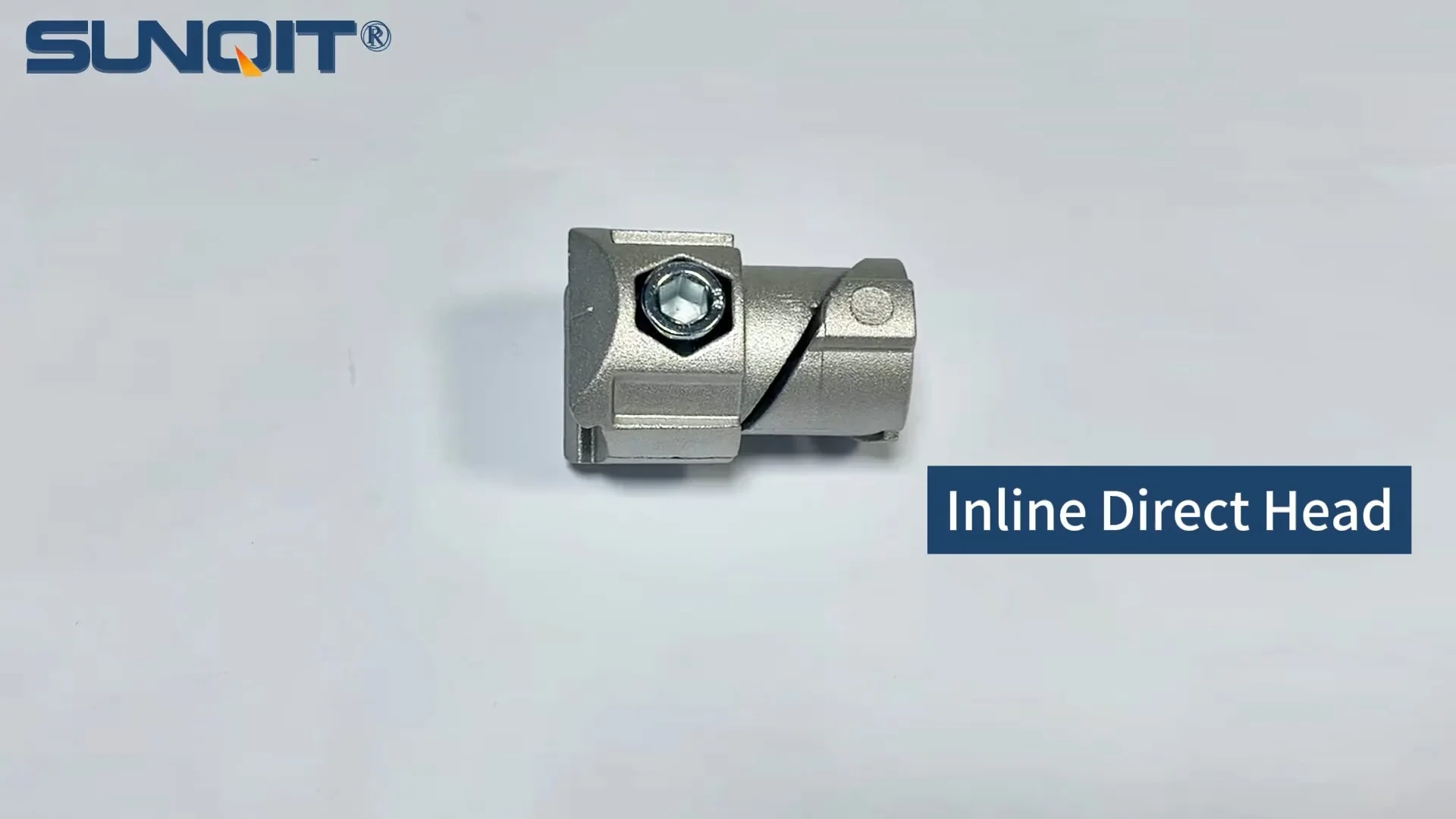
Internal straight aluminum joint
Aluminum pipe joint inside connection used for two pcs 28pcs aluminum pipe connection in straight angle,it connects two pcs pipe from inside.
In the fast-paced world of manufacturing, where every second counts and waste is the enemy, lean production isn't just a buzzword—it's the backbone of staying competitive. For decades, manufacturers have relied on tried-and-true methods to build workstations, material racks, and assembly lines. But as consumer demands shift faster than ever, and production lines need to pivot at a moment's notice, the limitations of traditional techniques like welding have become impossible to ignore. Enter the internal straight aluminum joint: a small component with a big impact, quietly revolutionizing how we build, adapt, and optimize production systems. Today, we're diving deep into why this unassuming part is becoming a cornerstone of lean manufacturing, and how it stacks up against the old guard of welded connections.
The Problem with "Set It and Forget It": Why Welded Connections Struggle in Lean Environments
Let's start with the basics: welded connections have been around for centuries, and for good reason. They're strong, durable, and when done right, can hold together heavy machinery or structural components for decades. But in a lean production setting—where the goal is to eliminate waste (muda), reduce lead times, and stay flexible—welding starts to look less like a solution and more like a bottleneck.
Picture this: You're running an electronics assembly line, and your team needs to reconfigure the workbench layout to accommodate a new product. The current setup uses steel frames welded together. To make changes, you'll need to bring in a welder, who'll spend hours cutting, grinding, and re-welding the frame. That's downtime—time when your assembly line isn't producing. Then there's the cost: skilled welders don't come cheap, and each modification means new materials, gas for the torch, and post-weld finishing to smooth rough edges. And if the new layout doesn't work? You're back to square one, with a pile of scrap metal from the old frame.
Welded connections are also inherently rigid. Once two pieces of metal are fused, they're stuck that way. In lean terms, that rigidity translates to "overproduction" of structure—you're building something that can't adapt to future needs, which is a form of waste. Add to that the weight: steel frames with welded joints are heavy, making it hard to move workstations or add caster wheels for mobility. And let's not forget safety: welding produces fumes, sparks, and heat, creating hazards in already busy factories. For environments that require ESD (electrostatic discharge) protection—like those using ESD workbenches—welded steel can even interfere with grounding, putting sensitive electronics at risk.
Meet the Underdog: What Are Internal Straight Aluminum Joints?
If welded connections are the industrial equivalent of a permanent tattoo, internal straight aluminum joints are more like a modular wardrobe—easy to mix, match, and rearrange. These small, often unnoticeable components are designed to connect aluminum pipes or profiles without a single drop of molten metal. Instead of heat and filler rods, they use friction, screws, or internal clamping mechanisms to create a secure, yet bond between pieces of aluminum profile.
Aluminum profile itself is a game-changer here. Unlike steel, it's lightweight (about 1/3 the weight of steel), corrosion-resistant, and surprisingly strong—strong enough to support heavy tools, materials, or even entire workbenches. When paired with internal straight aluminum joints, it becomes a building block for almost anything: workbenches, roller tracks, material racks, or turnover trolleys. The joints themselves are usually made of high-strength plastic or aluminum, with precision-engineered grooves or threads that lock into the aluminum pipe's interior, creating a tight fit that can withstand vibrations, impacts, and daily wear and tear.
But what really sets these joints apart is their simplicity. You don't need a certification or a torch to use them. A basic wrench or hex key is often all it takes to assemble or disassemble a structure. That means your line workers—people who know the production floor best—can make adjustments themselves, without waiting for a specialist. It's empowerment, and in lean terms, it's eliminating the "wait time" waste that plagues traditional setups.

Head-to-Head: How Internal Straight Aluminum Joints Compare to Welded Connections
To understand why internal straight aluminum joints are winning over manufacturers, let's put them side by side with welded connections across the metrics that matter most in lean production. The table below breaks down the key differences:
| Feature | Internal Straight Aluminum Joint | Welded Connection |
|---|---|---|
| Installation Time | 5–15 minutes per joint (no specialized labor required) | 30–60 minutes per joint (requires skilled welders, prepping, and cooling time) |
| Reconfigurability | 100% reusable; can be disassembled and reassembled in new configurations | Permanent; modifications require cutting and rewelding (often rendering old parts useless) |
| Weight Impact | Aluminum profile is lightweight; joints add minimal weight | Steel (common in welded setups) is 3x heavier; adds bulk to structures |
| Maintenance Needs | Minimal—tighten screws if loose; no corrosion (aluminum resists rust) | Prone to rust at weld points; requires periodic grinding to fix cracks or weak spots |
| Cost Over Time | Higher upfront cost for joints, but reusable; lower long-term labor and material waste | Lower upfront material cost, but high labor costs for installation and modifications |
| Safety Risks | No heat, sparks, or fumes; edges are smooth (no sharp weld spatter) | Fire risk from sparks; toxic fumes; sharp, uneven edges post-welding |
At a glance, the pattern is clear: internal straight aluminum joints prioritize flexibility, speed, and adaptability—three pillars of lean production. But let's dig deeper into how these differences translate to real-world advantages on the factory floor.

5 Lean Production Wins with Internal Straight Aluminum Joints
1. Slashing Waste: From Hours of Downtime to Minutes of Modification
Waste is the arch-nemesis of lean, and welded connections are a breeding ground for it. Let's break down the types of waste they generate:
- Time waste (muda): Welding a single joint takes 30–60 minutes, not including prep work (cleaning metal, setting up clamps) or post-weld tasks (grinding, painting). For a simple workbench with 10 joints, that's a full day of labor. With internal aluminum joints? The same workbench can be assembled in under 2 hours by a single worker with basic tools.
- Material waste (muri): Welded structures are one-and-done. If you need to shorten a frame by 6 inches, you'll cut off that section and throw it away—scrap metal that adds up over time. Aluminum joints let you reuse every pipe and profile, even if you reconfigure the layout 10 times.
- Labor waste (mura): Skilled welders are a resource. Tying them up in routine modifications means they're not available for critical repairs or more complex projects. Internal joints democratize assembly—anyone on your team can learn to use them in 10 minutes, freeing up specialists for higher-value work.
For example, a automotive parts manufacturer in Ohio recently switched to aluminum profile workbenches with internal joints. They reported cutting setup time for new production lines by 75%—from 2 days to 4 hours. "We used to schedule welders weeks in advance for line changes," said their plant manager. "Now, the night shift crew can reconfigure a workstation during their break. That's waste we'll never get back with welding."
2. Flexibility: The Ability to "Pivot on a Dime"
Lean production thrives on adaptability. Consumer trends shift, product designs evolve, and production volumes fluctuate—your factory needs to keep up. Welded connections, by their nature, resist change. They're built for stability, not speed.
Internal straight aluminum joints, on the other hand, turn your production floor into a modular playground. Need to add a shelf to a material rack? Unscrew a joint, insert a new aluminum pipe, and tighten. Want to adjust the height of a workbench to fit a taller operator? Swap out the vertical pipes for longer ones—no cutting, no welding, no drama. Even larger systems, like roller tracks for material flow, can be modified in minutes: add a section, change the angle, or relocate the entire track to a new part of the line.
This flexibility is a game-changer for small-batch production or custom manufacturing. A furniture maker in North Carolina, for instance, uses aluminum profile and internal joints to build temporary assembly stations for custom orders. When the order is done, they disassemble the station and reuse the parts for the next project. "We used to build wooden workbenches that ended up in the dumpster after one job," said their operations lead. "Now, we haven't bought new bench materials in two years—we just rearrange what we have."
3. Ergonomics and Safety: Lighter, Smoother, and Easier on Your Team
Lean isn't just about efficiency—it's about people. Heavy, rigid structures make work harder for your team, increasing fatigue and injury risk. Welded steel frames are notoriously heavy; a basic workbench can weigh 200+ pounds, making it impossible to move without a forklift. Add caster wheels to the mix, and you're still pushing a cumbersome load that strains backs and slows down material handling.
Aluminum profile changes the game. It's 3x lighter than steel, so even a large workbench with multiple shelves might weigh under 100 pounds. Pair that with caster wheels (another lean staple), and suddenly your workstation becomes mobile. Need to move it closer to the assembly line? Two workers can wheel it into place in 30 seconds. This cuts down on "transportation waste"—the time spent walking back and forth to grab tools or materials.
Safety is another win. Welded joints often leave sharp, uneven edges from spatter or grinding, which can tear gloves or cut hands. Aluminum joints, by contrast, have smooth, rounded edges, and the profiles themselves are often anodized or powder-coated for a clean finish. Plus, no welding means no open flames or toxic fumes in the workspace—critical for compliance with OSHA standards and keeping your team healthy.
4. Cost Efficiency: Paying More Now to Save Big Later
Let's address the elephant in the room: internal straight aluminum joints aren't cheap. A single joint can cost $5–$15, compared to a few dollars for welding rods. But lean is about total cost of ownership , not just upfront price tags. Over time, aluminum joints more than pay for themselves.
Consider this: A manufacturer spends $2,000 on welded steel workbenches for a new line. Six months later, they need to reconfigure for a new product, costing another $1,500 in welder labor and materials. A year later, they expand the line, adding $2,500 more in welding and steel. Total cost after 18 months: $6,000.
Now, the same manufacturer buys aluminum profile workbenches with internal joints for $3,500 upfront. Reconfiguring takes 2 hours (no welder needed), costing $0 in extra materials. Expanding the line? They reuse old parts and add $500 in new joints and profiles. Total cost after 18 months: $4,000—a 33% savings. And the aluminum setup will keep paying dividends for years, as it's reused again and again.
5. Compatibility with Lean Tools: From 5S to Kaizen
Lean production isn't just about equipment—it's a culture of continuous improvement (kaizen). Internal straight aluminum joints play nicely with core lean tools:
- 5S (Sort, Set in Order, Shine, Standardize, Sustain): "Set in Order" requires workspaces to be organized for efficiency. Aluminum joints let you customize storage racks, tool holders, and work surfaces to fit exactly what your team needs, reducing clutter and wasted motion.
- Kaizen Events: These short, focused improvement workshops often involve reconfiguring workstations to eliminate waste. With aluminum joints, your team can test new layouts in hours, not days, making kaizen actionable and immediate.
- Just-In-Time (JIT) Production: JIT relies on minimal inventory and fast response times. Movable, reconfigurable workstations let you adjust production flow to match demand spikes, avoiding overproduction.
Case Study: How a Medical Device Maker Cut Lead Times by 40% with Aluminum Joints
Let's put all this into context with a real-world example. A mid-sized medical device manufacturer in California was struggling with long lead times for custom assembly lines. Their old process involved welding stainless steel frames for workbenches and roller tracks, which took 2–3 weeks per line. When a new client order came in with a 4-week deadline, they knew they needed a better way.
They switched to aluminum profile and internal straight aluminum joints. Here's what happened:
- Assembly Time: A 10-station workbench line that used to take 5 days of welding was assembled in 8 hours by two technicians with no welding experience.
- Reconfiguration: During testing, the team realized the roller track angle was too steep for delicate components. With welded tracks, this would have meant cutting and rewelding—2 days of work. With aluminum joints? They adjusted the angle in under 30 minutes by loosening two joints and repositioning the track.
- Cost Savings: Over 12 months, they reduced modification costs by 60% and eliminated $15,000 in scrap metal from welded prototypes.
"We used to say 'no' to small custom orders because the setup time was too high," said their operations director. "Now, we can turn around a new line in a week—and that's opened up a whole new revenue stream."
Is It Time to Make the Switch? What to Consider Before Ditching Welded Connections
Internal straight aluminum joints aren't a one-size-fits-all solution. There are cases where welding still makes sense—for example, in heavy machinery that needs to withstand extreme stress or high temperatures. But for most lean production environments, the benefits far outweigh the limitations. Here are a few factors to keep in mind as you evaluate:
Load Capacity: Aluminum profile is strong, but it's not steel. Most internal joints can handle 200–500 pounds per joint, which is more than enough for workbenches, material racks, or light-duty conveyor systems. For ultra-heavy loads (e.g., 10,000+ pounds), you might still need welded steel—but those cases are rare in lean settings.
Environment: Aluminum resists corrosion, making it ideal for damp or humid factories (unlike steel, which rusts). If you work with chemicals, look for anodized or coated profiles to add extra protection.
Upfront Investment: Budget for the initial cost of joints and profiles. It's tempting to stick with cheaper welded steel, but remember: the ROI comes from reusability and labor savings down the line.
The Future of Lean: Building for Change, Not Perfection
At the end of the day, lean production is about embracing change. Markets shift, technologies evolve, and your production system needs to evolve with them. Welded connections are built for a world where change was slow—where a factory might produce the same product for decades. But today, that world is gone.
Internal straight aluminum joints represent a new way of thinking: building systems that are intentionally adaptable . They let you start small, test fast, and scale quickly—without wasting time, money, or materials. They put the power of change in the hands of your team, not just specialists. And in doing so, they turn your factory floor from a static lineup of machines into a dynamic, responsive ecosystem that can keep up with whatever the future throws at it.
So, the next time you walk through your production line, take a look at those welded frames. Are they helping you move faster, or holding you back? The answer might just be in a small, unassuming joint—and the big difference it can make for your lean journey.