- Company Articles
- Products and Technology
- Product knowledge
- Internal Straight Aluminum Joints in Aerospace Manufacturing: Precision Requirements

Internal Straight Aluminum Joints in Aerospace Manufacturing: Precision Requirements
Related Product
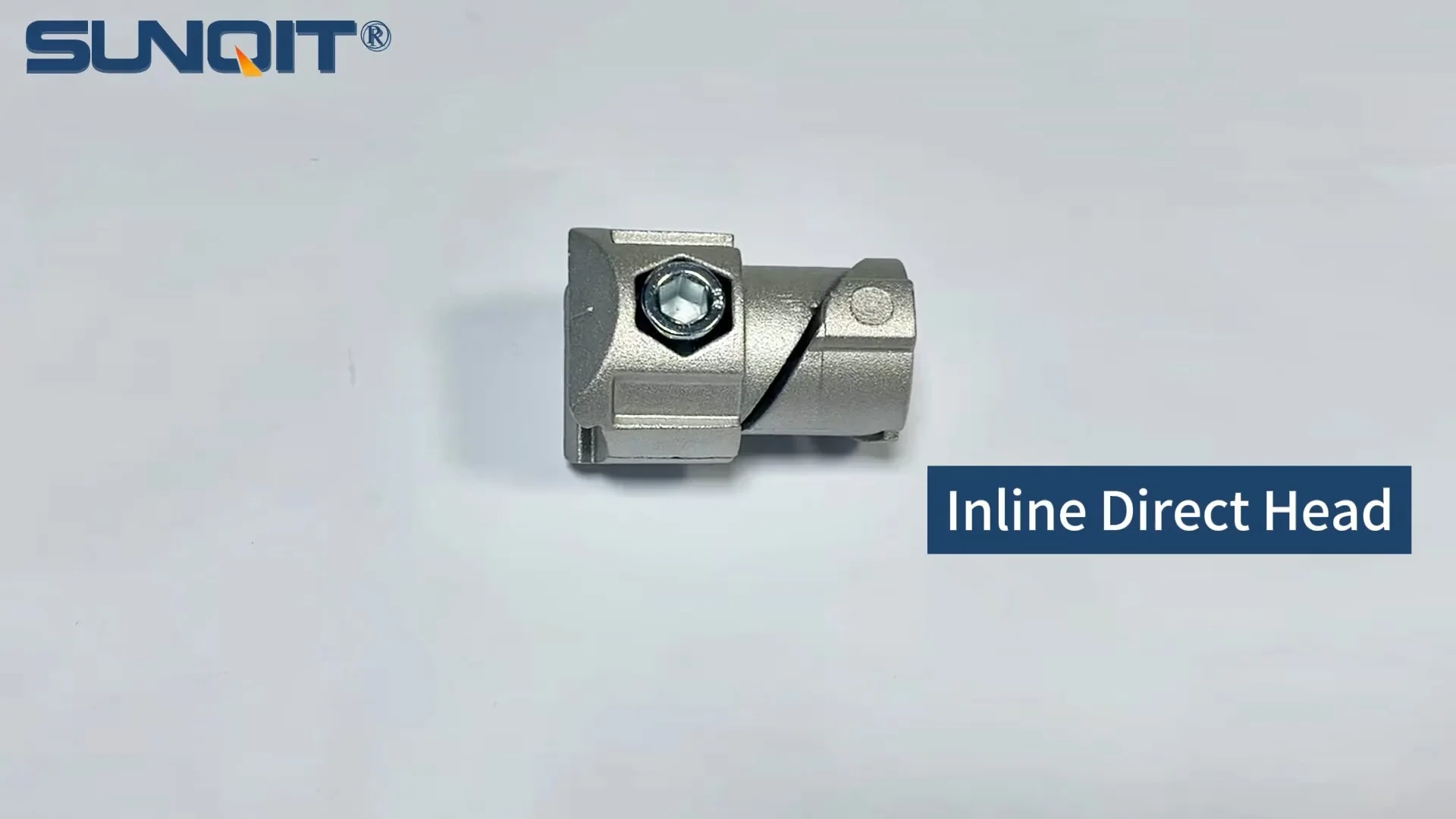
Internal straight aluminum joint
Aluminum pipe joint inside connection used for two pcs 28pcs aluminum pipe connection in straight angle,it connects two pcs pipe from inside.
Aerospace manufacturing is a realm where precision isn't just a goal—it's a non-negotiable standard. Every component, from the largest wing panel to the smallest fastener, plays a role in ensuring safety, performance, and reliability at 35,000 feet or in the vacuum of space. Among these unsung heroes are internal straight aluminum joints, yet critical connectors that hold together everything from aircraft assembly lines to satellite structural frames. In this article, we'll dive into why these joints matter, the exacting precision they demand, and how they intersect with aluminum profiles, extrusion processes, and lean systems to drive aerospace innovation.
What Are Internal Straight Aluminum Joints?
At first glance, an internal straight aluminum joint might look like a simple metal cylinder, but its design is anything but basic. These joints are engineered to connect aluminum pipes or profiles in a straight line, with their threading or locking mechanisms housed internally to minimize bulk and maximize structural integrity. Unlike external joints, which protrude and add weight, internal straight joints sit flush within the hollow channels of aluminum tubes, creating a sleek, aerodynamic connection—perfect for aerospace applications where every ounce and inch counts.
The magic starts with the material: aluminum. Most aerospace-grade internal straight joints are crafted from high-strength aluminum alloys like 6061-T6 or 7075-T6. These alloys offer a rare combination of lightweight properties (about a third the density of steel), impressive tensile strength (up to 420 MPa for 7075-T6), and excellent corrosion resistance—essential for withstanding the harsh conditions of flight, from extreme temperature swings to moisture and salt exposure. But the material alone isn't enough; the manufacturing process is equally critical.
Many internal straight joints begin as aluminum extrusion profiles. Extrusion involves forcing heated aluminum billets through a die to create uniform cross-sections—think of it as squeezing toothpaste through a tube, but with industrial precision. This process ensures consistency in shape and wall thickness, which is vital for maintaining the joint's structural integrity. After extrusion, the profiles undergo CNC machining to carve out internal threads, grooves, or locking mechanisms. Modern CNC machines with multi-axis capabilities can achieve tolerances as tight as ±0.001 inches (0.0254 mm), ensuring that every joint fits perfectly with its mating pipe or profile.
Why Precision Matters in Aerospace: The Stakes Couldn't Be Higher
In aerospace, "close enough" is never good enough. A joint that's even slightly out of tolerance can lead to catastrophic failure. Consider an aircraft's fuel line system: if an internal straight joint connecting two aluminum pipes has a misaligned thread, it could leak fuel, risking fire or engine failure. Similarly, in a satellite's solar panel array, a loose joint might cause vibrations that disrupt sensitive instruments. That's why precision requirements for these joints are among the strictest in manufacturing.
Tolerances: Measuring in Microns
Tolerances for internal straight aluminum joints in aerospace typically range from ±0.0005 inches (0.0127 mm) to ±0.002 inches (0.0508 mm), depending on the application. To put that in perspective, a human hair is about 0.003 inches thick—so these tolerances are often thinner than a strand of hair. Achieving this level of precision requires advanced metrology tools, such as coordinate measuring machines (CMMs) that use laser scanning or touch probes to map the joint's dimensions in 3D. Any deviation beyond the specified tolerance means the part is scrapped, no exceptions.
Material Integrity: No Room for Defects
Precision isn't just about size—it's about what's inside the material. Even a tiny inclusion or porosity in the aluminum can weaken the joint under stress. That's why suppliers use non-destructive testing (NDT) methods like ultrasonic inspection and X-ray imaging to check for internal flaws. For example, ultrasonic waves can detect cracks as small as 0.1 mm, ensuring the joint can withstand the cyclic loading of takeoffs, landings, and turbulence over decades of service.
Surface Finish: Smooth as Glass
The internal surface of the joint matters, too. Rough edges or burrs can cause stress concentrations, where cracks are likely to start. Aerospace standards often require a surface finish of Ra 0.8 μm or better (Ra is a measure of roughness, with lower values meaning smoother surfaces). Achieving this involves processes like electrochemical polishing or honing, which refine the surface to a mirror-like finish, reducing friction and wear when the joint is assembled or adjusted.
| Requirement | Aerospace Standard | Why It Matters |
|---|---|---|
| Tolerance | ±0.0005–±0.002 inches | Ensures proper fit; prevents leaks or structural failure under stress. |
| Material Porosity | ≤ 0.5% by volume (NDT-tested) | Eliminates weak points that could crack under pressure or vibration. |
| Surface Finish | Ra ≤ 0.8 μm | Reduces stress concentrations and wear during assembly/adjustment. |
| Corrosion Resistance | Salt spray test: ≥ 1000 hours (ASTM B117) | Withstands moisture, salt, and chemicals in flight environments. |

Aluminum Profile and Extrusion: The Foundation of Precision Joints
Internal straight aluminum joints don't work in isolation—they rely on high-quality aluminum extrusion profiles to deliver their full potential. Aluminum extrusion is the process that shapes raw aluminum into the pipes, tubes, and structural beams that form the "bones" of aerospace systems. For example, a typical aircraft assembly line might use 2020 or 3030 aluminum extrusion profiles (named for their 20mm×20mm or 30mm×30mm cross-sections) as the framework for workstations, with internal straight joints connecting these profiles into stable, modular structures.
The beauty of extrusion lies in its versatility. Extruded aluminum profiles can be customized with T-slots, grooves, or hollow channels that perfectly complement internal straight joints. A T-slot profile, for instance, might have a longitudinal channel that allows the joint to lock into place using a spring-loaded pin or set screw, eliminating the need for external fasteners. This not only saves weight but also speeds up assembly—a critical advantage in aerospace manufacturing, where time is money.
Another benefit of aluminum extrusion profiles is their consistency. Unlike welded or cast components, extruded profiles have uniform grain structure, which enhances their strength and fatigue resistance. This consistency is key when pairing profiles with internal straight joints; if the profile's inner diameter varies by even 0.001 inches, the joint might not seat properly, compromising the connection. Reputable extrusion suppliers use state-of-the-art dies and quality control processes to ensure that every profile meets strict dimensional standards, making them the ideal partner for precision joints.

Aluminum Pipe Accessories: The Unsung Heroes of Stability
While internal straight aluminum joints take center stage, aluminum pipe accessories play a supporting role that's just as important. These accessories—think brackets, clamps, gaskets, and end caps—ensure that joints stay secure, aligned, and functional over time. For example, a simple bracket might hold two connected profiles parallel, preventing them from flexing under load and straining the joint. A rubber gasket inserted into the joint can create a watertight seal, critical for fluid systems like hydraulic lines or fuel ducts.
One of the most valuable accessories is the locknut. When assembling an internal straight joint, a locknut (or "jam nut") is tightened against the joint to prevent it from loosening due to vibration—common in aerospace environments, where engines, turbulence, and even rocket launches generate intense shaking. Without a locknut, the joint's threads could gradually back out, leading to a loss of structural integrity. High-quality locknuts are often made from the same aluminum alloy as the joint to ensure compatibility and avoid galvanic corrosion (a problem when dissimilar metals touch).
Suppliers of internal straight joints often offer (complementary) aluminum pipe accessories, ensuring that everything works together seamlessly. This "one-stop shop" approach reduces the risk of mismatched components, which is a major cause of assembly errors and quality issues. For aerospace manufacturers, this means fewer delays, lower costs, and greater confidence that their systems will perform as expected.
Lean Systems: How Precision Joints Drive Efficiency in Aerospace
Aerospace manufacturing isn't just about building reliable products—it's also about building them efficiently. That's where lean systems come in. Lean manufacturing focuses on eliminating waste, improving flow, and maximizing value, and internal straight aluminum joints align perfectly with these principles. Here's how:
Modularity = Adaptability
Aerospace production lines are constantly evolving. A manufacturer might build commercial airliners one month and military drones the next, each requiring different workstations, tooling, and material handling systems. Internal straight joints make reconfiguration fast and easy. Because they connect profiles without welding or permanent fasteners, workers can disassemble and reassemble structures in hours instead of days. For example, a workstation frame built with 3030 aluminum profiles and internal straight joints can be taken apart, modified, and put back together to accommodate a new aircraft part—no cutting, grinding, or repainting required. This modularity reduces downtime and waste, two key pillars of lean manufacturing.
Lightweight = Less Waste
Lean systems also emphasize minimizing resource consumption, and aluminum's lightweight nature is a game-changer. Compared to steel joints and profiles, aluminum alternatives reduce material usage by up to 60%, cutting down on raw material costs and waste. Additionally, lighter structures are easier to move and handle, reducing the risk of worker injury and lowering energy consumption in factories (e.g., less power needed for cranes and conveyors). For aerospace manufacturers, this translates to lower operational costs and a smaller environmental footprint—both wins for lean and sustainability goals.
Durability = Longevity
Waste isn't just about materials; it's also about (short-lived) equipment. Internal straight aluminum joints are built to last. Their corrosion resistance and high fatigue strength mean they can withstand years of use, even in demanding environments. Unlike plastic joints, which degrade under UV light or extreme temperatures, or steel joints, which rust, aluminum joints require minimal maintenance. This longevity reduces the need for frequent replacements, saving time and money while aligning with lean's focus on long-term value.
Case Study: How Internal Straight Joints Transformed an Aircraft Assembly Line
A leading aerospace manufacturer was struggling with its legacy assembly line for narrow-body aircraft. The line used steel frames connected with welded joints, which were heavy, time-consuming to modify, and prone to rust. When the company won a contract to build a new, lighter aircraft model, it needed a more flexible solution. The team switched to 4040 aluminum extrusion profiles paired with internal straight aluminum joints and aluminum pipe accessories like brackets and locknuts.
The results were striking: assembly line reconfiguration time dropped by 75% (from 2 weeks to 2 days), material waste decreased by 40% due to aluminum's lighter weight, and maintenance costs fell by 30% because the joints and profiles were corrosion-resistant. Most importantly, the new line could handle both the old and new aircraft models, eliminating the need for a separate production facility. It was a textbook example of lean manufacturing in action—driven by precision, modularity, and the right components.
Challenges in Manufacturing Internal Straight Aluminum Joints
Meeting aerospace precision requirements for internal straight aluminum joints isn't without its hurdles. One of the biggest challenges is material consistency. Even small variations in aluminum alloy composition can affect machinability. For example, a batch of 6061-T6 with slightly higher silicon content might be harder to machine, leading to tool wear and dimensional inaccuracies. To combat this, suppliers carefully control the alloying process, using certified raw materials and advanced testing (like spectrometry) to verify composition before extrusion.
Another challenge is thermal expansion. Aluminum expands and contracts with temperature changes, and during CNC machining, the heat generated by cutting tools can cause the material to warp. To minimize this, manufacturers use coolant systems to keep the workpiece at a stable temperature, and they often machine parts in multiple passes—roughing first to remove excess material, then finishing to achieve the final tolerance. Post-machining, parts are sometimes stress-relieved (heat-treated) to reduce internal stresses that could cause warping over time.
Testing is also a major hurdle. Every batch of internal straight joints must undergo rigorous quality checks, including dimensional inspection with CMMs, hardness testing (to ensure the alloy is properly heat-treated), and fatigue testing (to simulate years of stress). These tests are time-consuming and expensive, but they're non-negotiable in aerospace. A single failed joint could lead to a product recall, damaged reputation, or worse—making the cost of testing a small price to pay for safety.
Future Trends: What's Next for Precision Joints in Aerospace
As aerospace pushes the boundaries of innovation—think electric aircraft, hypersonic flight, and deep-space exploration—the demand for even more precise internal straight aluminum joints will grow. Here are three trends to watch:
Advanced Alloys for Extreme Performance
Researchers are developing new aluminum-lithium alloys that offer even higher strength-to-weight ratios than current options. These alloys could reduce joint weight by an additional 10–15%, which is a game-changer for electric aircraft, where every pound saved extends battery range. Some of these alloys also have better cryogenic properties, making them ideal for space applications, where temperatures can drop to -270°C (-454°F).
Automation and AI-Driven Manufacturing
The future of precision manufacturing is automated. AI-powered CNC machines will soon adjust cutting parameters in real time, using sensors to detect material variations and compensate for tool wear. Robotic arms with vision systems will assemble joints with sub-micrometer accuracy, reducing human error. Even inspection will become more efficient, with AI algorithms analyzing CMM data to flag defects faster than human operators.
3D Printing for Customization
While extrusion and machining will remain the workhorses for high-volume production, 3D printing (additive manufacturing) is emerging as a tool for low-volume, highly customized internal straight joints. For example, a satellite manufacturer might need a one-of-a-kind joint with integrated sensors to monitor stress in orbit. 3D printing allows for complex geometries that would be impossible with traditional methods, opening up new possibilities for joint design.
Conclusion: Small Joints, Big Impact
Internal straight aluminum joints may be small, but their impact on aerospace manufacturing is enormous. They're the glue that holds together lightweight, efficient, and reliable systems—from assembly lines to aircraft components. By meeting the industry's strict precision requirements, leveraging aluminum extrusion profiles and accessories, and supporting lean manufacturing principles, these joints are helping aerospace companies build safer, better, and more efficient products.
As we look to the future, one thing is clear: the demand for precision will only grow. Whether it's through advanced alloys, automation, or 3D printing, the next generation of internal straight aluminum joints will push the boundaries of what's possible in aerospace. And in an industry where innovation is the key to staying ahead, that's a very good thing.
So the next time you look up at an airplane or read about a new satellite launch, take a moment to appreciate the small, precise components that make it all possible. Internal straight aluminum joints might not grab headlines, but they're soaring high—literally and figuratively—in the world of aerospace.