- Company Articles
- Products and Technology
- Product knowledge
- Internal Straight Aluminum Joints in Food Processing: Sanitary Design Features

Internal Straight Aluminum Joints in Food Processing: Sanitary Design Features
Related Product
Internal straight aluminum joint
Aluminum pipe joint inside connection used for two pcs 28pcs aluminum pipe connection in straight angle,it connects two pcs pipe from inside.
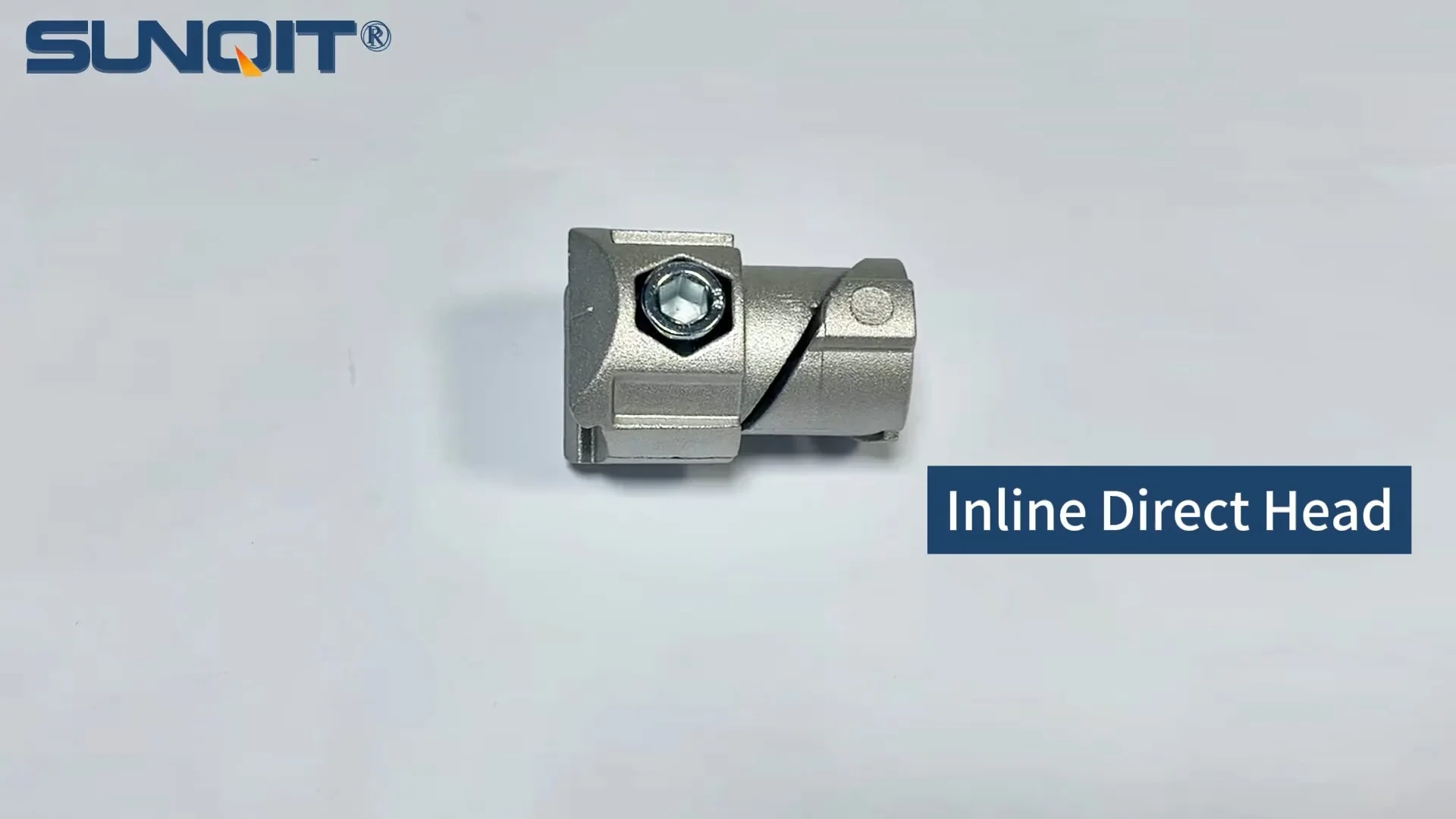
In the fast-paced world of food processing, where precision, safety, and efficiency are non-negotiable, every component of the production line plays a critical role. From conveyor belts that transport raw ingredients to workbenches where final products are assembled, the design of equipment directly impacts food quality and consumer trust. Among the unsung heroes of sanitary food processing equipment are internal straight aluminum joints—modular components that connect aluminum extrusion profiles to form sturdy, easy-to-clean structures. These joints are more than just connectors; they are guardians of hygiene, ensuring that even the smallest crevice doesn't become a breeding ground for bacteria. Let's dive into why these joints matter, their key design features, and how they're transforming food processing facilities worldwide.
Why Sanitary Design Is Non-Negotiable in Food Processing
Food processing environments are battlegrounds against contamination. Every day, facilities handle raw meats, dairy, fruits, and grains—organic materials that attract pathogens like Salmonella, E. coli, and Listeria. According to the World Health Organization, unsafe food causes 600 million illnesses and 420,000 deaths annually. While many factors contribute to these statistics, equipment design is a major culprit. Traditional machinery with hard-to-reach corners, rough surfaces, or (detachable) parts that leave gaps can trap food particles, moisture, and bacteria, turning otherwise harmless equipment into vectors for disease.
Regulatory bodies like the FDA (U.S. Food and Drug Administration), NSF International, and the EU's Food Safety Authority (EFSA) have responded with strict guidelines for equipment sanitation. These standards mandate that surfaces must be smooth, non-porous, and resistant to corrosion; joints must be sealed or designed to prevent buildup; and all components must be easy to disassemble and clean. For food processors, compliance isn't just about avoiding fines—it's about protecting their brand reputation and ensuring consumer safety. In this context, the choice of connectors and structural components like internal straight aluminum joints becomes a strategic decision, not just a logistical one.
What Are Internal Straight Aluminum Joints?
At their core, internal straight aluminum joints are specialized connectors used to join aluminum extrusion profiles—hollow, lightweight metal beams with standardized cross-sections—into rigid, modular structures. Unlike external joints that bolt onto the outside of profiles (creating potential crevices), internal straight joints fit inside the aluminum extrusion profile, creating a flush, seamless connection. This "inside-out" design is a game-changer for sanitation, as it eliminates external gaps where food debris or moisture could accumulate.
These joints are typically made from high-grade aluminum alloys, chosen for their corrosion resistance, lightweight properties, and compatibility with food-grade cleaning agents. They come in various configurations to suit different structural needs: some are fixed for permanent connections, while others (like the internal rotatary aluminum joint) allow for limited rotation, adding flexibility to assembly lines. However, in high-sanitary environments like food processing, fixed internal straight joints are often preferred, as their static design minimizes moving parts and potential contamination points.
Key Components: Aluminum Extrusion Profile and Joint Synergy
Internal straight aluminum joints don't work in isolation—they rely on aluminum extrusion profiles to form the backbone of structures. Aluminum extrusion profiles are created by forcing heated aluminum through a die, resulting in consistent, precise shapes with smooth surfaces. Most food-grade profiles feature T-slots—longitudinal grooves that allow for easy attachment of accessories like workbench tops, conveyor rails, or material racks. When paired with internal straight joints, these profiles create a system where every connection is tight, smooth, and easy to inspect.
The synergy between the joint and the profile is critical. For example, a standard 4040 aluminum extrusion profile (40mm x 40mm) has internal dimensions that perfectly accommodate an internal straight joint, ensuring a snug fit that leaves no room for gaps. The joint itself may feature ridges or teeth that grip the profile's inner walls, eliminating the need for external fasteners. This design not only strengthens the connection but also ensures that the outer surface of the structure remains flat and easy to wipe down—no bolts, nuts, or protruding edges to catch food particles.

Sanitary Design Features of Internal Straight Aluminum Joints
What sets internal straight aluminum joints apart from traditional connectors (like those used in stainless steel pipe series) is their laser focus on hygiene. Let's break down their most critical sanitary features:
1. Seamless, Crevice-Free Connections
The biggest advantage of internal joints is their ability to create flush connections. When installed inside an aluminum extrusion profile, the joint's outer edges align perfectly with the profile's inner walls, leaving no external gaps. Compare this to external joints, which often bolt onto the profile's surface, creating ledges or spaces where food crumbs, oil, or water can pool. In a meat processing plant, for example, a single beef particle trapped in an external joint could harbor bacteria for days, even after regular cleaning. With internal straight joints, there's simply nowhere for debris to hide.
2. Smooth, Non-Porous Surfaces
Aluminum extrusion profiles and their accompanying joints are treated with anodization—a process that coats the aluminum with a thin, protective oxide layer. This layer is non-porous, resistant to scratches, and impervious to most food acids and cleaning chemicals. Unlike painted or coated metals, anodized aluminum doesn't chip or peel, ensuring that the surface remains smooth and easy to sanitize over time. Even after repeated exposure to high-pressure hosing or caustic detergents (common in food processing clean-in-place, or CIP, systems), the surface retains its integrity, preventing bacterial adhesion.
3. Corrosion Resistance
Food processing environments are harsh: high humidity, frequent exposure to water, and contact with acidic or salty foods can corrode even durable metals. Aluminum's natural resistance to corrosion makes it ideal for these conditions. Unlike steel, which rusts when exposed to moisture, aluminum forms a self-healing oxide layer that protects against further degradation. Internal straight aluminum joints, made from the same alloy as the profiles, inherit this resistance, ensuring that structures remain stable and hygienic for years—even in wet areas like poultry processing or seafood plants.
4. Tool-Free or Minimal-Tool Assembly
Disassembling equipment for deep cleaning is a time-consuming but necessary task in food processing. Internal straight aluminum joints simplify this process with tool-free or minimal-tool design. Many models use cam levers, spring-loaded pins, or hand-tightened knobs, allowing workers to disassemble structures quickly without specialized tools. This not only reduces downtime but also ensures that cleaning is thorough—no bolts or screws to lose, and no hidden areas to miss during inspection. For example, a workbench used for packaging bread can be taken apart in minutes, with each joint and profile wiped down individually before reassembly.
5. Compatibility with Food-Grade Accessories
Internal straight aluminum joints are part of a larger ecosystem of aluminum profile accessories designed for food safety. From food-grade plastic roller track guide rails (available in yellow or grey, as noted in industry catalogs) to stainless steel swivel roller balls for smooth material flow, these accessories integrate seamlessly with joint-and-profile systems. For instance, a conveyor system built with internal straight joints can be fitted with yellow plastic roller track guide rails, which are non-marking, easy to clean, and resistant to wear from constant product movement. This modularity ensures that the entire structure—from joints to rails—meets the same high sanitary standards.

Internal Straight Aluminum Joints vs. Traditional Stainless Steel Pipe Series: A Comparison
Stainless steel pipe series have long been the gold standard in food processing, prized for their durability and corrosion resistance. However, internal straight aluminum joints and aluminum extrusion profiles are increasingly challenging this status quo. To understand why, let's compare the two systems across key sanitary and operational metrics:
| Feature | Internal Straight Aluminum Joints + Aluminum Extrusion Profile | Stainless Steel Pipe Series |
|---|---|---|
| Surface Smoothness | Anodized, non-porous surface with flush, crevice-free joints. | Smooth but often requires welding, which can create rough seams if not polished. |
| Weight | 30-50% lighter than stainless steel, reducing structural stress and easing handling during cleaning. | Heavy, making disassembly and transport for cleaning labor-intensive. |
| Corrosion Resistance | Highly resistant to moisture and mild acids; ideal for wet environments. | Excellent corrosion resistance but prone to pitting in chloride-rich environments (e.g., seafood processing). |
| Assembly/Disassembly | Tool-free or minimal tools required; modular design allows quick reconfiguration. | Often welded or bolted with external fasteners, requiring specialized tools for disassembly. |
| Cost | Lower upfront cost than stainless steel; lower long-term maintenance costs. | Higher upfront cost; welding and polishing add to installation expenses. |
| Sanitary Gaps | No external gaps; internal joints eliminate crevices. | External bolts, welds, or fittings can create gaps if not properly sealed. |
While stainless steel pipe series still excel in extreme conditions (e.g., high-temperature processing or caustic chemical exposure), aluminum systems offer a compelling alternative for most food processing applications. Their lightweight design reduces worker fatigue during cleaning, their modularity allows for quick reconfiguration of assembly lines, and their seamless joints drastically lower contamination risks. For many processors, the trade-off between slightly lower heat resistance and superior sanitation and cost-efficiency is well worth it.
Applications in Food Processing: From Workbenches to Conveyors
Internal straight aluminum joints and aluminum extrusion profiles are incredibly versatile, forming the basis of countless food processing structures. Let's explore some of their most common applications and how their design enhances sanitation:
1. Sanitary Workbenches
Workbenches are the heart of food processing facilities—used for tasks like cutting vegetables, assembling sandwiches, or packaging snacks. A typical workbench built with aluminum extrusion profiles and internal straight joints features a smooth, food-grade top (often stainless steel or HDPE plastic) supported by a lightweight aluminum frame. The internal joints ensure that the frame's connections are flush, with no bolts or crevices to trap crumbs or spills. Many models, like the "workbench e (single deck-without caster)" referenced in industry catalogs, are designed with adjustable heights and removable tops, making them easy to clean underneath and around. In a bakery, for example, a workbench used for decorating cakes can be disassembled in minutes, with each aluminum extrusion profile wiped down and sanitized to prevent cross-contamination between batches.
2. Conveyor Systems and Roller Tracks
Conveyors are essential for moving products through processing lines, but their belts, rollers, and support structures are notoriously hard to clean. Aluminum-based conveyor systems, built with internal straight joints and plastic roller track guide rails (yellow or grey, depending on the application), address this challenge. The aluminum extrusion profile frame provides a sturdy base, while the internal joints ensure that the structure remains stable even under the weight of moving products. Plastic roller track guide rails are non-stick and easy to wipe down, and their modular design allows for quick replacement if damaged. In a dairy plant, a conveyor transporting yogurt cups can be fitted with stainless steel swivel roller balls (1 inch) to ensure smooth movement, with the entire system disassembled monthly for deep cleaning—no hidden areas, no rust, no bacterial buildup.
3. Material Racks and Storage Systems
Storing raw materials and finished products requires racks that are both durable and sanitary. Internal straight aluminum joints shine here, forming structures like "material rack b (3 row and 3 floor)" that are lightweight, corrosion-resistant, and easy to clean. Unlike wooden pallets or steel racks, aluminum racks won't splinter, rust, or absorb moisture. Their open design allows for air circulation, reducing mold growth, and their smooth surfaces can be sanitized with spray cleaners or pressure washers. In a meat processing plant, a rack storing frozen beef cuts can be hosed down after use, with water draining easily through the aluminum extrusion profile's T-slots—no standing water, no bacterial growth.
4. Turnover Trolleys and Mobile Workstations
Turnover trolleys are used to transport ingredients between stations, and their mobility makes them prone to collecting dirt in wheels and joints. Aluminum trolleys, built with internal straight joints and caster wheels (often with brake systems), solve this problem. The aluminum frame is lightweight, making the trolley easy to maneuver, while the internal joints prevent debris from getting trapped in the structure. Caster accessories like sealed bearings and food-grade grease ensure that the wheels themselves remain clean, even in wet environments. A trolley used to move lettuce from washing to chopping stations, for example, can be wiped down quickly between uses, with its aluminum components resisting the moisture from the greens.
Compliance and Certification: Meeting Global Food Safety Standards
For food processors, using equipment that meets international safety standards is non-negotiable. Internal straight aluminum joints and aluminum extrusion profiles are designed with these standards in mind, ensuring compliance with regulations like:
- FDA 21 CFR Part 177 : Specifies that materials in contact with food must be safe and non-toxic. Aluminum alloys used in joints and profiles meet this requirement, as they do not leach harmful substances into food.
- NSF/ANSI 169 : Applies to equipment for processing and handling food, requiring smooth surfaces, corrosion resistance, and ease of cleaning. Many internal straight aluminum joints and aluminum extrusion profiles are NSF-certified, meaning they've been tested and approved for food contact.
- ISO 22000 : A global standard for food safety management systems, which includes requirements for equipment design. The modular, easy-to-clean nature of aluminum joint systems aligns with ISO 22000's focus on hazard analysis and critical control points (HACCP).
Manufacturers of these components often provide certification documents, material safety data sheets (MSDS), and test reports to verify compliance. For food processors, this documentation is critical during audits, as it demonstrates a commitment to safety and helps avoid costly shutdowns or recalls.
Maintenance and Longevity: Keeping Systems Sanitary for Years
Even the most well-designed equipment requires maintenance to stay sanitary. Internal straight aluminum joints simplify this process, thanks to their durable materials and thoughtful design:
Cleaning : Daily cleaning typically involves wiping surfaces with a food-grade detergent and water, followed by sanitization with a chlorine or quaternary ammonium solution. The smooth, non-porous surface of aluminum extrusion profiles and internal joints ensures that cleaning agents penetrate evenly, with no residue left behind. For weekly deep cleaning, structures can be disassembled using minimal tools, allowing for individual components to be soaked or pressure-washed.
Inspection : Regular inspections are key to catching issues early. Internal straight aluminum joints should be checked for signs of wear, such as loose connections or damaged anodization. Unlike steel, aluminum doesn't rust, so corrosion is rarely a problem—but joints can loosen over time due to vibration. Tightening them by hand (or with a simple tool) is usually sufficient to restore stability.
Replacement : If a joint becomes damaged (e.g., a cracked housing or worn teeth), it can be replaced individually without rebuilding the entire structure. This modularity reduces downtime and costs, as only the faulty component needs to be swapped out. Most manufacturers offer a range of aluminum profile accessories, including replacement joints, ensuring compatibility with existing systems.
Case Study: A Bakery's Journey to Sanitary Excellence
To illustrate the impact of internal straight aluminum joints, consider the case of a mid-sized artisanal bakery in the Midwest, USA. Prior to 2022, the bakery used steel workbenches and wooden racks to prepare and store dough, pastries, and packaging materials. While the team followed strict cleaning protocols, they struggled with persistent mold growth on wooden surfaces and rust spots on steel joints, leading to occasional product contamination and customer complaints.
In early 2022, the bakery invested in a complete overhaul of its production line, replacing steel and wood with aluminum extrusion profiles, internal straight aluminum joints, and food-grade accessories. Key changes included:
- Installing aluminum workbenches with HDPE tops and internal straight joints, allowing for easy disassembly and cleaning.
- Replacing wooden storage racks with aluminum "material rack b (3 row and 3 floor)" units, fitted with plastic roller track guide rails to prevent pastries from sticking.
- Upgrading to aluminum conveyor systems with stainless steel swivel roller balls (1 inch) for moving dough trays between stations.
The results were dramatic: within six months, the bakery saw a 75% reduction in contamination incidents, as reported by internal quality checks. Cleaning time decreased by 40%, as workers no longer had to scrub rusted steel joints or replace moldy wooden shelves. Employee satisfaction also improved, with staff noting that the lighter aluminum structures were easier to move and adjust. Most importantly, customer complaints dropped to zero, and the bakery's reputation for quality grew—leading to a 20% increase in sales by the end of the year.
Future Trends: Where Sanitary Design Meets Innovation
As food safety standards evolve, so too will the design of internal straight aluminum joints and aluminum extrusion profile systems. Emerging trends include:
Smart Sanitation Sensors : Manufacturers are exploring integrating sensors into joints to monitor temperature, moisture, or bacterial growth, alerting workers to potential issues before they escalate.
Sustainability : Aluminum is 100% recyclable, making it a eco-friendly alternative to steel. Future systems may use recycled aluminum alloys without compromising strength or corrosion resistance.
3D-Printed Customization : While still in early stages, 3D printing could allow for on-demand production of specialized internal joints, tailored to unique processing needs (e.g., curved profiles for irregular conveyor paths).
Conclusion: Investing in Sanitary Design for a Safer Food Supply
Internal straight aluminum joints may seem like small components, but their impact on food safety is enormous. By eliminating crevices, reducing weight, and simplifying cleaning, these joints—and the aluminum extrusion profiles they connect—are helping food processors meet rigorous regulatory standards, protect their brands, and ensure consumer trust. As the bakery case study shows, the investment in sanitary equipment pays off in reduced contamination, lower maintenance costs, and improved efficiency.
For food processors considering upgrading their equipment, the message is clear: don't overlook the details. From workbenches to conveyors, the choice of joints and profiles matters. Internal straight aluminum joints offer a winning combination of sanitation, durability, and flexibility—proving that sometimes, the smallest innovations make the biggest difference in keeping our food safe.