- Company Articles
- Products and Technology
- Product knowledge
- Internal Straight Aluminum Joints in Renewable Energy Manufacturing: Solar Panel Production

Internal Straight Aluminum Joints in Renewable Energy Manufacturing: Solar Panel Production
Related Product
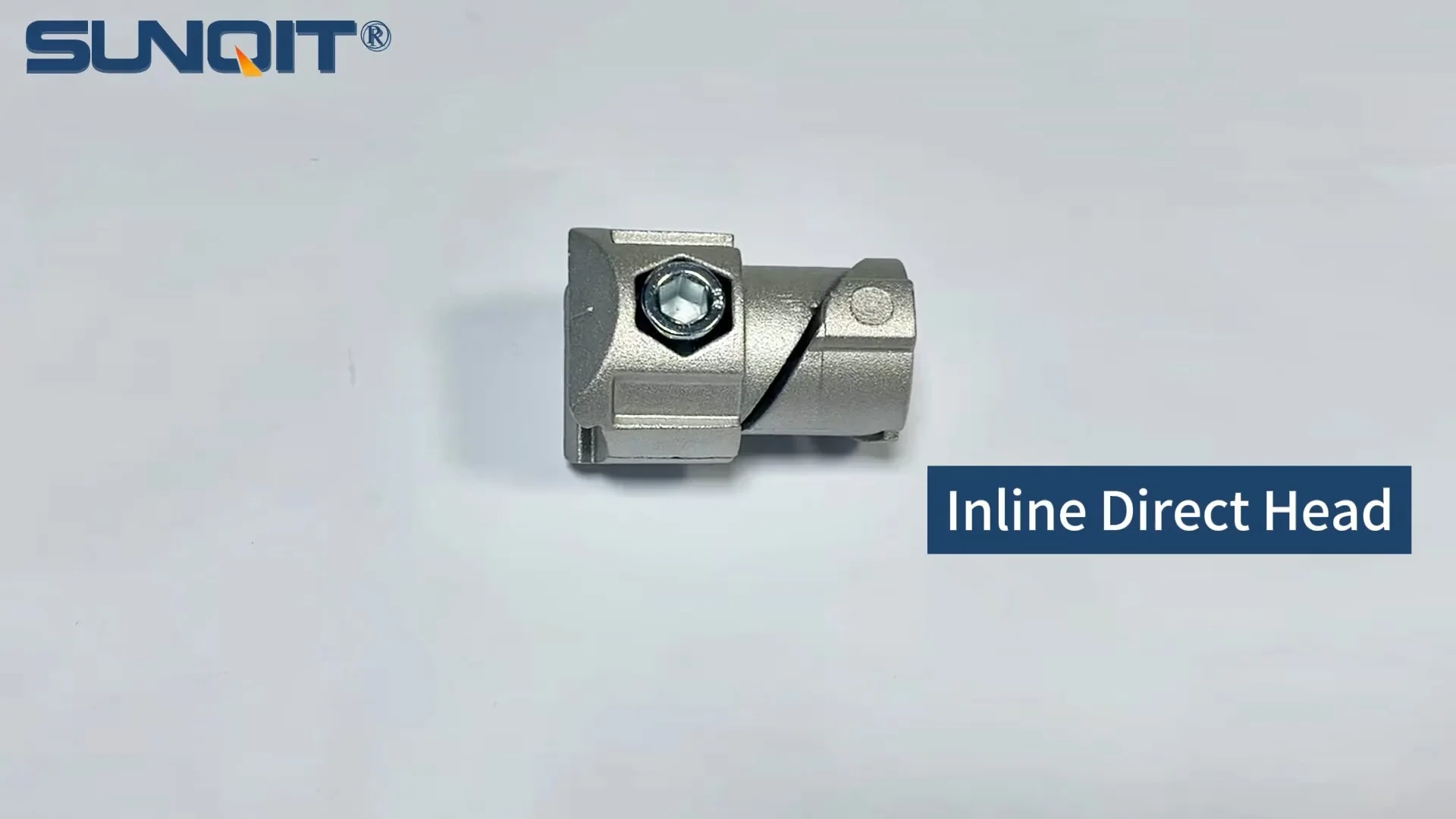
Internal straight aluminum joint
Aluminum pipe joint inside connection used for two pcs 28pcs aluminum pipe connection in straight angle,it connects two pcs pipe from inside.
How a Small Component Powers Efficiency and Sustainability in Solar Assembly Lines
The Solar Surge: Manufacturing Challenges in the Race for Renewable Energy
As the world grapples with climate change, solar energy has emerged as a cornerstone of the transition to renewable power. In 2023 alone, global solar capacity grew by 290 gigawatts, a 30% increase from the previous year, according to the International Energy Agency. Behind every sleek solar panel that adorns rooftops and solar farms lies a complex manufacturing process—one that demands precision, adaptability, and efficiency. Solar panel production involves multiple stages: from silicon wafer cutting and cell sorting to stringing, lamination, and final framing. Each step requires assembly lines that can keep pace with evolving panel designs, varying production volumes, and the industry's unyielding focus on reducing costs without compromising quality.
In this high-stakes environment, the tools and infrastructure that support manufacturing operations play a critical role. Traditional assembly systems, often built with rigid steel components or generic plastic fixtures, struggle to meet the demands of modern solar production. They are heavy, difficult to reconfigure, and prone to corrosion in factory environments—all factors that slow down production, increase maintenance costs, and limit a manufacturer's ability to scale. Enter internal straight aluminum joints : a seemingly small component that is quietly revolutionizing how solar panel assembly lines are designed, built, and operated. When paired with aluminum extrusion profiles , these joints create modular, flexible systems that align perfectly with the needs of renewable energy manufacturing.
What Are Internal Straight Aluminum Joints? A Closer Look at the Design
At first glance, an internal straight aluminum joint might appear unassuming—a small, cylindrical piece of aluminum alloy with precision-machined grooves and a hollow core. But its simplicity belies its engineering ingenuity. These joints are specifically designed to connect aluminum extrusion profiles —hollow, lightweight beams with T-slot channels—into stable, yet adjustable structures. Unlike traditional welding or bolted connections, internal straight aluminum joints use a friction-based mechanism: when inserted into the end of an aluminum profile, a tightening screw expands the joint's inner core, creating a secure grip that can withstand heavy loads while allowing for quick disassembly and reconfiguration.
The "internal straight" designation refers to two key features: the joint's placement inside the profile (rather than clamping around it) and its ability to create straight-line connections between profiles. This design minimizes bulk, reduces weight, and ensures a clean, streamlined look—all critical for applications where space and aesthetics matter. Most internal straight aluminum joints are made from high-grade aluminum alloys, such as 6061-T6, chosen for their exceptional strength-to-weight ratio, corrosion resistance, and thermal stability. This material choice is no accident: aluminum's properties align with the sustainability goals of the solar industry, as it is 100% recyclable with no loss of quality, making it a natural fit for renewable energy manufacturing.
Another standout feature is compatibility. Internal straight aluminum joints are engineered to work seamlessly with standard aluminum extrusion profiles, which come in various sizes (e.g., 2020, 3030, 4040 series) to accommodate different load requirements. This interoperability means manufacturers can mix and match profiles and joints to create custom structures—from workbenches to flow racks—without being locked into a single supplier's proprietary system. For solar panel production, where assembly lines often need to be retooled for new panel sizes or technologies, this flexibility is invaluable.

From Workbenches to Flow Racks: Applications in Solar Panel Assembly
Solar panel manufacturing is a dance of precision and speed, and nowhere is this more evident than on the assembly floor. Let's walk through a typical solar panel production line and see how internal straight aluminum joints make their mark, starting with the workbench —the heart of manual assembly tasks.
In the cell sorting stage, workers inspect and categorize solar cells by efficiency and color uniformity. These cells are delicate, and the workbench must provide a stable, ergonomic surface at the correct height. With internal straight aluminum joints, manufacturers can build modular workbenches that adjust to different worker heights and cell sizes. For example, a workbench E (single deck-without caster) can be quickly reconfigured by loosening the joints, adjusting the aluminum profiles, and retightening—no welding or specialized tools required. This adaptability is crucial when switching between producing residential panels (typically 60 or 72 cells) and commercial panels (up to 144 cells), which demand longer work surfaces.
Moving down the line, flow racks take center stage. These structures use gravity or rollers to move materials—such as framed panels or lamination sheets—from one workstation to the next. A material rack B (3 row and 3 floor), for instance, relies on sturdy connections to support stacked materials without sagging. Internal straight aluminum joints excel here: their secure grip ensures the rack remains stable even when fully loaded, while their lightweight nature makes the entire structure easy to relocate if the production layout changes. The joints also work seamlessly with roller track components, such as plastic roller track guide rails (yellow or grey), creating smooth, uninterrupted material flow that reduces bottlenecks and speeds up production.
Beyond workbenches and flow racks, internal straight aluminum joints play a role in specialized equipment, too. For example, lamination stations—where solar cells are bonded to glass and backsheets under heat and pressure—require precise alignment. Aluminum extrusion profiles connected by internal joints form the frame of these stations, ensuring the lamination press remains level and stable, even under high temperatures. Similarly, testing stations, where panels undergo electrical performance checks, use joint-connected structures to hold testing equipment in place, allowing for quick adjustments when testing new panel models.
| Feature | Traditional Steel Joints | Internal Straight Aluminum Joints |
|---|---|---|
| Weight | Heavy (increases worker fatigue and floor load) | Lightweight (up to 60% lighter than steel) |
| Assembly Time | Slow (requires welding or drilling; 2-3 hours per structure) | Fast (tool-free adjustment; 30-60 minutes per structure) |
| Corrosion Resistance | Poor (prone to rust in humid factory environments) | Excellent (aluminum oxide layer prevents corrosion) |
| Reconfigurability | Limited (permanent connections; difficult to modify) | High (easily disassembled and reconfigured) |
| Sustainability | Low (steel recycling is energy-intensive; joints often non-recyclable) | High (100% recyclable aluminum; minimal waste during assembly) |
Case Study: BrightHorizon Solar's 25% Production Boost with Aluminum Joints
To put these benefits into perspective, let's look at BrightHorizon Solar, a mid-sized manufacturer in Arizona that produces residential solar panels. In 2022, BrightHorizon faced a challenge: demand for their high-efficiency panels was surging, but their aging assembly line, built with steel workbenches and bolted flow racks, couldn't keep up. Changeovers between panel models took 4 hours, and workers complained of fatigue from moving heavy steel components during reconfigurations. Maintenance costs were also rising, as steel racks in the humid factory air began to rust, leading to jams in material flow.
BrightHorizon's production manager, Maria Gonzalez, decided to overhaul the line using aluminum extrusion profiles and internal straight aluminum joints. "We started small, replacing the cell sorting workbenches first," she recalls. "Within a week, workers were asking for the new joints everywhere. The workbenches were lighter, so we could move them without forklifts, and adjusting heights took 10 minutes instead of 2 hours. It was a game-changer."
Encouraged by the results, BrightHorizon replaced all flow racks and assembly stations. The impact was immediate: changeover time dropped from 4 hours to 45 minutes, allowing the line to run three shifts instead of two. Worker absenteeism due to back strain decreased by 30%, and maintenance costs fell by 40% as rust-related jams disappeared. Most notably, production output increased by 25%—all without adding square footage to the factory. "The internal straight aluminum joints were the unsung heroes," Gonzalez says. "They turned our rigid, static line into a flexible, adaptive system that can keep up with demand and evolving technology."

Beyond the Factory Floor: Sustainability and the Lean System Advantage
Solar energy is about more than clean electricity—it's about building a sustainable future from the ground up. For manufacturers, this means aligning every aspect of production with environmental goals, and internal straight aluminum joints fit this vision perfectly. Unlike steel, which requires intensive mining and energy-heavy processing, aluminum is highly recyclable. In fact, 75% of all aluminum ever produced is still in use today, thanks to its infinite recyclability. When a solar manufacturer retires an assembly line built with internal straight aluminum joints, the aluminum profiles and joints can be melted down and reused, creating a closed-loop system that minimizes waste.
This sustainability aligns with the lean system philosophy, which focuses on eliminating waste (muda) in manufacturing. Lean systems aim to reduce overproduction, waiting, and unnecessary movement—all areas where internal straight aluminum joints shine. Their modular design means manufacturers can build only what they need, avoiding overproduction of custom steel structures. Quick reconfigurations reduce waiting time during changeovers, and lightweight components minimize unnecessary movement of equipment. In short, these joints don't just support lean systems—they embody them.
Looking ahead, the future of solar manufacturing will likely see even tighter integration between modular assembly systems and smart technology. Imagine sensors embedded in aluminum profiles that monitor joint tightness or material flow, alerting maintenance teams before issues arise. Or digital twins of assembly lines, where engineers can test new configurations using 3D models of aluminum joints and profiles before physical changes are made. Internal straight aluminum joints, with their standardized design and compatibility, are poised to be the backbone of these smart, sustainable lines.
Conclusion: Small Joints, Big Impact on Renewable Energy's Future
In the grand scheme of solar energy, internal straight aluminum joints may seem like minor players. But as we've seen, their impact is anything but small. They transform rigid assembly lines into flexible, adaptive systems that can keep pace with the rapid growth of solar power. They reduce worker fatigue, cut maintenance costs, and boost production efficiency. And they do it all while upholding the sustainability values that make solar energy so vital.
As Maria Gonzalez from BrightHorizon Solar put it: "Solar panels are about capturing sunlight and turning it into progress. The tools we use to build them should do the same—capture efficiency and turn it into a better, more sustainable future." Internal straight aluminum joints, paired with aluminum extrusion profiles, workbenches, and flow racks, are doing just that. They are the quiet innovators powering the next generation of solar manufacturing, proving that sometimes, the smallest components make the biggest difference.
In a world racing to combat climate change, every advance in solar production counts. Internal straight aluminum joints may not generate electricity, but they help generate the progress we need—one panel, one workbench, one sustainable step at a time.