- Company Articles
- Products and Technology
- Product knowledge
- Internal Straight Aluminum Joints vs. Riveted Joints: Disassembly & Reuse Comparison

Internal Straight Aluminum Joints vs. Riveted Joints: Disassembly & Reuse Comparison
Related Product
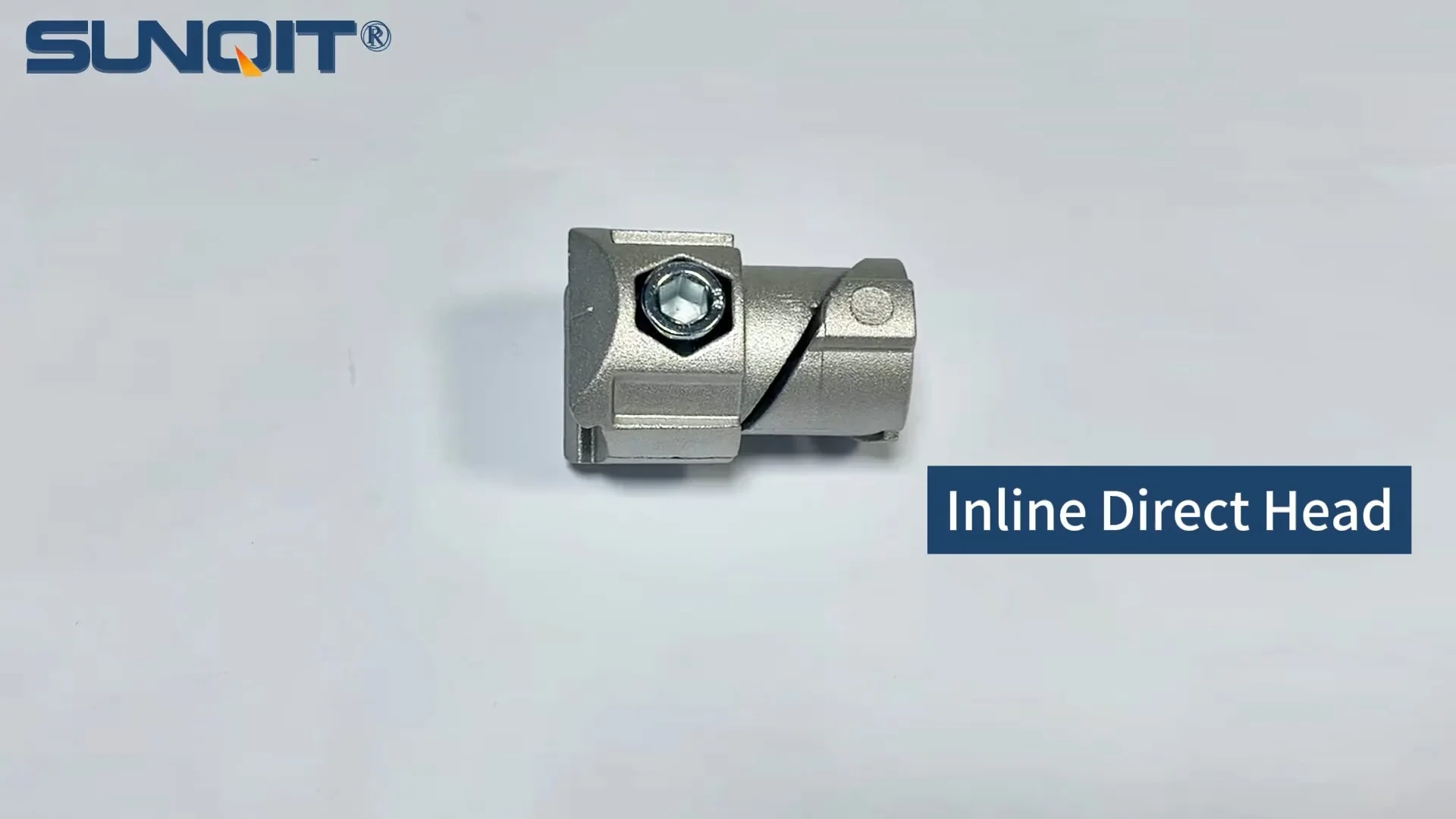
Internal straight aluminum joint
Aluminum pipe joint inside connection used for two pcs 28pcs aluminum pipe connection in straight angle,it connects two pcs pipe from inside.
In the world of manufacturing and workshop design, the smallest components often have the biggest impact on efficiency. Whether you're setting up a new production line, reconfiguring a workspace, or scaling operations, the way you connect materials can make or break your ability to adapt quickly. Today, we're diving into two common joining methods: internal straight aluminum joints and traditional riveted joints. Specifically, we'll explore how they stack up when it comes to disassembly and reuse—two critical factors for any business aiming to stay flexible, reduce waste, and keep costs in check.
If you've ever walked through a busy factory or a small workshop, you've probably seen aluminum profiles holding up workbenches, material racks, or conveyor systems. These lightweight, durable structures are the backbone of modern modular setups. But what holds them together? That's where joints come in. And not all joints are created equal. Some are built for permanence, while others prioritize adaptability. Let's start by understanding why disassembly and reuse matter in the first place.
Why Disassembly and Reuse Matter in Modern Workspaces
Gone are the days when manufacturing floors were static, set-it-and-forget-it spaces. Today's businesses—from small startups to large corporations—need to pivot fast. Maybe a sudden surge in orders means you need to expand your assembly line. Or perhaps a new product design requires rearranging your workbenches to optimize workflow. In lean system environments, where waste reduction is key, being able to take apart and reuse components isn't just a convenience—it's a strategic advantage.
Consider the cost of materials alone. If every time you need to reconfigure a structure, you have to cut, drill, or replace parts, those expenses add up. Then there's downtime: the longer it takes to disassemble and rebuild, the more production suffers. And let's not forget sustainability. Throwing away perfectly good aluminum profiles or joints because they're permanently fixed isn't just wasteful—it's bad for the planet and your brand's reputation.
So, when choosing between joining methods, the ability to take things apart without destroying them and reuse them in new setups is a game-changer. That's where internal straight aluminum joints and riveted joints part ways. Let's break down each one.
What Are Internal Straight Aluminum Joints?
First, let's get familiar with internal straight aluminum joints . These are specialized connectors designed to work with aluminum profiles—those extruded metal beams with T-slots that you see in everything from workbenches to machine guards. Unlike some joints that clamp around the outside of the profile, internal straight joints fit inside the T-slot, creating a clean, streamlined connection.
Think of them as the "hidden heroes" of modular systems. They're not just about holding things together; they're engineered for precision and flexibility. Most internal straight aluminum joints use a combination of set screws, cams, or spring-loaded mechanisms to lock into place. To install them, you slide the joint into the end of one aluminum profile, align it with another profile, and tighten a screw (usually with an Allen wrench). The result? A secure, rattle-free connection that's strong enough to support heavy loads but easy enough to take apart when needed.
One of the biggest perks of these joints is their compatibility with standard aluminum profiles. Whether you're working with 2020, 3030, or 4040 series profiles (common sizes in industrial setups), there's likely an internal straight joint designed to fit. They're also versatile: you can use them to connect profiles end-to-end, at right angles, or even in complex configurations, depending on the joint design. But for our focus today—disassembly and reuse—their true magic lies in how they let you undo that connection.

What Are Riveted Joints?
Now, let's turn to riveted joints—the old reliable of the manufacturing world. Rivets are one of the oldest mechanical fasteners around, and for good reason: they're simple, strong, and inexpensive. A rivet is a cylindrical metal pin with a head on one end. To join two pieces of material, you drill a hole through both, insert the rivet, and then deform the "tail" end (the side without the head) using a hammer, rivet gun, or press. This deformation spreads the tail, creating a second head that locks the rivet in place, clamping the materials together.
Riveted joints have been used for decades in everything from bridges to airplanes to metal shelving. They're prized for their vibration resistance—once set, they don't loosen over time—and their ability to create a permanent bond. In applications where the structure will never need to be taken apart (think: a static storage rack in a warehouse that's been in the same spot for 20 years), rivets make perfect sense. They're also budget-friendly upfront, which is why they're still common in low-cost, fixed-structure projects.
But here's the catch: that permanence is a double-edged sword. Rivets are designed to be installed once and stay put. Taking them apart isn't just hard—it's often destructive. To remove a rivet, you typically have to drill out the head, which can damage the surrounding material, bend the rivet shank, or widen the hole. Even if you manage to get the rivet out, the hole is usually too deformed to reuse with another rivet. So, while rivets are great for stability, they're terrible for flexibility.

Disassembly: The Day-to-Day Reality
Let's say you need to take apart a structure—maybe that workbench we mentioned earlier—to move it to a new location or reconfigure its layout. How do internal straight aluminum joints and riveted joints handle this process?
Disassembling Internal Straight Aluminum Joints
Disassembling with internal straight aluminum joints is surprisingly straightforward. Most models require just a basic tool—usually an Allen wrench (hex key) or a small screwdriver. Here's how it typically goes:
1. Locate the set screw: On most internal joints, there's a small screw that tightens against the inside of the aluminum profile's T-slot. This screw is what locks the joint in place.
2. Loosen the screw: Using your Allen wrench, turn the screw counterclockwise. You don't need to remove it completely—just loosen it enough so that the joint can slide freely inside the T-slot.
3. Separate the profiles: Once the screw is loose, gently pull or twist the connected profiles apart. The joint should slide out of one of the profiles with minimal effort. If it's stuck (maybe from years of vibration), a light tap with a rubber mallet usually does the trick.
That's it. No drilling, no cutting, no swearing (okay, maybe a little if the screw is stubborn). The entire process takes minutes—even for someone with minimal technical experience. And here's the best part: the aluminum profile and the joint itself are both undamaged. The T-slot isn't scratched, the joint's threads aren't stripped, and everything is ready to be reused.
I once worked with a small electronics manufacturer that used internal straight aluminum joints for their assembly workbenches. When they landed a big contract, they needed to add two more workstations in a week. Their team disassembled three unused material racks (held together with these joints), re-cut the aluminum profiles to the new dimensions, and reassembled them into workbenches. Total time? Two days. Cost? Just the labor—no new materials needed. That's the power of easy disassembly.
Disassembling Riveted Joints
Now, let's try that same scenario with riveted joints. Disassembling a riveted structure is more like a demolition project than a reconfiguration. Here's what you're up against:
1. Drill out the rivet head: You'll need a drill bit slightly smaller than the rivet shank. Carefully center the bit on the rivet head and drill until the head pops off. If you're not precise, you'll scratch the aluminum profile or drill too deep, damaging the material below.
2. Pound out the remaining shank: Once the head is gone, the shank might still be stuck. You'll need a punch and hammer to drive it through the hole. This can bend the shank, making it harder to remove, or warp the surrounding metal if you hit too hard.
3. Clean up the mess: Even if you successfully remove the rivet, the hole is now enlarged or deformed. You might need to file down burrs, sand out scratches, or even drill a new hole (which weakens the profile). And the rivet itself? It's trash—you can't reuse a deformed rivet.
I spoke with a workshop foreman who tried to reuse a riveted workbench once. His team spent four hours drilling out 12 rivets, only to find that half the holes were too damaged to use again. They ended up buying new aluminum profiles and rivets, negating any cost savings from "reusing" the old structure. "Never again," he told me. "Rivets are great if you want something to stay put forever, but if you even think you might need to move it, save yourself the headache."
Reuse Potential: Making the Most of Your Materials
Disassembly is only half the battle. The real test is whether you can reuse the components afterward. Let's compare how internal straight aluminum joints and riveted joints hold up here.
Reusing Internal Straight Aluminum Joints
Internal straight aluminum joints are built for reuse. They're made from durable materials like aluminum alloy or steel, which can withstand multiple cycles of tightening and loosening without losing their strength. The set screws are designed to grip the T-slot firmly, even after being adjusted dozens of times. And since the joint itself isn't deformed during installation or removal, there's no degradation in performance.
In fact, many manufacturers of these joints advertise their "unlimited reuse" potential. I've seen joints that are 10 years old, reused in five different structures, still holding strong. The key is proper maintenance: occasionally cleaning out dust or debris from the T-slot and ensuring the set screw is tightened to the right torque (too loose, and the joint slips; too tight, and you risk stripping the threads).
Reusing these joints also extends to the aluminum profiles. Since there's no drilling or cutting involved in disassembly, the profiles remain intact. You can cut them to new lengths, drill new holes (if needed), or even use them in their original form. This is a huge win for sustainability—instead of sending old profiles to the scrapyard, you're giving them a second (or third, or fourth) life.
For example, a furniture manufacturer I consulted with uses internal straight aluminum joints to build temporary display racks for trade shows. After each show, they disassemble the racks, pack the joints and profiles into boxes, and reuse them for the next event. Over three years, they estimate they've saved $40,000 on materials alone by not having to buy new racks every time.
Reusing Riveted Joints
Riveted joints, on the other hand, are essentially single-use. Once a rivet is installed, its tail is permanently deformed. Even if you manage to remove it without destroying the surrounding material (a big "if"), the rivet itself is useless. You can't straighten out the tail or re-deform it to fit a new hole. So, every time you disassemble a riveted structure, you have to buy new rivets for reassembly.
Then there's the aluminum profile. As we mentioned earlier, drilling out rivets often damages the holes. If the hole is too enlarged, you might need to use a larger rivet, but that requires drilling a bigger hole, which weakens the profile. Over time, this creates a vicious cycle: more holes, weaker material, and eventually, profiles that are too compromised to reuse.
I visited a automotive repair shop that had a riveted tool rack they'd tried to reuse. After drilling out the rivets, they found three of the profiles had cracks around the old holes. They had to throw those profiles away and buy new ones, which cost more than just building a new rack from scratch. "It was a false economy," the shop owner told me. "I thought rivets were cheaper, but in the long run, I spent more on replacements."
A Side-by-Side Comparison
To make it easier to see how these two joining methods stack up, let's put them head-to-head in a table:
| Feature | Internal Straight Aluminum Joints | Riveted Joints |
|---|---|---|
| Disassembly Time | 5–15 minutes per joint (minimal tools) | 30–60 minutes per rivet (requires drilling, punching) |
| Tools Required | Allen wrench or small screwdriver | Drill, drill bits, punch, hammer, file |
| Material Damage Risk | Very low (no drilling or cutting) | High (scratches, enlarged holes, bent material) |
| Joint Reusability | Unlimited (can be reused dozens of times) | None (rivets are permanently deformed) |
| Profile Reusability | High (profiles remain undamaged) | Low (holes may be too damaged to reuse) |
| Initial Cost | Higher ($2–$10 per joint, depending on size) | Lower ($0.10–$0.50 per rivet) |
| Long-Term Cost | Lower (no need to replace joints or profiles) | Higher (frequent replacement of rivets and damaged profiles) |
| Best For | Lean systems, modular workbenches, reconfigurable structures | Static, permanent structures (e.g., bridges, fixed shelving) |
The Lean System Advantage
If you're familiar with lean system principles—eliminating waste, continuous improvement, maximizing value—then internal straight aluminum joints should sound like a dream come true. Lean manufacturing is all about adapting to change quickly, and these joints embody that flexibility.
In a lean environment, downtime is the enemy. When you can disassemble and reassemble a workbench or material rack in hours instead of days, you reduce production interruptions. Reusing components means less waste sent to landfills, aligning with sustainability goals. And since you're not buying new materials every time you reconfigure, you free up budget for other investments—like training or new equipment.
Riveted joints, by contrast, are the antithesis of lean. They create waste (discarded rivets, damaged profiles), slow down change, and lock you into rigid structures that can't evolve with your needs. For companies that want to stay competitive in today's fast-paced market, that's a risky choice.
When Might You Still Choose Riveted Joints?
To be fair, riveted joints aren't obsolete. There are scenarios where their permanence is an asset. For example:
- Static structures: If you're building something that will never move or change—like a support beam in a warehouse or a fixed machine guard—rivets are reliable and cheap.
- High-vibration environments: Rivets don't loosen over time, which can be critical in applications like heavy machinery or transportation (though modern internal joints with locking set screws are closing this gap).
- Low-budget, one-off projects: If you're building a prototype or a temporary structure that you'll never reuse, rivets might be the most cost-effective option upfront.
But for most manufacturing and workshop applications—especially those focused on growth and adaptability—internal straight aluminum joints are the smarter long-term bet.
Tips for Getting the Most Out of Internal Straight Aluminum Joints
If you're convinced to give internal straight aluminum joints a try (and I hope you are), here are a few tips to ensure success:
1. Choose the right joint for the job: Not all internal straight joints are the same. Some are designed for light loads, others for heavy-duty applications. Check the manufacturer's load ratings to avoid overloading.
2. Use quality aluminum profiles: Cheap, poorly extruded profiles can have uneven T-slots, which make joints harder to install and more likely to slip. Invest in standard aluminum profiles from reputable suppliers.
3. Don't overtighten the set screws: You need enough torque to hold the joint in place, but too much can strip the threads or warp the profile. Most manufacturers recommend a specific torque (e.g., 2–3 Nm for small joints).
4. Label your joints and profiles: If you're disassembling a complex structure, take photos and label components to make reassembly easier. Trust me, you won't remember which joint goes where six months later.
5. Keep spares on hand: It's frustrating to be in the middle of a reconfiguration and realize you're missing a joint. A small stock of extra joints and screws will save you time and stress.
Conclusion: Flexibility Wins the Day
At the end of the day, the choice between internal straight aluminum joints and riveted joints comes down to one question: Do you need your structure to adapt, or will it stay the same forever?
If you answered "adapt," then internal straight aluminum joints are the clear winner. They make disassembly quick and painless, allow for unlimited reuse of both joints and aluminum profiles, and align perfectly with lean system principles of waste reduction and flexibility. Yes, they cost more upfront, but the long-term savings in time, materials, and frustration more than make up for it.
Riveted joints have their place, but in a world where change is constant, they're becoming increasingly outdated for most workshop and manufacturing applications. Why lock yourself into a rigid structure when you could build something that grows and evolves with your business?
So, the next time you're planning a new workbench, material rack, or production line, think about the future. Will you need to move it? Resize it? Repurpose it? If the answer is yes, reach for the internal straight aluminum joints. Your future self (and your budget) will thank you.