- Company Articles
- Products and Technology
- Product knowledge
- IP Ratings for Suction Cup Anti-Slip Foot Adjusters: Water & Dust Resistance

IP Ratings for Suction Cup Anti-Slip Foot Adjusters: Water & Dust Resistance
Related Product
Suction Cup Anti-slip Foot Adjuster
D=35mm suction cup anti-slip foot adjusterï¼screw M10*55ï¼with a blot, used for workbench, flowrack pipe contact with groud.
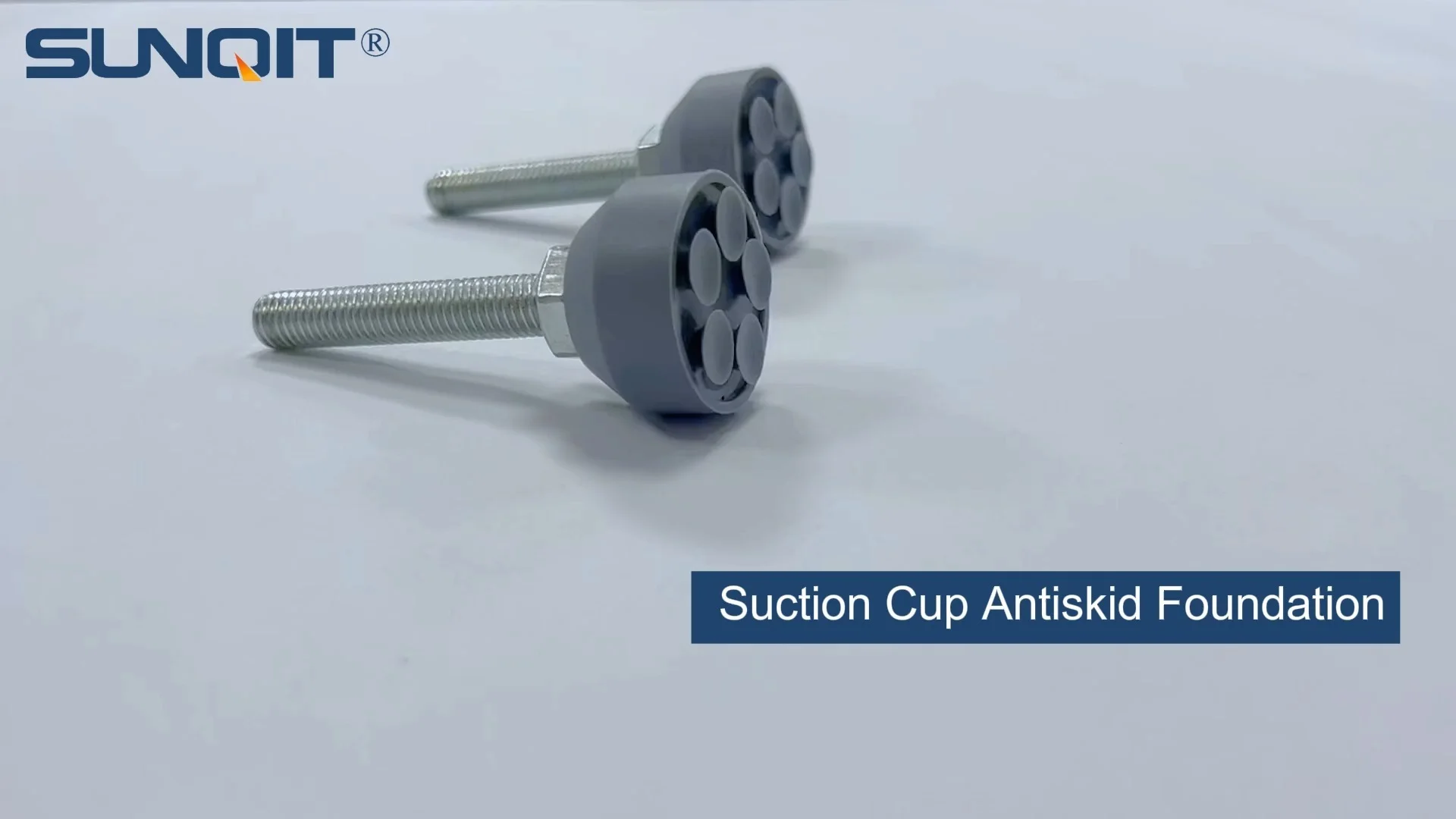
Walk into any manufacturing plant, warehouse, or workshop, and you'll notice a quiet hero holding everything together: the humble workbench. Whether it's a lean pipe workbench assembling electronics, an aluminum profile station packing medical supplies, or a heavy-duty table in an auto shop, stability is non-negotiable. Slipping, wobbling, or uneven surfaces don't just slow down work—they create safety hazards and compromise precision. That's where suction cup anti-slip foot adjusters come in. These small but mighty components keep workbenches grounded, even on oily, wet, or bumpy floors. But here's the thing: not all foot adjusters are built to handle the chaos of industrial environments. Dust, water, coolant, and grime can turn a reliable adjuster into a liability. That's why understanding IP ratings isn't just technical jargon—it's the key to keeping your workspace safe, efficient, and running smoothly.
What Are IP Ratings, and Why Do They Matter?
IP stands for "Ingress Protection," a standard defined by the International Electrotechnical Commission (IEC) to rate how well a device or component resists intrusion from solids (like dust) and liquids (like water). Think of it as a shield: the higher the IP rating, the tougher the shield. An IP rating has two digits: the first measures protection against solids (0-6), and the second against liquids (0-9K). For example, an IP54 rating means the component is "dust-protected" (the first digit "5") and "protected against splashing water" (the second digit "4").
You might be thinking, "Why does this matter for a foot adjuster?" Let's break it down. Suction cup anti-slip foot adjusters aren't just chunks of plastic or metal—they have moving parts. Inside, there's usually a threaded rod to adjust height, a spring to maintain tension, and a suction cup (often made of rubber or silicone) that creates a vacuum seal with the floor. Dust can clog the threads, making adjustments impossible. Water can rust the rod or corrode the spring. Even a little moisture can degrade the suction cup's grip over time. In environments like food processing plants, where workbenches are hosed down daily, or automotive shops where oil and coolant drip onto the floor, a low IP rating could mean replacing adjusters every few months. In dusty warehouses, unprotected adjusters might seize up, leaving workbenches wobbly and workers frustrated. IP ratings aren't just about durability—they're about reliability when you need it most.
Decoding the Digits: What Each IP Rating Really Means
Before we dive into how IP ratings apply to suction cup anti-slip foot adjusters, let's demystify the numbers. Not all environments are the same, and neither are their demands. A foot adjuster in a cleanroom might need minimal protection, while one in a brewery (think steam, water, and yeast dust) needs a heavy-duty rating. Here's a breakdown of the most common ratings you'll encounter:
| IP Rating | Solid Particle Protection (1st Digit) | Liquid Ingress Protection (2nd Digit) | Ideal Environment |
|---|---|---|---|
| IP44 | Protected against objects >1mm (e.g., wires, small tools) and limited dust (no harmful deposits) | Protected against water splashing from any direction (e.g., light rain, occasional spills) | Dry workshops, offices, or areas with minimal dust and rare liquid exposure |
| IP54 | Dust-protected: Dust may enter, but not enough to damage the component | Same as IP44 (splashing water) | General manufacturing, warehouses with moderate dust, or workshops with occasional spills |
| IP55 | Dust-protected (same as IP54) | Protected against low-pressure water jets (e.g., hose spray from any direction) | Auto shops, garages, or facilities with regular cleaning (but not high-pressure washdowns) |
| IP65 | Dust-tight: No dust enters, even in high concentrations | Protected against low-pressure water jets (same as IP55) | Food processing (non-washdown areas), pharmaceutical labs, or dusty environments like sawmills |
| IP67 | Dust-tight (same as IP65) | Protected against temporary immersion (up to 1m for 30 minutes) | Wet environments like breweries, car washes, or outdoor workbenches exposed to heavy rain |
Notice that the first digit maxes out at "6" (dust-tight), while the second goes up to "9K" (protected against high-temperature, high-pressure steam jets). For most industrial workbenches, you'll see ratings between IP44 and IP67. IP67 is overkill for a dry warehouse, but IP44 might fail in a bakery where hosing down is part of the daily routine. The goal is to match the rating to the environment—not overbuy, but never under-protect.

Suction Cup Anti-Slip Foot Adjusters: How IP Ratings Protect the "Grip"
Let's zoom in on the star of the show: the suction cup anti-slip foot adjuster. Unlike regular foot pads (which just sit there), these adjusters have a dual job: adjusting height to level the workbench and gripping the floor to prevent slipping. The suction cup is the secret weapon here. When you press the adjuster down, the cup flattens, pushing out air and creating a vacuum seal with the floor. This seal is what keeps the workbench from sliding, even if oil or water is present. But here's the catch: dust and water can break that seal or jam the mechanism.
Dust: The Silent Saboteur
Dust might seem harmless, but in a factory or warehouse, it's everywhere. From concrete dust in a construction workshop to metal shavings in a machining area, tiny particles love to sneak into crevices. For a suction cup adjuster, dust can collect in two critical places: the threads of the height-adjustment rod and the rim of the suction cup. If dust clogs the threads, turning the adjuster to level the workbench becomes impossible—you'll either struggle with a stuck rod or, worse, strip the threads entirely. On the suction cup, dust breaks the vacuum seal. Instead of a tight grip, you get a leaky seal that slips at the worst moment, like when a worker is leaning on the bench to tighten a bolt.
This is where the first digit of the IP rating shines. An IP5X rating (dust-protected) means the adjuster's housing is designed to keep out most dust. Seals around the adjustment rod and a tight-fitting cup cover prevent particles from settling in key areas. An IP6X rating (dust-tight) takes it further, with gaskets and O-rings that create an airtight barrier. In a furniture factory, where sawdust is constant, an IP65 adjuster will outlast an IP44 model by years—no more stopping work to clean out dust-clogged threads.
Water: More Than Just a Spill
Water is even trickier than dust. It's not just about rain or spills—think about coolant in a CNC shop, sanitizing sprays in a food plant, or condensation in a cold storage facility. Water can corrode metal parts, swell plastic components, or freeze in winter, cracking the adjuster from the inside. For the suction cup itself, prolonged exposure to water (especially hot water or chemicals like bleach) can degrade the material, making it brittle or less flexible. A cup that's hard and cracked won't seal properly, turning your anti-slip adjuster into a slip risk.
The second digit of the IP rating addresses this. An IPX4 rating (splashing water) is fine for occasional spills, but in a brewery where hoses are used to clean floors daily, you need IPX5 (low-pressure jets) or higher. IPX7 (temporary immersion) is ideal for environments where adjusters might sit in puddles, like a commercial kitchen with a leaky fridge. The housing material matters too: stainless steel resists rust better than regular steel, while UV-stabilized plastic won't degrade in humid or outdoor settings. Even the suction cup material plays a role—nitrile rubber stands up to oils and chemicals better than standard PVC, ensuring the seal holds even after repeated exposure to harsh liquids.

Real-World Scenarios: When IP Ratings Make or Break Your Workbench
Let's put this into context with three common work environments. Each tells a story of how the right (or wrong) IP rating impacts daily operations.
Scenario 1: The Automotive Repair Shop
Auto shops are messy places. Oil drips from engines, coolant splashes during radiator repairs, and pressure washers blast grime off tools at the end of the day. A local repair shop invested in lean pipe workbenches to organize their tools and parts. They chose basic foot adjusters with an IP44 rating, figuring "splashes are rare" and "we clean up spills quickly." Six months later, the mechanics started complaining: workbenches wobbled when they leaned on them, and adjusting the height required brute force. When the shop owner inspected the adjusters, he found oil and dust had mixed into a sticky sludge, gumming up the threads. The suction cups, once soft and grippy, were hard and cracked from exposure to degreasers. The shop had to replace all 12 adjusters, costing time and money—all because they underestimated how tough their environment really was.
The fix? Upgrading to IP65-rated suction cup anti-slip foot adjusters. These adjusters had stainless steel threads, a dust-tight housing, and nitrile suction cups resistant to oil and chemicals. A year later, the adjusters still turn smoothly, and the suction cups hold firm, even when the floor is wet with coolant. The mechanics no longer waste time fighting with wobbly benches, and the shop owner estimates the upgrade paid for itself in reduced downtime.
Scenario 2: The Bakery Production Line
Bakeries are all about cleanliness. Daily washdowns with hot water and sanitizing solutions keep bacteria at bay, but they're brutal on equipment. A mid-sized bakery used aluminum profile workbenches for decorating cakes and packaging pastries. Their original foot adjusters had an IP54 rating—"good enough for splashes," they thought. But after a few months, the adjusters started to rust. The water from daily hosing was seeping past the seals, corroding the internal springs. Worse, the suction cups, made of standard rubber, began to disintegrate when they came into contact with the bakery's citrus-based sanitizer. The workbenches, once level, now tilted, making it hard to ice cakes evenly. A few even slipped during busy mornings, spilling trays of pastries.
The solution? Switching to IP67-rated adjusters with food-grade silicone suction cups. The IP67 rating meant the adjusters could handle temporary immersion (like when a hose accidentally sprays directly at them), and the silicone cups were resistant to the sanitizer's chemicals. The housing, made of corrosion-resistant plastic, stood up to hot water without warping. Now, the bakery's workbenches stay level, the adjusters don't rust, and the suction cups grip even when the floor is wet—no more spilled pastries, and no more replacing adjusters every quarter.
Scenario 3: The Electronics Assembly Warehouse
You might think electronics assembly is "clean," but dust is a silent enemy here. Tiny particles can short out circuit boards or ruin delicate components. A warehouse assembling smartphones used lean pipe workbenches with IP44 foot adjusters. The problem? The warehouse had high ceilings, and dust from the HVAC system and cardboard boxes settled constantly. Over time, dust collected in the adjusters' thread grooves, making it impossible to (fine-tune) the height. Workers had to use pliers to turn the adjusters, risking damage to the threads. Even the suction cups suffered—dust particles got trapped between the cup and the floor, breaking the vacuum seal. The workbenches would shift slightly when workers leaned on them, misaligning the tiny components they were assembling.
The fix was simple: upgrading to IP65 adjusters with dust-tight seals. The new adjusters had a rubber gasket around the adjustment rod and a protective cap over the suction cup when not in use. Dust could no longer clog the threads, and the suction cups maintained a tight seal. Workers could now adjust the benches with a quick twist, and the stable surface reduced errors in component assembly. The warehouse manager noted a 15% decrease in rework due to misaligned parts—proof that even in "clean" environments, IP ratings matter.

Choosing the Right IP Rating: It's Not One-Size-Fits-All
So, how do you pick the right IP rating for your suction cup anti-slip foot adjusters? It starts with asking the right questions about your environment:
- How much dust is in the air? If you're in a woodshop, metal foundry, or warehouse with constant dust, aim for IP5X or higher. For offices or cleanrooms, IP4X might suffice.
- What liquids are present? Spills? Splashes? High-pressure hoses? Daily washdowns? For occasional spills, IPX4 or IPX5 works. For hosing or immersion, go for IPX7 or higher.
- What chemicals are involved? Oil, coolant, sanitizers, or solvents can degrade materials. Look for adjusters with chemical-resistant seals and suction cups (like nitrile or silicone).
- How often do you need to adjust the height? If you're always tweaking the workbench, ensure the IP rating doesn't hinder usability. Some dust-tight seals can make adjusters harder to turn—balance protection with functionality.
It's also worth comparing with other components in your setup. For example, if your lean pipe workbench has caster wheels (which also have IP ratings), make sure the foot adjusters match or exceed their protection. If the casters are IP54, but the adjusters are IP44, the adjusters will fail first, leaving the bench unstable even if the casters are fine. Think of it as a team—every component needs to pull its weight.
Installation and Maintenance: Keeping Your IP Rating Intact
Even the best IP-rated adjuster won't perform if installed incorrectly. Here's how to ensure your adjusters stay protected:
Check the seals: When installing, make sure all gaskets, O-rings, and covers are in place and undamaged. A torn O-ring or missing cover is an open door for dust and water.
Tighten properly: Don't overtighten the adjuster to the workbench—this can warp the housing and break the seals. Follow the manufacturer's torque guidelines.
Clean regularly: Even IP6X adjusters need occasional cleaning. Wipe down the housing and suction cup to remove built-up grime that could degrade materials over time.
Inspect for wear: Check the suction cup for cracks or brittleness, and the housing for signs of damage (like cracks or warping). replace worn parts immediately—compromised components mean compromised protection.
Final Thoughts: Your Workbench Deserves the Best Protection
Suction cup anti-slip foot adjusters might be small, but they play a huge role in keeping your workspace safe, efficient, and productive. They're the difference between a workbench that stays level and secure, and one that wobbles, slips, or breaks down when you need it most. And in today's fast-paced industrial world, you can't afford to cut corners on reliability.
IP ratings aren't just numbers on a spec sheet—they're a promise. A promise that your adjuster will stand up to dust, water, and grime. A promise that your workbench will stay stable, your workers will stay safe, and your operations will keep running smoothly. So the next time you're shopping for foot adjusters for your lean pipe workbench, aluminum profile station, or any workspace, take a minute to check the IP rating. It might just be the smartest decision you make for your business.
After all, in the world of manufacturing and warehousing, stability isn't optional. It's everything. And with the right IP-rated suction cup anti-slip foot adjusters, you've got stability on your side.