Is 1.0mm Stainless Steel Pipe Suitable for High-Temperature Industrial Environments?
Related Product
1.0mm Stainless Steel Pipe
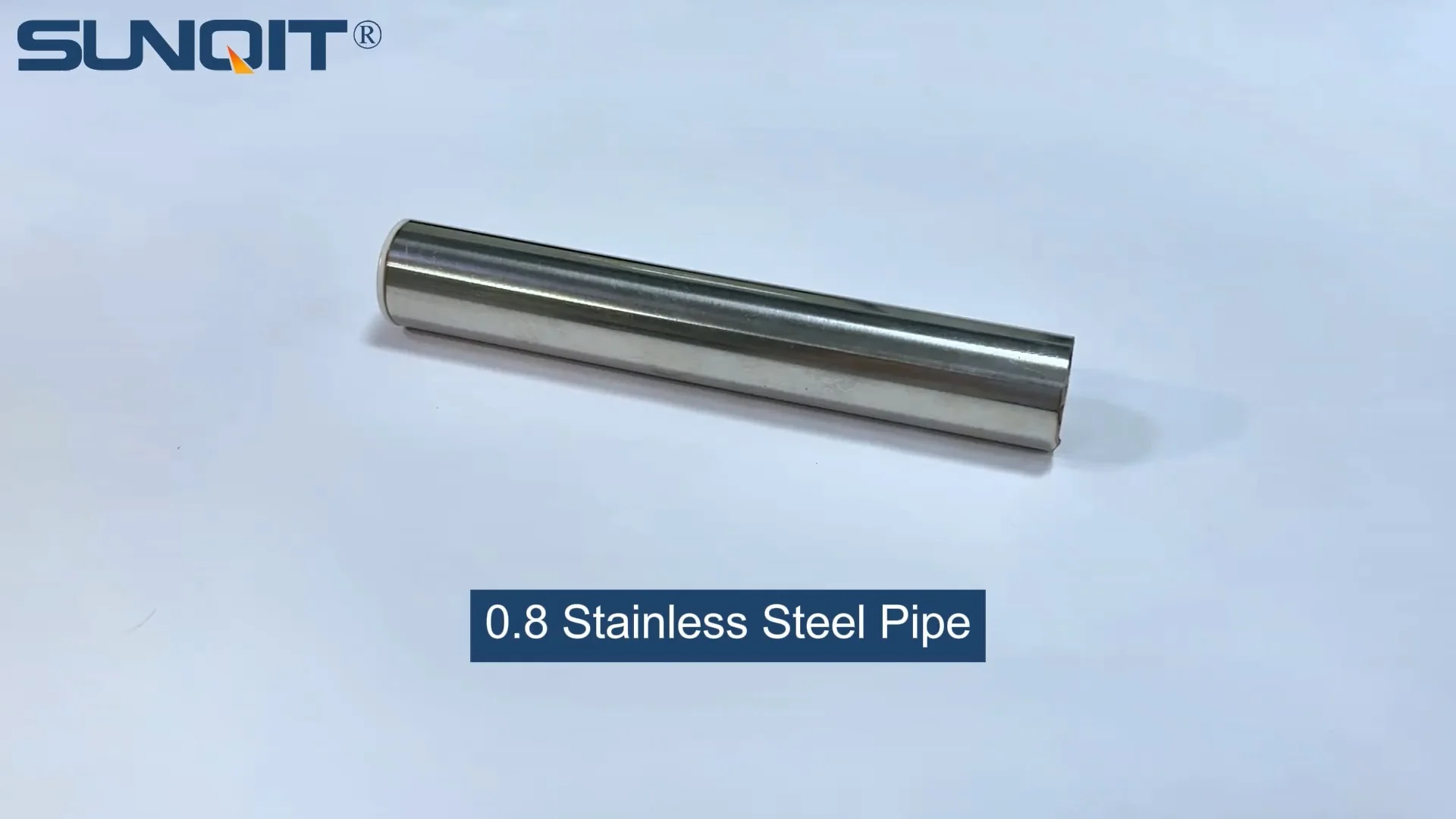
Stainless steel pipe, lean pipe, diameter is 28mm, material is SS201 or SS304, SS201 is normally used in the market. It knows a KARAKURI, KAIZEN material for industrial plant to improve efficiency, save labor cost, standard management.
1.0mm Stainless Steel Pipe

A detailed analysis of performance, applications, and considerations

Introduction: The Role of Piping in Industrial Heat

Walk into any high-temperature industrial facility—whether it's a bustling automotive manufacturing plant, a food processing warehouse, or a chemical production unit—and you'll notice a silent workhorse holding everything together: piping systems. These unassuming structures carry materials, support equipment, and form the backbone of workflows, often operating under extreme conditions. Among the many materials used, stainless steel has long been a favorite for its durability and resistance to corrosion. But when it comes to thinner variants like the 1.0mm stainless steel pipe, a critical question arises: Can something so slender stand up to the relentless heat of industrial environments?

In this article, we'll dive deep into the world of 1.0mm stainless steel pipe, exploring its properties, performance under high temperatures, and whether it's the right choice for your industrial needs. We'll weigh its strengths against its limitations, compare it to alternatives like aluminum lean pipe, and look at real-world applications where it has (or hasn't) shined. By the end, you'll have a clear understanding of when this material is a reliable ally—and when it might be time to consider a thicker wall or a different material altogether.

Understanding 1.0mm Stainless Steel Pipe: More Than Just a Thin Wall

First, let's clarify what we mean by "1.0mm stainless steel pipe." This refers to a pipe with a wall thickness of 1.0 millimeters, typically part of the broader stainless steel pipe series—a range of products designed for versatility across industries. Unlike thicker pipes (which might measure 2mm or more), 1.0mm pipes balance strength and flexibility, making them a popular choice for applications where weight and cost are as important as durability.

Most 1.0mm stainless steel pipes are made from austenitic grades like 304 or 316, known for their excellent corrosion resistance and formability. Grade 304 is the workhorse, ideal for general industrial use, while 316 adds molybdenum to enhance resistance to acids and saltwater—key for environments where high temperatures meet chemical exposure. The thin wall doesn't just make these pipes lighter; it also simplifies installation, as they're easier to cut, bend, and assemble into custom configurations. This flexibility is a big reason they're often integrated into lean system setups, where adaptability and efficiency are paramount.

But here's the catch: thickness directly impacts how a material behaves under stress—especially heat. A 1.0mm wall is thin enough to raise eyebrows in high-temperature settings, where thermal expansion, structural load, and heat transfer become critical factors. To understand if it's up to the task, we need to first define what "high-temperature" really means in an industrial context.

High-Temperature Industrial Environments: What Are We Up Against?

"High-temperature" is a relative term, but in industrial settings, it generally refers to environments where temperatures exceed 200°C (392°F) on a regular basis. Think of a foundry floor where molten metal is poured, a bakery with industrial ovens, or a chemical reactor where exothermic reactions drive heat upward. In these spaces, piping systems face a unique set of challenges:

  • Thermal Expansion: All materials expand when heated. For pipes, this can lead to warping, stress on joints, or even cracks if movement isn't accounted for.
  • Corrosion Under Heat: High temperatures accelerate chemical reactions, including oxidation (rusting) and scaling (the formation of brittle, flaky layers on the surface). This can weaken the pipe over time.
  • Structural Integrity: Heat can reduce a material's tensile strength, meaning pipes that support heavy loads (like a workbench frame or a roller track for moving parts) might sag or fail under stress.
  • Heat Transfer: Thinner pipes conduct heat more readily, which can make them to the touch (a safety hazard) or cause energy loss if they're carrying heated materials.

Against this backdrop, the 1.0mm stainless steel pipe must prove it can maintain its shape, strength, and resistance to corrosion—even when the mercury rises. Let's break down its key properties under heat to see how it stacks up.

How 1.0mm Stainless Steel Performs Under Heat: The Science Behind the Strength

Stainless steel owes its popularity to a thin, protective layer of chromium oxide that forms on its surface, preventing rust and corrosion. But how does this layer—and the pipe itself—hold up when temperatures soar? Let's look at three critical properties:

1. Mechanical Strength at High Temperatures

At room temperature, 1.0mm stainless steel (Grade 304) has a tensile strength of around 500 MPa and a yield strength of 210 MPa—more than enough for light to moderate loads. But as temperatures climb, these numbers drop. For example, at 300°C (572°F), Grade 304's yield strength falls to about 140 MPa, and at 500°C (932°F), it plummets to just 90 MPa. This means the pipe can support less weight as it gets hotter.

For 1.0mm pipes, this drop is more noticeable than in thicker pipes because there's less material to "absorb" the stress. A 2mm pipe, with twice the wall thickness, has a larger cross-sectional area, so even with reduced strength, it can still carry heavier loads. In contrast, a 1.0mm pipe might start to sag if used as a support beam for a heavy workbench in a 400°C environment.

2. Corrosion Resistance: The Oxide Layer's Last Stand

Stainless steel's chromium oxide layer is stable up to about 800°C (1472°F) in air, which is good news for most high-temperature industrial settings. However, at temperatures above 600°C (1112°F), the layer can thicken and become brittle, a process called "scaling." Thinner pipes like the 1.0mm variant are more vulnerable here because scaling eats away at the already limited wall thickness. Over time, this can lead to pinholes or leaks—especially if the pipe is exposed to moisture or chemicals alongside heat.

Grade 316 fares better than 304 in this regard, thanks to its molybdenum content, but it's still not immune. In environments with sulfur or chlorine (common in chemical plants), scaling and pitting can occur even at lower temperatures, putting 1.0mm pipes at higher risk of failure.

3. Thermal Conductivity and Expansion

Stainless steel has a lower thermal conductivity than materials like aluminum, meaning it doesn't transfer heat as quickly. For a 1.0mm pipe, this is a mixed blessing: It reduces the risk of the pipe becoming too hot to handle (a safety plus) but also means heat is retained longer, potentially exacerbating thermal expansion. When heated, a 1.0mm stainless steel pipe will expand at a rate of about 17.3 μm/m·°C (micro meters per meter per degree Celsius). For a 10-meter pipe, that's a expansion of 1.73mm for every 100°C rise in temperature. Without proper expansion joints, this can lead to buckling or stress on adjacent components like roller track connectors.

The Case for 1.0mm Stainless Steel Pipe: When It Shines Bright

Despite these challenges, there are scenarios where 1.0mm stainless steel pipe is not just suitable but ideal for high-temperature environments. Let's explore its key advantages:

1. Lightweight and Cost-Effective

Thinner walls mean less material, which translates to lower costs and easier handling. For lean system setups—where minimizing waste and maximizing efficiency are core principles—this is a huge win. A 1.0mm pipe weighs about half as much as a 2mm pipe of the same diameter, making it faster to install and reducing shipping costs. In temporary or semi-permanent structures (like a movable workbench or a temporary roller track for material transport), this lightweight nature is a major advantage.

2. Excellent for Low-to-Moderate Heat and Light Loads

In environments where temperatures stay below 300°C (590°F) and loads are light (e.g., supporting a conveyor belt for small parts or a lightweight workbench top), 1.0mm stainless steel pipe performs admirably. Take a food processing plant, for example: Oven areas might reach 250°C, and the pipes used to frame the conveyor system (which carries small baked goods) don't need to support heavy weights. Here, 1.0mm Grade 304 pipes resist corrosion from steam and cleaning chemicals, while their thin walls keep installation quick and costs low.

3. Compatibility with Lean System Components

Lean systems thrive on modularity, and 1.0mm stainless steel pipes play well with other components like roller track, caster wheels, and pipe joints. Their thin walls are easy to drill and thread, allowing for quick assembly of custom structures. For instance, a manufacturer might use 1.0mm pipes to build a roller track system that feeds parts to an assembly line—adjusting the layout on the fly as production needs change. The pipes' flexibility (literally and figuratively) aligns perfectly with the lean philosophy of adaptability.

The Risks: When 1.0mm Stainless Steel Pipe Falls Short

For all its benefits, 1.0mm stainless steel pipe isn't a one-size-fits-all solution. Here are the key risks to watch for in high-temperature settings:

1. Reduced Service Life Under Extreme Heat

In environments above 400°C (752°F), the combination of thermal expansion, scaling, and reduced tensile strength can drastically shorten the pipe's lifespan. A 1.0mm pipe used to support a heavy tool rack in a foundry (where temperatures hit 500°C) might last only 6–12 months before showing signs of fatigue, compared to 2–3 years for a 2mm pipe. The cost savings from using thinner pipes upfront can quickly vanish when replacement and downtime are factored in.

2. Limited Load-Bearing Capacity

Even at moderate temperatures, 1.0mm pipes struggle with heavy loads. A workbench framed with 1.0mm stainless steel might sag if loaded with 100kg of equipment, especially if the legs are spaced too far apart. In contrast, a workbench built with 2mm pipes or aluminum lean pipe (which has a higher strength-to-weight ratio) would maintain its shape. This is why 1.0mm pipes are best reserved for light-duty applications, not structural supports.

3. Vulnerability to Impact and Vibration

High-temperature environments are often noisy, with machinery generating constant vibration. Thinner pipes are more prone to resonance (a phenomenon where vibration causes the pipe to oscillate violently), which can weaken joints and lead to fatigue failure. For example, a 1.0mm pipe used as part of a roller track near a stamping machine might develop cracks at the joints over time, whereas a thicker pipe would dampen the vibration more effectively.

1.0mm Stainless Steel vs. Aluminum Lean Pipe: A Head-to-Head Comparison

When considering thin-walled piping for high-temperature use, aluminum lean pipe is a common alternative. Let's compare the two to see which comes out on top in key areas:

Property 1.0mm Stainless Steel Pipe (Grade 304) Aluminum Lean Pipe (6061-T6)
Max Recommended Temperature Up to 400°C (with caution) Up to 200°C (beyond this, strength drops sharply)
Tensile Strength at 200°C ~400 MPa ~180 MPa
Corrosion Resistance Under Heat Excellent (resists oxidation up to 800°C) Good (forms a protective oxide layer but prone to pitting in salt/acid)
Weight (per meter, 20mm diameter) ~0.45 kg ~0.25 kg
Cost (per meter) Higher (stainless steel is pricier than aluminum) Lower (aluminum is more abundant)
Thermal Conductivity Low (16 W/m·K) High (167 W/m·K)

As the table shows, 1.0mm stainless steel pipe outperforms aluminum lean pipe in high-temperature strength and corrosion resistance, making it better suited for environments above 200°C. However, aluminum is lighter and cheaper, making it a strong choice for low-heat, light-load applications (like a warehouse workbench). For temperatures between 200°C and 400°C, 1.0mm stainless steel is the safer bet—but beyond 400°C, even it may need reinforcement.

Real-World Applications: Success Stories and Cautionary Tales

The best way to gauge a material's suitability is to look at how it performs in real settings. Let's explore two case studies:

Case Study 1: Food Processing Plant Conveyor System

A mid-sized bakery in California needed to replace the framing for its oven conveyor system. The oven operates at 280°C (536°F), and the conveyor carries trays of cookies (light loads, ~5kg per tray). The plant chose 1.0mm Grade 304 stainless steel pipe for its corrosion resistance (critical for cleaning with hot water and sanitizers) and lightweight design. The system has been in operation for 3 years with no issues—no scaling, no sagging, and minimal maintenance. The key here was the moderate temperature and light load, which played to the pipe's strengths.

Case Study 2: Automotive Paint Curing Oven

An automotive manufacturer tried using 1.0mm Grade 304 pipes to support the rails of a paint curing oven, where temperatures reach 550°C (1022°F). Within 6 months, inspectors noticed scaling on the pipes and sagging in the middle sections. The pipes were replaced with 2mm Grade 316 stainless steel, which has held up for over 5 years. The failure here was due to exceeding the pipe's temperature limits and underestimating the load from the heavy paint racks.

These cases highlight a clear pattern: 1.0mm stainless steel pipe works well when temperatures stay below 400°C and loads are light. Push beyond those limits, and you're asking for trouble.

Best Practices for Using 1.0mm Stainless Steel Pipe in High-Temp Settings

If you've decided 1.0mm stainless steel pipe is right for your application, follow these tips to maximize its lifespan and performance:

  • Choose the Right Grade: Opt for Grade 316 over 304 if your environment includes chemicals, salt, or temperatures above 400°C.
  • Limit Exposure Time: Avoid continuous exposure to temperatures above 400°C. If possible, use insulation to reduce heat transfer to the pipe.
  • Reinforce Supports: Space supports closer together (every 50cm instead of 1m) to reduce sagging under load.
  • Use Expansion Joints: Install flexible joints to accommodate thermal expansion and prevent buckling.
  • Inspect Regularly: Check for scaling, cracks, or deformation every 3–6 months, especially at joints and stress points near roller track connectors or caster wheels.

Conclusion: Is 1.0mm Stainless Steel Pipe Suitable? It Depends.

So, is 1.0mm stainless steel pipe suitable for high-temperature industrial environments? The answer is a qualified "yes"—but only under the right conditions. It excels in low-to-moderate heat (below 400°C), light-load applications, and settings where corrosion resistance and cost-efficiency are priorities. When integrated into a lean system, its lightweight design and ease of installation make it a valuable asset, whether you're building a workbench, a roller track, or a temporary support structure.

However, it's not a one-stop solution. For temperatures above 400°C, heavy loads, or environments with extreme vibration or chemicals, a thicker stainless steel pipe (2mm or more) or a different material (like nickel alloys) is a safer bet. Always assess your specific needs—temperature range, load, exposure time, and budget—before making a decision.

At the end of the day, 1.0mm stainless steel pipe is a tool, and like any tool, it works best when used for the job it was designed for. Use it wisely, and it will serve you well; push it beyond its limits, and you'll be left with costly repairs and downtime. Choose carefully, and your piping system will be the silent, reliable backbone of your industrial operation for years to come.


Get In Touch with us

Hey there! Your message matters! It'll go straight into our CRM system. Expect a one-on-one reply from our CS within 7×24 hours. We value your feedback. Fill in the box and share your thoughts!