- Company Articles
- Products and Technology
- Product knowledge
- Is Chrome Four Way Straight Lean Pipe Joint Suitable for Outdoor Use?

Is Chrome Four Way Straight Lean Pipe Joint Suitable for Outdoor Use?
Related Product
Four Way Straight Lean Pipe Joint
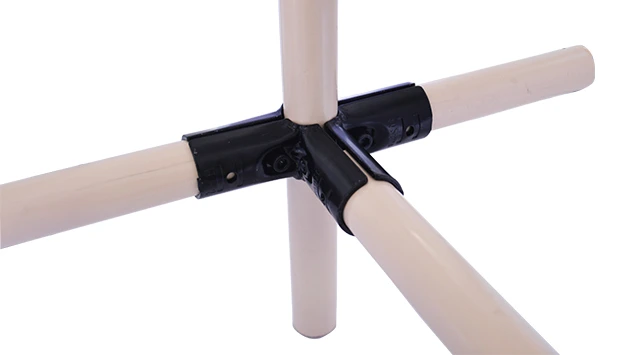
Four way lean pipe joint for 4 pcs 28MM lean pipe connection in straight angle, which used widely in workbench, flow rack, hand trolley frame connection.
If you've ever stepped into a manufacturing plant, warehouse, or even a busy workshop, you've likely encountered lean pipe systems. These modular setups—built from pipes, joints, and accessories—are the unsung heroes of efficient workflows, holding tools, materials, and products with a flexibility that traditional fixed structures can't match. Among the many components that make up these systems, the chrome four way straight lean pipe joint stands out as a workhorse. Its ability to connect four pipes in a straight line makes it a cornerstone for building sturdy, customizable structures, from simple material racks to complex assembly workstations. But here's a question that often comes up for those looking to extend their lean systems beyond indoor walls: Is this chrome-plated joint really suitable for outdoor use? Let's dive in and explore.
First Things First: What Exactly Is a Chrome Four Way Straight Lean Pipe Joint?
Before we can judge its outdoor suitability, let's get clear on what a chrome four way straight lean pipe joint is. At its core, it's a connector designed to link four lean pipes at 180-degree angles, forming a straight line. Think of it as the "crossroads" of a lean pipe system—allowing you to build horizontal or vertical runs that branch out in four directions, all while maintaining structural integrity. These joints are typically made from a base material (often carbon steel) and then coated with a layer of chrome via electroplating, a process that gives them their shiny, silver finish and a reputation for durability.
Lean pipe systems, in general, are beloved for their modularity. Unlike welded steel structures, they can be disassembled, reconfigured, and reused as needs change—making them a favorite for lean manufacturing, where adaptability is key. The chrome four way straight lean pipe joint, in particular, is prized for its strength; it's designed to handle the weight of materials, tools, and even small equipment without bending or warping. But indoors, where conditions are controlled (stable temperature, low humidity, no direct exposure to the elements), these joints thrive. Outdoors? That's a different story.
The Nuts and Bolts: What's in a Chrome Four Way Straight Lean Pipe Joint?
To understand if this joint can handle the outdoors, we need to start with its materials. Most chrome four way straight lean pipe joints begin as carbon steel castings. Carbon steel is strong and affordable, which is why it's a common choice for structural components. But on its own, carbon steel is prone to rust and corrosion when exposed to moisture and oxygen—hardly ideal for outdoor settings. That's where the chrome plating comes in.
Chrome plating is a thin layer of chromium applied to the steel surface through electroplating. This layer acts as a barrier, shielding the underlying steel from direct contact with water, dirt, and other corrosive elements. It also gives the joint its smooth, reflective surface, which is easy to clean and resistant to scratches (to a point). But here's the catch: chrome plating isn't indestructible. Its effectiveness depends on two things: thickness and adhesion. A thick, well-adhered chrome layer will offer better protection than a thin or poorly applied one. Unfortunately, not all chrome four way straight lean pipe joints are created equal—some manufacturers cut corners on plating thickness to save costs, which can leave the steel vulnerable over time.
Another factor to consider is the joint's design. The four-way straight configuration means there are more crevices and contact points where water, dirt, or debris can collect. Even with chrome plating, these tiny gaps can become traps for moisture, especially if the joint isn't properly sealed or maintained. Over time, water seeping into these areas can start to chip away at the plating from the inside out—a process that's hard to spot until it's too late.

The Great Outdoors: What Challenges Does It Face?
Outdoor environments are tough on almost any material, and lean pipe joints are no exception. Let's break down the biggest threats an outdoor chrome four way straight lean pipe joint might encounter:
1. Moisture: The Silent Enemy
Rain, dew, humidity—moisture is everywhere outdoors, and it's the primary driver of corrosion. Even if a joint is under a covered patio or awning, humidity alone can cause condensation to form on its surface. Over time, this condensation can penetrate tiny cracks in the chrome plating, reaching the carbon steel underneath. Once steel and moisture meet, rust starts to form. You might first notice small, reddish-brown spots on the joint's surface, which can spread and weaken the metal if left unchecked. In coastal areas, the problem is even worse: saltwater spray adds chloride ions, which accelerate corrosion far faster than freshwater alone.
2. UV Radiation: Fading and Brittle Coating
Sunlight isn't just bright—it's packed with ultraviolet (UV) radiation. While chrome itself is relatively resistant to UV damage, the plating process often involves a layer of nickel underneath the chrome (to improve adhesion). Nickel can degrade over time when exposed to prolonged sunlight, causing the chrome layer to become brittle or peel. This peeling creates even more entry points for moisture, turning a small issue into a big one. If you've ever seen an old chrome bumper on a car that's started to flake, you've witnessed UV damage in action.
3. Temperature Swings: Expanding and Contracting
Outdoor temperatures can swing dramatically—scorching hot during the day, freezing cold at night. These fluctuations cause materials to expand and contract. Chrome plating and carbon steel have different rates of thermal expansion, which means repeated heating and cooling can create stress at the interface between the two materials. Over time, this stress can lead to tiny cracks in the plating, again opening the door for moisture and corrosion.
4. Physical Wear and Tear
Outdoor spaces are often busier and rougher than indoor ones. A joint might get bumped by a forklift, scraped by a pallet, or even hit by flying debris during a storm. While chrome is scratch-resistant, deep scratches can nick the plating, exposing the steel below. Once that happens, rust can start forming in the scratch and spread outward, undermining the joint's structural integrity.

So, How Does It Actually Perform Outdoors?
The million-dollar question: Can a chrome four way straight lean pipe joint hold up outdoors? The answer, as with most things in engineering, is "it depends." Let's consider a few scenarios:
Short-Term Outdoor Use: Maybe Okay
If you need a temporary setup—say, a lean pipe workstation for a weekend outdoor event or a pop-up warehouse during peak season—a chrome four way straight lean pipe joint might work. For a few weeks or even a couple of months, the chrome plating should hold up, especially if the joint is cleaned regularly and kept dry. Just be sure to inspect it frequently for signs of rust or plating damage, and disassemble it once the outdoor need passes.
Long-Term Outdoor Use: Risky
For permanent or semi-permanent outdoor setups—like a material rack in an uncovered loading dock or a lean pipe structure in a garden workshop—chrome four way straight lean pipe joints are riskier. Even with regular maintenance, the combination of moisture, UV, and temperature swings will eventually take a toll. In humid climates, you might start seeing rust within a year; in coastal areas, it could be even sooner. Once rust starts, it's hard to stop without replacing the joint entirely.
Covered Outdoor Spaces: A Middle Ground
What if the joint is under a roof or awning, shielded from direct rain and sunlight? This helps, but it's not a silver bullet. Humidity, dew, and occasional splashes (from a hose, for example) can still cause problems over time. Think of it like leaving a chrome-plated tool in a covered shed—eventually, it might start to rust, even if it never gets rained on directly.
Better Alternatives for Outdoor Lean Pipe Systems
If chrome four way straight lean pipe joints aren't ideal for outdoor use, what should you use instead? Let's look at two popular options: stainless steel pipe series and aluminum lean pipe.
| Feature | Chrome Four Way Straight Lean Pipe Joint | Stainless Steel Pipe Series Joints | Aluminum Lean Pipe Joints |
|---|---|---|---|
| Corrosion Resistance | Moderate (chrome plating can fail over time) | High (stainless steel contains chromium and nickel) | High (aluminum forms a protective oxide layer) |
| UV Resistance | Low (plating may peel or become brittle) | High (no plating to degrade) | High (oxide layer is stable under UV) |
| Cost | Low to moderate | High (stainless steel is pricier) | Moderate to high (aluminum is more expensive than carbon steel) |
| Weight | Heavy (carbon steel base) | Heavy (stainless steel is dense) | Lightweight (aluminum is 1/3 the weight of steel) |
| Outdoor Suitability | Poor to fair (short-term only) | Excellent (long-term, even in harsh climates) | Excellent (ideal for humid or coastal areas) |
Stainless Steel Pipe Series: The Durable Choice
Stainless steel pipe series joints are a top pick for outdoor use. Unlike chrome-plated carbon steel, stainless steel contains chromium (at least 10.5%) and often nickel, which work together to form a passive oxide layer on the surface. This layer self-repairs if scratched, preventing rust from spreading. Stainless steel is also UV-resistant and holds up well to temperature swings, making it perfect for outdoor environments—even coastal areas with salt spray. The downside? It's more expensive than chrome-plated options, and the joints are heavier, which can make installation trickier. But if you need a system that will last outdoors for years, the investment is worth it.
Aluminum Lean Pipe: Lightweight and Corrosion-Resistant
Aluminum lean pipe and its joints are another great outdoor alternative. Aluminum is naturally corrosion-resistant because it forms a thin, protective oxide layer when exposed to air—this layer won't flake or peel, and it repairs itself if damaged. It's also lightweight, making aluminum lean pipe systems easy to assemble and reconfigure, even outdoors. While aluminum isn't as strong as steel, it's more than capable of handling most light to medium-duty outdoor applications, like tool racks or small material storage. Plus, aluminum lean pipe often comes in anodized finishes, which add an extra layer of protection and can even add a pop of color to your outdoor setup.
If You Must Use Chrome Four Way Straight Lean Pipe Joints Outdoors: Maintenance Tips
Maybe you already have a stash of chrome four way straight lean pipe joints, or your budget won't stretch to stainless steel or aluminum. If you're set on using them outdoors, here's how to extend their lifespan:
- Keep It Clean: Wipe down joints regularly with a dry cloth to remove dirt, dust, and moisture. For stubborn grime, use a mild soap and water solution, then dry thoroughly.
- Apply a Protective Coating: Once or twice a year, apply a thin layer of clear, outdoor-grade sealant (like a silicone spray or wax) to the chrome surface. This adds an extra barrier against moisture and UV rays.
- Inspect Often: Check joints monthly for signs of rust, plating peeling, or cracks. replace any damaged joints immediately—don't wait for the problem to spread.
- Shield from Direct Elements: Use a tarp, awning, or roof to protect the system from rain, snow, and direct sunlight. Even partial coverage can make a big difference.
- Avoid Salt and Chemicals: If you're in a coastal area or near a road that's salted in winter, rinse the joints with fresh water periodically to remove salt buildup.
The Verdict: Think Twice Before Taking Chrome Joints Outdoors
At the end of the day, chrome four way straight lean pipe joints are designed for indoor use. Their carbon steel core and chrome plating work well in controlled environments, but they're simply not built to withstand the relentless assault of outdoor elements like moisture, UV radiation, and temperature swings. While they might hold up for short-term, temporary setups, long-term outdoor use is a gamble that could lead to rust, structural weakness, and costly replacements.
If you're planning an outdoor lean pipe system, your best bets are stainless steel pipe series joints for heavy-duty, long-lasting performance or aluminum lean pipe joints for lightweight, corrosion-resistant flexibility. Both options will save you time, money, and headaches in the long run. But if you do decide to use chrome four way straight lean pipe joints outdoors, be prepared to invest in regular maintenance and keep a close eye on their condition—because when it comes to the outdoors, prevention is always better than repair.