- Company Articles
- Products and Technology
- Product knowledge
- Is Lean Pipe Clamp Chrome Compatible with ESD-Sensitive Areas?

Is Lean Pipe Clamp Chrome Compatible with ESD-Sensitive Areas?
Related Product
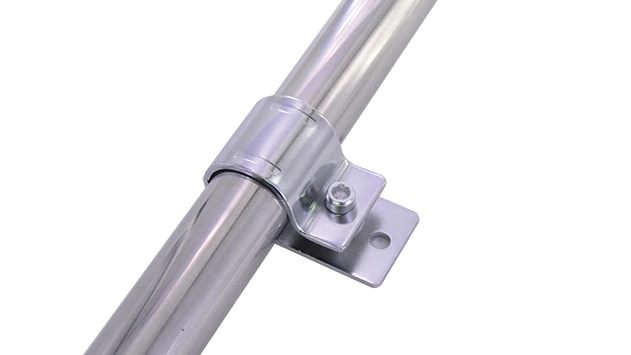
Lean Pipe Clamp Chrome
Lean pipe clamp is used for rack system hang monitor or other panel for workbenck, flowrack in production daily use.
In the quiet hum of an electronics manufacturing facility, where microchips smaller than a grain of rice are assembled into life-saving medical devices or cutting-edge smartphones, a single misstep can unravel hours of precision work. Walk through the cleanroom, and you'll notice technicians wearing grounded wristbands, floors lined with conductive mats, and workstations built with materials that seem at first glance—until you realize they're engineered to combat one of the industry's silent killers: electrostatic discharge (ESD). ESD-sensitive areas, from semiconductor labs to circuit board assembly lines, demand more than just organization; they require tools and infrastructure that actively prevent static buildup, protecting components that can be damaged by voltages as low as 10 volts. Among the most common tools in these spaces are lean pipe systems—modular, flexible structures that form workbenches, flow racks, and material handlers. But here's the question: when those systems include lean pipe clamp chrome, are they truly safe for ESD-sensitive environments?
To answer that, we need to dig into the details: What makes an area "ESD-sensitive"? How do lean pipe clamp chrome components work in lean manufacturing setups? And crucially, do their material properties align with the strict static control standards that keep production lines running smoothly? Let's unpack this step by step, starting with the basics of ESD and why it matters, then moving into the world of lean pipe systems, and finally, evaluating whether chrome-plated clamps have a place in spaces where static is the enemy.
Understanding ESD: The Invisible Threat in Manufacturing
Electrostatic discharge is the sudden flow of electricity between two objects with different electrical potentials, often caused by contact, separation, or friction—think of the spark you feel when touching a doorknob after shuffling across carpet. In everyday life, that spark is harmless, but in ESD-sensitive areas, it's a disaster waiting to happen. Microchips, sensors, and circuit boards contain tiny transistors and diodes that can be permanently damaged by ESD, even if the discharge is too small to feel or see. According to the Electrostatic Discharge Association (ESDA), ESD costs the electronics industry an estimated $50 billion annually in damaged components, production delays, and product returns. For example, a 2018 incident at a semiconductor plant in Taiwan resulted in a $200 million loss after ESD corrupted a batch of 7nm chips—all because a poorly grounded workbench failed to dissipate static.
What makes ESD so insidious is its invisibility. A component hit by ESD might not fail immediately; instead, it could develop "latent damage," degrading over time and causing product failures months after leaving the factory. In industries like aerospace or medical devices, where reliability is critical, this isn't just costly—it's dangerous. That's why ESD-sensitive areas adhere to strict standards, such as ANSI/ESD S20.20, which outlines requirements for grounding, material conductivity, and static control protocols. These standards don't just apply to people (hence the wristbands and grounded footwear); they extend to every surface, tool, and piece of equipment in the workspace—including the lean pipe clamps that hold workbenches and material racks together.
Lean Pipe Systems: The Backbone of Modern Manufacturing
Long before ESD concerns took center stage, lean manufacturing revolutionized how factories operate. Born from Toyota's "just-in-time" philosophy, lean systems prioritize efficiency, flexibility, and waste reduction. At the heart of this revolution are lean pipe systems—modular structures built from lightweight pipes, joints, and clamps that can be assembled, disassembled, and reconfigured in hours. Unlike rigid metal frames or custom-built furniture, lean pipe systems adapt to changing production needs: a workbench for assembling small parts today can become a flow rack for material storage tomorrow, all with minimal tools and cost.
These systems rely on simple components: aluminum or steel pipes, plastic or metal joints, and clamps that secure the structure. Lean pipe workbenches, for example, combine pipes, a flat work surface, and sometimes casters for mobility, creating a station where technicians can assemble, test, or package products. Flow racks, another common application, use roller tracks to let materials glide from one workstation to the next, reducing manual handling and speeding up production. The magic lies in their modularity—suppliers like lean pipe suppliers or ESD workstation suppliers offer a range of parts, from basic aluminum tubes to internal rotary joints, allowing facilities to build custom setups without engineering overhauls.
But as lean systems became ubiquitous, manufacturers began demanding more than just flexibility. In ESD-sensitive areas, the materials used in these systems took on new importance. Suddenly, the choice between steel, aluminum, or plastic pipes wasn't just about cost or durability—it was about whether the material could prevent static buildup. Which brings us to the star of the show: lean pipe clamp chrome.

Lean Pipe Clamp Chrome: What Is It, and Why Is It Used?
Lean pipe clamp chrome sounds technical, but it's surprisingly straightforward. At its core, it's a steel pipe clamp coated in a thin layer of chrome via electroplating—a process where a metal (in this case, chromium) is deposited onto a steel surface using an electric current. The result? A clamp that's shiny, corrosion-resistant, and harder than bare steel. In non-ESD settings, this is a winning combination: chrome plating protects the steel from rust, extends the clamp's lifespan, and gives it a clean, professional look that holds up in dusty warehouses or humid assembly lines.
But why use chrome-plated clamps in lean systems specifically? For one, they're cost-effective. Steel is cheaper than stainless steel or aluminum, and chrome plating adds durability without a massive price hike. They're also easy to source—most lean pipe suppliers stock chrome-plated clamps as a standard option, making them a go-to for facilities looking to build lean structures on a budget. In automotive plants, for example, where lean systems are used to organize tools and parts, chrome clamps are everywhere: they stand up to oil, grease, and frequent reconfigurations, and their shine makes it easy to spot dirt or debris that could compromise quality.
But here's the catch: ESD-sensitive areas aren't automotive plants. In spaces where static control is non-negotiable, the question isn't just "Is this clamp durable?" but "Does it conduct electricity?" Because for a material to prevent ESD, it needs to either dissipate static charge (slowly releasing it to ground) or conduct it (quickly channeling it away). If a clamp is non-conductive, it can act like a sponge for static, holding onto charge until it discharges onto a nearby component. So, does chrome plating make lean pipe clamps conductive enough for ESD work?
The Critical Question: Conductivity and ESD Compatibility
To determine if lean pipe clamp chrome works in ESD-sensitive areas, we need to start with the basics of material conductivity. Chromium itself is a metal, and metals are conductive—so in theory, a chrome-plated clamp should conduct electricity, right? Well, it's not that simple. Chrome plating is just a thin layer (usually 0.5 to 5 microns thick) over steel. While steel is also conductive, the plating process can introduce variables that affect performance. For example, if the plating is uneven, has pinholes, or if the steel underneath isn't properly cleaned before plating, the clamp's conductivity could be spotty. Worse, if the plating chips or scratches (a common issue in high-traffic areas), it might expose the steel underneath—but even then, steel is conductive, so is that a problem?
The bigger issue is grounding. Even if a chrome-plated clamp is conductive, it won't prevent ESD unless it's connected to a ground. In ESD workstations, this means the entire lean structure—pipes, clamps, workbench—must be grounded via a wire or conductive caster wheels that connect to the facility's grounding system. If the clamp is part of a grounded network, static charge should flow from the clamp to the ground, rather than building up and discharging onto components. But here's where real-world conditions complicate things: over time, clamps can loosen, plating can wear off at connection points, or dirt and oil can insulate the surface, breaking the grounding path. In a busy facility, where lean systems are reconfigured weekly or technicians accidentally kick a caster, maintaining that ground connection isn't always easy.
To put this in perspective, let's compare chrome-plated clamps to two common alternatives used in ESD settings: stainless steel and aluminum. The table below breaks down their conductivity, ESD performance, and practicality:
| Material Type | Conductivity (Resistivity, Ω·m) | ESD Performance | Cost (Relative to Steel) | Durability in ESD Areas |
|---|---|---|---|---|
| Chrome-Plated Lean Pipe Clamp | ~1.2×10⁻⁷ (chrome) / ~1.7×10⁻⁸ (steel base) | Conductive if grounded; risk of non-conductive gaps if plating chips or is uneven. | Low (steel + plating = ~10% higher than bare steel) | Moderate; plating may chip with heavy use, requiring frequent inspection. |
| Stainless Steel Pipe (304 Series) | ~6.9×10⁻⁷ | Consistently conductive; ideal for dissipative grounding. | High (2–3× steel cost) | High; resistant to corrosion and wear, no plating to chip. |
| Aluminum Lean Pipe | ~2.8×10⁻⁸ | Excellent conductivity; lightweight and easy to ground. | Medium (1.5× steel cost) | Moderate; softer than steel, prone to dents but no plating issues. |
Looking at the table, stainless steel and aluminum clearly have edge in ESD performance. Stainless steel's resistivity is higher than chrome or aluminum, but it's consistent—no plating to chip, so it maintains conductivity even with wear. Aluminum, meanwhile, is highly conductive and lightweight, making it easy to ground and reconfigure. Chrome-plated clamps, on the other hand, rely on that thin chrome layer to maintain conductivity, and any flaw in the plating (a scratch, a pinhole) can create non-conductive spots. In an ESD workstation where even a small gap in grounding can lead to component damage, this is a significant risk.
Alternatives to Chrome-Plated Clamps in ESD-Sensitive Areas
If chrome-plated clamps come with risks, what do ESD-sensitive facilities use instead? The answer depends on budget, durability needs, and the specific ESD standards they're required to meet (like ANSI/ESD S20.20, which sets strict limits on surface resistance for conductive materials). Let's explore the most common alternatives:
Stainless Steel Pipe Series
Stainless steel is the gold standard for ESD applications, and for good reason. Unlike chrome-plated steel, it's inherently corrosion-resistant and conductive, with no plating to wear off. The 304 series, in particular, is widely used in lean systems: it's strong enough to support heavy workbenches, resists chemicals common in electronics manufacturing (like isopropyl alcohol used for cleaning), and maintains conductivity even after years of use. Stainless steel clamps and pipes are pricier than chrome-plated options, but for facilities handling high-value components (think aerospace or medical devices), the investment pays off in reduced ESD failures. Many ESD workstation suppliers now offer stainless steel lean systems as a premium option, complete with grounded joints and conductive casters.
Aluminum Lean Pipe
Aluminum is another popular choice, especially for facilities that need lightweight, easy-to-reconfigure systems. Aluminum is highly conductive (even more so than steel), and its natural oxide layer (which forms quickly when exposed to air) is actually beneficial: it's thin enough to allow static charge to dissipate but thick enough to resist corrosion. Aluminum lean pipe systems are lighter than steel or stainless steel, making them ideal for mobile workbenches or flow racks that need to be moved daily. They're also more affordable than stainless steel, though still pricier than chrome-plated steel. The downside? Aluminum is softer than steel, so it can dent if hit with heavy tools. For most ESD areas, though, this is a minor trade-off for its conductivity and flexibility.
ESD-Coated Plastic Clamps
For facilities on a tight budget or those with low static risk (e.g., assembling components that can withstand higher voltages), ESD-coated plastic clamps are an option. These are plastic clamps mixed with conductive additives (like carbon black) that allow static to dissipate slowly. They're lightweight, cheap, and easy to clean, but they're not as durable as metal—they can crack under heavy loads or degrade when exposed to chemicals. In high-risk ESD areas, they're rarely used alone, but they can work as part of a broader static control strategy (e.g., paired with grounded metal pipes and ESD mats).
ESD Standards and Testing: What the Experts Say
At this point, you might be thinking, "But my facility uses chrome-plated clamps and hasn't had an ESD failure yet—does that mean they're safe?" Not necessarily. ESD damage is often latent, meaning components fail later, not immediately, making it hard to trace back to the clamp. To avoid this, ESD-sensitive areas rely on strict standards, and the most widely recognized is ANSI/ESD S20.20. Developed by the ESDA, this standard outlines requirements for everything from grounding practices to material conductivity, and it's often mandatory for suppliers to the aerospace, defense, and medical industries.
ANSI/ESD S20.20 defines two key categories for ESD materials: conductive (surface resistance <1×10⁵ Ω) and dissipative (surface resistance between 1×10⁵ Ω and 1×10¹¹ Ω). For a lean pipe clamp to be ESD-compatible, it must fall into one of these categories. So, how do chrome-plated clamps stack up? In theory, if the chrome layer is intact and the clamp is grounded, it should be conductive. But in practice, testing is required. The most common method is using a megohmmeter to measure surface resistance between the clamp and a ground point. If the reading is <1×10⁵ Ω, it's conductive; if it's between 1×10⁵ Ω and 1×10¹¹ Ω, it's dissipative. If it's >1×10¹¹ Ω, it's non-conductive—and a risk for ESD.
But here's the problem: chrome plating can vary widely in quality. A poorly plated clamp might have pinholes or thin spots that make its surface resistance inconsistent—high in some areas, low in others. Even a small non-conductive spot can trap static charge, turning the clamp into an ESD hazard. That's why most ESD consultants recommend regular testing (monthly, at minimum) of all metal components in lean systems, including clamps. For facilities using chrome-plated clamps, this testing is non-negotiable: it's the only way to ensure the plating hasn't chipped or worn thin in high-stress areas (like joints that are frequently adjusted).
Real-World Example: A Manufacturer's Shift from Chrome to Stainless Steel
To understand the real impact of material choice, let's look at a case study from a mid-sized electronics manufacturer in Southeast Asia. The company produced printed circuit boards (PCBs) for consumer electronics, and for years, it used chrome-plated lean pipe clamps to build workbenches and flow racks. The facility had basic ESD controls (grounded wristbands, conductive floors) but had never tested the clamps themselves—until a spate of PCB failures in 2022. After weeks of troubleshooting, engineers traced the issue to ESD: components on the PCBs were failing due to static discharge, and the culprit was the chrome-plated clamps.
Testing revealed that many of the clamps had chipped plating near the joints, where they were frequently tightened or loosened during reconfigurations. The exposed steel underneath was rusting, and the rust (a non-conductive oxide) was blocking the ground path, allowing static to build up on the workbench surface. The company faced a choice: replace the clamps with new chrome-plated ones (and hope the plating held) or switch to a more reliable material. They opted for stainless steel pipe series from a local lean pipe supplier, investing in new clamps, joints, and grounded casters. Within three months, PCB failure rates dropped by 75%, and the company estimated saving $120,000 annually in rework and component replacement costs.
This example isn't unique. Across industries, ESD failures often stem from overlooked details—like the material of a clamp that seems "good enough." The takeaway? In ESD-sensitive areas, "good enough" rarely is. Chrome-plated clamps can work if they're regularly tested, maintained, and grounded, but they require vigilance that many facilities can't sustain long-term. For most, the peace of mind of using stainless steel or aluminum is worth the extra cost.
Best Practices for Using Lean Pipe Systems in ESD-Sensitive Areas
If your facility already uses lean pipe clamp chrome and can't switch to alternatives overnight, or if you're considering them for a low-risk ESD area, there are steps you can take to minimize static risk. Here are the best practices recommended by ESD consultants and lean manufacturing experts:
- Ground Everything: Ensure every metal component—clamps, pipes, workbench frames—is connected to a dedicated ESD ground. Use braided ground wires (not thin single-strand wires, which can break) and secure connections with crimped terminals (not just tape). Test ground continuity weekly with a multimeter to ensure no breaks in the path.
- Inspect Plating Regularly: Check clamps for chipped, cracked, or peeling plating, especially near joints or areas with frequent contact. replace any damaged clamps immediately—exposed steel can rust, and rust is a non-conductive barrier to static dissipation.
- Pair with ESD Mats: Even if clamps are grounded, use ESD dissipative mats on workbench surfaces. Mats provide an extra layer of protection, ensuring static from a technician's hands or tools is dissipated before reaching components. Choose mats with a surface resistance of 1×10⁶ to 1×10⁹ Ω (per ANSI/ESD S20.20) and ground them separately from the lean system.
- Train Staff on ESD Protocols: Technicians should know to avoid dragging tools across clamps (which can generate static), report damaged clamps immediately, and never use non-conductive materials (like plastic zip ties) to secure components to the lean system.
- Consult Suppliers: Work with your lean pipe supplier or ESD workstation supplier to design a system tailored to your needs. Many suppliers offer free ESD assessments, helping you identify weak points (like chrome-plated clamps) and recommend alternatives (like stainless steel or aluminum) that fit your budget.
Final Verdict: Chrome-Plated Clamps in ESD Areas—Proceed with Caution
So, is lean pipe clamp chrome compatible with ESD-sensitive areas? The answer is: it depends. In low-risk environments with rigorous maintenance (regular testing, grounding checks, and prompt replacement of damaged clamps), chrome-plated clamps can work. But for most ESD-sensitive areas—especially those handling high-value, low-voltage components—they're a gamble. The thin chrome layer, risk of chipping, and need for constant vigilance make them less reliable than stainless steel or aluminum, which offer inherent conductivity and durability.
At the end of the day, ESD control is about minimizing risk. If your facility can afford stainless steel or aluminum, they're the safer bets. If budget is a constraint, chrome-plated clamps can be used— but only with strict testing, grounding, and maintenance protocols. And always remember: when in doubt, consult an ESD expert or lean pipe supplier. They can help you balance cost, flexibility, and safety, ensuring your lean system protects your components as effectively as it organizes your workflow.
In the world of electronics manufacturing, where the smallest detail can make or break a product, the choice of a clamp might seem trivial. But as countless failed components and lost revenue have shown, it's anything but. When it comes to ESD-sensitive areas, the best tool is one that works quietly, reliably, and without surprises—because in the end, the goal isn't just to build lean systems, but to build systems that keep the magic of microchips alive.