- Company Articles
- Products and Technology
- Product knowledge
- Joining 3060 Aluminum Angle Yards: Fasteners & Connection Methods

Joining 3060 Aluminum Angle Yards: Fasteners & Connection Methods
Related Product
3060 Aluminum Angle Yards
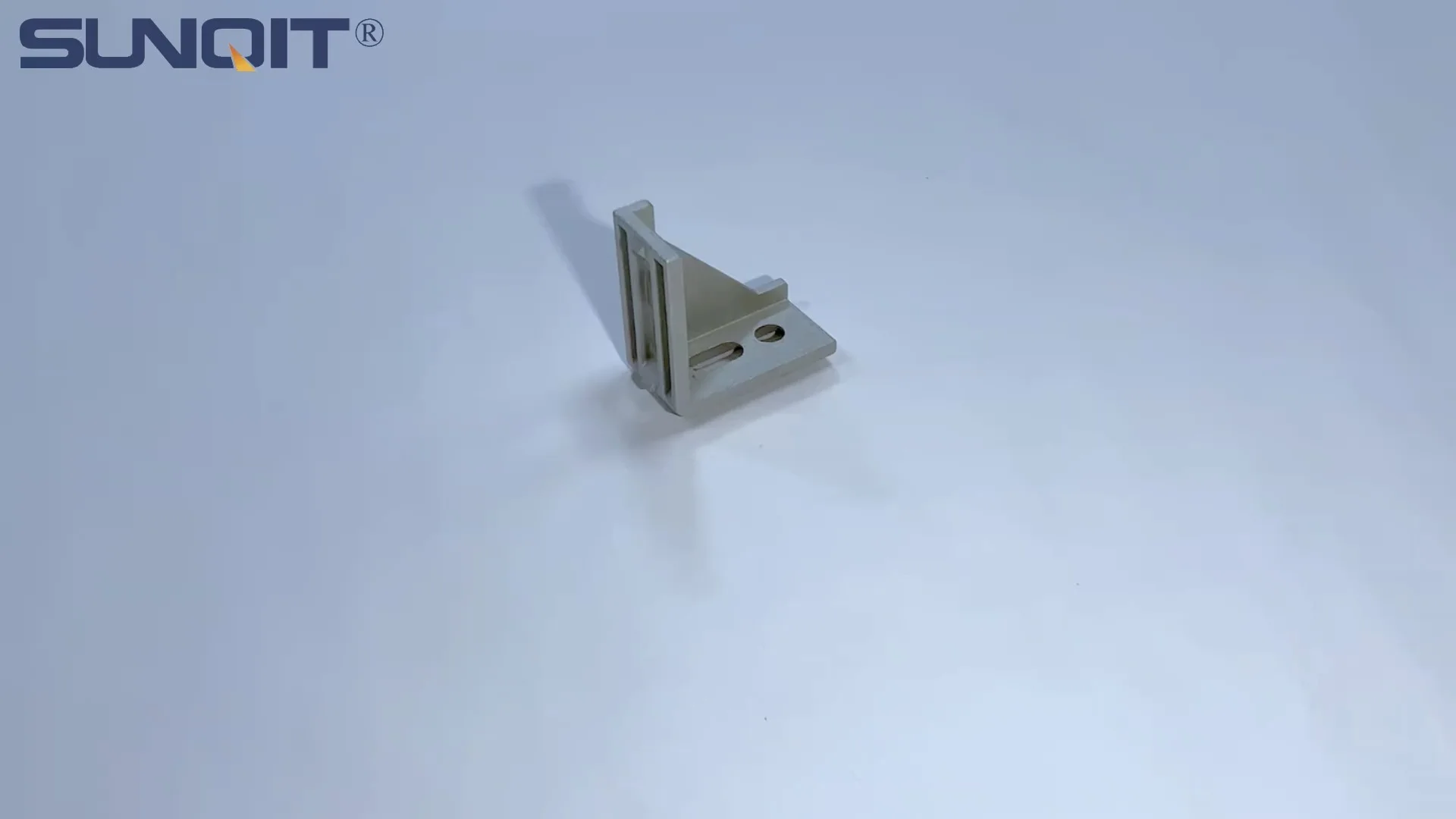
It used for 90° flat connection for 20 series aluminum profile.
If you've ever walked through a busy manufacturing plant, a well-organized workshop, or even a modern warehouse, you've probably seen the unsung heroes holding everything together: aluminum profiles. These sleek, modular structures form the backbone of workbenches, material racks, conveyor systems, and assembly lines, quietly ensuring operations run smoothly day in and day out. Among the many aluminum profiles available, the 3060 aluminum angle yards stand out as a versatile workhorse, balancing strength, flexibility, and ease of use. But what truly makes these profiles indispensable isn't just their shape or material—it's how well they connect. After all, even the sturdiest profile is only as reliable as the joints holding it together. In this guide, we'll dive into the world of joining 3060 aluminum angle yards, exploring the fasteners, accessories, and connection methods that turn individual pieces into robust, functional structures.
What Are 3060 Aluminum Angle Yards, Anyway?
Before we jump into fasteners and connections, let's make sure we're all on the same page about what 3060 aluminum angle yards actually are. Simply put, they're a type of aluminum extrusion profile characterized by their dimensions: 30 millimeters in one leg and 60 millimeters in the other, forming a right angle (hence "angle yards"). This specific size strikes a sweet spot in the world of aluminum profiles—small enough to be lightweight and easy to handle, yet large enough to support significant weight, making them ideal for a wide range of applications.
Most 3060 aluminum angle yards are made from 6063-T5 aluminum alloy, a popular choice for extrusions thanks to its excellent combination of strength, corrosion resistance, and machinability. This alloy can handle daily wear and tear in industrial settings, resist rust in humid environments, and even stand up to light impacts without bending or warping. Whether you're building a workbench for your garage, a material rack for a factory floor, or a custom conveyor guide rail, 3060 angle yards provide a stable foundation.
What really sets these profiles apart, though, is their T-slot design. Running along the length of each leg are precision-machined slots that allow for easy attachment of fasteners, brackets, and accessories. This T-slot system is the secret to their modularity—you can reconfigure, extend, or modify structures with minimal effort, unlike welded steel frames that require cutting and rewelding. It's no wonder they're a favorite among manufacturers, DIY enthusiasts, and engineers alike.
The Building Blocks: Key Fasteners and Aluminum Profile Accessories
To join 3060 aluminum angle yards effectively, you'll need the right tools for the job—and by "tools," we mean fasteners and accessories specifically designed for T-slot profiles. These aren't your average nuts and bolts; they're engineered to lock securely into T-slots, create strong joints, and maintain the profile's structural integrity. Let's break down the most essential ones.
1. 3060 Aluminum Angle Yards (Angle Codes)
Wait, isn't this the profile itself? Yes—but angle yards often refer to the angle codes or corner brackets that connect 3060 profiles at 90-degree angles. Think of them as the "cornerstone" of right-angle joints. These small, L-shaped brackets fit snugly into the T-slots of two intersecting 3060 profiles, providing lateral support and preventing the joint from twisting. They're typically made from die-cast aluminum or steel, with pre-drilled holes that align with the T-slots. To install, you'll slide a T-slot nut into each profile's slot, position the angle code over the nuts, and tighten a bolt through the code into the nut. The result? A rigid, vibration-resistant joint that can handle both vertical and horizontal loads.
2. 90° Aluminum Profile Connectors
For more heavy-duty applications, 90° aluminum profile connectors are a step up from basic angle codes. These are larger, more robust fasteners designed to join 3060 profiles at right angles with enhanced strength. Unlike angle codes, which sit on the surface of the profiles, some 90° connectors are partially inserted into the ends of the profiles, creating a flush, seamless joint. Others feature a "cross" design that wraps around the outside of the profiles, distributing stress across a larger area. Many come with built-in grub screws or set screws that bite into the profile's slot, adding extra security against loosening over time. If you're building something that needs to support heavy machinery or frequent movement—like a roller track or a turnover trolley—90° aluminum profile connectors are worth the investment.
3. T-Slot Nuts and Bolts
No T-slot joint is complete without T-slot nuts and bolts—the unsung heroes that hold everything together. T-slot nuts are rectangular or cylindrical nuts with a flange that slides into the T-slot of the profile. Once inserted, you rotate the nut 90 degrees, and the flange locks into place, preventing it from sliding out. Then, a bolt (usually M5, M6, or M8, depending on the slot size) is threaded through the accessory (like an angle code or bracket) and into the T-slot nut, clamping the two pieces together.
There are a few types of T-slot nuts to choose from: slide-in nuts (the most common, easy to install from the end of the profile), drop-in nuts (can be inserted through the slot at any point, no need to slide from the end), and spring nuts (feature a spring that holds them in place during installation, great for overhead work). For 3060 angle yards, M6 T-slot nuts are the standard, as they provide enough clamping force without overtightening and stripping the threads.
4. 3060 Aluminum Profile End Caps
While not a fastener in the traditional sense, 3060 aluminum profile end caps are an essential accessory for any project. These plastic or aluminum caps snap onto the ends of profiles, covering sharp edges and preventing debris, dust, or moisture from entering the T-slots. In industrial settings, they also protect workers from cuts and scrapes—an important safety detail often overlooked. End caps come in various colors (black, gray, and white are most common), so you can even use them to add a touch of color coordination to your structure. Plus, they give finished projects a polished, professional look, turning a functional frame into something that looks intentional and well-made.
5. Gusset Plates
For joints that need extra reinforcement—think load-bearing corners or high-stress areas—gusset plates are your best friend. These flat, triangular or square plates attach to the outside of a joint, distributing weight across a larger surface area and reducing stress on the T-slot fasteners. Gusset plates for 3060 profiles are usually made from steel or aluminum and feature pre-drilled holes that align with the T-slots. They're especially useful for structures like workbenches with heavy tools on top or material racks loaded with boxes, where the joints might otherwise flex under pressure. Installing a gusset plate is simple: just secure it to both profiles using T-slot nuts and bolts, and you'll instantly add rigidity to the joint.

Connection Methods: Step-by-Step Guides
Now that we've covered the key fasteners, let's walk through the most common methods for joining 3060 aluminum angle yards. Each method has its own strengths, so choosing the right one depends on your project's needs: Are you prioritizing speed? Strength? Or maybe the ability to disassemble and reconfigure later?
Method 1: Basic Right-Angle Joint with Angle Codes
This is the simplest and most widely used connection method, perfect for 90-degree joints in lightweight to medium-weight structures (e.g., small workbenches, shelving units). Here's how to do it:
- Prepare the profiles: Cut your 3060 aluminum angle yards to the desired length using a miter saw or hacksaw with a fine-tooth blade. Deburr the ends with a file to remove sharp edges—this will make inserting end caps easier later.
- insert T-slot nuts: Slide M6 T-slot nuts into the T-slots of both profiles where you want the joint to be. For angle codes, you'll typically need two nuts per profile (one near the top, one near the bottom of the joint) for stability.
- Position the angle code: Place the 3060 aluminum angle code (angle yard) over the T-slot nuts, aligning the holes in the code with the nuts. Make sure the code is flush against both profiles—no gaps, as this could weaken the joint.
- Tighten the bolts: Thread M6 bolts through the angle code and into the T-slot nuts. Use a hex key (Allen wrench) to tighten the bolts until snug—don't overtighten, as this can strip the T-slot or warp the angle code. A good rule of thumb: tighten until you feel resistance, then give it a quarter-turn more.
- Test the joint: Gently shake the structure to check for wobbling. If the joint feels loose, check that the T-slot nuts are fully rotated and locked into the slots, then retighten the bolts.
This method is quick, requires minimal tools, and is easy to disassemble if you need to reconfigure your project later. The downside? It's not the strongest option for heavy loads—for that, you'll want to upgrade to Method 2.
Method 2: Heavy-Duty 90° Aluminum Profile Connector Joint
When you need a joint that can handle serious weight—like a material rack holding boxes of parts or a workbench supporting a CNC machine—the 90° aluminum profile connector is the way to go. These connectors are designed to lock profiles together from the inside, creating a joint that's both strong and flush. Here's the process:
- Prepare the profiles: Cut the profiles to length and deburr the ends, as with Method 1. For this method, you may need to drill a small hole through one profile if the connector uses a grub screw (check the manufacturer's instructions).
- insert the connector: Slide the 90° aluminum profile connector into the end of one 3060 profile until it's flush with the end. Some connectors have a tongue that fits into the T-slot, while others are cylindrical and press-fit into the profile's inner cavity.
- Align the second profile: Slide the second 3060 profile onto the exposed end of the connector, ensuring the T-slots are aligned (if needed for accessory attachment). The joint should be tight—no play between the two profiles.
- Secure with grub screws: Many 90° connectors have set screws (grub screws) that thread through the side of the profile and into the connector, locking it in place. Use a hex key to tighten these screws until they bite into the connector—this prevents the profiles from sliding apart.
- Add T-slot reinforcement (optional): For extra strength, add angle codes or gusset plates to the outside of the joint, following Method 1. This creates a "double-reinforced" joint that can handle even heavier loads.
The result? A joint that's far stronger than a basic angle code connection, with no protruding brackets (great for tight spaces). The tradeoff? It's slightly more complex to install, and disassembling requires removing the grub screws, which can be tricky if they're overtightened.
Method 3: Parallel Connection with Parallel Aluminum Joints
Not all joints are at 90 degrees—sometimes you need to connect two 3060 profiles side by side (parallel) to create a wider, stronger beam. For this, parallel aluminum joints (also called "parallel fixation aluminum pipe joints") are essential. These accessories clamp two profiles together along their length, ideal for reinforcing long spans or creating custom-width frames.
- Align the profiles: Place the two 3060 aluminum angle yards side by side, ensuring their edges are flush and T-slots are facing the same direction (or opposite, depending on your needs).
- insert T-slot nuts: Slide T-slot nuts into the T-slots of both profiles, spacing them evenly along the length (every 12–18 inches is a good rule for stability).
- Attach parallel joints: Place the parallel aluminum joint over the T-slot nuts, spanning both profiles. These joints are usually U-shaped or have two sets of holes to fit over both profiles.
- Tighten the bolts: Thread bolts through the joint and into the T-slot nuts, tightening them until the joint clamps both profiles firmly together. Again, avoid overtightening—you want a secure grip, not a crushed T-slot.
This method is perfect for creating custom workbench tops, wide conveyor rails, or reinforced frames. It's also reversible, so you can adjust the spacing between profiles if needed.

Fastener Comparison: Which One Should You Choose?
With so many fasteners and connection methods available, it can be tough to decide which is right for your project. To simplify things, we've put together a comparison table of the most common options, highlighting their best uses, pros, and cons.
| Fastener/Method | Best For | Pros | Cons | Load Capacity |
|---|---|---|---|---|
| 3060 Aluminum Angle Codes | Light to medium-weight 90° joints (shelving, small workbenches) | Quick to install, easy to disassemble, low cost | Not ideal for heavy loads; protruding bracket | Medium (up to 50 lbs per joint) |
| 90° Aluminum Profile Connector | Heavy-duty 90° joints (material racks, industrial workbenches) | High strength, flush design, no protruding parts | More complex installation; harder to disassemble | High (up to 150 lbs per joint) |
| Parallel Aluminum Joints | Parallel profile connections (wide frames, reinforced beams) | Even weight distribution, adjustable spacing | Requires multiple fasteners for long spans | High (depends on spacing; 100+ lbs per linear foot) |
| Gusset Plates | Reinforcing existing joints (high-stress areas) | Adds rigidity, easy to retrofit | Adds bulk; requires extra T-slot nuts | Enhances load capacity by 30–50% |

Troubleshooting Common Connection Issues
Even with the right fasteners and methods, you might run into hiccups when joining 3060 aluminum angle yards. Here are some common problems and how to fix them:
Issue: Loose Joints
The most common culprit here is T-slot nuts that aren't fully rotated into the locked position. If the nut is still "sliding" in the slot, the bolt will loosen over time. To fix this, remove the bolt, rotate the nut 90 degrees until it clicks into place, then retighten. If the joint still loosens, check for worn or damaged T-slot nuts—replace them with new ones (they're cheap and worth the investment).
Issue: Stripped Threads
Overtightening bolts is the main cause of stripped threads in T-slot nuts or angle codes. If this happens, don't panic—you can often replace the T-slot nut (they're inexpensive) or use a larger nut (e.g., M8 instead of M6) if the T-slot is big enough. To prevent stripping, use a torque wrench set to 4–5 Nm for M6 bolts—this is the sweet spot for 6063 aluminum.
Issue: Misaligned T-Slots
If the T-slots of two profiles don't align, inserting fasteners can be frustrating. This usually happens if the profiles are cut at slightly off angles. To fix it, use a file to gently widen the T-slot entrance on one profile, or use an adjustable angle code that can tolerate small misalignments. For severe misalignment, recut the profile with a miter saw for a cleaner edge.
Issue: Protruding Bolts
Nothing ruins a clean look like bolts sticking out of angle codes. To fix this, use low-profile or countersunk bolts, which sit flush with the surface of the angle code. You can also add 3060 aluminum profile end caps to cover exposed bolt ends on profile ends.
Final Thoughts: Building Strong, Smart Structures with 3060 Aluminum Angle Yards
Joining 3060 aluminum angle yards might seem like a small detail in the grand scheme of a project, but it's the foundation of a strong, reliable structure. Whether you're using basic angle codes for a garage workbench or heavy-duty 90° connectors for an industrial material rack, the key is to choose the right fasteners for your load, application, and budget.
Remember, the T-slot system is all about flexibility—don't be afraid to experiment, reconfigure, or add reinforcements like gusset plates if needed. And don't overlook the little things, like end caps to protect edges or parallel joints to create custom widths. With the right tools and a bit of know-how, 3060 aluminum angle yards can transform from simple extrusions into the backbone of nearly any project.
So, the next time you're planning a build, take a moment to think about your joints. A little attention to fasteners and connection methods will go a long way toward creating a structure that's not just functional, but built to last.