- Company Articles
- Products and Technology
- Solution
- Kaizen Events: Using Lean Pipe Clamp B Chrome to Enhance Workflow Efficiency

Kaizen Events: Using Lean Pipe Clamp B Chrome to Enhance Workflow Efficiency
Related Product
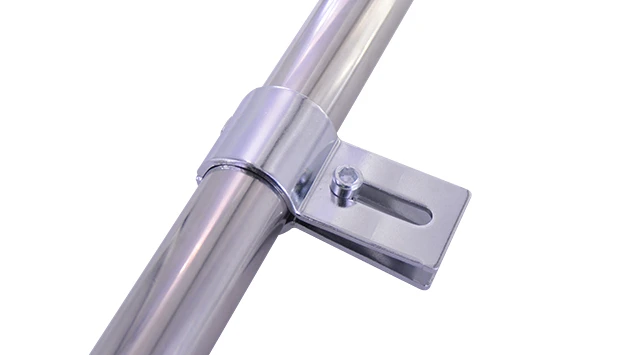
Lean Pipe Clamp B Chrome
Lean pipe clamp is used for turnover trolley, workbench, flowrack adjust the frame or fix some accessory.
Imagine walking onto a bustling manufacturing floor on a Tuesday morning. The air hums with the steady whir of machinery, and workers in blue uniforms move with purpose—yet there's an undercurrent of frustration. Maria, an assembly line technician, pauses to adjust a loose pipe on her workstation, her brow furrowed as she fumbles with a rusted clamp that won't tighten. Across the floor, Raj waits by a flow rack, tapping his foot: the roller track feeding parts to his station keeps jamming, and the tools he needs are scattered across a cluttered workbench. By midday, the team has fallen 15 units behind schedule, and the supervisor is scribbling notes on a clipboard, muttering about "bottlenecks" and "wasted time." Sound familiar? For many production teams, this scenario isn't just a bad day—it's the status quo.
But what if there was a way to turn these daily struggles into moments of progress? Enter Kaizen events: short, focused workshops where teams collaborate to identify inefficiencies, brainstorm solutions, and implement changes—fast. And while Kaizen is often associated with big-picture strategies, its success hinges on the smallest of tools. Today, we're shining a light on one such unsung hero: the Lean Pipe Clamp B Chrome. at first glance, this unassuming component is a linchpin in transforming chaotic workspaces into streamlined hubs of productivity. In this article, we'll explore how Kaizen events and the Lean Pipe Clamp B Chrome work hand-in-hand to eliminate waste, boost efficiency, and empower teams to own their success.
Understanding Kaizen Events: The Heart of Continuous Improvement
Before diving into the specifics of clamps and workflow design, let's ground ourselves in what Kaizen events really are. Derived from the Japanese words "kai" (change) and "zen" (good), Kaizen translates to "continuous improvement"—but it's far more than a buzzword. A Kaizen event is a structured, time-bound workshop (typically 3–5 days) where cross-functional teams come together to tackle a specific problem: a bottleneck in production, a disorganized workspace, or a process that's eating up unnecessary time.
The magic of Kaizen lies in its simplicity. Instead of waiting for top-down mandates, teams roll up their sleeves to observe, analyze, and act. They start by mapping the current state of a process—say, how parts move from the warehouse to the assembly line—then identify "muda," or waste: motion (workers walking too far for tools), waiting (idle time due to jams), defects (parts damaged by poor storage), and more. From there, they brainstorm solutions, test them on the spot, and implement the best ones before the event ends. The goal? Small, sustainable changes that add up to big results over time.
But here's the catch: Kaizen events thrive on actionable tools. You can't solve a workflow problem with a whiteboard alone. That's where lean systems come into play. A lean system provides the framework for organizing workspaces, tools, and processes to minimize waste—and its most powerful tools are often the ones you can touch, adjust, and repurpose. Think of lean systems as the backbone of a well-oiled machine; tools like the Lean Pipe Clamp B Chrome are the joints that hold it all together, flexible yet strong enough to support constant improvement.
Lean Systems 101: Building Blocks of Efficient Workflows
At its core, a lean system is designed to deliver value to customers while using the least amount of resources. It's about stripping away the non-essentials—those "nice-to-haves" that don't contribute to the final product—and focusing on what matters: speed, quality, and consistency. To do this, lean systems rely on modular, adaptable tools that can evolve with changing needs. Workbenches that adjust to different tasks, flow racks that keep parts within arm's reach, roller tracks that move materials smoothly—these are the workhorses of lean manufacturing.
But here's the challenge: traditional manufacturing setups often use fixed, one-size-fits-all equipment. A welded steel workbench might last for decades, but if your team needs to reconfigure the line to produce a new product, that bench becomes a liability., clamps that rust, loosen, or require specialized tools to adjust can turn a 10-minute setup into a 2-hour project. This is where lean pipe systems shine. Made from lightweight yet durable materials like steel or aluminum, lean pipes (also called "flexible pipes") can be combined with joints and clamps to build everything from workstations to material handling carts—all without welding, drilling, or heavy machinery.
And at the center of this flexibility? The clamp. A good clamp doesn't just hold pipes together—it enables change. It lets teams reposition a workbench shelf in minutes, not hours. It ensures that roller tracks stay aligned, even after daily use. It turns a static workspace into a dynamic one that can adapt to new orders, new products, and new ideas. Which brings us to the star of our story: the Lean Pipe Clamp B Chrome. Let's take a closer look at what makes this clamp a game-changer for Kaizen events and beyond.
The Lean Pipe Clamp B Chrome: Small Tool, Big Impact
At first glance, the Lean Pipe Clamp B Chrome might seem like just another metal fastener. But spend five minutes with a maintenance technician or a Kaizen team lead, and you'll quickly learn: not all clamps are created equal. Let's break down its design, materials, and functionality to understand why it's become a staple in lean environments.
Design That Puts Workers First
The Lean Pipe Clamp B Chrome is engineered with one goal in mind: usability. Unlike traditional clamps that require wrenches, pliers, or even power tools to tighten, this clamp features a ergonomic, hand-tightenable design. Its chrome-plated steel body is smooth to the touch, reducing the risk of cuts or scrapes during adjustments. The clamping mechanism uses a cam lever—similar to a bike brake—that locks into place with a satisfying "click," ensuring a secure hold without over-tightening (which can warp pipes or strip threads). For workers like Maria, who spend hours at their stations, this means less time wrestling with tools and more time focusing on the task at hand.
But usability isn't just about ease of use—it's about adaptability. The Lean Pipe Clamp B Chrome is compatible with standard 28mm lean pipes (the most common size in manufacturing), making it a versatile addition to existing setups. Whether you're building a new workbench, reinforcing a flow rack, or repairing a roller track, this clamp fits seamlessly. Its compact size (just 85mm long and 40mm wide) also means it won't add bulk to tight spaces, keeping workstations clean and uncluttered.
Durability That Stands the Test of Time
In a manufacturing environment, "durable" isn't just a nice-to-have—it's a requirement. Pipes vibrate during use, chemicals and oils splash onto surfaces, and clamps are tightened and loosened dozens of times a week. The Lean Pipe Clamp B Chrome rises to the challenge with its chrome-plated finish, which resists corrosion, rust, and wear. Unlike painted or galvanized clamps that chip or flake over time, the chrome coating maintains its integrity even in humid or oily conditions. This longevity isn't just about reducing replacement costs; it's about reliability. When a Kaizen team implements a new workflow, they need to trust that the tools holding it together won't fail mid-shift.
Take Raj's roller track, for example. A loose clamp could cause the track to misalign, jamming parts and halting production. With the Lean Pipe Clamp B Chrome, the cam lever design ensures consistent pressure, so the track stays aligned even as heavy bins glide over it. And if the team decides to adjust the track's angle during a Kaizen event? The clamp releases quickly, allowing for on-the-fly changes without compromising stability.
Cost-Effectiveness: More Than Just a Low Price Tag
When discussing tools, cost is always a factor—but "cost-effective" doesn't mean "cheapest." The Lean Pipe Clamp B Chrome delivers value in three key ways: upfront affordability, reduced labor costs, and minimal maintenance. Let's break it down: a single clamp costs a fraction of what you'd pay for a specialized welded joint or a proprietary fastener. Since it requires no special tools, teams save on equipment expenses. And because it's reusable—you can disassemble and reassemble it dozens of times—it reduces waste from discarded parts.
But the biggest cost-saver is time. A traditional clamp might take 10 minutes to install (including hunting for a wrench), while the Lean Pipe Clamp B Chrome takes 30 seconds. Multiply that by 50 clamps on a single workbench, and you're looking at hours saved during setup. During a Kaizen event, where every minute counts, that time adds up to more brainstorming, more testing, and more solutions implemented. Post-event, those saved minutes translate to faster changeovers, quicker response to customer demands, and higher throughput.
| Feature | Traditional Steel Clamp | Lean Pipe Clamp B Chrome |
|---|---|---|
| Installation Time | 10–15 minutes (requires wrench/pliers) | 30 seconds (hand-tightenable cam lever) |
| Durability | Prone to rust; wears quickly with frequent adjustments | Chrome-plated steel; resists corrosion and wear |
| Flexibility | Fixed position; difficult to reconfigure | Reusable; easy to adjust or relocate |
| Maintenance | Requires lubrication; may need replacement after 6–12 months | Low maintenance; lasts 3+ years with regular use |
| Safety | Sharp edges; risk of over-tightening/warping pipes | Smooth chrome finish; cam lever prevents over-tightening |
Putting It All Together: A Kaizen Event in Action
To truly understand the impact of the Lean Pipe Clamp B Chrome, let's walk through a hypothetical Kaizen event at a mid-sized electronics manufacturer we'll call "TechFlow." TechFlow produces circuit boards for smartphones, and their assembly line has been struggling with two main issues: disorganized workbenches causing tool-searching delays, and a inefficient flow rack system that's bottlenecking part delivery.
TechFlow's Kaizen Event: Day 1–3
Day 1: Identify Waste The Kaizen team—including assembly technicians, a supervisor, a maintenance worker, and a lean coordinator—starts by mapping the current workflow. They observe that workers spend 15% of their time searching for tools (motion waste) and 20% waiting for parts from the flow rack (waiting waste). The workbenches are cluttered with loose cables and mismatched storage bins, and the flow rack's roller track frequently jams because the pipes are held together with old, rusted clamps that won't stay tight.
Day 2: Brainstorm Solutions The team brainstorms ideas: modular workbenches with tool holders, a reconfigured flow rack with smoother roller tracks, and standardized storage bins. The lean coordinator suggests using a lean pipe system for both workbenches and the flow rack, highlighting the Lean Pipe Clamp B Chrome as a key component for quick adjustments.
Day 3: Test and Implement The team prototypes a new workstation using lean pipes, joints, and the Lean Pipe Clamp B Chrome. They mount tool holders at eye level, add a small roller track (secured with the clamps) to feed parts directly to the assembly area, and attach storage bins under the workbench. On the flow rack, they replace rusted clamps with the chrome ones, realigning the roller track to reduce jams. By the end of the day, the prototype workstation is up and running—and workers report a 10-minute reduction in setup time.
By Day 5, the team has rolled out the new workbenches and flow rack adjustments to the entire assembly line. The results? Tool-searching time drops by 75%, and the flow rack jams decrease from 8 per shift to 0. By the end of the month, TechFlow's daily output increases by 25 units, and employee satisfaction scores rise—workers feel heard, and their input has directly improved their daily lives.
What made this transformation possible? It wasn't just the Kaizen event's structure—it was the tools. The Lean Pipe Clamp B Chrome allowed the team to build, test, and adjust their solutions without waiting for maintenance or outside contractors. It turned abstract ideas into tangible changes, proving that even the smallest tools can drive big results.
Beyond the Event: Sustaining Efficiency with Lean Tools
Kaizen events are powerful, but their impact fades if changes aren't sustained. The Lean Pipe Clamp B Chrome plays a crucial role here, too, by making it easy for teams to maintain and evolve their workflows long after the event ends. Let's explore three ways it supports long-term success:
Empowering Employees to Own Improvement
One of Kaizen's core principles is "respect for people"—and that means trusting employees to make decisions about their workspaces. With traditional tools, adjusting a workstation might require a maintenance request or a supervisor's approval. With the Lean Pipe Clamp B Chrome, workers can make small tweaks on their own: raising a shelf by an inch to reduce bending, repositioning a roller track to better align with their reach, or adding a new bin holder for frequently used parts. This sense of ownership turns "the company's workflow" into "our workflow," motivating teams to keep looking for ways to improve.
Adapting to Changing Demands
Manufacturing is rarely static. New product designs, seasonal demand spikes, and customer requests for customization all require flexibility. The Lean Pipe Clamp B Chrome makes it easy to pivot. For example, if TechFlow lands a contract for a larger circuit board, the team can quickly reconfigure their workbenches by loosening the clamps, adjusting the pipe lengths, and retightening—no downtime, no extra costs. This agility keeps production on track, even when the unexpected happens.
Reducing Long-Term Costs
Over time, the savings from the Lean Pipe Clamp B Chrome add up. Let's say TechFlow uses 200 clamps across their facility. If each clamp reduces setup time by 10 minutes per week, that's 2,000 minutes (or 33 hours) saved annually—time that can be redirected to production or training. Add in lower replacement costs (thanks to the chrome finish) and reduced maintenance, and the ROI becomes clear. For small manufacturers, these savings can mean the difference between staying competitive and falling behind.
The Future of Kaizen: Tools That Grow with Your Team
As manufacturing evolves—with trends like automation, IoT, and sustainable production—Kaizen events will continue to adapt. But one thing won't change: the need for tools that empower teams to collaborate, innovate, and act quickly. The Lean Pipe Clamp B Chrome is more than a product; it's a symbol of that philosophy. It's a reminder that continuous improvement isn't about grand gestures—it's about the small, intentional choices that add up to better workdays, better products, and better businesses.
So, the next time you walk onto a manufacturing floor, take a closer look at the workbenches, flow racks, and roller tracks. Chances are, there's a Lean Pipe Clamp B Chrome holding them together—quietly, reliably, and ready for whatever Kaizen event comes next. And for the teams using them? They're not just building products. They're building a culture of improvement—one clamp at a time.