- Company Articles
- Products and Technology
- Product knowledge
- Kaizen in Action: Optimizing Stability with Suction Cup Anti-Slip Foot Adjusters

Kaizen in Action: Optimizing Stability with Suction Cup Anti-Slip Foot Adjusters
Related Product
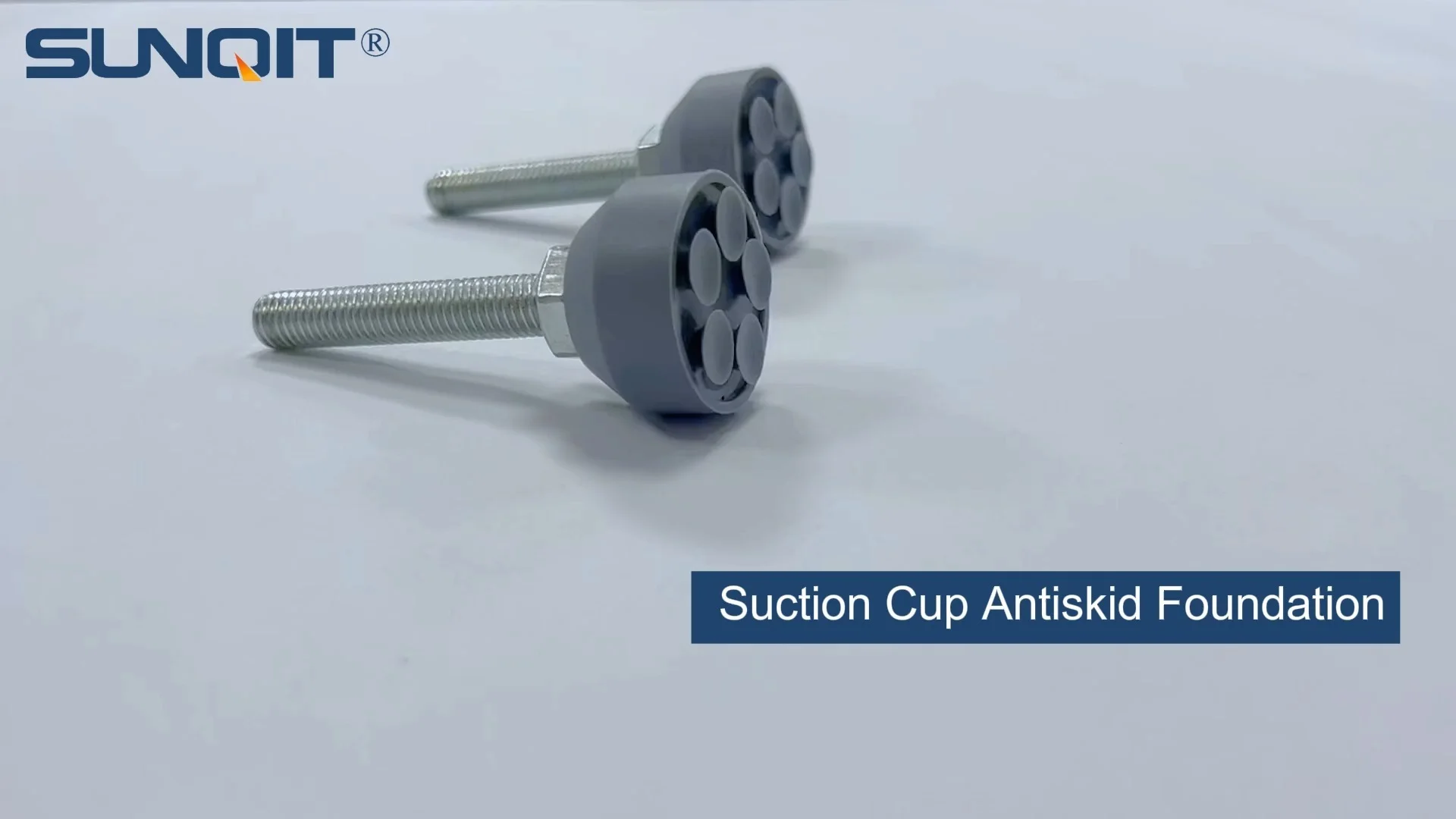
Suction Cup Anti-slip Foot Adjuster
D=35mm suction cup anti-slip foot adjusterï¼screw M10*55ï¼with a blot, used for workbench, flowrack pipe contact with groud.
The Heartbeat of Kaizen: Small Changes, Big Results
In the world of manufacturing, where every second and every movement counts, there's a philosophy that doesn't just talk about improvement—it lives it. Kaizen, the Japanese concept of continuous improvement, isn't about grand overhauls or expensive tech upgrades. It's about the small, intentional tweaks that add up to transformative change. It's the assembly line worker suggesting a better way to position a tool. It's the supervisor noticing a wobbly table and asking, "How can we fix this before it becomes a problem?" And sometimes, it's a humble component that flies under the radar until you realize just how much chaos it was quietly preventing.
Today, we're diving into one of those unsung heroes of the lean system: the suction cup anti-slip foot adjuster . It might not sound glamorous, but in the daily grind of production floors, warehouses, and workshops, stability isn't just a nice-to-have—it's the foundation of efficiency, safety, and quality. Let's walk through why stability matters, the hidden costs of ignoring it, and how this small but mighty tool is helping teams embrace Kaizen in the most practical way possible.
The Cost of a Wobble: When Instability Creeps Into Your Workflow
Picture this: Maria, an assembly line worker at a mid-sized electronics plant, is tasked with soldering tiny components onto circuit boards. Her workbench has been a little off-kilter lately. At first, it was barely noticeable—a slight rock when she leaned in to adjust her microscope. But this week, it's gotten worse. Every time she reaches for a tool, the bench shifts. She's started slowing down, hesitating before making precise movements, afraid a sudden wobble might ruin hours of careful work.
Across the floor, Raj is loading parts onto a material rack. The rack, which holds heavy plastic bins, sits on uneven concrete. One corner is higher than the others, so the bins slide to one side, jamming the shelves. He's spent 10 minutes today just rearranging them—time he could have spent restocking the line. And in the packaging area, Priya is struggling with a conveyor belt that vibrates so much, small boxes sometimes tip over. She's had to stop the line twice this morning to clean up spills.
These might seem like minor annoyances, but in a lean system, "minor" adds up fast. A wobbly workbench isn't just frustrating for Maria—it's a quality risk. A misaligned material rack isn't just a time-waster for Raj—it's a bottleneck. And a vibrating conveyor isn't just a cleanup hassle for Priya—it's a safety hazard. Instability seeps into every corner of operations, eroding productivity, increasing waste, and even demoralizing teams who feel like they're fighting their tools instead of using them.
The problem? Traditional solutions often miss the mark. Basic rubber feet might stop sliding on smooth floors, but they can't grip uneven concrete or dampen vibrations. Adjustable screws help level surfaces, but they lack the "stick" to prevent movement once set. And when you're dealing with heavy loads—think full material racks or workbenches cluttered with tools—even a small shift can throw off an entire process. That's where the suction cup anti-slip foot adjuster steps in.

Meet the Game-Changer: What Is a Suction Cup Anti-Slip Foot Adjuster?
At first glance, a suction cup anti-slip foot adjuster looks simple: a durable plastic or metal base, an adjustable screw for height, and a soft, flexible suction cup at the bottom. But don't let its simplicity fool you. This little device is engineered to solve two big problems: leveling and gripping. Let's break down how it works.
First, the adjustability. The threaded screw allows you to tweak the height of each foot independently. So if your workbench is on a floor with a slight slope (and let's be real—how many factory floors are perfectly flat?), you can twist each foot to level the surface. No more propping up with scrap wood or shims that slip out over time. It's precise, repeatable, and easy to adjust even when the bench is fully loaded.
But the real magic is in the suction cup. Made from high-quality, oil-resistant rubber, the cup creates a vacuum-like seal with the floor when pressure is applied. When you lower the foot onto the ground and lock it into place, the cup conforms to the floor's texture—whether it's smooth tile, rough concrete, or even slightly cracked surfaces—creating a grip that's both strong and forgiving. Unlike hard plastic feet that slide or metal feet that scratch, the suction cup absorbs minor vibrations, reduces noise, and stays put even when the equipment is jostled.
Take Maria's workbench, for example. Swap out her old rubber feet for these adjusters, and suddenly, that wobble disappears. The suction cups grip the concrete, so even when she leans in, the bench stays steady. The adjustable screws let her level the surface perfectly, so her microscope and tools sit flat, reducing eye strain and improving precision. For Raj's material rack, the cups prevent the entire structure from shifting under the weight of full bins, keeping shelves aligned and parts easy to access. And on Priya's conveyor, the dampening effect of the suction cups cuts down on vibration, so boxes stay upright and the line runs smoother.
But this isn't just about fixing existing problems—it's about preventing new ones. In a lean system, waste comes in many forms: defects, overproduction, waiting, and unnecessary motion. A stable workspace reduces defects by minimizing errors caused by unsteady surfaces. It cuts down on waiting time by keeping tools and materials where they're supposed to be. And it eliminates unnecessary motion by letting workers focus on their tasks instead of adjusting, readjusting, or cleaning up messes. That's Kaizen in action: a small change that ripples through the entire workflow.

How It Stacks Up: Traditional vs. Suction Cup Foot Adjusters
Curious how this tool compares to what's already in your facility? Let's put it side by side with common alternatives. The table below breaks down key features, so you can see why more teams are making the switch.
| Feature | Traditional Rubber Feet | Basic Adjustable Screws | Suction Cup Anti-Slip Foot Adjusters |
|---|---|---|---|
| Grip Mechanism | Friction from rubber; slides on wet/oily floors | Weight of equipment; no active grip | Suction vacuum seal + friction; grips on most surfaces |
| Stability on Uneven Floors | Poor; rubber compresses unevenly | Good for leveling, but slides if shifted | Excellent; suction cup conforms to surface texture |
| Vibration Dampening | Minimal; hard rubber transfers vibration | None; metal/plastic conducts vibration | High; flexible cup absorbs shocks and noise |
| Installation & Adjustment | Easy to install, but fixed height | Adjustable height, but requires tools to tighten | Tool-free adjustment; twist to level, lock in place |
| Compatibility | Best on smooth, dry floors | Works on most floors, but no grip | Concrete, tile, wood, even slightly uneven or oily surfaces |
| Long-Term Durability | Rubber wears down; loses friction over time | Metal screws rust; plastic cracks under heavy loads | Reinforced base + UV-resistant suction cup; lasts 2–3x longer |
The standout here? The suction cup's ability to actively grip the floor, not just passively sit on it. That's a game-changer for anyone dealing with heavy equipment, high-traffic areas, or floors that see spills (looking at you, machine shops and food processing plants). And because they're adjustable, they work with everything from lightweight workbenches to heavy-duty material rack B (3 row and 3 floor) units—no need to buy different feet for different equipment.

Fitting Into the Lean Puzzle: Compatibility with Your Existing System
One of the biggest hurdles to adopting new tools in manufacturing is compatibility. Will this foot adjuster work with our current workbenches? Our material racks? Our aluminum profile frames? The answer, happily, is almost always yes. These adjusters are designed to integrate seamlessly with the lean components you already use, making them a low-risk, high-reward upgrade.
Take aluminum profile workbenches, for example. Many modern facilities use aluminum extrusion profiles to build modular workstations—they're lightweight, durable, and easy to customize. The suction cup anti-slip foot adjusters screw directly into the base of these profiles, replacing standard feet in minutes. No drilling, no welding, no redesigning the entire bench. Just twist off the old feet, twist on the new ones, adjust the height, and you're done.
The same goes for material racks, conveyor stands, and even mobile trolleys (when you need to lock them in place for loading/unloading). Pair them with caster wheel systems, and you get the best of both worlds: mobility when you need it (thanks to the casters) and rock-solid stability when you don't (thanks to the suction cup adjusters). It's a one-two punch that turns "either/or" into "both/and"—exactly the kind of flexibility lean systems thrive on.
And let's talk about customization. These adjusters come in different sizes and load capacities, so you can match them to your equipment. Need to support a heavy material rack? Go for a 500kg-rated adjuster with a larger suction cup. Outfitting a lightweight assembly table? A compact 100kg version will do the trick. Some even come with swivel bases, allowing you to angle the foot slightly to accommodate floors with more severe slopes. It's not a one-size-fits-all solution—it's a one-size-fits-most, with options to tailor it to your specific needs.
From Frustration to Flow: A Real-World Kaizen Story
Let's circle back to Maria, Raj, and Priya. A few months after their facility started experimenting with Kaizen workshops, their team leader, Mike, brought up the stability issues during a brainstorming session. "What if we tried these suction cup feet I saw at the trade show?" he suggested. "They're not expensive, and we could test them on a few problem spots."
They started with Maria's workbench. Within an hour of installing the adjusters, she noticed the difference. "It's like the bench is glued to the floor," she told Mike. "I don't even think about it anymore—I just focus on the boards." A week later, Raj's material rack got the upgrade. No more sliding bins, no more rearranging. "I can load three racks in the time it used to take me to do two," he reported. And Priya's conveyor? The vibration dropped so much that the line ran for a full shift without a single tipped box. "It's quieter, too," she added. "The whole area feels calmer."
But the real win? The ripple effect. With Maria's workbench stable, her error rate dropped by 15% in the first month. Raj's faster restocking meant the assembly line rarely ran out of parts, cutting downtime by 10%. And Priya's smoother conveyor reduced cleanup time, letting her team package 5% more units per day. All from a $20 part per workstation.
That's the beauty of Kaizen. It's not about spending more—it's about spending smarter. It's about noticing the small pains that add up to big problems and solving them with tools that respect the work your team does every day. The suction cup anti-slip foot adjuster didn't just fix a wobble; it gave Maria, Raj, and Priya control over their workspace. And when workers feel in control, they feel empowered to suggest more improvements. It's a cycle of positivity that starts with stability and grows into something even bigger.
The Bottom Line: Stability as a Foundation for Excellence
In the end, manufacturing isn't just about machines and materials—it's about people. It's about creating an environment where workers can do their best work without fighting unnecessary battles. A stable workbench, a secure material rack, a vibration-free conveyor—these aren't luxuries. They're the basics. And when you get the basics right, everything else follows.
The suction cup anti-slip foot adjuster might not make headlines, but it's a testament to what Kaizen is all about: seeing the unseen, fixing the overlooked, and respecting the details that make or break a process. It's a reminder that continuous improvement doesn't have to be complicated. Sometimes, the most powerful changes are the ones that let your team say, "Finally—this works the way it should."
So, the next time you walk through your facility, take a closer look. Are there wobbling tables? Sliding racks? Workers hesitating because their tools won't stay put? Those are Kaizen opportunities in disguise. And maybe, just maybe, the solution is simpler than you think. After all, in the world of lean, the best upgrades aren't the ones that cost the most—they're the ones that care the most.